

 Travel Essentials
 Travel Essentials

Explore Panama City's finest museums featuring contemporary art, ecological wonders, indigenous heritage, and the iconic Panama Canal's fascinating history.
 Travel Essentials
Panama City stands as a vibrant crossroads of history, nature, and artistic expression. The capital’s museum landscape reflects the nation’s complex past, ecological significance, and contemporary creative vitality. From Frank Gehry’s architectural masterpiece celebrating biodiversity to intimate galleries preserving indigenous traditions, Panama City offers visitors an exceptional array of cultural institutions that illuminate the character of Central America’s most dynamic metropolis.
The Museo de Arte Contemporáneo de Panamá, affectionately known as MAC Panamá, represents Panama’s premier destination for experiencing modern and contemporary visual culture. Established as a non-profit organization in 1962, this institution has evolved into a repository of the world’s most comprehensive collection of Panamanian artwork. The museum’s permanent location, secured in 1983, occupies a thoughtfully renovated former Masonic Temple situated within the Ancón settlement near the Canal Zone.
MAC Panamá distinguishes itself through its commitment to rotating exhibitions and dynamic cultural programming. With over 700 works representing Latin American artists from the twentieth and twenty-first centuries, the museum ensures that visitors encounter fresh perspectives during repeat visits. The curatorial approach emphasizes dialogue between historical and contemporary production, allowing audiences to trace artistic evolution across decades. The institution’s location within the historic Casco Antiguo district positions it as part of a broader cultural ecosystem, enabling visitors to combine museum exploration with architectural appreciation and culinary experiences in Panama’s most charming neighborhood.
The museum welcomes diverse audiences through its accessible approach to contemporary art. Whether patrons arrive with extensive art historical knowledge or visiting as curious newcomers, MAC Panamá cultivates an environment of discovery. The thoughtful presentation of Latin American artistic voices elevates regional creativity onto an international stage, positioning Panama City as a serious player in the contemporary art world.
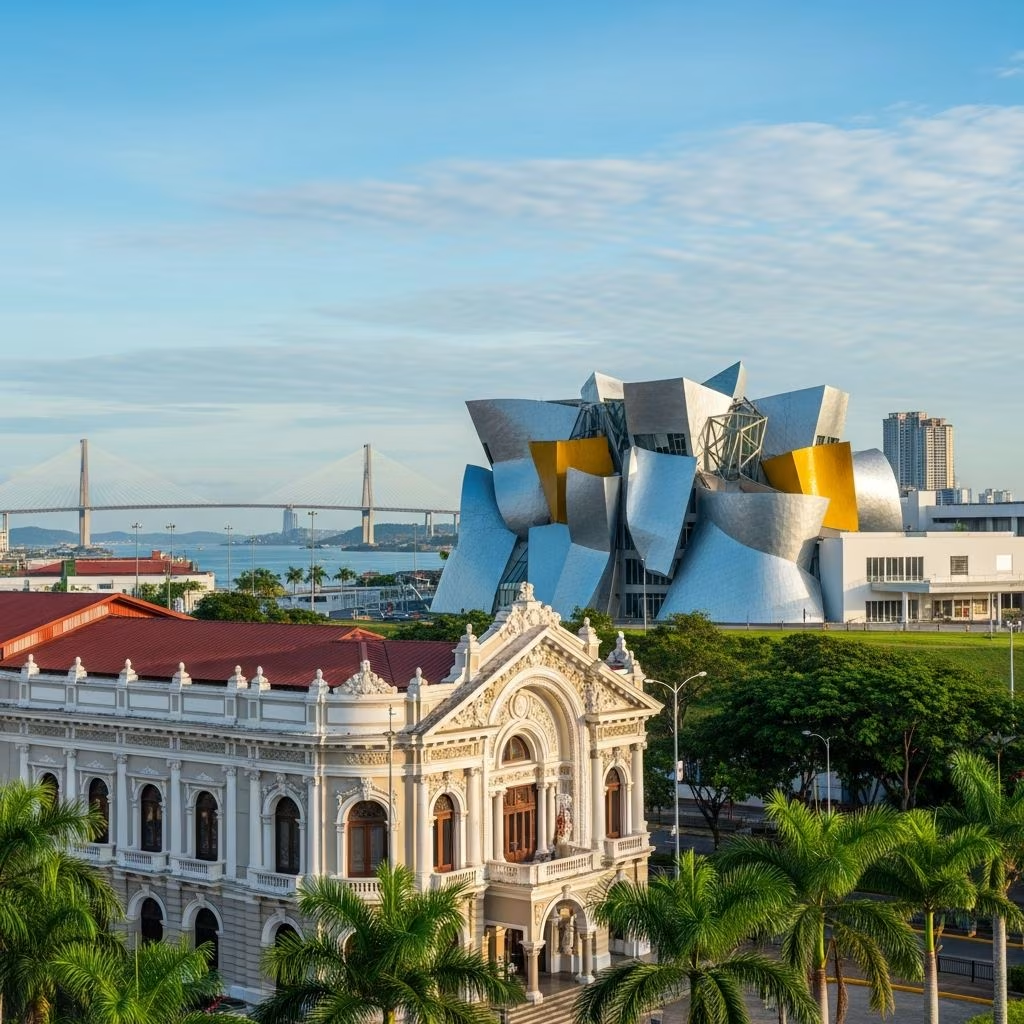
The BioMuseo, or Museum of Biodiversity, represents an extraordinary convergence of architectural innovation and scientific education. Designed by the renowned architect Frank Gehry, this pioneering institution explores the profound ecological significance of the isthmus’s emergence from the ocean. The building itself functions as a three-dimensional argument about natural diversity, with its signature rooftop presenting a deliberately chaotic arrangement of multi-colored geometric forms that symbolize both rainforest canopy complexity and the natural world’s inherent variety.
The museum’s development trajectory illustrates its importance to Panama’s cultural infrastructure. From initial concept to its 2014 opening, the project required fifteen years of planning and construction, positioning the BioMuseo among the most anticipated cultural developments of the early twenty-first century. Located on the Amador Causeway adjacent to the Panama Canal, the museum’s setting emphasizes the relationship between human infrastructure and natural systems.
Within the BioMuseo’s innovative galleries, visitors encounter eight permanent exhibitions that chronicle the isthmus’s geological and biological history. These displays present information about the first animals inhabiting the lands, documented evolutionary pathways, and identification of unique species distributed throughout Panama. A particularly striking feature involves “Divided Oceans,” consisting of two towering semi-cylindrical aquariums that visually demonstrate how the Pacific and Caribbean environments diverged following the isthmus’s creation. This interactive approach transforms scientific content into visceral, memorable experiences.
The museum provides English audio guides alongside Spanish-language primary exhibits, ensuring accessibility for international visitors. This multilingual commitment reflects Panama’s position as a genuinely global city.
Panama Viejo represents the physical remnants of the first Spanish city established on the American Pacific coast, embodying centuries of colonial history and maritime commerce. The archaeological site preserves ruins from the original Panama City, which pirates destroyed in the seventeenth century, creating a tangible connection to the region’s tumultuous past. The Plaza Mayor Museum complements the outdoor archaeological experience by presenting recovered artifacts and detailed historical context regarding the pivotal battle that transformed the settlement.
Visitors to Panama Viejo undertake both literal and metaphorical journeys through time. The opportunity to climb the cathedral tower provides not merely elevated vistas of contemporary Panama City but also symbolic perspective on centuries of change and development. The contrast between preserved colonial structures and the modern skyline creates a powerful meditation on historical transformation.
Accessibility to Panama Viejo has improved substantially, with public transportation options including Metrobus lines C640 and 1672, supplementing private vehicle access via Via Israel. The site maintains consistent hours from Tuesday through Sunday, 8:30 a.m. to 5:30 p.m., accommodating visitor schedules.
The Museo de la Mola celebrates the sophisticated textile artistry of Panama’s Guna indigenous people through an extensive collection exceeding 200 traditional garments. The mola represents far more than functional clothing; these layered textiles function as artistic statements and cultural documents. The museum’s five permanent exhibitions systematically explore the technique and evolution of mola production, cosmological worldviews expressed through textile symbolism, environmental themes, artistic layering techniques, and narrative compositions that tell stories through visual means.
What distinguishes the Mola Museum’s approach is its commitment to participatory learning. Visitors not only observe historical and contemporary examples but also engage in hands-on mola creation, developing appreciation for the patience, precision, and creative vision required to produce these intricate works. This interactive dimension transforms passive observation into embodied understanding. The museum’s location in Casco Antiguo, combined with its zero entrance fee, positions it as an essential cultural stop for visitors committed to understanding indigenous Panamanian traditions.
The Museo de la Mola functions as custodian of endangered cultural practices. As younger generations navigate modern economies and globalized culture, institutions dedicated to preserving and celebrating indigenous artistic traditions play increasingly vital roles in maintaining cultural continuity.
Mi Pueblito operates as an open-air museum presenting the architectural styles, material culture, and daily life practices of three distinct Panamanian ethnic communities. This immersive approach contrasts with traditional enclosed museum environments, allowing visitors to experience cultural spaces within naturalistic settings. The Plaza Afroantillana recreates the Caribbean lifestyle of Afro-Antillean communities who settled in the region, presenting domestic arrangements, social organization, and cultural practices within environmental context.
The Interiorana section depicts life in Panama’s central provinces, emphasizing Spanish colonial traditions that shaped regional identity and architectural aesthetics. The Plaza Indígena, currently undergoing restoration, will continue Mi Pueblito’s commitment to representing indigenous lifeways with cultural sensitivity and historical accuracy. Additionally, the Museo de la Pollera preserves knowledge surrounding Panama’s iconic traditional costume, celebrating feminine elegance and national identity.
Mi Pueblito’s ethnographic methodology acknowledges that culture exists not merely in objects displayed within vitrines but within lived environments and embodied practices. This philosophy creates opportunities for visitors to develop more nuanced understandings of cultural diversity.
Understanding Panama requires comprehending the transformative significance of the canal that physically and psychologically shaped the nation. The Interoceanic Canal Museum guides visitors through the historical developments that converted the isthmus into a nexus of world commerce and geopolitical significance. The narrative begins with Spanish transcontinental mule trains, continues through the Panama railroad construction, encompasses the failed French attempt at canal engineering, details the subsequent American project, and concludes with Panama’s assumption of canal control in 1999.
This chronological approach enables visitors to grasp how external powers and internal Panamanian agency collaborated and conflicted in constructing infrastructure that fundamentally altered global trade patterns. Spanish-language presentations with available English audio guides ensure accessibility for diverse audiences.
| Institution | Primary Focus | Location | Distinctive Elements |
|---|---|---|---|
| MAC Panamá | Contemporary Art | Casco Antiguo | 700+ Latin American artworks; rotating exhibitions |
| BioMuseo | Biodiversity & Geology | Amador Causeway | Gehry architecture; interactive aquariums |
| Panama Viejo | Colonial History | Eastern Panama City | Archaeological ruins; cathedral tower views |
| Museo de la Mola | Indigenous Textiles | Casco Antiguo | 200+ garments; hands-on workshops; free admission |
| Mi Pueblito | Ethnographic Culture | Various | Open-air format; three cultural zones |
Effective museum visiting requires strategic planning that balances individual interests with practical considerations regarding time, location, and energy. Casco Antiguo’s concentration of cultural institutions—including MAC Panamá and the Museo de la Mola—enables visitors to combine multiple experiences within a single neighborhood exploration. The historic district’s pedestrian-friendly streets, vibrant dining establishments, and artisanal shops complement museum visits.
The BioMuseo’s location on the Amador Causeway presents opportunities for combining museum exploration with waterfront recreation and canal observation. The Miraflores visitor center, situated nearby, offers complementary perspectives on canal operations through 3D presentations and observation platforms. This clustering permits comprehensive understanding of Panama’s natural and human-constructed environments.
Visitors should allocate minimum two hours for thorough museum engagement, though major institutions reward extended visits. The BioMuseo’s interactive components and expansive collection benefit from unhurried exploration. Similarly, the Museo de la Mola’s participatory workshops require time for meaningful engagement.
Panama City’s museums maintain generally accessible facilities, though specific accessibility features warrant verification before visits. Public transportation connections improve accessibility for visitors without private vehicles, though service frequency and reliability benefit from advance planning.
Operating hours warrant confirmation, as cultural institutions occasionally close for special events or maintenance. Many museums offer reduced admission rates for students, seniors, and children, making cultural exploration economically viable for families and budget-conscious travelers.
Panama City’s cultural institutions increasingly emphasize interactive, participatory approaches that transform visitors from passive observers into engaged participants. The Museo de la Mola’s workshops, BioMuseo’s aquarium interactions, and Mi Pueblito’s immersive environmental design exemplify this curatorial philosophy. This trend reflects global museum practice while specifically addressing Panamanian cultural values regarding community participation and hands-on learning.
Contemporary Latin American museums navigate complex questions regarding cultural representation, indigenous rights, and decolonization of institutional practice. Panamanian museums demonstrate increasing sophistication in these conversations, as evidenced by the Museo de la Mola’s collaborative approach to indigenous knowledge systems and Mi Pueblito’s ethnographic methodology.
Panama’s museums collectively construct narratives regarding national identity, emphasizing the nation’s multicultural character, ecological uniqueness, and strategic geopolitical importance. These institutions resist simplistic characterizations of Panama as merely a corridor for international commerce, instead presenting a complex society with indigenous traditions, Afro-Caribbean heritage, Spanish colonial legacies, and contemporary artistic innovation.
Museum visits enable visitors to transcend superficial tourism, developing genuine comprehension of the forces—geological, historical, cultural, and political—that shaped Panama into its contemporary form. The nation’s museums function as essential infrastructure for both visitor enlightenment and national self-understanding.
Museums operate year-round, though the dry season (December through April) provides optimal weather for exploring outdoor sites like Panama Viejo and traveling between museums. Museum interiors offer climate-controlled comfort during Panama’s humid seasons.
Major institutions including BioMuseo and the Panama Canal Museum provide English audio guides and materials. Smaller museums may operate primarily in Spanish, though staff frequently speak English. Advance research regarding specific language availability aids planning.
Absolutely. Casco Antiguo museums coordinate well with neighborhood exploration, dining, and shopping. The Amador Causeway region integrates BioMuseo visits with canal observation and recreation. Multi-day itineraries accommodate both museum depth and broader city exploration.
Admission fees vary by institution. Some museums like Museo de la Mola offer free entry, while others charge modest fees ranging from $5-15 USD. Combination tickets may offer savings for multiple visits.
