

 Travel Essentials
 Travel Essentials

Discover waterfalls, ancient mounds, historic sites, and scenic overlooks on the Natchez Trace Parkway’s best side trips through Tennessee, Alabama, and Mississippi.
 Travel Essentials
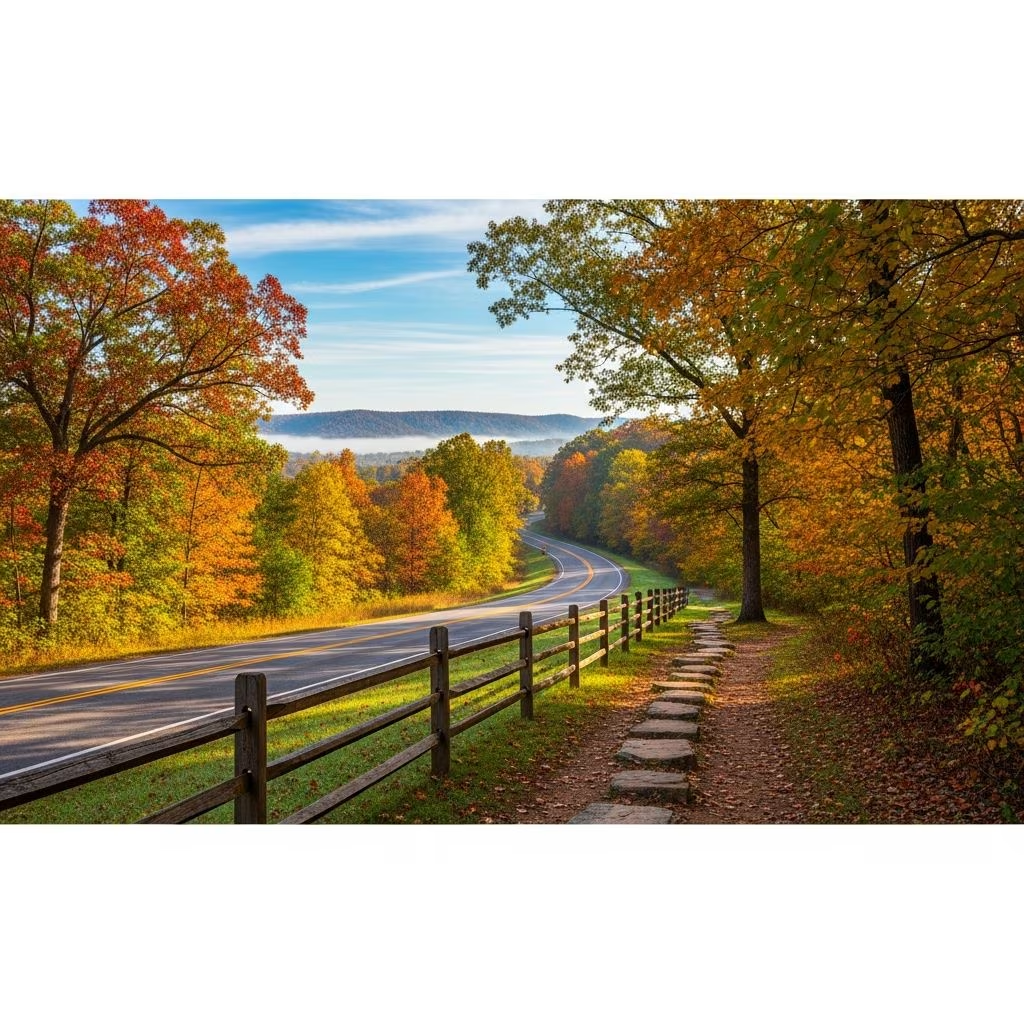
The Natchez Trace Parkway spans 444 miles through Tennessee, Alabama, and Mississippi, offering a serene drive through forests, hills, and historic landscapes. Managed by the National Park Service since 1938, this route traces an ancient path used by Native Americans and early settlers. Beyond the main parkway, numerous side trips reveal waterfalls, old trails, archaeological sites, and overlooks that enrich any journey. This guide highlights essential detours, organized by state and milepost, to help travelers maximize their experience.
Starting from Nashville at milepost 442, the parkway quickly immerses visitors in rolling hills and wildlife sightings. Key early stops provide immediate access to engineering marvels and natural beauty.
Just minutes south of the northern terminus (milepost 438), the Double Arch Bridge stands as a highlight, earning the 1995 Presidential Award for Design Excellence. This 155-foot-high structure offers sweeping views of lush valleys. Nearby Birdsong Hollow provides parking and trail access for hikers exploring the surrounding terrain. Families appreciate the short, scenic walks here, blending modern architecture with natural vistas.
At milepost 401.4, the Tobacco Barn marks the entrance to a 2-mile, one-way Old Trace Drive. This bumpy dirt road recreates the original 18th-century path, winding through valleys with forested views. It’s an adventurous detour popular with children and history buffs, reconnecting to the parkway after evoking pioneer travel conditions.
Fall Hollow (milepost 391.9) features a short, steep trail leading to multiple cascades and waterfalls, creating a magical forest setting just over an hour from Nashville. A longer 4.3-mile Meriwether Lewis Loop trail adds hiking options. Nearby, Jackson Falls (milepost 404.7) offers another accessible waterfall hike, part of the parkway’s renowned natural features.
| Site | Milepost | Trail Length | Highlights |
|---|---|---|---|
| Fall Hollow | 391.9 | Short steep trail | Multiple waterfalls, cascades |
| Jackson Falls | 404.7 | Moderate hike | Scenic falls, forest immersion |
Moving southward, the parkway passes campgrounds, historic graves, and unique geological sites, blending outdoor recreation with American history.
Milepost 386 hosts the Meriwether Lewis Monument and Grave, commemorating the explorer’s mysterious death in 1809. A 2.5-mile Old Trace Drive nearby offers valley views, while the campground provides overnight stays amid peaceful woods. The site includes a loop trail for deeper exploration.
A short paved path at this stop leads to a collapsed cave once used by Native Americans for shelter and ceremonies. A deep pool inside beckons with flashlights, though water is unsafe for consumption. It’s a quick, intriguing detour for spelunkers.
Reservoir Overlook provides access to a 50-square-mile lake formed by an earth-filled dam, with multi-use trails for biking and walking that bypass busy roads. Water Valley Overlook (milepost 411.8) rewards with a 180-degree ridge-top panorama. Swan View Overlook (milepost 392.5) gazes toward Hohenwald, Tennessee’s highest town between New Orleans and Chicago.
Crossing into Alabama around milepost 341, the parkway shifts to archaeological wonders and serene waterways, highlighting indigenous heritage.
Key sites include the Chickasaw Village Site and Pharr Mounds, featuring prehistoric earthen structures built by Woodland and Mississippian cultures over 1,800 years ago. Old Town Overlook (milepost 263.9) connects to hiking trails linking to visitor centers. These stops educate on pre-Columbian life through interpretive signs.
Milepost 407.7’s Gordon House, a restored 1818 dogtrot cabin, overlooks the Duck River ferry site, illustrating early 19th-century travel challenges. It’s a prime example of frontier architecture.
The final stretch in Mississippi emphasizes wildlife, sunken traces, and the parkway’s Natchez terminus, rich in Civil War and plantation history.
Sections of the original sunken Natchez Trace, worn deep by foot and horse traffic, are preserved for walking. Metal Ford and Buffalo River offer canoeing amid cypress trees.
One of North America’s largest mound sites, Emerald Mound features a massive platform built by Native Americans. Nearby, historic homes like Melrose provide glimpses into antebellum life.
This abandoned 19th-century village (milepost 54.8) tells tales of yellow fever epidemics and Civil War destruction, with ruins explorable via trails.
The Natchez Trace Parkway prohibits commercial traffic, ensuring a peaceful drive with 50 mph speed limits. Campgrounds, picnic areas, and visitor centers dot the route. Spring wildflowers and fall foliage peak seasonal beauty.
| State | Key Detours | Distance from Parkway |
|---|---|---|
| Tennessee | Double Arch, Fall Hollow | On-route pull-offs |
| Alabama | Mounds, Gordon House | Short walks/trails |
| Mississippi | Sunken Trace, Emerald Mound | Easy access |
The 444-mile route takes 8-10 hours straight through, but plan 3-5 days for detours and stops.
Yes, leashed pets are welcome on most trails and campgrounds.
Spring (March-May) for wildflowers and mild weather; avoid summer heat.
Biking is permitted; multi-use trails like those at Reservoir Overlook accommodate cyclists.
No fees; it’s free and open year-round.
These side trips transform the Natchez Trace Parkway from a scenic drive into a deep dive into 10,000 years of history and nature. Whether hiking waterfalls or pondering ancient mounds, each detour uncovers layers of America’s past.
