

 Travel Essentials
 Travel Essentials

Discover Central America's finest national parks, showcasing unparalleled biodiversity, archaeological treasures, and adventure opportunities across Costa Rica, Guatemala, Panama, and more.
 Travel Essentials
Central America’s national parks stand as vital guardians of some of the planet’s most vibrant ecosystems. Spanning from Mexico’s southern border to Colombia’s northern edge, these protected areas harbor immense biodiversity, ancient cultural heritage, and thrilling outdoor pursuits. Costa Rica alone dedicates over 25% of its land to conservation, setting a global standard with more than 100 protected zones teeming with wildlife. This guide delves into standout parks, highlighting their unique attractions, access tips, and conservation significance to inspire your next journey.
These parks offer more than scenic beauty; they represent living classrooms of ecology and history. Rainforests here pulse with life—jaguars prowl, scarlet macaws soar, and sea turtles nest on midnight beaches. Remote locations challenge adventurers, while established trails welcome families. Conservation efforts protect against deforestation and climate threats, ensuring these treasures endure. Whether hiking volcanic slopes or paddling jungle rivers, visitors connect deeply with nature’s raw power.
Costa Rica dominates Central American conservation, boasting parks like Corcovado and Tortuguero that rival the world’s richest wildernesses.
Nestled on the Osa Peninsula, Corcovado safeguards Central America’s largest Pacific lowland rainforest tract. Its isolation—reached via boat, river ferries, and guided jungle treks—preserves extraordinary diversity, including tapirs, scarlet macaws, and elusive jaguars. Wild beaches fringe the park, where humpback whales breach offshore from July to October. Trails like the Los Patos route demand fitness but reward with pristine rivers and canopy views. Stay in Sirena ranger station for immersive nights alive with howler monkeys.
Accessible only by boat or small plane, Tortuguero’s Caribbean canals weave through rainforest, hosting green sea turtle nestings from July to October. Green, hawksbill, and leatherback turtles haul ashore under starry skies, a spectacle drawing eco-tourists worldwide. Jaguar sightings thrill mammal enthusiasts, alongside manatees and river otters. Paddle dugout canoes at dawn for birdwatching—over 300 species thrive here. Lodges like Tortuguero Village provide comfy bases for guided night walks.
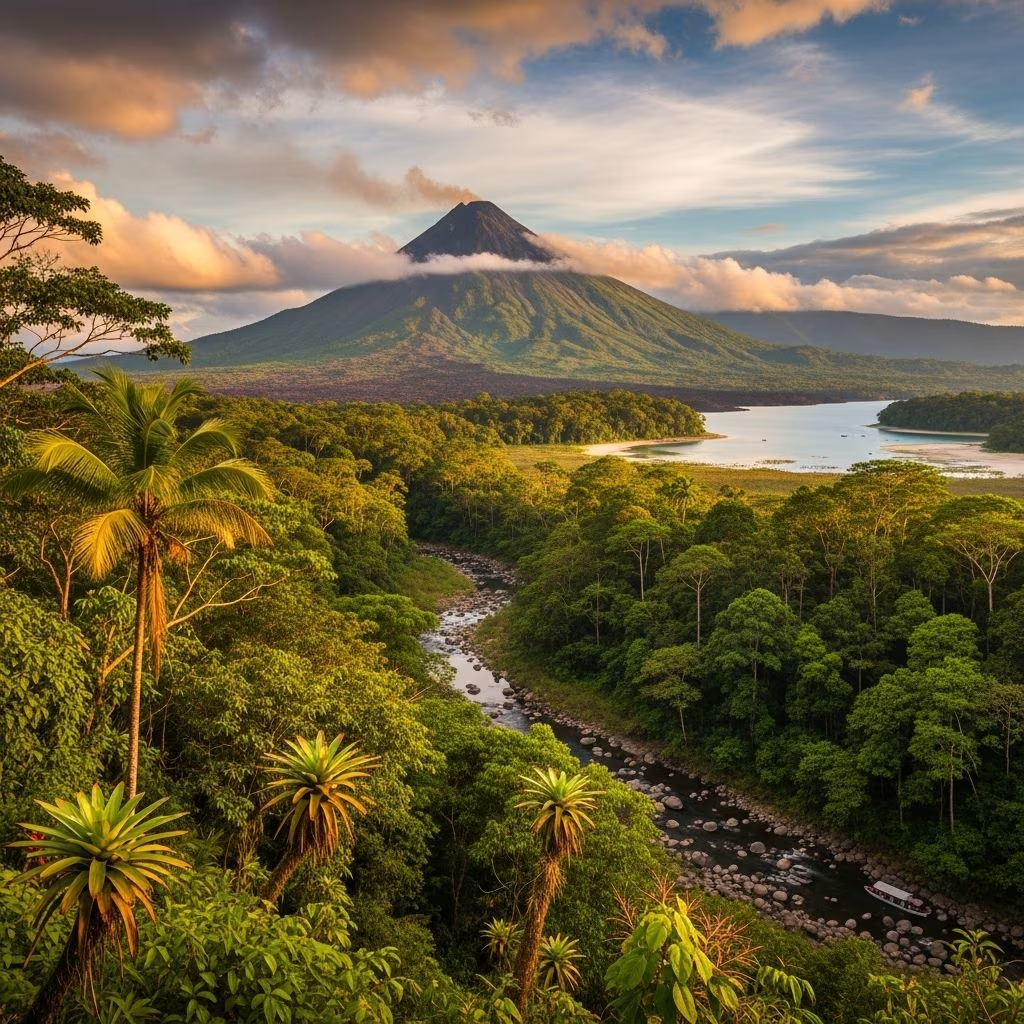
Dominating northern lowlands, Arenal’s perfect cone erupted dramatically until 2010, now luring hikers to lava fields and old-growth forest. Trails skirt the base, revealing quetzals and orchids amid secondary rainforests. Nearby hot springs, fed by volcanic heat, soothe post-hike muscles. La Fortuna town offers zip-lines and hanging bridges for canopy adventures. This park exemplifies Costa Rica’s dynamic landscapes for nature lovers.
Guatemala blends ancient ruins with lush reserves, where parks protect Maya legacies amid volcanic backdrops.
In Petén’s northern expanse, this 1,100+ square kilometer park anchors the Maya Biosphere Reserve, sheltering unbroken rainforest and over 40 Maya cities. El Mirador’s La Danta pyramid, soaring 70 meters, pierces the canopy as one of the world’s largest by volume. Multi-day treks or helicopter access reveal stelae and ball courts. Biodiversity rivals the Amazon, with jaguars, howler monkeys, and 300+ bird species. Archaeological digs continue, unveiling Preclassic Maya grandeur.
Though not always labeled strictly a national park, Tikal’s integration into Petén’s reserves makes it essential. Towering temples like Temple IV overlook jungle vistas, where spider monkeys swing and coatimundis forage. Dawn chorus of birds accompanies climbs, evoking ancient rituals. UNESCO-listed, it preserves Classic Maya peak, with reservoirs and palaces amid ceiba trees.
Panama’s parks guard untamed frontiers, from cloud forests to the infamous Darién Gap.
Central America’s largest park at 579,000 hectares, Darién straddles the Colombia border, embodying remoteness via the Darién Gap—an impenetrable jungle halting the Pan-American Highway. Emberá indigenous communities guide treks to Harpy eagle nests and tapir trails. Biodiversity explodes with 500+ bird species, including crimson-fronted parakeets. Boca de Cupe entry demands permits and stamina; rewards include pristine rivers and colossal ceiba trees. UNESCO status underscores its global importance.
Near Panama City, Soberanía offers accessible rainforest along Pipeline Road, a top birding trail hosting 525 avian species. Summit Trail challenges with elevation, revealing sloths and poison dart frogs. Proximity to the Canal adds engineering marvels to nature hikes.
Other nations shine with unique parks.
Central America’s parks cater to all levels.
| Park | Top Activity | Best Season | Difficulty |
|---|---|---|---|
| Corcovado | Multi-day trek | Dry: Dec-Apr | High |
| Tortuguero | Turtle watching | Jul-Oct | Low |
| Darién | Indigenous-guided hike | Dry: Jan-Mar | Extreme |
| Arenal | Volcano hike & springs | Year-round | Medium |
| El Mirador | Pyramid climb | Dry: Nov-Apr | High |
Pack insect repellent, sturdy boots, and rain gear. Book guides via park services for safety and ethics. Entry fees range $10-30 USD; multi-park passes save in Costa Rica.
Deforestation, poaching, and tourism pressure threaten these havens. Urban sprawl displaces wildlife, sparking human-animal conflicts. Support via low-impact travel: stick to trails, avoid single-use plastics, choose certified lodges. Donations to organizations like Costa Rica’s SINAC bolster ranger patrols.
Corcovado National Park hosts unparalleled species density, often called the most biologically intense place on Earth.
With guided tours, yes—stick to official paths and avoid after dark. Darién requires expert accompaniment due to remoteness.
Dry seasons (Dec-Apr) ease access; wet months boost turtle hatchings and bird migrations.
Absolutely—El Mirador and Tikal integrate Maya archaeology with nature immersion.
Flights via regional hubs like San José or Guatemala City; shuttles connect Costa Rican sites efficiently.
Combine parks for themed itineraries: Costa Rica’s Pacific-Caribbean loop, or Guatemala-Petén Maya trail. Budget 10-14 days for depth. These parks not only thrill but transform perspectives on conservation’s urgency. Venture forth responsibly for memories etched in emerald.
