

 Travel Essentials
 Travel Essentials

This guide highlights Chile's standout national parks, offering insights into their unique ecosystems, top activities, and essential travel tips for adventurers.
 Travel Essentials
Chile boasts an extraordinary array of national parks that showcase the country’s dramatic geography, from towering glaciers and jagged mountains in the south to arid deserts and volcanic fields in the north. These protected areas preserve unique biodiversity, ancient forests, and geological marvels, drawing hikers, wildlife enthusiasts, and nature lovers worldwide. Spanning over 40 parks managed by CONAF (Chile’s National Forestry Corporation), they offer experiences ranging from multi-day treks to serene boat cruises. This article delves into the most captivating ones, providing practical advice for your visit.
The southern regions, particularly Patagonia, host some of the world’s most photogenic natural spectacles. These parks feature granite spires, vast ice fields, and turquoise lakes, shaped by millennia of glacial activity.
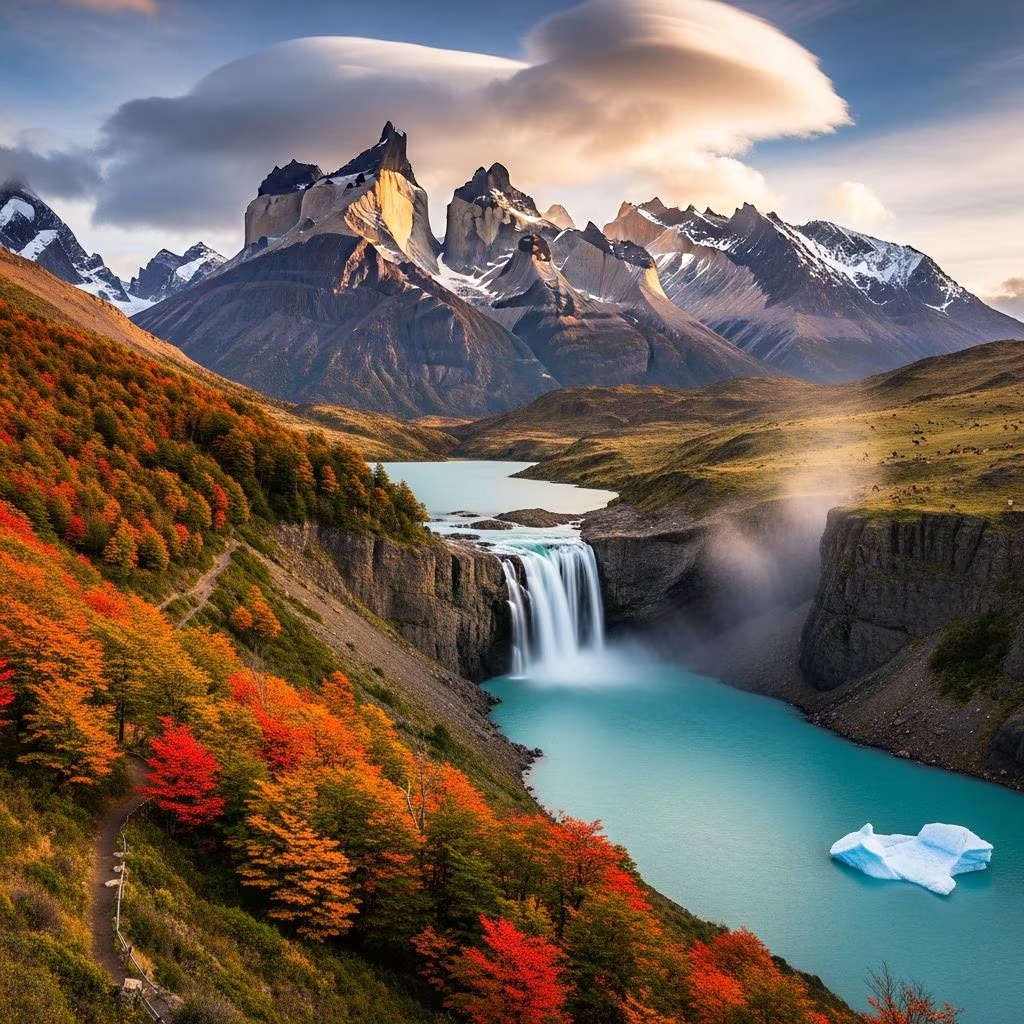
Encompassing 181,414 hectares in Chilean Patagonia, this park is renowned for its iconic granite towers rising dramatically from the plains, alongside glaciers, emerald lakes, and abundant wildlife like guanacos and pumas. The ‘W’ trek, a moderate 4-5 day route, winds through valleys, past the French Valley’s hanging glaciers, and up to the base of the towers for sunrise views. For longer adventures, the ‘O’ circuit circles the Paine Massif over 7-9 days. Winter transforms the landscape into a snowy wonderland for ice trekking on Grey Glacier. Access via Puerto Natales; entry fees around $30 USD for foreigners. Book refugios months ahead during peak season (November-March).
One of Chile’s largest parks at over 1.5 million hectares, this remote Tierra del Fuego gem is best explored by boat from Ushuaia or Punta Arenas. Navigate fjords teeming with dolphins, sea lions, and Magellanic penguins while glaciers calve into the sea. Land-based hikes reveal pristine forests and peaks like Mount Darwin. Ideal for those seeking solitude away from crowds; cruises last 4-7 days.
Central-southern Chile pulses with volcanic energy, where snow-capped cones, araucaria forests, and crystal-clear lakes create mystical settings for exploration.
Centered on the active Llaima Volcano (over 3,000m), this 60,000-hectare park in Araucanía blends lava fields, monkey puzzle trees, and alpine meadows. Hike the 12km Tronador trail to a viewpoint overlooking the cone, or explore Sussuquo Lake’s shores. Skiing in winter and wildflower blooms in summer add seasonal variety. Reachable from Temuco or Melipeuco; entry about $10 USD.
Near Pucón, this compact park protects ancient araucarias and glacial lakes amid rugged peaks. The Ñorquinco Lakes circuit (one day) passes waterfalls and lagoons, while the multi-day Sendero Los Lagos offers solitude. Spot pudú deer and condors. Perfect base for Villarrica Volcano day trips. Entry fee similar to Conguillío.
Chile’s Atacama region delivers stark beauty with towering dunes, salt flats, and marine reserves contrasting the hyper-arid interior.
This northern park near Copiapó features dramatic cliffs, over 27 cactus species, and ocean views. Boat to Isla Pan de Azúcar for sea lion, penguin, and otter colonies. Hike coastal trails spotting vicuñas and foxes under vast skies. Arid yet accessible; $15 USD entry for foreigners. Ideal for birdwatchers.
Lesser-known parks reveal Chile’s prehistoric heritage and massive ice reserves.
In Los Ríos, this park safeguards the ‘Gran Abuelo,’ a 5,000+ year-old alerce tree, older than the pyramids. Trails through coastal temperate rainforests lead to chaotic groves of these towering conifers. Combine with Valdivian coastal hikes. Emerging park; check CONAF for access.
Along the Carretera Austral, this park protects part of the Northern Patagonian Ice Field, the third-largest after Antarctica and Greenland. Boat tours approach the towering San Rafael Glacier amid iceberg-strewn lagoons. Kayak or hike shores for calving views. Multi-day cruises from Puerto Chacabuco.
Further north on the Austral highway, Queulat’s star is the Ventisquero Colgante, a massive hanging glacier cascading into the fjord. Trek the 3.5km trail for close-up views, or explore enchanted forests and waterfalls. Wildlife includes huemul deer. Lodging nearby in Puyuhuapi.
To maximize your trip, consider Chile’s geography: fly to Santiago, then connect south or north. Peak season is summer (Dec-Feb); shoulder seasons offer fewer crowds. Always pack layers, rain gear, and sun protection—weather shifts rapidly. CONAF requires permits for overnight treks; use apps like AllTrails for maps.
| Park | Region | Best Activity | Entry Fee (USD) | Difficulty |
|---|---|---|---|---|
| Torres del Paine | Patagonia | W Trek | ~30 | Moderate-Hard |
| Conguillío | Araucanía | Volcano Hike | ~10 | Moderate |
| Pan de Azúcar | Atacama | Boat Tour | 15 | Easy |
| Alerce Costero | Los Ríos | Forest Walk | Varies | Easy |
| Laguna San Rafael | Aysén | Glacier Cruise | Cruise-based | Easy |
Chile’s parks face threats from climate change, overtourism, and invasive species. Follow Leave No Trace: stick to trails, pack out waste, and support local guides. CONAF monitors fire risks—camp only in designated areas. Recent initiatives include expanded protected zones in Patagonia, bolstering biodiversity.
Southern parks like Torres del Paine shine in summer (Nov-Mar) for hiking; northern ones year-round, avoiding winter rains.
Day hikes no, but multi-day circuits require preparation or guides for safety and navigation.
Yes—easier trails in Huerquehue or Pan de Azúcar suit all ages; avoid strenuous Patagonian routes with kids.
Buses, rental cars, or domestic flights; Carretera Austral connects southern gems by scenic drive.
From pumas and condors in the south to penguins and flamingos in the north—bring binoculars!
Beyond the highlights, parks like Pumalín Douglas Tompkins offer fjords and volcanoes in raw Patagonia, while Rapa Nui (Easter Island) National Park features moai statues amid subtropical forests. Lauca in the Andes hosts flamingo lakes at 4,000m+. With ongoing conservation, Chile’s parks evolve, promising endless discovery.
Whether chasing adrenaline or serenity, these sanctuaries deliver unparalleled immersion in Earth’s raw power. Start planning—Chile’s outdoors await.
