

 Travel Essentials
 Travel Essentials

Explore the best national parks in Malawi, featuring Liwonde's boat safaris, Nyika's plateaus, and more for wildlife, hiking, and nature lovers.
 Travel Essentials
Malawi, often called the Warm Heart of Africa, boasts a stunning array of national parks and wildlife reserves that showcase its diverse ecosystems. From the misty highlands of the north to the serene waters of Africa’s third-largest lake in the south, these protected areas offer unparalleled opportunities for wildlife encounters, adventure activities, and serene escapes. Whether you’re gliding down rivers spotting elephants or trekking through rolling grasslands, Malawi’s parks deliver authentic safari experiences without the crowds of more famous destinations.
Malawi’s conservation efforts have transformed its parks into thriving havens. Managed by organizations like African Parks in partnership with the Department of National Parks and Wildlife, many reserves have seen remarkable recoveries. Poaching has decreased, animal populations have rebounded, and infrastructure has improved, making these spots accessible yet wild. Expect Big Five sightings, over 400 bird species in some areas, and activities like boat safaris, guided walks, and mountain biking. These parks span savannas, forests, wetlands, and mountains, providing varied landscapes for every traveler.
Nyika National Park stands as Malawi’s largest and oldest protected area, encompassing about 3,200 square kilometers of high-altitude plateau. Established in 1965, its name meaning “plateau” in Chitumbuka reflects the expansive grasslands dotted with wildflowers, acacia trees, and dramatic rocky outcrops. At elevations up to 2,600 meters, the cool climate sets it apart from Malawi’s tropical lowlands, offering brisk mornings ideal for exploration.
Wildlife here thrives in the open terrain. Herds of zebra, eland, and roan antelope roam freely, while predators like leopard and hyena lurk in the underbrush. Bird enthusiasts will delight in sightings of rare species such as the blue crane and red-winged francolin. The park’s floral diversity, with over 200 orchid varieties, makes it a botanist’s dream.
Liwonde National Park, along the Shire River south of Lake Malawi, is renowned for its boat-based safaris. Covering 548 square kilometers, this park has made a stunning comeback since African Parks took management in 2015. Once depleted by poaching, it now hosts the Big Five: lion, leopard, elephant, buffalo, and rhino, introduced through translocation efforts.
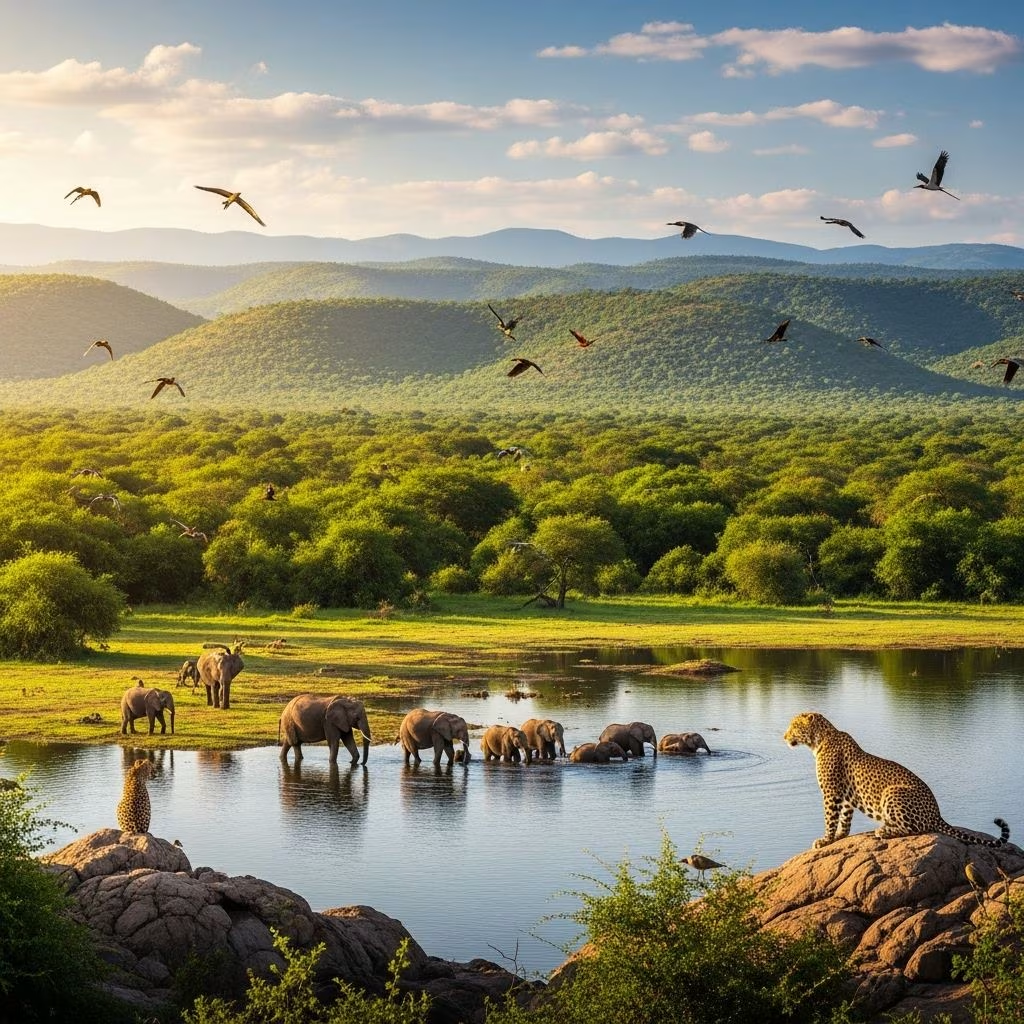
River cruises reveal hippo pods, Nile crocodiles basking on banks, and elephants drinking at water’s edge—often just meters away. Over 400 bird species, including Pel’s fishing owl, soar overhead. Game drives and walking safaris complement the watery adventures, immersing visitors in miombo woodlands and floodplains.
| Activity | Highlights | Duration |
|---|---|---|
| Boat Safari | Elephants, hippos, crocs | 2-3 hours |
| Game Drive | Big Five, antelopes | 3-4 hours |
| Walking Safari | Birds, tracks, plants | 2 hours |
Stay at Mvuu Camp or Lodge for luxury tents with river views.
In southern Malawi’s Lower Shire Valley, Majete Wildlife Reserve spans 720 square kilometers of dense woodland and riverine bush. African Parks’ reintroduction program has restocked it with over 2,500 animals, including all Big Five members. Black rhino, in particular, thrive here, with the highest density in Malawi.
Game drives reveal buffalo herds, lion prides, and elephant families amid fever trees and tamboti forests. Walking safaris with expert guides highlight smaller wonders like chameleons and dung beetles. Birdlife exceeds 300 species, from lilac-breasted rollers to schalows turaco.
Nkhotakota, one of Africa’s largest reserves at 1,800 square kilometers, hugs Lake Malawi’s shores in central Malawi. Revitalized by African Parks since 2015, it received 2,000+ elephants, 500 buffalo, and other species via massive translocations. The result: a rugged paradise of miombo forests, brachystegia woodlands, and dambos.
Elephant herds dominate, but sable antelope, hyena, and civet add intrigue. Over 280 birds include the batis and paradise flycatcher. Activities focus on immersion: canoe safaris on the Bua River, multi-day walks tracking elephants, and horse riding through grasslands.
The world’s first freshwater aquatic park, Lake Malawi National Park at Cape Maclear covers 87 square kilometers of lake and islands. A UNESCO World Heritage Site since 1984, it’s famed for its cichlid fish—over 1,000 endemic species in crystal-clear waters.
Snorkeling and diving reveal colorful mbuna fish amid rocky reefs. Kayak to Thumbi West Island for birdwatching (fish eagles, kingfishers). On land, yellow baboons and klipspringers roam. It’s perfect for relaxed eco-tourism with cultural village visits.
Kasungu National Park: Northern savanna with elephant herds and over 300 birds. Ideal for remote game viewing.
Lengwe National Park: Elephant haven in riverine forests, great for off-the-beaten-path hikes.
Mwabvi Wildlife Reserve: Small but diverse, with sable and waterbuck along the Mwabvi River.
Combine parks via scenic drives or flights. Dry season (May-October) is optimal; wet season brings lush greenery and fewer visitors. Budget for park fees ($10-30/day), guided activities ($50+), and lodges ($150-500/night). Support conservation by choosing eco-lodges and following Leave No Trace principles.
| Park | Size (km²) | Best Activity | Star Wildlife |
|---|---|---|---|
| Nyika | 3,200 | Hiking | Zebra, antelope |
| Liwonde | 548 | Boat safari | Elephants, Big Five |
| Majete | 720 | Game drive | Rhino, lion |
| Nkhotakota | 1,800 | Walking safari | Elephants |
| Lake Malawi | 87 | Snorkeling | Cichlids |
Liwonde offers safe boat safaris and easy wildlife viewing suitable for all ages.
Yes, Liwonde and Majete feature lion, leopard, elephant, buffalo, and rhino.
May to October, with dry conditions concentrating animals at water sources.
Yes, parks are well-managed; stick to guided activities and reputable lodges.
4×4 rentals, chartered flights, or buses; distances vary from 2-10 hours.
