

 Travel Essentials
 Travel Essentials

Explore Namibia's standout national parks: Etosha for safaris, Namib-Naukluft for dunes, Skeleton Coast for wilderness, and more unique reserves.
 Travel Essentials
Namibia’s national parks showcase a remarkable diversity of ecosystems, from vast salt pans teeming with wildlife to ancient dunes and rugged coastlines. These protected areas offer adventurers unparalleled opportunities to witness unique flora, fauna, and geological marvels. This guide delves into the country’s premier parks, highlighting their attractions, best visit times, and practical tips for an immersive experience.
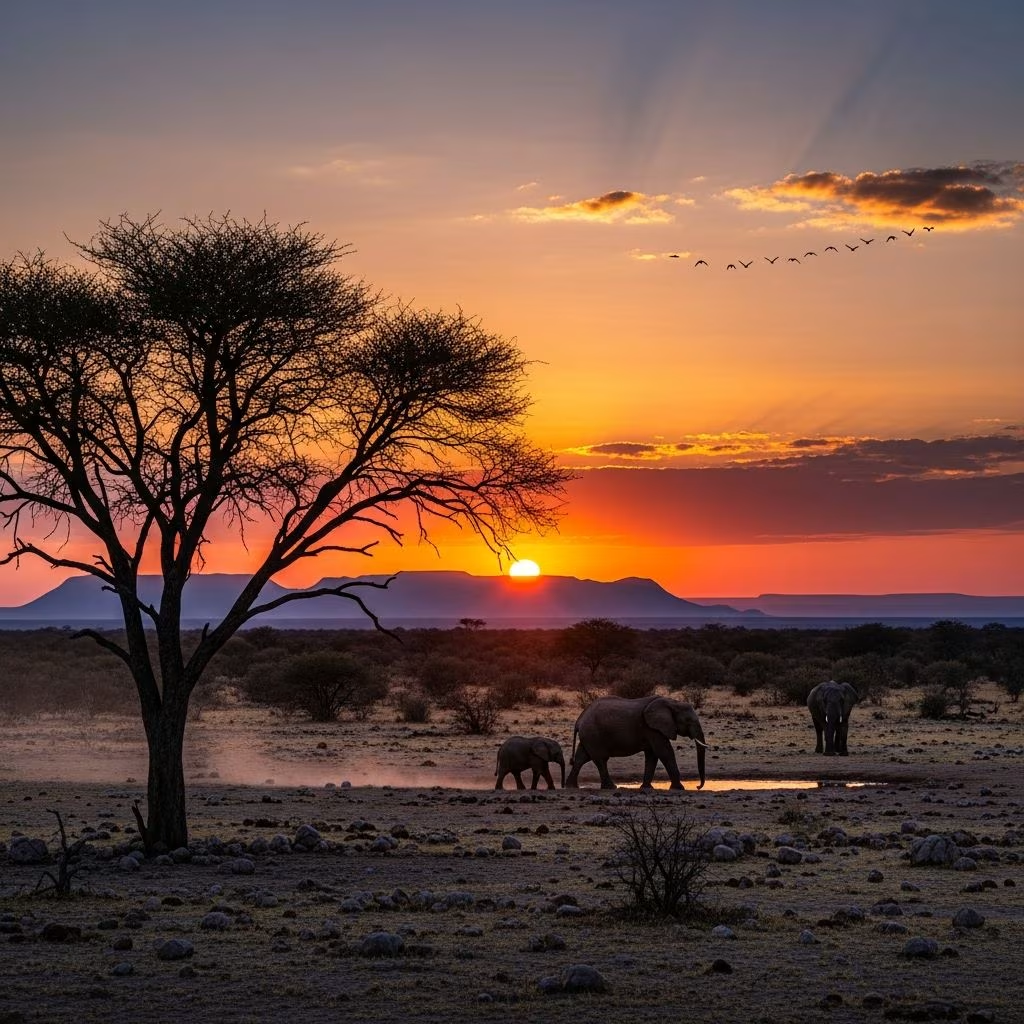
Etosha National Park stands as Namibia’s flagship conservation area and one of Africa’s largest, drawing visitors with its iconic salt pan and abundant wildlife. Spanning a vast area larger than many European countries, it hosts 114 mammal species, over 400 birds, and diverse reptiles. The massive Etosha Pan, visible from space, becomes a magnet for animals during the dry season as they converge at waterholes.
Expect sightings of elephants, lions, rhinos, giraffes, zebras, and cheetahs. The park’s savanna and woodland habitats support endangered species like black and white rhinos. Dry months from May to October offer prime game viewing, with animals clustering around permanent water sources. Infrastructure includes well-maintained roads ideal for self-drive safaris, rest camps, and floodlit waterholes for nighttime observations.
The Namib-Naukluft National Park encompasses nearly 50,000 square kilometers of dramatic desert terrain, including the world’s oldest desert. Iconic Sossusvlei features towering red dunes up to 300 meters high, while Deadvlei’s skeletal trees create surreal photography backdrops. Sesriem Canyon adds rugged beauty with its deep incisions carved by ancient rivers.
Desert-adapted wildlife like oryx, springbok, and jackals thrive here alongside Welwitschia plants, some over 1,000 years old. The park’s gravel plains, mountains, and Kuiseb Canyon offer hiking and 4×4 exploration. Visit from April to October for milder temperatures and clear skies. Permits are required, and early mornings beat the heat for dune climbs.
| Feature | Description |
|---|---|
| Sossusvlei Dunes | Towering orange-red sands, star-shaped formations |
| Deadvlei | Clay pan with dead camel thorn trees |
| Sesriem Canyon | 30m deep, 5km long gorge |
Stretching 500 kilometers along Namibia’s northern Atlantic coast, Skeleton Coast National Park blends fog-shrouded beaches, massive dunes, and shipwrecks in a haunting landscape. Named for whale and ship bones littering the shore, it evokes isolation with desert-adapted lions, hyenas, and seal colonies.
The park divides into southern (accessible) and northern (permit-only) sections. Highlights include the Huab River’s desert elephants and the remote Marienfluss for canyon scenery. Best visited June to October, it demands 4×4 vehicles and guided tours for safety amid shifting sands and unpredictable weather.
In Namibia’s northeast Zambezi Region, Bwabwata National Park contrasts the country’s aridity with Kalahari woodlands, floodplains, and the Kwando River. Herds of elephants, buffalo, and antelope roam freely, joined by 400 bird species in summer.
Boat safaris on the river reveal hippos and crocs, while game drives spot predators. As a newer park, it integrates community conservancies, supporting local livelihoods. Wet season (November-April) boosts birding; dry months favor mammal viewing. 4×4 recommended for tracks.
Nestled in the Caprivi Strip, Nkasa Rupara (formerly Mamili) protects expansive wetlands and floodplains along the Kwando and Linyanti Rivers. Namibia’s largest wetland park, it harbors elephants, buffalo, hippos, and rare antelopes like sitatunga. Birdlife explodes with 400+ species, including pelicans and kingfishers.
Access via 4×4 or guided mokoro (canoe) trips offers solitude amid papyrus swamps. Peak wildlife viewing aligns with dry season (May-October), though flooding enhances scenery year-round. Ideal for off-the-beaten-path explorers seeking biodiversity away from crowds.
Central Namibia’s Waterberg Plateau rises 200 meters as a sandstone table mountain, sheltering endangered species like black rhinos and sable antelope. Hiking trails wind through diverse habitats, from savanna to montane forest, with Cape vultures soaring overhead.
Nature drives and guided walks reveal endemic plants and geology. Cooler climate makes it visitable year-round, though May-September avoids summer rains. Lodges provide rhino tracking opportunities, emphasizing conservation successes.
Namibia’s parks demand preparation: rent 4×4 vehicles with roof tents, secure permits via Namibia Wildlife Resorts, and book campsites ahead. Combine Etosha with Damaraland for northern loops, or Sossusvlei with Swakopmund for southern routes. Budget for fuel, water, and entry fees (approx. N$80/adult/day). Malaria risk in northeast parks; use prophylaxis.
| Park | Size (km²) | Main Attraction | Access |
|---|---|---|---|
| Etosha | 22,270 | Salt pan wildlife | 2WD/4WD |
| Namib-Naukluft | 49,768 | Dunes & canyon | 4WD |
| Skeleton Coast | 16,845 | Coastal dunes | 4WD/permit |
| Bwabwata | 6,100 | River wildlife | 4WD |
Namibia pioneered community-based conservation, with parks generating revenue for locals. Support by choosing accredited lodges and avoiding off-road driving. Parks like Etosha have reduced rhino poaching through anti-poaching units. Respect ‘leave no trace’ principles to preserve these fragile ecosystems.
Etosha National Park excels for Big Five sightings and self-drive options.
Etosha allows 2WD, but most require 4×4 for remote tracks.
April-October for cooler weather and vivid colors.
Yes, fly-in or 4×4 guided trips are recommended for safety.
About 20, managed by Namibia Wildlife Resorts and ministry.
