

 Travel Essentials
 Travel Essentials

Explore the best national parks in Tanzania, featuring wildlife hotspots like Serengeti, Tarangire, and Nyerere, with tips for planning your safari.
 Travel Essentials
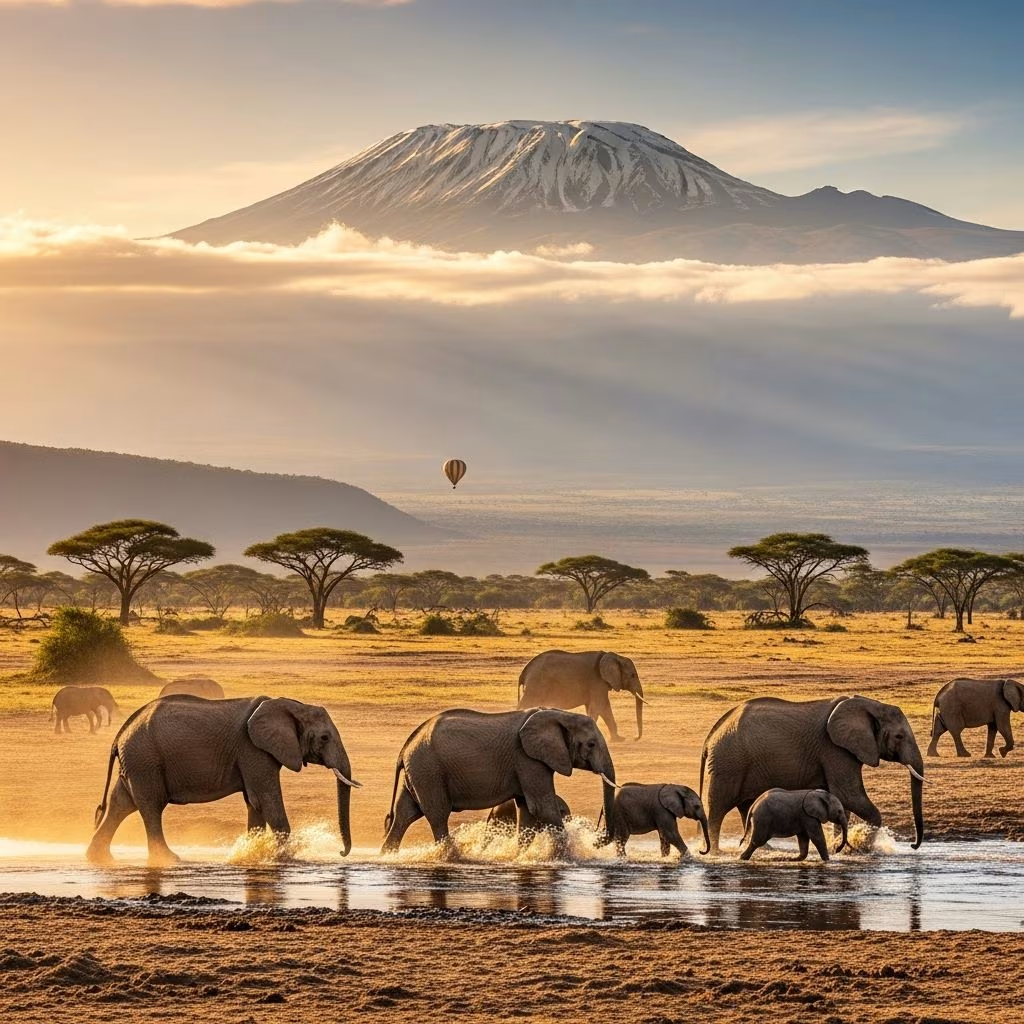
Tanzania boasts some of the world’s most spectacular national parks, offering unparalleled opportunities to witness Africa’s iconic wildlife against breathtaking backdrops. These protected areas span vast savannas, rugged mountains, lush forests, and serene lakes, drawing adventurers and nature enthusiasts from around the globe. Whether you’re chasing the drama of the Great Migration or seeking secluded primate encounters, Tanzania’s parks deliver diverse experiences.
With over 20 national parks managed by the Tanzania National Parks Authority, these reserves protect nearly 40% of the country’s land, safeguarding ecosystems teeming with the Big Five—lion, leopard, elephant, buffalo, and rhino—alongside thousands of bird species and unique flora. Parks like Serengeti and Ngorongoro Crater form part of the Northern Tanzania Circuit, accessible from Arusha, while southern gems like Ruaha offer off-the-beaten-path immersion. Conservation efforts have bolstered populations, such as Tarangire’s elephants, making visits both thrilling and impactful.
Spanning 5,600 square miles of endless plains—’Serengeti’ means ‘endless plains’ in Maasai—this park hosts the planet’s most spectacular wildlife event: the Great Migration of over two million wildebeest, zebras, and gazelles. Predators like lions, cheetahs, and hyenas stalk the herds year-round, peaking from June to October in the south and west. The Seronera region in the center offers reliable game viewing, with kopjes (rocky outcrops) sheltering leopards. Hot-air balloon safaris provide aerial views of this dynamic ecosystem.
Accommodations range from luxury tented camps to budget lodges, with guided drives essential for safety and spotting hidden gems. Best visited June to October for dry-season concentrations, though birding peaks November to April.
South of Arusha, this 1,771-square-mile park is renowned for its massive elephant herds—up to 2,500 individuals—gathering around seasonal rivers during the dry months (June to October). Towering baobab trees dot the landscape, alongside oryx, gerenuk, and frequent leopard sightings. It’s an ideal first safari stop due to proximity to Kilimanjaro Airport.
Swamps and woodlands support over 550 bird species, including the striking yellow-collared lovebird. Walking safaris and night drives reveal nocturnal life, setting it apart from busier parks.
Not a traditional park but a UNESCO World Heritage Site within the Ngorongoro Conservation Area, this 100-square-mile crater floor is a natural enclosure teeming with dense wildlife. Lions, black rhinos, and flamingos thrive here year-round, with the Lerai Forest famed for old bull elephants. Descend via steep tracks for six-hour game drives, often spotting the Big Five in hours.
Maasai communities graze livestock on the rim, blending culture with conservation. Optimal visits are during dry seasons to avoid slippery roads.
East Africa’s largest park at 19,252 square miles, Nyerere dazzles with riverine forests, miombo woodlands, and Rufiji River floodplains. Boat safaris reveal hippos, crocs, and rare antelopes like sable and eland, while walking safaris offer intimate bush encounters. It’s a Big Five stronghold with fewer crowds.
Fly-in access from Dar es Salaam enhances its remoteness. Prime time: June to October for dry conditions ideal for fly-camping.
Tanzania’s second-largest park at 7,800 square miles, Ruaha centers on the life-giving Great Ruaha River, attracting elephants, lions, and wild dogs. Baobabs crown rocky hills, and dry-season game concentrations rival the Serengeti. Established in 1910, recent expansions include wetlands boosting biodiversity.
Excellent for photographers, with rare sightings of cheetahs and bat-eared foxes. Lodges perch on escarpments for sunset views.
This compact gem hugs a soda lake, famous for tree-climbing lions lounging in acacias. Flamingo flocks paint the water pink seasonally, joined by elephants and over 400 bird species. Groundwater forests host Sykes’ monkeys and blue monkeys.
Ideal for day trips from Arusha, with canopy walkways adding adventure. Visit November to June for bird abundance.
Bordering Nyerere, Mikumi’s open plains mirror the Serengeti but with fewer visitors. Lions hunt amid giraffes and eland near baobabs and waterholes. Dry season (June to October) concentrates game along the Mkata River.
Just four hours from Dar es Salaam, it’s perfect for short safaris. Elephants and buffalo herds are common sights.
On Lake Tanganyika’s eastern shores, these remote parks protect habituated chimpanzees. Gombe, studied by Jane Goodall, offers forest treks amid waterfalls and butterflies. Mahale’s Mahale Mountains backdrop chimpanzee tracking with pristine beaches.
Access by boat or charter flight; best July to October or December to March. Combine with swimming in the lake.
| Park | Highlight | Best For |
|---|---|---|
| Rubondo Island | Chimps, sitatunga, 400+ birds | Birders, lake safaris |
| Mt Kilimanjaro | Africa’s highest peak | Hiking, climbs |
| Katavi | Hippo pools, remote bush | True wilderness |
| Udzungwa Mountains | Endemic primates, hikes | Trekking |
Best Time to Go: Dry season (June-October) for migrations and concentrations; green season (November-May) for fewer crowds and newborn animals.
Getting There: Fly into Kilimanjaro (northern parks) or Dar es Salaam (southern). Internal flights connect remote areas.
Costs and Tips: Budget $300-800/day including park fees ($50-80/person), guides, and lodging. Book with reputable operators; pack neutral clothes, binoculars, and malaria prophylaxis.
Sustainable Travel: Stick to tracks, support community tourism, avoid single-use plastics.
Tarangire or Lake Manyara offer accessible, diverse wildlife without overwhelming crowds.
Yes, reliably in Serengeti, Ngorongoro, and Nyerere.
Absolutely, with family lodges and guided activities; children under 6 restricted in some areas like Ngorongoro.
10-14 days covers northern highlights; add 7 for southern circuit.
June-July in the west; August-October crossing Mara River in the north.
