
 Stays
StaysStays
Best Neighborhoods in Rome: Where to Stay for Every Traveler
A comprehensive guide to Rome's distinctive neighborhoods, from historic centers to residential gems, helping travelers find their ideal Roman experience.
 Stays
StaysRome’s appeal extends far beyond its most famous landmarks. While the Colosseum and Vatican attract millions annually, the city’s true character emerges through its diverse neighborhoods, each offering distinct atmospheres, culinary traditions, and local experiences. Understanding these districts allows travelers to move beyond surface-level tourism and immerse themselves in authentic Roman culture. This guide explores the neighborhoods that define modern Rome, providing insights into where different types of travelers should consider staying and what makes each area uniquely compelling.
The Historic Core: Understanding Centro Storico’s Timeless Appeal
At the geographical and cultural heart of Rome lies Centro Storico, the Historic Center, which represents centuries of architectural and cultural evolution compressed into a remarkably walkable area. This neighborhood functions as a living museum where ancient ruins coexist with Renaissance palaces, Baroque fountains, and medieval alleyways. The historic center encompasses multiple distinct sub-neighborhoods, each with particular character traits and attractions.
Centro Storico demonstrates Rome’s palimpsest nature—layers of history visible in nearly every street corner. Travelers choosing to stay here gain unparalleled proximity to major attractions and can experience how Romans have inhabited this space for over two millennia. The neighborhood’s compactness means that many significant sites sit within reasonable walking distance, making it ideal for first-time visitors who wish to maximize their sightseeing efficiency.
The trade-off for this convenience involves navigating crowded streets, especially during peak tourist seasons, and typically paying premium prices for accommodations and dining. However, the neighborhood offers excellent dining variety and provides entry points for understanding Rome’s complex history through its architectural styles and public spaces.
West Bank Charm: Trastevere’s Bohemian Spirit and Culinary Scene
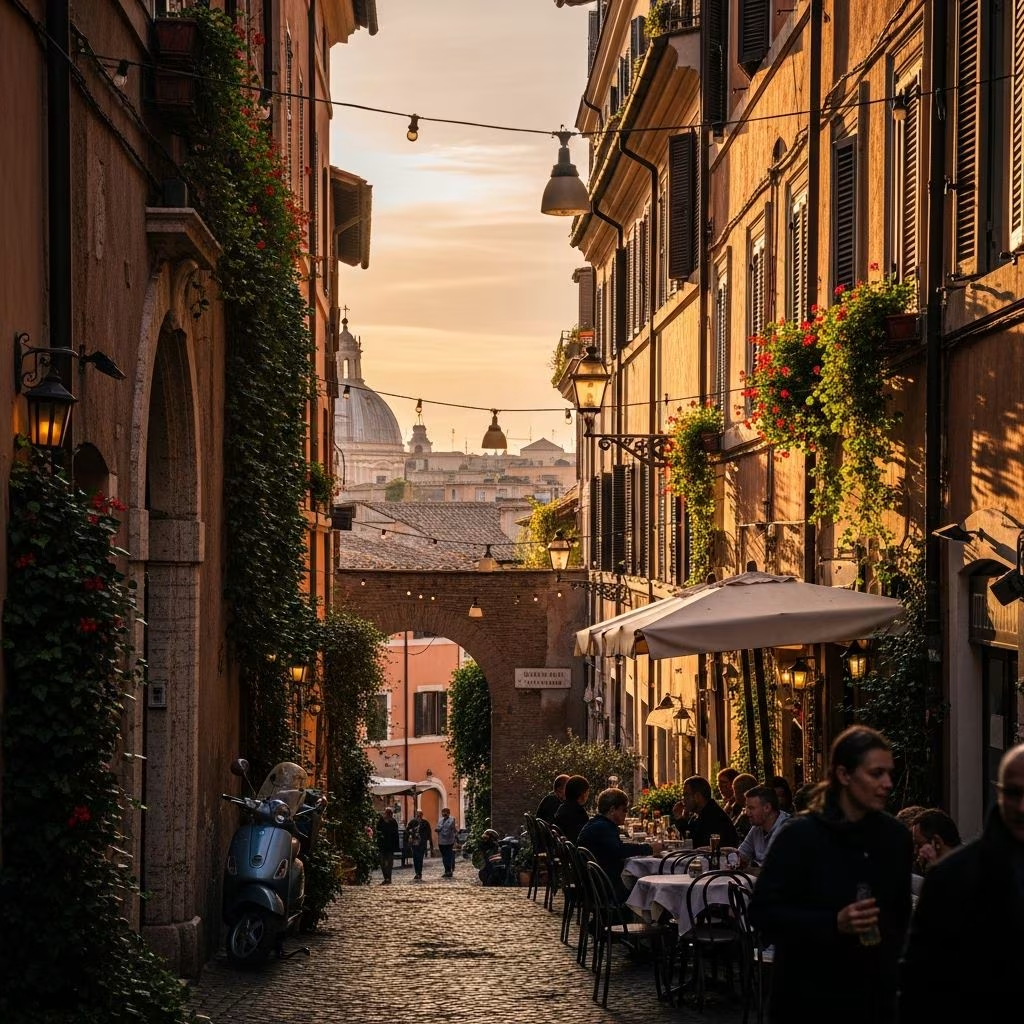
Separated from the historic center by the Tiber River, Trastevere occupies Rome’s western bank and has cultivated a reputation as the city’s bohemian heart. This neighborhood’s narrow, winding cobblestone streets create an intimate, village-like atmosphere that contrasts sharply with the monumental grandeur of Centro Storico. The area comes alive after sunset, when its numerous piazzas transform into social hubs where locals and visitors converge for aperitivos and dinner.
Trastevere’s appeal rests partly on its food culture. The neighborhood has developed as a destination for serious eaters, with restaurants ranging from traditional trattorias serving multi-generational family recipes to innovative establishments reinterpreting classical Roman cuisine. The evening scene generates particular energy, with dining areas spilling onto cobblestone plazas and creating spontaneous street performances and social interactions.
The neighborhood maintains a delicate balance between local authenticity and visitor accommodation. While gentrification has brought upscale establishments, traditional Roman families continue living and conducting daily life in Trastevere, preserving genuine neighborhood character. Travelers seeking vibrant nightlife, excellent food, and charming medieval streetscapes find Trastevere compelling, though it attracts significant tourist traffic that can diminish the sense of discovery.
Modern Elegance: Prati’s Architectural Refinement and Family-Friendly Infrastructure
Located just across the Tiber from Vatican City, Prati represents a distinctly different Rome aesthetic from the historic center. Developed during the early twentieth century, this neighborhood showcases neoclassical architecture and Art Nouveau palazzi arranged along wide, tree-lined avenues. The architectural uniformity and planned layout create a sense of urban sophistication and order that distinguishes Prati from Rome’s more chaotic medieval districts.
Prati has emerged as particularly appealing for families and travelers seeking refined, measured environments. The neighborhood provides wide sidewalks suitable for strollers, safe streets where children can navigate comfortably, and proximity to Villa Borghese Park, Rome’s premier green space. The residential character means that restaurants cater primarily to local families rather than tourists, resulting in quality establishments with prices reflecting local rather than visitor economics.
The proximity to St. Peter’s Basilica and Vatican Museums makes Prati strategically valuable for those prioritizing religious sites. The Ottaviano metro stop provides convenient access to central Rome’s attractions despite the neighborhood’s northwesterly location. Prati’s combination of architectural beauty, practical amenities, and sophisticated atmosphere attracts travelers seeking a more residential, less tourist-saturated experience while maintaining easy access to major destinations.
Trendy Urban District: Monti’s Cultural Evolution and Central Positioning
Northeast of the Forum and colosseum, Monti has undergone significant transformation over recent decades, evolving from an undiscovered neighborhood to one of Rome’s trendiest addresses. The district occupies a strategically central location between Roma Termini station, the Colosseum, and the historic center, making it exceptionally convenient for travelers prioritizing accessibility. This centrality, combined with its cultural cachet, has attracted boutique hotels, stylish restaurants, and artisanal shops that appeal to younger, culturally-engaged travelers.
Monti’s character emerges from its bar and restaurant scene, which has become notably diverse, ranging from traditional Roman establishments to contemporary international cuisines. The neighborhood’s popularity among locals creates an atmosphere of neighborhood vitality and authenticity, despite its tourist visibility. For travelers interested in experiencing how Rome’s younger residents socialize and spend leisure time, Monti provides compelling insights.
The neighborhood’s central positioning offers substantial practical advantages. Proximity to major archaeological sites eliminates the necessity for lengthy metro rides or complex transit navigation. However, Monti’s trendiness and accessibility have made it popular, potentially diminishing the sense of discovery compared to less-visited areas.
Specialized Neighborhoods for Specific Traveler Preferences
Ponte District: Located within Centro Storico between the Tiber and Piazza Navona, Ponte balances tourist attractions with relative insulation from overwhelming crowds. The neighborhood offers reasonable walking distances to St. Peter’s Basilica westward and the Pantheon and Trevi Fountain eastward, making it ideal for travelers seeking central positioning without maximum congestion. The area provides excellent dining opportunities and a strong sense of authentic neighborhood character.
Testaccio: Located just outside Rome’s center, this working-class neighborhood has preserved strong local identity and cultural traditions. Testaccio’s distinction emerges from its exceptional food culture—the area has garnered recognition as Rome’s culinary destination, with traditional restaurants serving generational recipes and innovative chefs sourcing from local producers. The neighborhood possesses historic authenticity and contemporary vitality, attracting food-focused travelers and those seeking genuine Roman life beyond tourist zones.
Monteverde Vecchio: This verdant neighborhood, north of Castel Sant’Angelo, emphasizes natural beauty through extensive green spaces including Villa Sciarra and Villa Doria Pamphilj. Travelers seeking peaceful Roman life combined with architectural exploration find Monteverde Vecchio compelling, particularly for extended stays where daily ambling through elegant streets and examining palazzo courtyards provides its own satisfaction.
Budget-Conscious Alternatives: Neighborhoods including Garbatella and San Lorenzo offer practical advantages for budget travelers, providing access to excellent restaurants, authentic Roman residential character, and prices significantly lower than central areas. While requiring metro access to central attractions, these areas provide immersion in how Romans actually live outside tourist-focused zones.
Comparative Neighborhood Analysis
| Neighborhood | Primary Appeal | Best For | Price Level | Metro Access |
|---|---|---|---|---|
| Centro Storico | Historic landmarks, walkability | First-time visitors | High | Excellent |
| Trastevere | Food, nightlife, atmosphere | Foodies, evening activities | High | Good |
| Prati | Architecture, family amenities | Families, Vatican proximity | Moderate-High | Good |
| Monti | Trendy, central location | Cultural travelers, younger visitors | Moderate-High | Excellent |
| Testaccio | Food culture, authentic living | Foodies, cultural explorers | Moderate | Good |
Strategic Selection Criteria for Neighborhood Choice
Choosing an optimal neighborhood requires honest assessment of personal travel priorities. Travelers prioritizing efficiency and landmark access benefit from central locations despite higher prices and crowds. Those seeking vibrant social scenes and exceptional dining should consider Trastevere or Testaccio. Families with young children find Prati’s practical infrastructure particularly valuable. Budget-conscious travelers discover authentic Roman life in peripheral neighborhoods despite requiring transit to central attractions.
The optimal neighborhood varies based on trip duration, interests, and social preferences. Longer stays allow experimentation with quieter peripheral areas, while shorter visits justify central positioning for maximum efficiency. Travelers interested in contemporary Roman culture find different neighborhoods compelling than those prioritizing archaeological exploration or religious sites.
Frequently Asked Questions
Which neighborhood should first-time visitors choose?
Centro Storico provides optimal first-visit experience through unmatched landmark proximity and historical density. However, Monti offers similar accessibility with less overwhelming crowds and stronger food and bar scenes.
What’s the best neighborhood for families with children?
Prati combines practical infrastructure including wide sidewalks and nearby parks with Vatican proximity and residential character. The neighborhood provides safe, walkable streets and family-oriented restaurants.
Where can travelers find the most authentic Roman food experiences?
Testaccio has emerged as Rome’s culinary destination, offering traditional restaurants serving generational recipes. Trastevere provides excellent dining in historically significant settings, though with more tourist visibility.
Which neighborhoods offer the best value for budget travelers?
San Lorenzo and Garbatella provide authentic residential experience, excellent restaurants, and significantly lower prices than central areas. These neighborhoods require metro access to central attractions but offer genuine Roman living.
Is it possible to avoid excessive tourist crowds?
Neighborhoods including Testaccio, Monteverde Vecchio, and San Lorenzo see substantially fewer tourists while maintaining authentic character. Staying in these areas requires prioritizing neighborhood experience over landmark proximity.
Practical Considerations for Neighborhood Selection
Beyond atmospheric preferences, practical considerations influence neighborhood suitability. Metro connectivity varies across neighborhoods, with central areas offering superior access to all parts of Rome. Accommodation availability and price escalation occur most dramatically in Centro Storico and Trastevere. Noise levels differ substantially, with medieval center neighborhoods experiencing street-level activity throughout evening hours, while residential neighborhoods like Prati offer quieter sleeping environments.
Seasonal variations affect neighborhood appeal. Summer heat makes Trastevere’s narrow streets appealing for afternoon shade but creates evening crowding. Winter’s quieter periods favor exploring residential neighborhoods without overwhelming tourist infrastructure.
Conclusion: Matching Neighborhood to Travel Vision
Rome’s neighborhoods offer remarkably diverse experiences, from monumental history to bohemian charm to elegant residential peace. The optimal choice depends on aligning personal travel values with each district’s particular character. First-time visitors typically benefit from central positioning despite crowds and prices, gaining efficient access to major sites while establishing basic Rome familiarity. Return visitors and those prioritizing specific experiences—food culture, quiet residential living, vibrant social scenes—discover compelling alternatives beyond the tourism circuit. Rome rewards travelers who venture beyond predetermined tourist routes and invest time understanding how different neighborhoods embody the city’s multifaceted character.
References
- A guide to the best (and coolest) neighborhoods in Rome — Expedia Magazine. December 2025. https://www.expedia.com/magazine/best-coolest-rome-neighborhoods
- Best Neighborhoods to Stay in Rome – Scenic and Savvy — Scenic and Savvy. https://www.scenicandsavvy.com/best-neighborhoods-to-stay-in-rome/
- Rome Neighborhood Guide: 6 Areas Locals Love — Italy Segreta. https://italysegreta.com/rome-neighborhood-guide/
- Best Neighborhoods in Rome for Every Kind of Traveler — City Unscripted. https://www.cityunscripted.com/travel-magazine/rome-neighborhoods
- Where To Stay In Rome: A Complete Guide For First Timers — Wheatless Wanderlust. https://wheatlesswanderlust.com/where-to-stay-in-rome/
On This Page
The Historic Core: Understanding Centro Storico's Timeless Appeal West Bank Charm: Trastevere's Bohemian Spirit and Culinary Scene Modern Elegance: Prati's Architectural Refinement and Family-Friendly Infrastructure Trendy Urban District: Monti's Cultural Evolution and Central Positioning Specialized Neighborhoods for Specific Traveler Preferences Comparative Neighborhood Analysis Strategic Selection Criteria for Neighborhood Choice Frequently Asked Questions Practical Considerations for Neighborhood Selection Conclusion: Matching Neighborhood to Travel Vision← Previous
Best Things to Do in Turin, Italy: Royal Palaces, Museums & Food
Next →
Best Places to Visit in Kyrgyzstan: Mountains, Lakes & Silk Road Gems
Related Reading