

 Travel Essentials
 Travel Essentials

A comprehensive guide to Belgium's premier botanical gardens, historic parks, and natural reserves showcasing diverse landscapes and seasonal beauty.
 Travel Essentials
Belgium, despite its reputation as a densely populated European nation, harbors an impressive collection of botanical treasures and natural retreats. These verdant spaces provide respite from urban environments while showcasing the country’s commitment to preserving botanical heritage and natural beauty. From meticulously maintained formal gardens to sprawling nature reserves, Belgium’s parks and gardens represent centuries of horticultural tradition and contemporary conservation efforts.
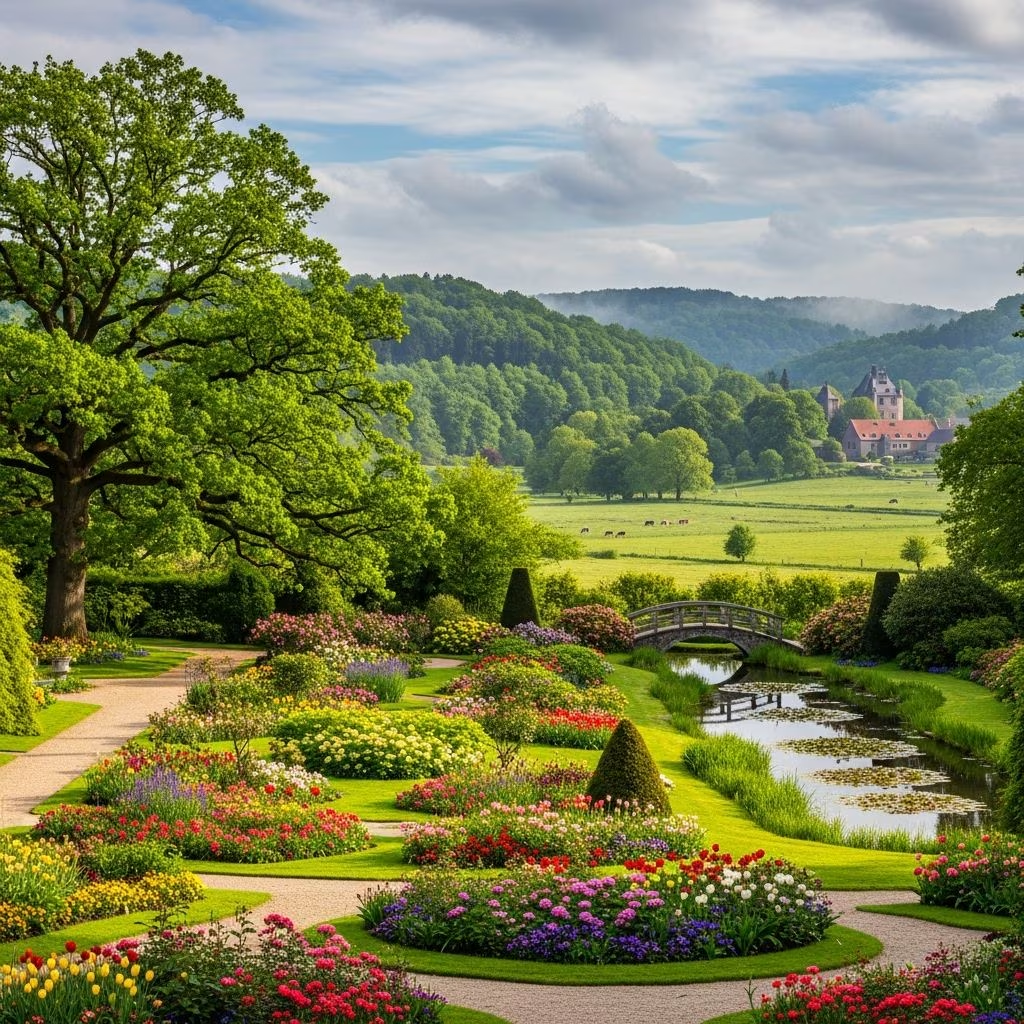
The gardens and parks throughout Belgium reflect a rich cultural history deeply influenced by neighboring European traditions. Belgian gardens typically resemble either Dutch or French garden styles, with most of the Belgian gardens open to the public dating from the Baroque period. This architectural and design heritage means visitors encounter carefully composed landscapes that balance human artistry with natural elements, creating spaces that are both aesthetically refined and emotionally restorative.
Belgian horticultural spaces serve multiple functions within their communities. They function as repositories for rare and endangered plant species, educational institutions for botanical science, recreational areas for local residents, and cultural landmarks that attract international visitors. The diversity of these spaces means that whether visitors seek contemplative solitude or family recreational activities, Belgium’s green infrastructure accommodates varied preferences and interests.
Among Belgium’s most significant botanical institutions stands the Meise Botanic Garden, located just outside Brussels in the municipality of Meise. Founded in 1796, Meise Botanic Garden pre-dates Belgium as a nation and is home to Europe’s largest, most enthralling network of greenhouses. This venerable institution occupies 92 hectares of carefully curated landscape. Within its boundaries, 20,000 plant species from all over the world grow in a large, green oasis, either outside in the domain, or inside in one of iconic glasshouses.
The garden functions as a world-class research facility alongside its role as a public attraction. Visitors traverse greenhouse collections representing diverse climatic zones and ecosystems, encountering tropical plants, desert specimens, and temperate flora in carefully controlled environments. Seasonal variations ensure that the garden presents different botanical displays throughout the year, making repeat visits rewarding for dedicated nature enthusiasts.
In Brussels, the Cinquantenaire Park stands out with its grand arch and museums, while the nearby Royal Greenhouses of Laeken showcase stunning Art Nouveau architecture and exotic plants. These adjacent destinations provide contrasting experiences within the Belgian capital. The Cinquantenaire Park presents a more expansive, public-access landscape ideal for leisurely strolls and outdoor recreation, while the Royal Greenhouses offer architectural splendor combined with horticultural excellence.
The Coloma Rose Garden is the largest, most beautiful rose garden in Europe, an enchanting 15-hectare park ideal for a romantic stroll. Located in Sint-Pieters-Leeuw, this specialty garden focuses exclusively on rose cultivation, creating an environment where thousands of rose varieties flourish across the expansive grounds. The garden’s seasonal peak occurs during bloom periods, when the entire landscape transforms into waves of color and fragrance. Beyond aesthetic appeal, the garden functions as a horticultural research center studying rose genetics, disease resistance, and cultivar development.
Jean Massart Botanical Garden: Scientific Focus
Botanical Garden Jean Massart is a five-hectare garden created to study the adaptation of wild plants to their environment, featuring three themed gardens: a collection of 400 species of medicinal plants, a collection of cultivated plants and a themed garden illustrating the evolution of flowering plants. This specialized institution prioritizes scientific research and educational programming, offering visitors insight into plant adaptation mechanisms and ethnobotanical relationships between humans and flora.
The Gaasbeek Museum Garden represents Belgium’s commitment to preserving aristocratic garden design traditions. Located at Kasteelstraat 40 in Gaasbeek, this garden showcases unparalleled world-class gardening craftsmanship. The garden functions as an extension of the Gaasbeek Castle museum, creating an immersive historical experience that contextualizes garden design within the broader narrative of European aristocratic life and aesthetic values.
At Le Paige Castle in Herentals, exhibitions run almost year-round and are free to visit, with an arboretum also available to explore. This venue combines cultural programming with botanical interest, allowing visitors to experience both contemporary and historical artistic expressions within naturalistic settings. The integration of cultural events with botanical spaces exemplifies how contemporary institutions repurpose historic properties for multifaceted community benefit.
The Rivierenhof in Deurne is one of the most diverse and active parks in Belgium, with a surface of 132 hectares of park to explore featuring two castles: Sterckshof and Rivierenhof. This expansive facility near Antwerp accommodates numerous recreational activities including jogging, cycling, cultural events, and family outings. The park maintains opening hours from 6:30am to 10:30pm with free entrance. The presence of multiple castles within the park grounds adds architectural and historical dimensions to what might otherwise function as a purely recreational space.
In Bruges, the Minnewater Park offers a romantic setting with its “Lake of Love” and swans. This smaller, more intimate park exemplifies how Belgian green spaces cater to specific visitor experiences and emotional atmospheres. The presence of water features and associated wildlife creates distinctive sensory environments that differentiate parks from one another and appeal to visitors seeking particular moods or settings.
Citadel Park in Ghent is a 19th-century park built on former fortifications. This park exemplifies urban renewal strategies that transform military infrastructure into recreational and cultural spaces. The historical context enriches visitor experiences by providing narrative layers that enhance understanding of urban development and landscape transformation.
The Sonian Forest is a vast beech forest spanning several municipalities around Brussels. This expansive natural reserve represents one of Europe’s significant remaining old-growth beech forests, offering experiences fundamentally different from designed gardens. The forest provides ecological habitat, research opportunities for forestry and ecology professionals, and recreational access for hiking and nature observation.
Located in the commune of Tervuren just outside Brussels’s city center, Tervuren Park provides an accessible natural retreat adjacent to the Royal Museum for Central Africa. The park encompasses extensive forested areas with interconnected pathways traversing through woodlands and around lakes. The landscape hosts diverse wildlife populations, particularly around aquatic zones where fishermen frequent the shores. The park’s seasonal variations prove particularly striking during autumn foliage transitions and early spring when newly emerged vegetation creates delicate visual tapestries as sunlight filters through the canopy. The park is home to Flanders’ largest Giant Redwood tree and hosts substantial wildlife inhabiting the lake and trees.
Arboretum Kalmthout represents one of Belgium’s significant tree collections. This specialized facility focuses on woody plant cultivation, offering visitors opportunities to learn about tree species diversity, growth characteristics, and ecological roles. Arboretums provide educational value while serving conservation functions for rare tree species.
The Collection Hugo Voeten is located at Art Center Hugo Voeten in Herentals and Sculpture Garden Hugo Voeten in Geel-Westerlo, each offering a unique environment for unique art in the green heart of the Antwerp Kempen region. These facilities demonstrate innovative approaches to integrating contemporary art with natural landscapes, creating multimedia experiences that engage visitors through multiple sensory and intellectual pathways.
Belgium’s horticultural attractions present notably different experiences across seasons. Spring activates gardens with fresh growth and flowering displays, while summer provides lusher, fuller botanical landscapes. Autumn transforms parks into color-rich environments as deciduous species change foliage. Even winter offers particular beauty in evergreen collections, frost-decorated plantings, and bare-branched tree structures that reveal architectural forms obscured during growing seasons.
Many premier gardens and parks cluster within specific regions, enabling efficient touring strategies. Brussels’s surrounding municipalities concentrate multiple significant botanical institutions, allowing visitors to experience multiple destinations within single excursions. Similarly, Antwerp-area parks like Rivierenhof provide extensive facilities within compact geographic areas.
Most major Belgian gardens and parks maintain accessible pathways accommodating visitors with mobility considerations. Many facilities offer visitor centers, rest areas, and refreshment options, though planning ahead ensures satisfactory experiences. Research regarding specific accessibility features and amenity availability proves worthwhile before visits, particularly for visitors with specific requirements or preferences.
Belgium’s botanical institutions increasingly emphasize conservation missions alongside recreational and educational functions. Climate change, habitat loss, and species extinction pressures have heightened the conservation significance of maintained botanical collections and protected natural reserves. These institutions contribute to species preservation, genetic diversity maintenance, and ecological research essential for addressing contemporary environmental challenges.
Spring and early autumn typically offer optimal visiting conditions, though each season presents distinct botanical displays. Spring showcases flowering displays and new growth, while autumn features dramatic foliage color changes.
Most outdoor parks remain accessible year-round, though specific facilities within gardens may have seasonal closures. Check individual venue websites for current access information and seasonal programming.
Most major gardens accommodate walk-in visitors, though certain special events or group visits may benefit from advance notice. Individual venues maintain varying policies regarding reservations and group access.
Belgium’s excellent public transit infrastructure connects most major gardens and parks to train stations and bus networks. Research specific venue locations for optimal transit route planning.
