

 Travel Essentials
 Travel Essentials

Explore London's finest parks: sizes, histories, attractions, and tips for Hyde Park, Richmond Park, and more in this comprehensive guide.
 Travel Essentials
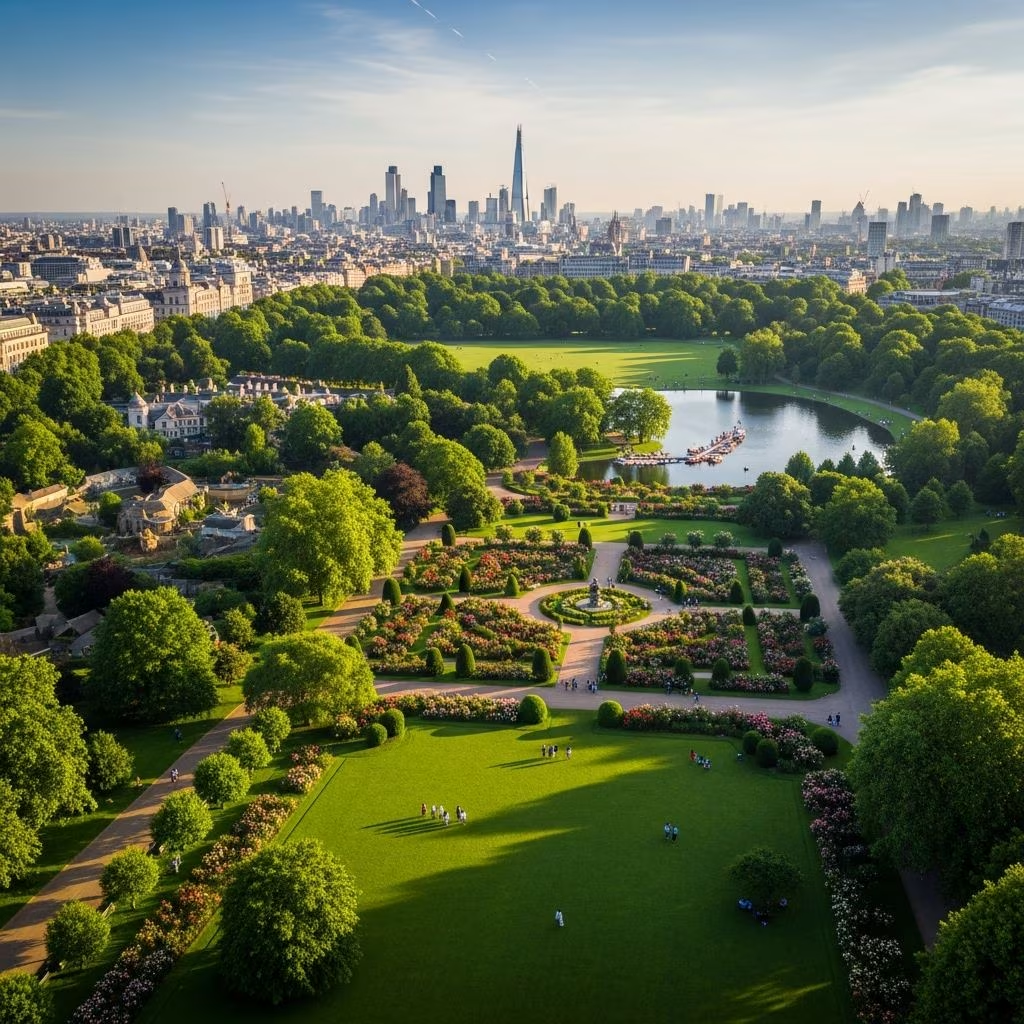
London boasts an impressive network of parks and open spaces that offer residents and visitors alike a respite from the bustling city life. These green havens range from expansive royal estates spanning hundreds of hectares to compact urban retreats, providing spaces for recreation, wildlife viewing, and historical exploration. With over 25% of the city dedicated to parks, there’s no shortage of options for picnics, jogs, or serene walks. This guide highlights the standout locations, drawing from official records and visitor insights to help you plan your perfect outing.
The city’s parks are managed by entities like The Royal Parks agency, which oversees eight iconic sites covering thousands of acres. These include ancient woodlands, manicured gardens, and lakeside paths that have evolved over centuries. Royal Parks such as Hyde Park and Richmond Park dominate in size and popularity, attracting millions annually for events, sports, and nature immersion. Beyond the royals, community greenspaces in areas like Tottenham add local flavor with playgrounds and sports facilities.
Key factors make these parks exceptional: vast sizes for exploration (e.g., Richmond Park at 955 hectares), diverse activities from boating to deer spotting, and prime locations near landmarks like the Thames or palaces. Visitor ratings on platforms like Tripadvisor underscore their appeal, with Hyde Park topping lists at over 22,000 reviews.
At the heart of the city, central parks provide easy access and royal heritage. These are ideal for short visits combined with sightseeing.
Spanning 140 hectares, Hyde Park is London’s most visited green space, open to the public since the early 1600s. Its central Serpentine lake supports boating and swimming, while expansive lawns host concerts and protests. Speakers’ Corner remains a hub for free speech debates. Families enjoy playgrounds and the Rose Garden, making it a versatile spot akin to New York’s Central Park. Early mornings suit joggers, with paths circling the water for scenic runs.
The oldest Royal Park, St. James’s covers a modest area near Buckingham Palace, famed for its lake, pelicans, and manicured flowerbeds. Views of the palace and Whitehall make it photogenic. Cafés overlook fountains, perfect for afternoon tea. It’s a peaceful contrast to busier neighbors, ideal for birdwatching with species like black swans.
At 166 hectares, Regent’s Park features formal gardens, a boating lake, and the London Zoo nearby. Primrose Hill offers panoramic city views, especially at sunset. Sports fields and playgrounds cater to active visitors, while rose gardens bloom vibrantly in summer. It’s a favorite for picnics and kite-flying.
Venture outward for larger, wilder parks with room to roam.
Adjacent to Hyde Park at 107 hectares, this royal garden hosts the Peter Pan statue and Diana Memorial Playground. Italian Gardens by the Serpentine provide serene fountains and flowerbeds. The Albert Memorial adds grandeur, drawing culture seekers. Shady paths suit stroller-friendly walks.
Along the Thames south bank, this 83-hectare park from the 1850s features a zoo, carousel, and art installations. Festivals and markets animate weekends. Pump House Gallery showcases contemporary exhibits, blending nature with urban art.
The largest at 955 hectares, Richmond Park feels like countryside within city limits. Free-roaming deer herds, ancient oaks, and Isabella Plantation’s woodland gardens are highlights. King Henry’s Mound frames St. Paul’s Cathedral through a telescope. Cyclists and hikers love the perimeter trails; spring azaleas dazzle.
These areas offer less crowded alternatives with unique vibes.
Covering 74 hectares with Roman roots, Greenwich Park crowns a hill overlooking the Thames, Canary Wharf, and beyond. The Royal Observatory marks the Prime Meridian; picnic spots abound under ancient trees. Flower gardens and deer enhance the 17th-century landscape.
Second-largest at 445 hectares near Hampton Court Palace, it’s wild with deer and water features like the Longford River. Cycle paths and polo fields attract sports enthusiasts. Woodland areas provide shaded escapes.
North London’s Finsbury Park offers compact green space for events and runs. Alexandra Park, at 80 hectares, includes a lido and ice rink. Tottenham’s gems like Downhills Park feature BMX tracks and gyms.
| Park | Size (hectares) | Key Attractions | Best For |
|---|---|---|---|
| Richmond Park | 955 | Deer, Isabella Plantation, views | Hiking, nature |
| Bushy Park | 445 | Deer, cycles, palace proximity | Cycling, picnics |
| Hyde Park | 140 | Serpentine, Speakers’ Corner | Events, boating |
| Regent’s Park | 166 | Zoo, rose gardens, hill views | Families, views |
| Greenwich Park | 74 | Observatory, Thames panorama | History, photos |
Activities span yoga in Hyde Park, birding in St. James’s, to mountain biking in local parks. Accessibility varies; most have paths for wheelchairs, with cafés and restrooms.
Enter free anytime (dawn to dusk typically). Use Oyster cards for nearby Tube stops. Pack picnics but use bins; dogs welcome on leads. Events like Winter Wonderland in Hyde Park require tickets. Check Royal Parks site for closures. Weatherproof gear is essential for UK’s variable climate.
Richmond Park at 955 hectares, ideal for wilderness feels.
Yes, entry is free; some attractions like zoos charge separately.
Regent’s Park with playgrounds and zoo, or Kensington’s Diana Playground.
Yes, in Richmond, Bushy, and Greenwich—keep distance.
Santander Cycles available; dedicated paths in Bushy and Richmond.
These parks thrive through conservation efforts, protecting biodiversity amid urban growth. Volunteer opportunities via Royal Parks support maintenance. Visitors contribute by sticking to paths and avoiding litter, ensuring future generations enjoy these treasures.
