

 Travel Essentials
 Travel Essentials

Explore Mexico City's best parks, from Chapultepec's vast forest to hidden green refuges, with tips for shade, history, and family fun.
 Travel Essentials
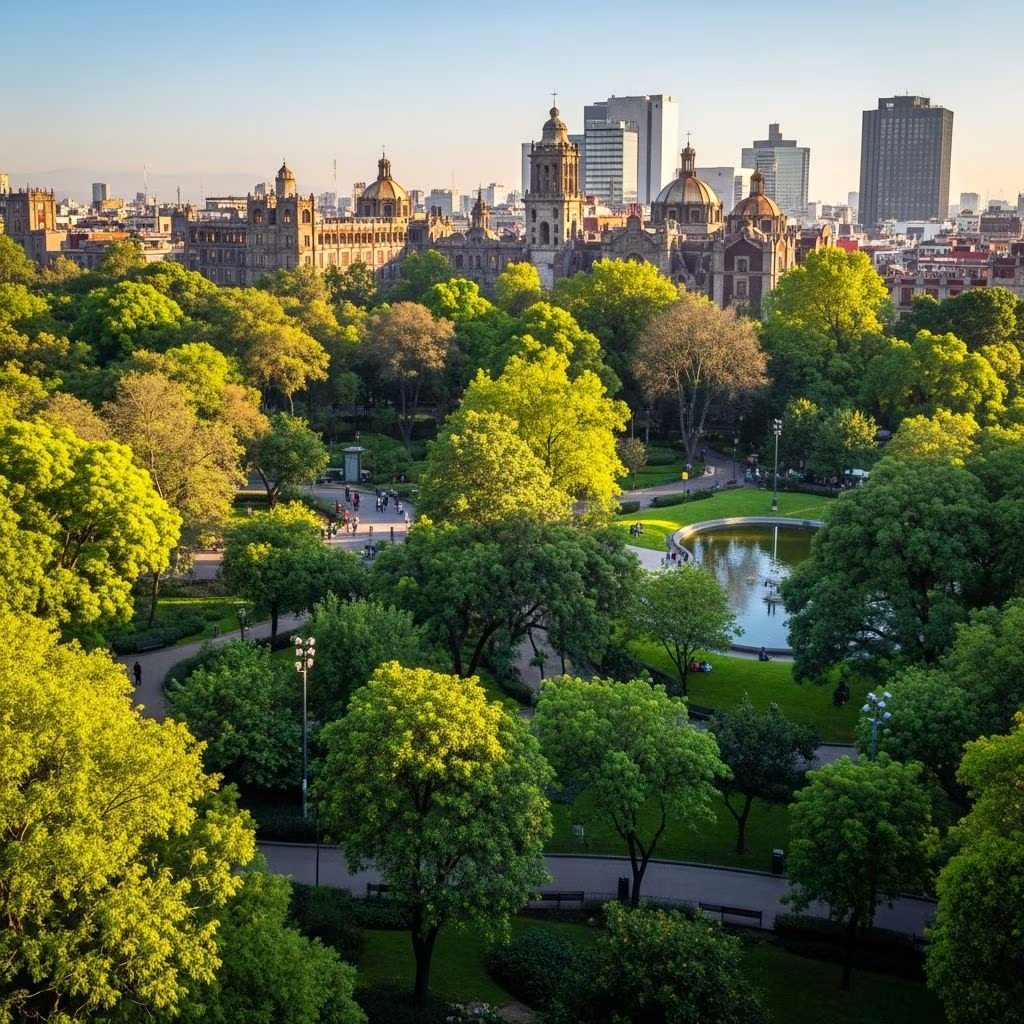
Mexico City, a sprawling metropolis of over 21 million inhabitants, presents a fascinating paradox—amid towering skyscrapers and bustling thoroughfares lies an impressive network of parks and green spaces that serve as the city’s lungs. These meticulously maintained reserves and gardens represent centuries of urban planning, ecological preservation, and recreational innovation. For visitors and locals alike, these verdant oases provide respite from the urban intensity, opportunities for physical activity, cultural exploration, and meaningful connection with nature.
Dominating the landscape of central Mexico City, the Bosque de Chapultepec stands as one of Latin America’s most significant urban parks. Spanning an impressive 1,700 acres, this expansive woodland reserve surpasses the size of New York City’s Central Park, creating a genuinely immersive forest experience within the metropolitan core. The park’s origins trace back centuries, with the name deriving from Nahuatl meaning “grasshopper hill,” reflecting the area’s pre-Hispanic significance.
The Bosque comprises multiple interconnected sections, each offering distinct attractions and experiences. Visitors encounter architectural landmarks, including Chapultepec Castle, which crowns the highest point and provides panoramic views of the city sprawl below. The park integrates recreational facilities, cultural institutions, and natural forest segments seamlessly. Towering native trees create dense canopies that filter sunlight and moderate temperatures, making even hot afternoons pleasantly bearable.
Within this vast territory, the Bosque de Chapultepec Botanical Garden showcases Mexico’s remarkable botanical diversity. Though modest in size, the garden presents specimens adapted to various Mexican climate zones, from tropical lowland species to high-altitude alpine varieties. Visitors can observe numerous cacti species and tropical orchids within climate-controlled greenhouse structures.
The park also houses Mexico City’s most renowned zoological facility, the Zoológico de Chapultepec. This institution maintains a comprehensive collection designed for both entertainment and educational enrichment, making it particularly appealing for families seeking combined cultural and natural experiences.
Predating most European parks, Alameda Central claims distinction as the oldest park in the Americas, established in 1592. This rectangular park occupies a ceremonial position in Mexico City’s downtown core, surrounded by iconic architectural landmarks and serving as a focal point for civic gatherings. The historic significance cannot be overstated—nearly half a millennium of continuous public use has woven Alameda Central into the fabric of Mexican urban identity.
The contemporary park design incorporates elements specifically chosen to enhance visitor experience and aesthetic appeal. Dancing fountains punctuate the landscape, creating dynamic focal points and providing auditory delight amid urban noise. Carefully selected lavender plantings border the paved pathways, infusing the space with subtle fragrance and visual charm. The surrounding sidewalk restaurants and cafés have transformed adjacent areas into vibrant social zones, particularly popular on weekends when families, couples, and friends converge to enjoy the public commons.
For first-time visitors to Mexico City, Alameda Central represents an essential cultural touchstone, offering not merely recreational opportunity but direct connection to the city’s historical foundations and evolving identity as a modern metropolis with deep historical roots.
La Condesa neighborhood has emerged as one of Mexico City’s most cosmopolitan and culturally vibrant districts, and its parks reflect this sophisticated character. Parque México and its neighboring Parque España represent complementary green spaces designed with European aesthetic principles and integrated into the neighborhood’s social fabric.
Parque México occupies a distinctive oval configuration, situated within the center of Avenida Amsterdam, a street originally engineered as an equestrian racing track during the early twentieth century. The 1920s conversion transformed this sporting venue into a expansive recreational park, incorporating the original elliptical boundary into its design. Today, soaring indigenous and imported tree species create an intricate canopy system that provides substantial shade from Mexico City’s intense midday sun. The abundant tropical vegetation integrates seamlessly with European landscape design principles, creating an unusual and appealing synthesis of aesthetics.
Parque México has earned recognition as among the city’s most attractive and socially welcoming parks. Numerous walking paths wind through the landscape, each bordered by magnificent trees and punctuated by soothing fountains. The surrounding restaurants and cafés have created a bustling gastronomic scene, transforming the park into a destination for both dining and relaxation. Locals and visitors frequent the space for morning coffee, evening strolls, and social gatherings.
Parque España, located two blocks to the northwest, offers an alternative aesthetic while maintaining the neighborhood’s character. This park has become particularly popular among younger demographics and creative professionals, earning the informal designation as “hipster central” within Mexico City’s neighborhood taxonomy.
Beyond the grand urban parks, Mexico City maintains several specialized botanical and ecological reserves designed to preserve biodiversity and support scientific research. The UNAM (National University) Botanical Garden and adjoining ecological reserve represent significant conservation efforts within the metropolitan area. These facilities combine public accessibility with rigorous academic research, creating hybrid spaces where recreation and scientific inquiry coexist.
Located in the southern regions of Mexico City, Bosque de Tlalpan and the adjacent Fuentes Brotantes National Park create interconnected green corridors. These sprawling verdant reserves serve multiple functions simultaneously—they provide critical habitat for native species while offering recreational opportunities for runners, picnickers, and nature enthusiasts. The landscape diversity within these reserves reflects Mexico’s varied topography and climate zones.
The Viveros de Coyoacán represent a unique category of park—a working nursery that simultaneously functions as a major recreational destination. Spanning 39 hectares (approximately 4.2 million square feet), these grounds provide what residents describe as crucial “lungs” for the southern portions of Mexico City. Once visitors cross the entrance, the ambient noise of the surrounding urban environment recedes, replaced by natural soundscapes dominated by birdsong and rustling leaves.
The name directly reflects the park’s primary function—the site incorporates an extensive tree and plant nursery where Mexico’s native and cultivated species are propagated for distribution throughout the city and region. This operational dimension distinguishes the Viveros from purely recreational parks. In 1901, the renowned engineer and researcher Miguel Ángel de Quevedo donated an initial hectare of land to establish Mexico’s first formal forestry nursery. Over more than a century, this institution has expanded significantly while maintaining its core conservation and propagation mission.
The Viveros provide valuable recreational infrastructure while simultaneously advancing ecological restoration and urban greening initiatives. Visitors can observe forestry operations directly, gaining practical understanding of how cities maintain and expand their green infrastructure systems.
Contemporary Mexico City parks incorporate specialized recreational facilities designed to appeal to diverse age groups and activity preferences. Parque la Hormiga, situated on the southern side of Chapultepec Park’s first section, exemplifies innovative approaches to children’s recreation. Rather than traditional playground equipment, the park features large steel structures artfully shaped to represent ants and other arthropods, each incorporating ropes and bars that create climbing challenges. Some of these sculptural frames extend several meters skyward, allowing children to achieve substantial height while engaging in creative play.
This design philosophy—combining art, nature education, and physical challenge—reflects evolving understanding of how to design recreational spaces that develop motor skills while maintaining aesthetic sophistication and ecological sensitivity.
| Park Name | Primary Features | Best For |
|---|---|---|
| Bosque de Chapultepec | Forest, castle, zoo, museums, botanical gardens, lakes | Full-day family visits, cultural exploration |
| Alameda Central | Historic fountains, lavender plantings, downtown location | Historical appreciation, weekend gatherings |
| Parque México | Tree-shaded paths, fountains, restaurants, European design | Morning walks, social dining, photography |
| Viveros de Coyoacán | Working nursery, extensive green space, nature trails | Peaceful nature immersion, ecological learning |
| Parque la Hormiga | Sculptural climbing structures, innovative play design | Children’s recreation, active play |
Early mornings and late afternoons provide optimal conditions—cooler temperatures, softer light, and fewer crowds. Weekdays generally offer more peaceful experiences than weekends.
Most major parks, particularly Bosque de Chapultepec and Alameda Central, maintain security presence and attract substantial visitor traffic. Exercise standard urban precautions, particularly in less populated areas during evening hours.
Bosque de Chapultepec’s dense forest canopy and Parque México’s extensive tree coverage provide superior shade compared to more open spaces.
Most parks are completely free. Specialized facilities like the zoo and certain museums charge separate admission.
Bosque de Chapultepec and Parque México offer numerous restaurants and cafés. Other parks typically have limited food service.
Mexico City’s parks operate year-round, though seasonal variations affect visitor comfort and experience. During the rainy season (May through October), afternoon thunderstorms are common but typically brief. The dry season (November through April) provides more predictable weather conditions. Elevation—Mexico City sits at approximately 2,250 meters above sea level—affects some visitors, who may experience minor altitude-related symptoms during first visits.
Public transportation efficiently connects most major parks to other city destinations. The Bosque de Chapultepec benefits from dedicated Metro stations, making access straightforward for visitors without personal vehicles. Parque México sits within the walkable La Condesa neighborhood, accessible via multiple transit options.
Water intake is essential given the city’s elevation and potentially intense sun exposure. Most parks provide water fountains or nearby vendors. Protective sunscreen and comfortable walking shoes significantly enhance park experiences.
Mexico City’s parks transcend simple recreational function—they represent deliberate choices to preserve ecological systems within an urban environment, maintain historical continuity, and provide equitable access to natural beauty across diverse socioeconomic communities. From the monumental Bosque de Chapultepec to the intimate Viveros de Coyoacán, from the historically venerable Alameda Central to the socially vibrant Parque México, these spaces reveal how thoughtful urban planning can integrate nature, culture, and recreation into the metropolitan fabric.
Whether seeking solitary contemplation, family recreation, historical connection, or simple respite from urban intensity, Mexico City’s parks offer varied and compelling options. These verdant sanctuaries deserve recognition as essential infrastructure that enhances quality of life while advancing broader ecological and cultural objectives.
