

 Travel Essentials
 Travel Essentials

A comprehensive guide to Patagonia's premier national parks featuring trekking routes, accommodation options, wildlife viewing, and practical planning advice for adventurers of all skill levels.
 Travel Essentials
Patagonia stands as one of the world’s most dramatic and unspoiled wilderness regions, stretching across the southern reaches of Chile and Argentina. This vast territory encompasses some of the most spectacular national parks in South America, each offering distinctive landscapes ranging from jagged granite peaks to massive ice fields and pristine glacial valleys. For travelers seeking authentic adventures in nature, these protected areas provide unparalleled opportunities to experience genuine Patagonian ecosystems with minimal infrastructure.
The region’s national parks have evolved significantly in recent years, transforming from exclusive destinations accessible only to experienced mountaineers into increasingly welcoming spaces for diverse visitor populations. Whether you’re a first-time hiker seeking manageable day excursions or a seasoned trekker prepared for multi-day wilderness traverses, Patagonia’s conservation areas offer experiences tailored to various experience levels and physical capabilities. Understanding the unique characteristics of each park, along with practical considerations for visiting, enables travelers to craft meaningful experiences within these remarkable landscapes.
Patagonia encompasses approximately 900,000 square kilometers across Chile and Argentina, characterized by dramatic topography that includes the Southern Patagonian Ice Field, the Andes mountain range, and vast steppe ecosystems. The region experiences a temperate climate with significant seasonal variations, creating distinct advantages for visiting during particular times of year. The landscape’s geological history, shaped by glaciation over millennia, has resulted in distinctive features including deep valleys, turquoise-colored glacial lakes, and granite mountain formations that define the region’s aesthetic character.
The ecological importance of Patagonia extends beyond its visual splendor. These national parks protect critical habitats for endangered species including pumas, guanacos in substantial populations, the threatened huemul deer, and iconic Andean condors. The preservation of these ecosystems represents a significant commitment to conservation in South America, ensuring that future generations can experience Patagonia’s natural heritage relatively unchanged from its pre-industrial state.
Located in southern Chile’s Magallanes region, Torres del Paine National Park functions as the most recognized and frequently visited destination within Patagonia’s protected areas. The park’s defining feature comprises three distinctive granite towers—the torres—that rise dramatically from the landscape, creating some of the most photographed mountain formations on Earth. Established as a national park in 1959, Torres del Paine has evolved into a sophisticated trekking destination offering trails suited to various ability levels and time constraints.
The W Trek represents the most celebrated hiking route within Torres del Paine, offering accessibility for moderately conditioned hikers while delivering spectacular scenery throughout its course. This linear trek spans approximately 100 kilometers and requires four to five days to complete, though the route can be modified to accommodate different schedules and fitness levels. The W Trek’s design allows visitors to experience the park’s most iconic landscapes while maintaining relatively manageable daily distances.
The trek’s three primary segments showcase distinct Patagonian environments: the approach to Base of the Towers reveals the park’s namesake granite formations, the French Valley traverse passes through dramatic alpine terrain, and the Grey Glacier section introduces visitors to Patagonia’s extensive ice formations. Rather than requiring continuous overnight camping, the W Trek accommodates various lodging preferences, from mountain refugios offering communal accommodations to comfortable hotel stays with daily hike variations.
For experienced hikers seeking comprehensive Patagonian immersion, the O Circuit provides an extended alternative that loops entirely around the park, spanning approximately six to nine days. This more demanding route traverses diverse ecosystems ranging from temperate forests to high-altitude plateaus, offering greater solitude and deeper engagement with the landscape compared to the popular W Trek.
Torres del Paine provides extensive visitor support systems that distinguish it from more remote Patagonian destinations. Multiple refugios positioned strategically along trekking routes offer comfortable overnight accommodations with prepared meals, reducing the logistical burden of self-catering wilderness travel. These facilities represent substantial investments in visitor accessibility, enabling individuals uncomfortable with backcountry camping to experience serious trekking within the park.
The park’s infrastructure extends to comprehensive transportation networks, with shuttle services connecting major trailheads and lodging facilities. This organized approach contrasts sharply with more isolated Patagonian parks, making Torres del Paine particularly suitable for first-time visitors to the region or those with limited time for extensive wilderness travel.
Argentina’s premier contribution to Patagonian conservation, Los Glaciares National Park encompasses 4,459 square kilometers of protected territory centered on the Perito Moreno Glacier and associated ice formations. This park, established in 1937, represents one of Argentina’s most significant natural heritage sites and receives substantial international visitor traffic due to the accessibility of its primary glacier feature.
Perito Moreno Glacier distinguishes itself through its accessibility compared to other Patagonian ice formations. A network of walkways and observation platforms positioned at varying elevations enables visitors to observe the glacier’s dynamic surface from multiple perspectives without requiring mountaineering experience. The glacier’s persistent advance and periodic calving events create dramatic visual experiences that attract photographers and casual visitors alongside serious naturalists.
For those seeking more immersive glacial engagement, the park offers advanced trekking options that ascend onto active glacier surfaces with appropriate technical equipment and experienced guides. These experiences transition park visitors from passive observation into active participation within Patagonia’s most austere environments.
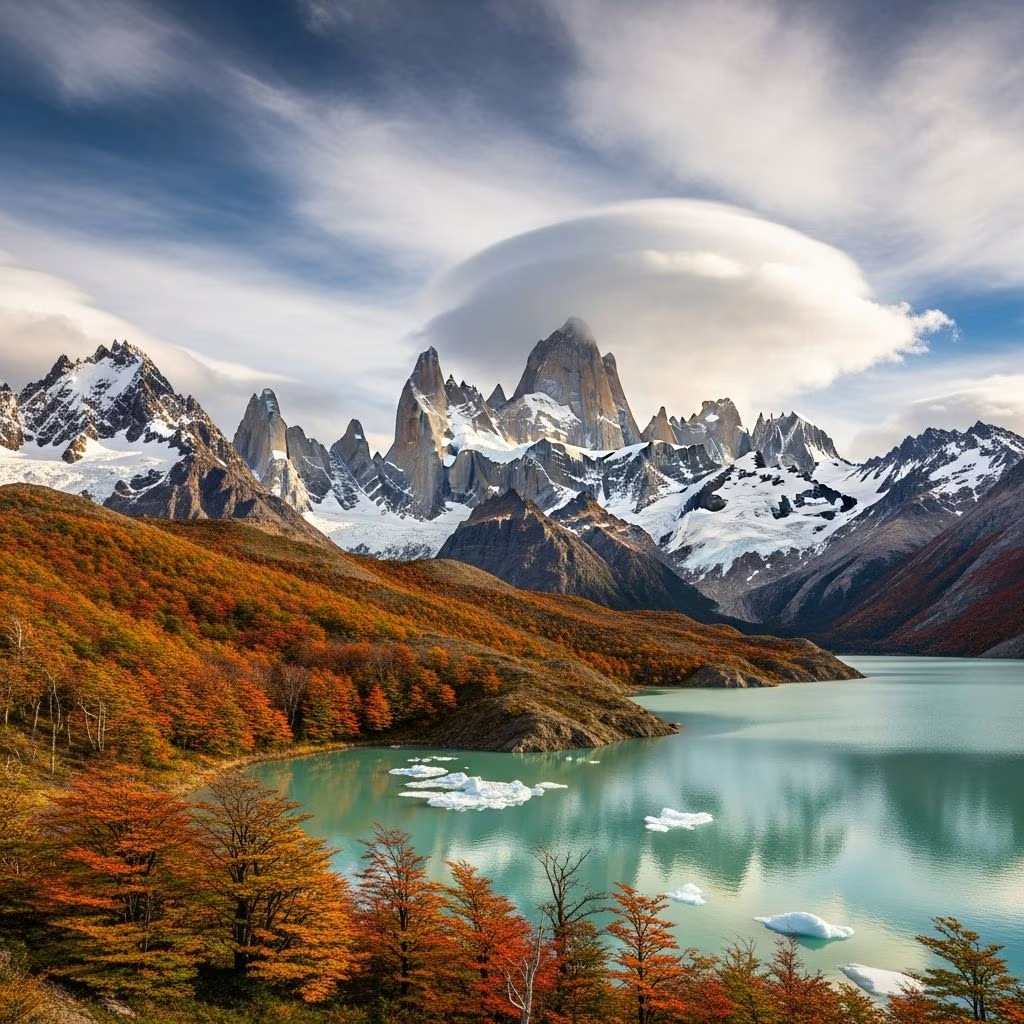
Beyond glacier viewing, Los Glaciares encompasses extensive backcountry territory offering multi-day trekking routes through alpine landscapes. Mount Fitz Roy, which crowns the park’s northern sector, attracts mountaineers from worldwide while also serving as a focal point for day hiking and base camp trekking. The mountain’s distinctive granite peak and accessible approach terrain have transformed the surrounding area into a significant adventure tourism center.
The park’s southern regions provide less-crowded alternatives to heavily trafficked glacier viewpoints, enabling exploratory trekking through pristine valleys and past remote glacier formations. These areas maintain greater wilderness character while remaining within the park’s protected boundaries.
Recent conservation efforts in central Patagonia have created opportunities at newly accessible protected areas that complement the region’s established parks. Patagonia National Park, a relatively recent addition to Chile’s conservation portfolio, offers distinctive trekking experiences through diverse ecosystems with substantially lower visitor volumes compared to Torres del Paine.
Patagonia National Park’s organization into three distinct sectors enables visitors to tailor experiences to specific interests. The Valle Chacabuco sector functions as the park’s developed core, featuring visitor facilities and established trails accessible to various ability levels. Sector Tamango, accessed from the small town of Cochrane, showcases lenga forests and prime habitat for endangered huemul deer, offering specialized wildlife viewing opportunities unavailable in more developed parks.
The Jeinimeni sector presents more challenging conditions, featuring remote glacial lakes and requiring river crossings that demand careful preparation and technical awareness. This sector’s relative remoteness and demanding terrain appeal to serious trekkers seeking authentic wilderness experiences without infrastructure.
The Lagunas Altas Loop, recognized among Patagonia’s premier five treks, showcases alpine terrain and guaranteed wildlife encounters within a demanding single-day hike framework. This 20- to 23-kilometer loop ascends 975 meters over seven to ten hours, positioning it among Patagonia’s most challenging day treks while delivering expansive valley views and Northern Patagonian Ice Field perspectives.
The emerging Avilés Valley traverse represents a multi-day classic trek connecting Patagonia National Park’s northern and central sectors through genuinely remote terrain. This 47-kilometer route requires three to five days of travel through glacial valleys, lenga forests, and high passes, incorporating multiple river crossings and variable weather challenges. The trek’s relative remoteness and technical demands position it as a serious adventure suitable primarily for experienced wilderness trekkers.
Patagonia’s southern latitude dictates pronounced seasonal variation with immediate implications for travel planning. The austral summer months from December through March provide the optimal window for trekking expeditions, featuring extended daylight hours and reduced precipitation compared to other seasons. During this period, temperatures typically range from 10°C to 18°C, necessitating layers and weatherproof outerwear despite the relatively warm designation.
Winter months from June through August bring substantial precipitation, reduced daylight availability, and potential trail closures in high-altitude regions. Shoulder seasons during spring (September-November) and autumn (April-May) present trade-offs between weather unpredictability and reduced crowd volumes at popular destinations.
Successful Patagonian adventures require candid assessment of personal fitness levels and appropriate trail selection based on realistic capability evaluation. Entry-level trekkers should prioritize well-marked, lower-elevation routes with established infrastructure, avoiding trails requiring river crossings, technical scrambling, or high-altitude navigation challenges.
Intermediate hikers can comfortably undertake popular routes like the W Trek within Torres del Paine or established loops within developed sectors of various parks. Advanced hikers qualify for remote wilderness traverses, multi-day expeditions through demanding terrain, and routes incorporating technical obstacles.
Patagonian conditions demand specific equipment preparation regardless of trail difficulty. Waterproof, well-broken-in hiking boots represent essential gear investments, as wet feet create compounding discomfort during extended trekking. Moisture-wicking base layers, insulating mid-layers, and waterproof outer shells enable temperature regulation within Patagonia’s volatile weather patterns.
Adequate water and nutritional supplies require careful calculation based on trail water source availability and desired daily mileage. Some trails traverse extended arid regions with limited water access, necessitating carrying capacity planning. Sun protection including high-SPF sunscreen, quality sunglasses, and hats compensates for intense ultraviolet exposure at southern latitudes with reduced atmospheric filtering.
Patagonian national parks facilitate wildlife observation opportunities that distinguish these destinations from purely scenic landscapes. Guanacos, the wild relatives of domesticated llamas, frequent various park locations in substantial herds, offering memorable wildlife viewing without requiring specialized guides or extended searches. Puma sightings, while genuinely rare, occur occasionally and represent prestigious wildlife encounters within predator-conscious frameworks.
Birdwatchers discover exceptional opportunities to observe Andean condors, Magellanic woodpeckers, steamer ducks, and numerous other species adapted to Patagonian environments. The huemul deer, an endangered species found exclusively in southern Chile and Argentina, maintains populations within protected areas, contributing to conservation significance beyond recreational experiences.
Patagonian parks accommodate diverse lodging preferences reflecting various visitor preferences and budget constraints. Full-service hotels positioned adjacent to major parks provide luxury accommodations with restaurant facilities, professional hospitality staff, and comfortable amenities. Refugios represent intermediate options offering mountain shelter with prepared meals and social communities of fellow trekkers. Backcountry camping provides authentic wilderness immersion for those comfortable with portable shelters and self-catering arrangements.
Many visitors optimize Patagonian experiences through multi-park itineraries combining several destinations across single trips. Torres del Paine and Los Glaciares can be connected through regional transportation networks, enabling comprehensive engagement with Patagonia’s premier destinations within two-week timeframes. Adding emerging parks like Patagonia National Park extends itineraries further, creating month-long adventures encompassing diverse ecosystems and experiences.
Patagonia’s national parks represent destinations transcending typical vacation frameworks, offering genuine encounters with pristine wilderness and personal challenges within spectacular natural environments. Success in these regions depends upon realistic self-assessment, appropriate preparation, and willingness to engage with demanding conditions. From accessible day hikes revealing dramatic scenery to remote multi-day traverses through genuine wilderness, Patagonia accommodates diverse adventure preferences within frameworks of environmental protection and sustainability. Planning thoughtfully and respecting these protected landscapes ensures that personal Patagonian adventures contribute to conservation objectives while creating lasting transformative experiences.
