

 Travel Essentials
 Travel Essentials

Explore premier Diwali celebration destinations worldwide, from India's spiritual heartlands to vibrant diaspora communities across continents.
 Travel Essentials
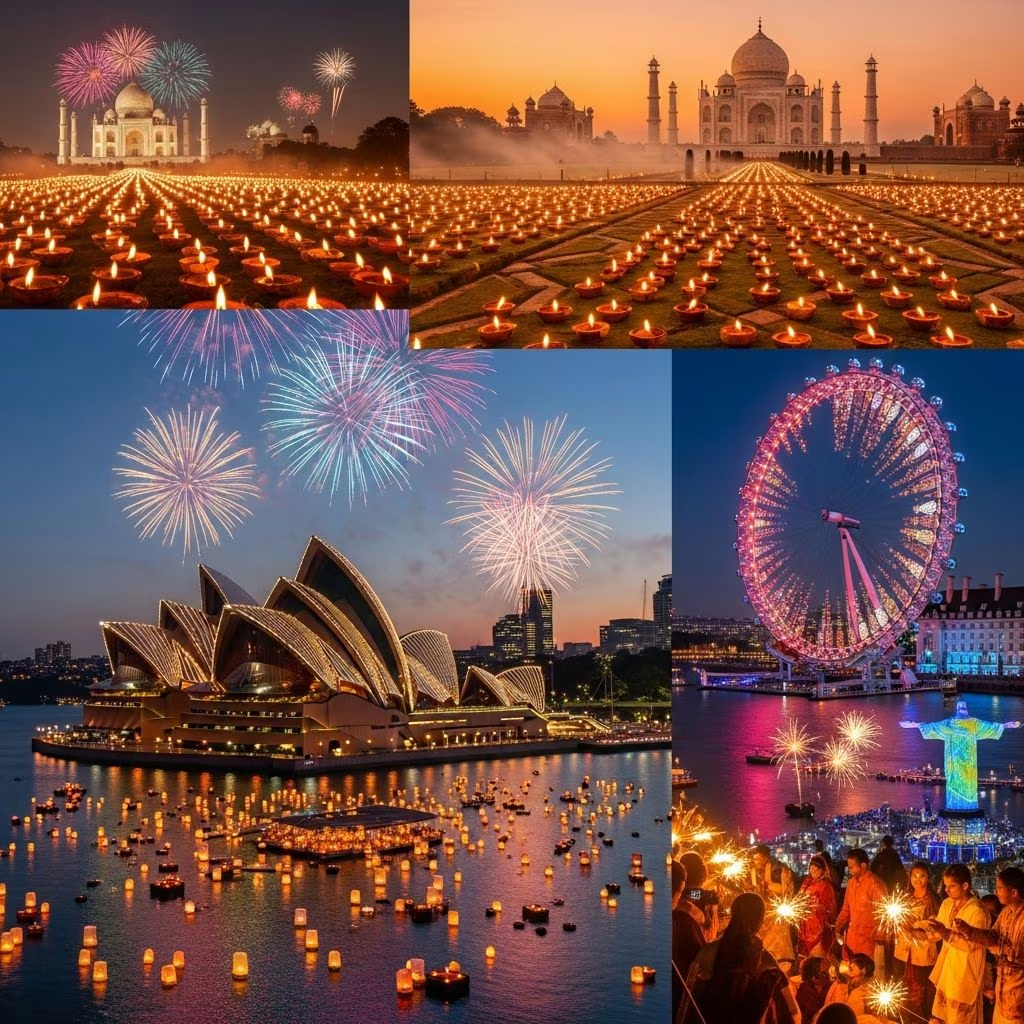
The Festival of Lights transforms cities and communities across the globe into luminous celebrations of triumph over adversity. While Diwali originated in India as a Hindu festival marking the victory of good over evil, its observance has spread to every continent, each region infusing the celebration with its own cultural character. This guide explores the most compelling destinations where travelers can experience Diwali’s magic, whether seeking spiritual immersion in India’s ancient pilgrimage sites or witnessing how diaspora communities worldwide have adapted this timeless festival.
Diwali, also known as Deepavali or the Festival of Lights, holds profound significance beyond religious boundaries. The festival celebrates the victory of Lord Rama over the demon Ravana and the triumph of light over darkness, themes that resonate universally across cultures. What began as a regional Indian celebration has evolved into a global phenomenon, with Hindu, Sikh, Jain, and Buddhist communities observing it, alongside secular cultural celebrations in countries with significant Indian populations.
The festival’s lunar calendar basis means its dates shift annually—falling on November 5 in 2025 and November 24 in 2026. Planning a Diwali pilgrimage requires checking the specific year’s dates, as accommodations in popular destinations book months in advance.
Ayodhya, revered as Lord Rama’s birthplace, transforms into an otherworldly spectacle during Diwali. Millions of earthen lamps and candles illuminate the ghats along the Sarayu River, creating an ethereal landscape that seems to defy reality. The city hosts Ramlila performances—dramatic reenactments of episodes from the Ramayana epic—primarily at Ram Katha Park and Ram Ki Paidi. These theatrical presentations, accompanied by traditional music and devotional chanting, provide cultural context for understanding the festival’s historical and religious significance.
The riverside experiences constitute the festival’s centerpiece. Devotional fire rituals known as aarti ceremonies activate the ghats, followed by synchronized firework displays that illuminate the night sky. A significant tableau procession featuring scenes from the Ramayana occurs on Diwali’s main day, attracting hundreds of thousands of participants and observers. For travelers seeking an authentically spiritual experience rooted in Hindu mythology, Ayodhya offers an unparalleled immersion.
Varanasi transcends conventional Diwali celebrations, offering a distinctly spiritual dimension to the festival. The city’s most distinctive observance is Dev Diwali, celebrated 15 days following the primary Diwali festivities. This celebration commemorates Lord Shiva’s victory over the demon Tripurasura, transforming Varanasi into a symphony of illumination, sacred chanting, and chromatic displays.
The city’s ghats—ancient riverside steps—become the focal point of celebration. Thousands of oil lamps create a shimmering pathway along the sacred Ganges River, while pilgrims participate in the renowned Ganga aarti ceremony. This ritualistic performance of prayers and fire offerings represents one of India’s most iconic spiritual moments. The combination of folk performances, musical presentations, and devotional atmosphere creates an intensely meditative experience far removed from the commercial aspects of Diwali celebrations elsewhere.
Jaipur, Rajasthan’s capital known as the Pink City, undergoes a chromatic metamorphosis during Diwali. Thousands of fairy lights illuminate the city’s palaces and bazaars, transforming the architecture into glowing monuments. The City Palace, a blend of Mughal and Hindu architectural styles, becomes particularly striking when adorned with extensive lighting installations.
Johari Bazaar, the city’s historic jewelry market, deserves particular attention during Diwali. Shop owners compete to create the most impressive light displays, turning the marketplace into a pedestrian-friendly wonderland. Beyond the visual spectacle, visitors encounter Rajasthani hospitality through food stalls offering traditional sweets and delicacies. The bazaar experience combines sensory celebration with shopping opportunities for traditional decorations, garlands, and festive items.
Agra, home to the Taj Mahal, witnesses spectacular firework displays reflected in the Yamuna River’s waters. The city hosts grand feasts featuring Mughlai delicacies, representing the region’s culinary heritage. The combination of Mughal architectural heritage and contemporary Diwali celebrations creates a unique historical context for the festival.
Delhi, India’s capital, offers the most accessible large-scale Diwali experience. Markets explode with colorful decorative items—diyas (oil lamps), marigold garlands, and rangoli (decorative floor paintings). Landmarks including the Akshardham Temple and India Gate become illuminated after sunset, while fireworks burst over the cityscape. The city’s Diwali melas (fairs) provide venues for acquiring traditional sweets, handicrafted gifts, and festival essentials, allowing visitors to absorb the celebratory atmosphere while managing logistics.
Singapore’s Little India, centered on Serangoon Road, transforms into a glowing wonderland during Diwali, known locally as Deepavali. Once home to Indian immigrants, this neighborhood has evolved into the city-state’s cultural hub, where the community collaborates to create one of Asia’s largest Diwali celebrations outside India.
The festival’s physical manifestation includes intricate light installations adorning streets and building facades. The air fills with incense scent and the aroma of traditional Indian sweets, while cultural performances and vibrant street markets activate public spaces. Elaborate neon displays complement traditional decorative elements, creating a fusion aesthetic that reflects Singapore’s multicultural identity. The celebration attracts both residents and international visitors, offering accessibility to Diwali traditions without traveling to India.
In Malaysia, Diwali—called Hari Diwali—constitutes a national holiday throughout most of the country. Kuala Lumpur’s Brickfields neighborhood, known as Little India, becomes the epicenter of celebrations. Markets sell traditional Indian decorative items and festival supplies, while restaurants introduce special menus featuring Diwali-specific cuisine. The neighborhood’s Sri Maha Mariamman Temple and nearby Batu Caves attract crowds of devotees, creating a spiritual dimension alongside commercial festivities and firework displays that illuminate the neighborhood after dark.
In Sri Lanka, Diwali celebrations concentrate in Jaffna, the northern peninsula serving as the country’s primary Tamil cultural center. Unlike more elaborate celebrations elsewhere, Jaffna’s observances maintain a more intimate scale, focusing on family homes and kovils (Hindu temples). The Nallur Kandaswamy Kovil represents the most significant religious site for Diwali observance in the region, attracting pilgrims seeking spiritual connection rather than commercial festivity.
Trinidad and Tobago hosts remarkable nine-day Diwali celebrations centered around Divali Nagar, or the Village of the Festival of Lights, located in Chaguanas. Built across 27 acres, this purpose-designed festival venue becomes the Caribbean’s premier Diwali destination. The National Council for Indian Culture organizes daily song and dance shows, folk art performances, contests, and markets offering Indian clothing and traditional food.
Divali Nagar represents an ambitious attempt to recreate the scale and festive atmosphere of India’s largest celebrations in a Caribbean context. Live performances rival Bollywood productions in grandeur and technical sophistication, attracting tourists alongside Trinidad and Tobago’s substantial Indian-descended population. The festival’s prominence reflects the historical significance of Indian migration to the Caribbean and the community’s determination to preserve cultural traditions across generations.
Australia’s major cities—Sydney and Melbourne—witness increasingly impressive Diwali celebrations that expand annually in scale and production value. Melbourne’s Diwali celebration at Federation Square has emerged as Australia’s largest Diwali event, featuring magnificent firework displays, nonstop live entertainment, and performances ranging from classical Indian dance to Bollywood-style productions. The city’s significant Indian population and broader multicultural demographics create an environment where Diwali has become an established cultural fixture rather than a novelty event.
India remains Diwali’s spiritual and cultural epicenter, where the festival’s importance permeates society on an extraordinary scale. Each Indian region brings distinct traditions to celebrations—from northern temple ceremonies to southern Tamil observances—reflecting India’s religious and cultural diversity. The atmosphere across Indian cities becomes electrified through home decorations with marigolds, oil lamps, and torans (decorative door hangings).
Global celebrations maintain Diwali’s symbolic core while incorporating local cultural elements. International observances emphasize communal participation, inviting people of all backgrounds to join festivities, thereby broadening the festival’s appeal beyond Hindu communities. This inclusive approach has enabled Diwali to become genuinely international, similar to how Christmas observances extend beyond Christian populations.
Choosing a Diwali destination depends on multiple factors: spiritual significance preference, scale of celebration desired, cultural immersion level, accessibility from your location, and climate preferences. Travelers seeking profound spiritual experiences should prioritize Varanasi or Ayodhya. Those preferring structured, accessible celebrations might favor major cities like Delhi or international locations like Singapore. Budget considerations should account for accommodation premiums during festival periods and potential price increases for festival-specific events.
Diwali follows the lunar calendar, making its dates variable. Celebrations typically occur in October or November. The festival falls on November 5 in 2025 and November 24 in 2026. Check the specific year’s dates before booking travel.
Oil lamps, called diyas, symbolize the triumph of light over darkness and good over evil. Their widespread use across India and diaspora communities creates the festival’s iconic visual element, with millions of lamps illuminating simultaneously in major celebration sites.
Absolutely. Diwali celebrations worldwide actively welcome participants from all backgrounds and faiths. Many locations deliberately market Diwali as a cultural celebration rather than exclusively religious observance, encouraging broad community participation.
India’s spiritual heartlands—particularly Ayodhya and Varanasi—offer the most historically authentic experiences, as these sites represent Diwali’s mythological and religious origins. However, authenticity is subjective; some travelers find Singapore’s modern multicultural approach equally valid.
For major Indian cities and popular international destinations, booking 3-6 months in advance is advisable. Premium accommodations often sell out 6-12 months before the festival, particularly near significant celebration sites.
Diwali celebrations span the globe, from India’s sacred riverside ceremonies to Singapore’s modern light displays, from Caribbean festivals to Australian urban celebrations. Each destination offers distinct perspectives on how communities preserve, adapt, and celebrate this ancient festival. Whether seeking spiritual immersion, cultural education, or festive entertainment, travelers can find Diwali celebrations matching their preferences and circumstances. The festival’s universal themes of light triumphing over darkness and good defeating evil transcend cultural boundaries, explaining its growing adoption across diverse populations worldwide.
