

 Travel Essentials
 Travel Essentials

Discover the world’s best shark diving spots, from great whites in South Africa to whale sharks in Mexico, with seasons, safety tips, and dive advice.
 Travel Essentials
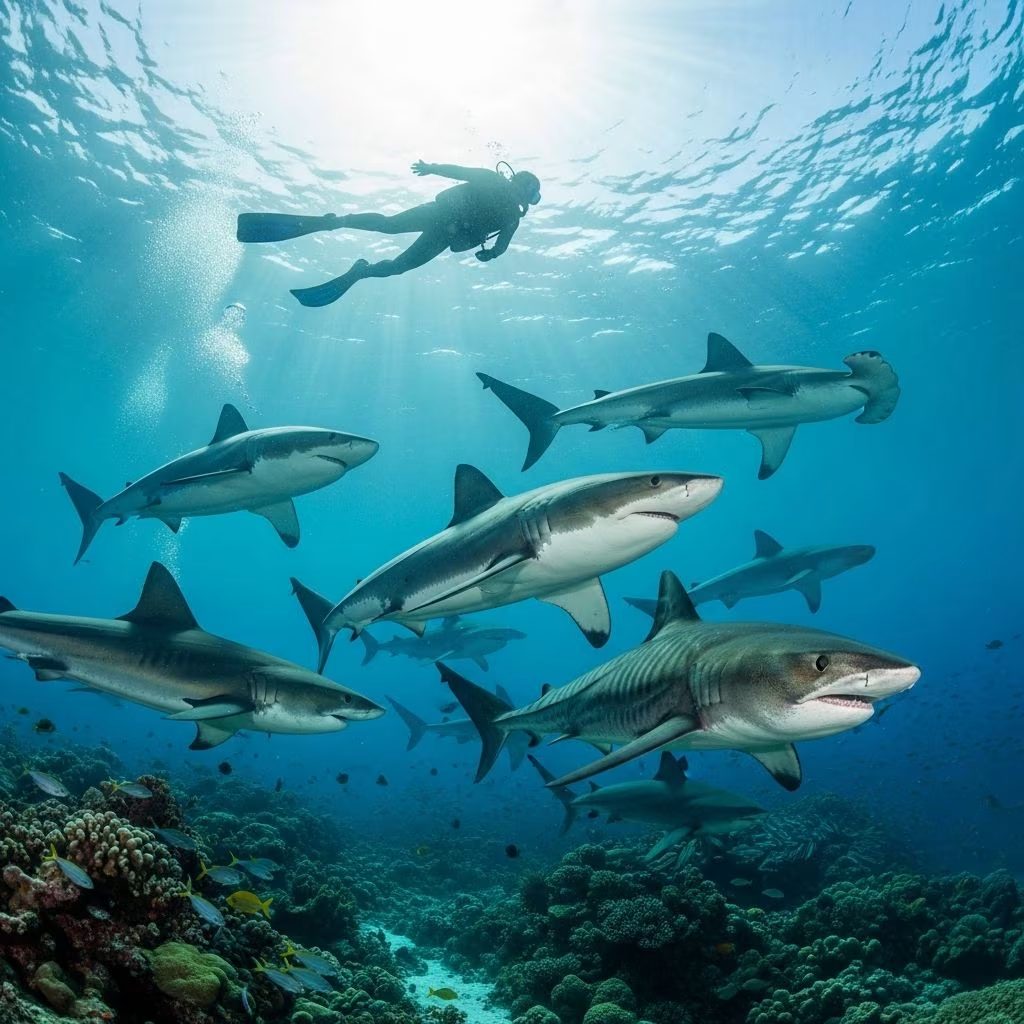
Shark diving offers one of the most exhilarating experiences for scuba enthusiasts, allowing divers to come face-to-face with these majestic ocean predators in their natural habitats. From the powerful great whites of South Africa to the gentle whale sharks of Mexico, the world’s oceans host incredible opportunities for safe and thrilling encounters. This guide highlights premier locations, species profiles, seasonal insights, and practical advice to help you plan your next adventure.
Sharks play a vital role in marine ecosystems, maintaining balance by controlling populations of other species. Diving with them provides not only adrenaline-pumping moments but also educational value, fostering appreciation for ocean conservation. Modern practices emphasize ethical tourism, with many sites using protective cages or natural observation methods to ensure diver safety and minimal wildlife disturbance.
Experienced divers report sightings of multiple shark species per dive, often alongside vibrant reefs, rays, and fish schools. Beginners can start at accessible sites with reef sharks, progressing to advanced drift dives in strong currents.
Africa’s coastal waters are renowned for dramatic shark encounters, particularly in South Africa, where nutrient-rich currents attract apex predators.
Known as the great white shark capital, Gansbaai offers cage dives where dozens of these iconic predators circle boats, performing acrobatic breaches while hunting seals. False Bay provides similar thrills, with strong recommendations for cages due to the sharks’ power. Peak season runs from June to December, coinciding with southern right whale migrations for added spectacle.
Dives typically last 45-60 minutes at depths of 10-15 meters, with visibility up to 20 meters. Operators like those in Simon’s Town venture offshore, passing sunfish and whales en route to pelagic sites.
Off KwaZulu-Natal, Protea Banks hosts ragged-tooth (grey nurse) sharks and oceanic blacktips amid strong currents. Aliwal Shoal features bull sharks, hammerheads, and tiger sharks, with drift dives revealing caves teeming with life.
The Bahamas archipelago is a shark diver’s dream, boasting shallow, clear waters ideal for multiple species sightings year-round.
Tiger Beach stands out for its tiger sharks, with dives attracting up to 12 individuals feeding on bait. Cat Island complements this with lemon and nurse sharks amid colorful reefs. These sites suit advanced divers due to depths of 20-30 meters and variable currents.
Bimini, just 50 miles from Florida, is the great hammerhead capital, where schools of up to a dozen mingle with bull and nurse sharks. Nassau’s shark arena features Caribbean reef sharks hand-fed near shipwrecks, a staple for Shark Week productions.
| Site | Main Sharks | Best Season | Difficulty |
|---|---|---|---|
| Tiger Beach | Tiger, Lemon | Year-round | Advanced |
| Bimini | Hammerhead, Bull | Winter | Intermediate |
| Nassau | Caribbean Reef | Year-round | Beginner |
The Pacific’s warm waters support some of the planet’s most biodiverse shark populations.
Beqa Lagoon hosts the world’s premier bull shark dive, where massive individuals are hand-fed alongside tigers and hammerheads. Colorful fish swarms enhance the spectacle, with marine protected areas ensuring sustainability. Depths reach 25 meters, best for experienced divers.
Near Fraser Island, Wolf Rock’s pinnacle attracts grey reef sharks, wobbegongs, and turtles. Strong currents create drift dives teeming with pelagics, ideal from May to October.
Tiputa Pass in Rangiroa delivers drift dives with grey, white-tip, black-tip, lemon, and hammerhead sharks. Advanced divers may spot tigers at 30+ meters during tidal flows.
Isla Mujeres sees hundreds of whale sharks annually from June to September, allowing close swims with these filter-feeders. Isla Holbox, north of Cancun, offers shallow encounters amid flamingo lagoons and white sands. No cages needed; snorkel or shallow dives suffice for all levels.
Dubbed the island of sharks, Cocos features night dives at Manuelita where white-tip reef sharks pack-hunt in natural frenzy. Hammerheads and silkies abound during day dives.
The shark corridor of Galapagos, Socorro, and Cocos hosts massive hammerhead schools alongside whalesharks and mantas. Wolf and Darwin Islands are prime for bold currents and pelagics.
Great White: Apex predator, cage dives essential.
Tiger Shark: Bold scavenger, sandy bottoms.
Hammerhead: Schooling, cephalofoil for navigation.
Whale Shark: Plankton feeder, gentle giant.
Reef Sharks: Territorial, abundant on corals.
Yes, with reputable operators using cages or protocols; incidents are rare, far safer than driving.
Advanced Open Water; nitrox helpful for deeper sites.
June-September in Mexico.
Yes, at reef shark sites like Nassau.
Look for PADI 5-star, conservation-focused with reviews.
Book liveaboards for remote sites like Cocos or Galapagos to maximize dives. Budget $500-1500 per trip, including gear rental. Combine with land explorations for holistic trips. Always prioritize eco-friendly choices to protect these vital marine ambassadors.
