

Food & Culture Stays Travel Essentials Travel Guides Trip Ideas
Categories
From the Blog
Remy’s Ratatouille Adventure at EPCOT: Ride Review, Tips & 2D Update
Travel Essentials

Best Places to Find Fossils in the UK

Discover top UK locations for fossil hunting, including Dorset's Jurassic Coast, Isle of Wight dinosaur tracks, and Yorkshire shores, with tips for beginners.
Travel Essentials

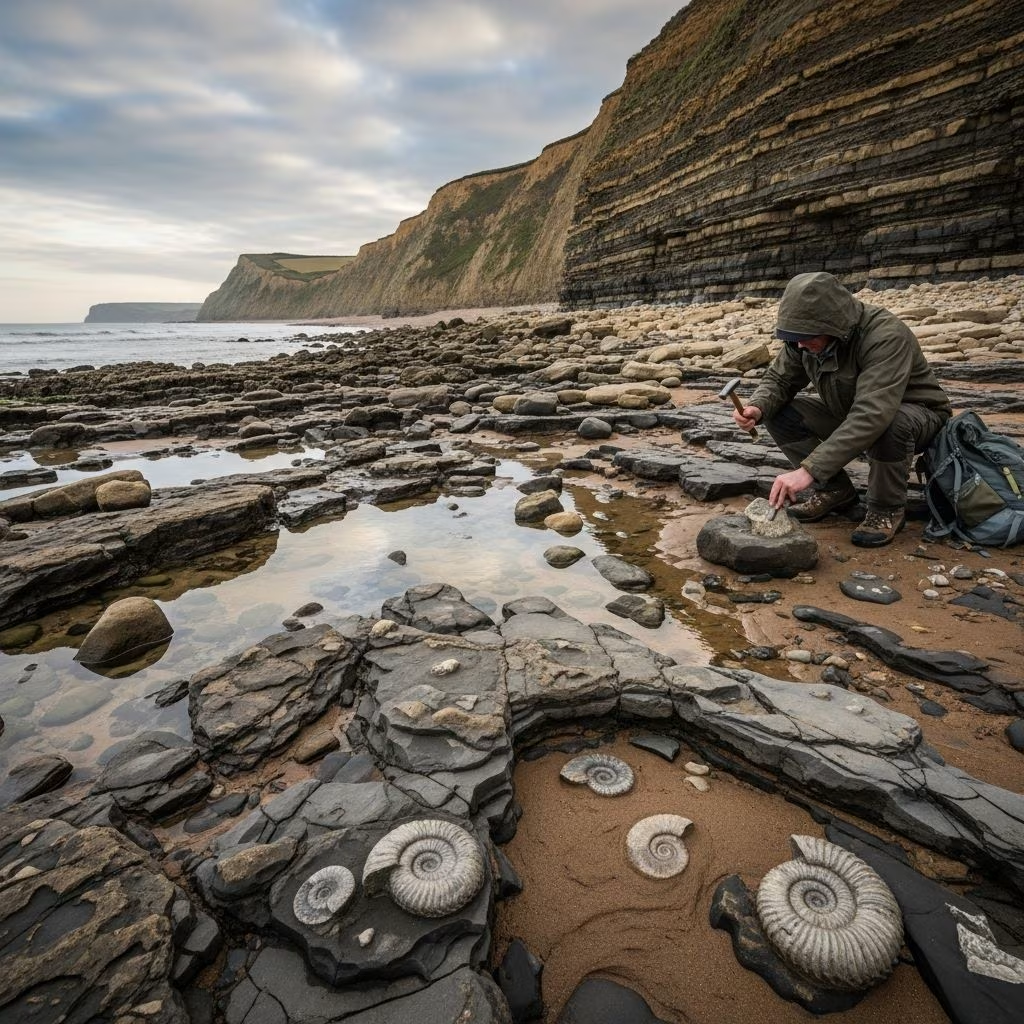
The United Kingdom boasts a remarkable geological heritage, with coastlines and cliffs revealing fossils from millions of years ago. From the dramatic waves of the Jurassic Coast to the rugged shores of the Isle of Wight, amateur paleontologists can discover ammonites, dinosaur footprints, and ancient marine life. This guide highlights prime locations, essential preparation advice, and ethical collecting practices to ensure safe and rewarding outings.

Why the UK Excels in Fossil Discovery

Britain’s exposed rock formations, shaped by erosion and geological uplift, preserve a timeline of Earth’s history spanning Triassic to Eocene eras. Coastal areas dominate due to constant wave action uncovering specimens, while inland quarries offer rarer finds. These sites attract families, students, and experts, blending adventure with education about prehistoric ecosystems.

Iconic Southern Coastlines for Marine Fossils

The south coast features layered sediments ideal for Jurassic and Cretaceous relics. Erosion here regularly exposes nodules containing well-preserved invertebrates and vertebrate fragments.

Dorset and East Devon’s Jurassic Coast

This 95-mile UNESCO World Heritage stretch from Exmouth to Studland showcases 185 million years of rock layers. Beaches yield ammonites, belemnites, and reptile bones from ichthyosaurs and plesiosaurs.

  • Lyme Regis Beach: Famous for large ammonites and occasional vertebrate skeletons after cliff falls.
  • Charmouth Beach: Prime for foreshore hunting of Jurassic nodules; visit the Heritage Coast Centre for guided insights.
  • Kimmeridge Bay: Clay cliffs reveal shells, fish, and reptile fossils.
  • Seatown Beach: Shale blocks hide diverse marine specimens.

Isle of Wight: Dinosaur Island

Dubbed ‘Dinosaur Island’ for its rich deposits, this spot offers accessible dinosaur evidence. Low tide reveals gravel beds with footprints and bones.

  • Compton Beach: Dinosaur tracks, including iguanodon casts at Hanover Point, plus bone fragments.
  • Whitecliff Bay: Eocene shells, sponges, and plants.

Eastern Shores: Chalk Cliffs and Eocene Riches

Sussex and Kent’s chalk formations from the Cretaceous period host echinoids, fish, and reptiles, while Eocene sites provide sharks’ teeth.

Sussex Highlights

The Seven Sisters and Beachy Head cliffs erode to scatter fossils.

  • Birling Gap: Cretaceous sea urchins and brachiopods from South Downs chalk.
  • Beachy Head: White and Grey Chalk subgroups yield advanced collector specimens.
  • Bracklesham Bay: Eocene shark teeth, ray plates, and shells after tides.

Kent and Sheppey Gems

  • Folkestone Beach: Gault Clay exposes ammonites and bivalves.
  • Warden Point, Isle of Sheppey: London Clay fossils like turtles, sharks, and plants.

Northern and Western Horizons

Northern England’s Jurassic cliffs and western Carboniferous limestones diversify finds.

Yorkshire Coast

Alum shales post-storms reveal marine life.

  • Runswick Bay: Ammonites and plant fossils in shale.
  • Staithes: Jet and fossil wood alongside invertebrates.

Somerset and Wales

Blue Lias and limestone foreshores host early Mesozoic and Paleozoic relics.

  • Watchet Beach: Ammonites, crinoids, fish in clays.
  • Weston-super-Mare: Scattered Jurassic pieces.
  • Llantwit Major, Wales: Carboniferous corals and brachiopods.

Further Afield: Scotland, Northern Ireland, and Inland Sites

Beyond England, diverse geology expands options.

  • Bearreraig Bay, Skye: Complete Jurassic sequence with marine fossils.
  • County Antrim, Northern Ireland: Whitepark Bay’s basalt layers hold hexacorals and brachiopods.
  • Inland: Wren’s Nest, Dudley: Silurian trilobites.
  • Torquay, Devon: Ordovician trilobites.

Essential Preparation for Safe Hunting

Success demands planning amid tides, weather, and regulations.

ItemPurpose
Fossil hammer & chiselSplitting nodules safely
Safety goggles & glovesEye/hand protection
Tide chart & weather appAvoid high tides/cliff falls
Buckets & bagsCollecting/transport
First aid kitHandle cuts from sharp rocks

Check local codes: National Trust sites permit hand collecting of common fossils but ban hammers on protected cliffs. Report significant finds to authorities.

Identifying Common UK Fossils

Key specimens vary by era:

  • Ammonites: Spiral shells, Jurassic/Cretaceous.
  • Belemnites: Bullet-shaped squid guards.
  • Sea urchins (echinoids): Spherical tests in chalk.
  • Shark teeth: Triangular Eocene teeth.
  • Crinoids: Stem fragments in limestones.
  • Trilobites: Segmented arthropods, Paleozoic.

Prep finds by air-drying; consult field guides or apps for ID.

Family-Friendly Tips and Guided Experiences

Many sites suit beginners. Dorset’s Charmouth Centre offers hunts; Isle of Wight has dinosaur trails. Supervise children near cliffs; focus on beachcombing.

Conservation and Ethical Practices

Leave rare/large specimens; photograph in situ. Fossils inform climate/paleontology research—contribute via museums.

Frequently Asked Questions

What gear do I need for fossil hunting?

Basic tools: hammer, goggles, tide info. No heavy machinery.

Is fossil collecting legal in the UK?

Yes for common beach finds; restrictions on Sites of Special Scientific Interest. No commercial sales without permits.

Best time to hunt?

Low tide after storms for fresh exposures, avoiding summer crowds.

Can kids join?

Absolutely—sites like Compton Bay are ideal for spotting footprints safely.

What if I find a rare fossil?

Report to UK Fossil Register or Natural History Museum.

References

  1. UK Fossil Hunting Guide for Beginners and Families — Sykes Cottages. 2023. https://www.sykescottages.co.uk/blog/uk-fossil-hunting-guide/
  2. Best places to find fossils | Coast — National Trust. 2024-04-01. https://www.nationaltrust.org.uk/visit/coast-beaches/best-places-to-find-fossils
  3. Fossil Hunting Locations — UK Fossils. 2024. https://ukfossils.co.uk/locations/
  4. Fantastic fossils in Britain and where to find them — Natural History Museum. 2023-06-15. https://www.nhm.ac.uk/discover/fantastic-fossils.html
  5. Where to Find Fossils in the UK – A Complete Guide — Fossils UK. 2024. https://www.fossils-uk.com/blog/where-to-find-fossils-in-the-uk-a-complete-guide/
ME
medha deb
Medha Deb is an editor with…

Medha Deb is an editor with a master's degree in Applied Linguistics from the University of Hyderabad. She believes that her qualification has helped her develop a deep understanding of language and its application in various contexts. Medha specializes in the areas of beauty, health, sports, and wellness and is committed to ensuring that the content on the website is of the highest quality.Medha's passion for writing and editing began early in life when she joined a book writer's club with her mother. It was there that she discovered her love for the written word and the power it holds to inform, inspire, and transform lives. Since then, she has honed her skills as a writer and editor, working with a variety of clients and publications to produce compelling and informative content. Currently, she writes and edits for CultureTreker.She is also an ardent animal lover and dedicates her time and resources to the foster care of neonatal kittens, providing them with the love and attention they need to thrive. Her commitment to animal welfare is a testament to her compassion and empathy, and it underscores her belief in the importance of caring for the most vulnerable members of our society.

← Previous
10 Most Beautiful Places in Italy to Visit
‹›
