


 Food & Culture
Food & Culture
Best Places to Forage in the U.S.: Regional Guide
Explore America's premier foraging destinations, from Pacific Northwest mushroom hotspots to Appalachian berry patches and coastal foraging opportunities.
 Food & Culture
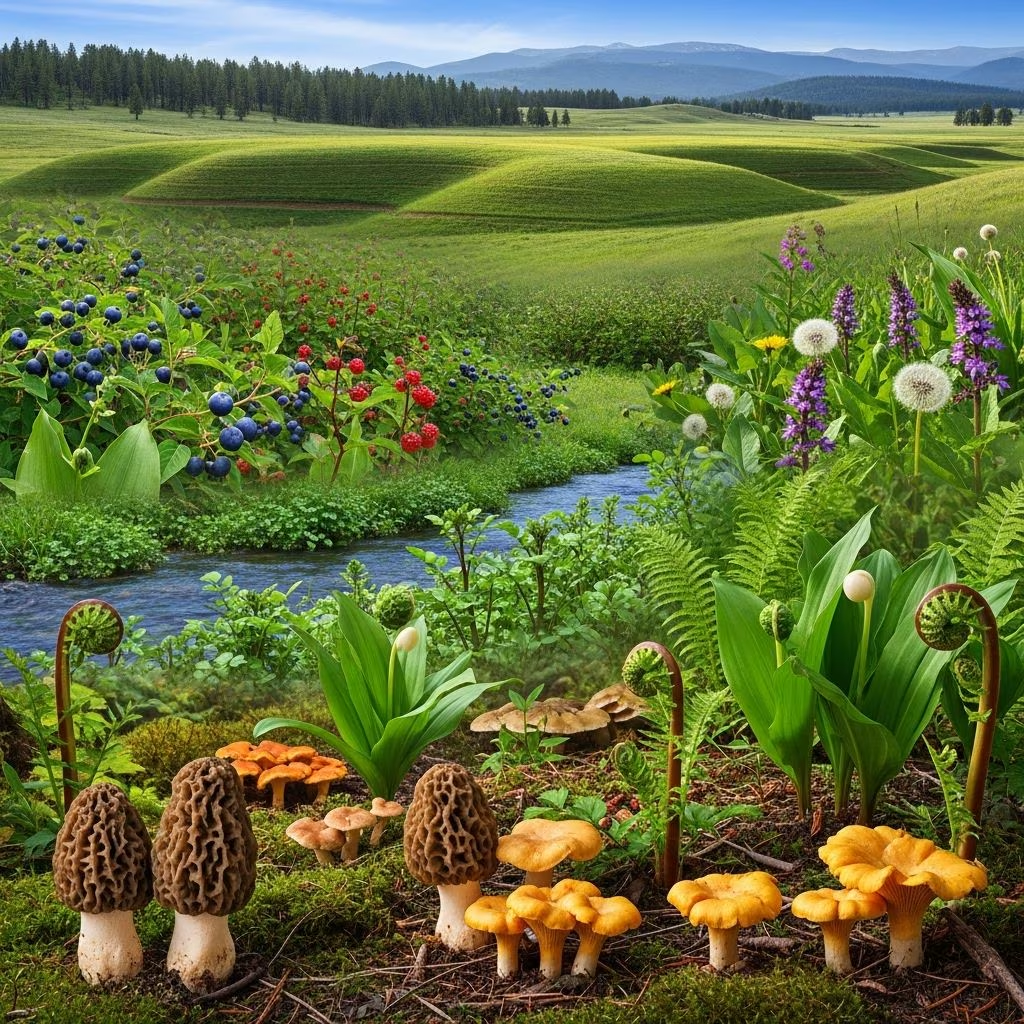
The practice of gathering wild edible plants, mushrooms, and berries directly from nature offers both sustenance and connection to the land. Across the United States, diverse ecosystems support abundant wild foods waiting to be discovered. Whether you’re a seasoned forager or exploring this practice for the first time, understanding where to find these resources and when to harvest them is essential for a successful and responsible foraging experience.
Understanding Regional Foraging Opportunities
Foraging success depends heavily on geography and climate. The United States encompasses numerous distinct ecosystems, each supporting different varieties of edible plants and mushrooms. The West Coast has emerged as the premier mushroom foraging destination in North America, with particular abundance in California’s Alpine County, which records 344 mushroom sightings per 1,000 residents. Meanwhile, the Pacific Northwest is renowned for its prolific fall mushroom flushes, the Appalachian region offers rich nut and berry harvests, and northern states provide ideal conditions for spring morels and summer berries.
Before venturing out to forage, it’s critical to understand local regulations. Many regions require permits for mushroom gathering on public lands, and harvesting rules vary significantly by location. Always verify regulations with your local forest service office and never eat anything unless you can identify it with complete certainty.
Pacific Northwest: Mushroom and Berry Paradise
The Pacific Northwest stands out as North America’s premier mushroom foraging territory. The region’s maritime climate creates ideal conditions for fungal growth, particularly during autumn months. The forests here benefit from consistent moisture and mild temperatures that support diverse mushroom species throughout the year.
Mt. Hood National Forest in Oregon exemplifies the region’s foraging potential. Located just outside Portland, this forest yields abundant golden chanterelles, lobster mushrooms, and hedgehog mushrooms during fall months. The understory also hosts huckleberries, nettles, fiddleheads, and thimbleberries. The optimal foraging window runs from August through November, with peak mushroom activity following autumn rainfall. Oregon’s free personal-use permit system makes access straightforward for visitors.
Redwood National and State Parks in California combine awe-inspiring old-growth trees with exceptional foraging opportunities. The damp forest floors and ocean-facing ridges support chanterelles and candy cap mushrooms in fall, while greens like miner’s lettuce and sorrel flourish in late winter and spring. Coastal foragers can also harvest edible seaweed along protected edges. However, foraging restrictions apply in national parks, so focus efforts on nearby state park or national forest lands.
Additional West Coast hotspots include numerous counties in California, Oregon, and Washington that host active mycophile communities. Lane County, Oregon hosts the Mount Pisgah Mushroom Festival, while King County, Washington supports a thriving mushroom enthusiast network.
Appalachian Region: Nuts, Greens, and Spring Treasures
The Appalachian Mountains stretch across multiple states and offer tremendous foraging diversity, with different species thriving at varying elevations. Ramps—a wild leek prized by chefs—appear in spring throughout the region. Pawpaws, a native fruit tree producing custard-like fruit, fruit prolifically in late summer. Hickory nuts and black walnuts provide sustenance in fall, while morels hide in moist hollows after spring rains.
Daniel Boone National Forest in Kentucky demonstrates the region’s richness. This expansive forest covers eastern Kentucky’s complex topography, with rivers, caves, and steep ridges creating varied microclimates. Pawpaws appear in late summer, wild onions emerge in spring, and morels thrive in the moist hollows. The region also supports abundant wild nut varieties. Visiting from March through May, and again in August through September, provides the best harvests. Regional field guides are invaluable, as plant species change dramatically with elevation.
Green Mountain National Forest in Vermont offers classic New England hardwood forest foraging. The maple, beech, and birch-dominated landscape supports oyster mushrooms, ramps, nuts, and blackberries. Spring and early fall provide optimal foraging conditions. The region also maintains a sugar-mapping tradition, where locals collect and process maple sap in late winter and early spring—a DIY homesteading practice that connects foragers to seasonal rhythms.
Pisgah National Forest in North Carolina extends foraging opportunities across a longer season. From April through October, this forest yields chanterelles, black trumpet mushrooms, ramps, hickory nuts, blackberries, pawpaws, and reishi. The Asheville Mushroom Club offers identification walks and foraging classes, providing valuable community connections and expertise for both beginners and experienced foragers.
Great Lakes Region: Morels and Berry Abundance
The Upper Peninsula of Michigan experiences unique foraging conditions created by its proximity to three Great Lakes. The cool, damp climate proves ideal for morel mushrooms in spring and supports dense conifer forests hiding blueberry patches and cranberry bogs during summer and fall months.
Hiawatha National Forest in Michigan exemplifies this region’s potential. The best morel hunting occurs from May through early June, particularly along old logging road edges and pine stands following rainfall. Summer and fall bring abundant blueberries and cranberries, while wintergreen and wild mint provide year-round foraging opportunities. Chaga mushroom, a prized medicinal fungus, grows on birch trees throughout the forest.
Chequamegon-Nicolet National Forest in Wisconsin offers similar opportunities with the added benefit of recreational activities. From August through October, foragers find abundant wild foods while combining harvesting with canoeing or kayaking on the forest’s numerous lakes. Grant County, Wisconsin has developed a notable mycophile community, making it an excellent location to connect with experienced foragers.
Minnesota’s Lake County consistently appears among top mushroom foraging destinations nationwide, with abundant mushroom populations supporting both recreational foragers and serious enthusiasts.
Alaska: Remote Wilderness Foraging
Alaska presents unique foraging opportunities in one of North America’s most pristine ecosystems. Tongass National Forest, the largest national forest in the United States, supports devil’s club (valued for medicinal properties), blueberries, salmonberries, spruce tips, and various mushroom species. The optimal foraging window runs from June through September, providing a concentrated but intensive harvesting season.
Alaskan foraging requires more planning and caution than most continental U.S. locations. The complex ecosystem demands thorough species identification and respect for wildlife. Considering guided foraging tours departing from Sitka or Juneau provides professional guidance while building knowledge about this challenging environment. Three Alaskan boroughs—Sitka, Skagway-Yaukutat-Angoon, and Denali—rank among the nation’s top 25 mushroom foraging counties.
Southern Regions: Winter and Spring Harvesting
Southern forests offer distinct advantages for off-season foraging. While northern regions experience snow cover, southern areas provide winter and spring harvesting opportunities.
Monongahela National Forest in West Virginia presents particular challenges due to abundant poisonous lookalike species throughout the region. Foragers should expect to encounter wild grapes, beautyberries, palmetto hearts, prickly pear, and dandelion greens. Winter and early spring visits avoid peak heat and insect activity but demand exceptional plant identification skills. Consulting detailed regional field guides before venturing out is non-negotiable in this area.
Florida’s forests, while not specifically detailed in major foraging guides, support similar southern species with corresponding identification challenges. The region’s subtropical climate allows year-round foraging but requires vigilance regarding toxic lookalikes.
Urban and Suburban Foraging Opportunities
Foraging extends beyond remote forests. Urban and suburban environments support significant wild food resources. Major cities including Los Angeles (with 176,000 documented foraging locations), New York (208,000 locations), and Seattle (114,000 locations) contain extensive networks of fruit trees, edible plants, and wild food sources.
Open meadows and fields throughout the country host wildflowers and grasses suitable for foraging, with clover and dandelion thriving in sunny areas. Coastal areas provide access to salt marshes and tidal flats where sea vegetables like seaweed and samphire grow abundantly. Nationwide foraging includes pine nuts, acorns, and urban nuts dropped in fall.
Seasonal Harvesting Calendar and Best Practices
| Season | Primary Forageables | Best Regions |
|---|---|---|
| Spring (March-May) | Morels, ramps, fiddleheads, maple sap, wild onions | Appalachia, Great Lakes, Northeast |
| Summer (June-August) | Berries, greens, chaga, spruce tips | Michigan, Wisconsin, Alaska, Pacific Northwest |
| Fall (August-November) | Chanterelles, lobster mushrooms, huckleberries, pawpaws, nuts | Pacific Northwest, California, Appalachia |
| Winter (December-February) | Greens, seaweed, wild grapes, hazelnuts | California coast, South, Gulf regions |
Responsible foraging requires adhering to fundamental principles. Always obtain proper identification before consuming anything harvested from the wild. Join local mushroom clubs and foraging groups to learn from experienced practitioners. Research local regulations and obtain required permits. Harvest only what you’ll use, leaving adequate plant material for regeneration. Avoid fragile ecosystems and never strip entire patches of plants.
Finding Foraging Locations Near You
Locating foraging opportunities in your area requires systematic research. Community groups and online forums connect foragers with shared knowledge about productive locations. Websites like Falling Fruit provide maps showing foraging sites based on user contributions, allowing you to identify opportunities near your home or planned travels.
State parks, national forests, and nature reserves frequently permit foraging, though regulations vary significantly. Contact your local forest service office to understand specific rules before venturing out. Many regions require free permits for mushroom gathering or restrict harvesting to certain times of year. Understanding these requirements prevents legal complications and supports sustainable resource management.
Frequently Asked Questions About U.S. Foraging
What equipment do I need for foraging?
Essential equipment includes a sharp knife or clippers for clean harvests, a collection basket (woven for air circulation), a field guide specific to your region, and a smartphone or camera for documentation. A magnifying glass helps identify small features on mushrooms and plants.
Is foraging free?
While gathering wild foods itself is free, some regions require inexpensive permits. Many require only a free registration or permit. Always verify local regulations before harvesting.
When should I start foraging if I’m a beginner?
Beginning foragers benefit from joining local mushroom clubs, attending identification workshops, or hiring guides for initial experiences. Start with easily identifiable species in your region and gradually expand your knowledge base.
Are there poisonous plants I should avoid?
Yes, numerous poisonous species exist in every region. Never consume anything unless you can identify it with absolute certainty. When in doubt, leave it. Many poisonous plants closely resemble edible species, particularly in regions like West Virginia and Florida.
What’s the best season for foraging?
Seasons vary by region and desired forageables. Spring offers morels and spring greens. Summer brings berries. Fall provides mushroom abundance and nuts. Some regions allow winter foraging for evergreen greens and coastal vegetables.
Sustainable Foraging for Future Generations
Responsible foraging ensures that wild food resources remain available for future generations. This means harvesting only what you need, avoiding rare or threatened species, and leaving enough plant material for regeneration. When harvesting mushrooms, cut them at the base rather than uprooting them, preserving the mycelium network for future fruiting. When gathering berries or greens, take only a portion from each plant, leaving substantial growth for wildlife and natural regeneration.
The United States offers extraordinary foraging opportunities across its diverse ecosystems. From Pacific Northwest mushroom forests to Appalachian nut groves, from Great Lakes berry patches to Alaskan wilderness resources, wild foods await discovery. By understanding regional opportunities, respecting local regulations, and committing to sustainable practices, foragers can experience both the rewards of self-sufficiency and the deeper connection to the natural world that foraging provides.
References
- 10 Best Forests for Foraging Wild Food in the U.S. — No Man’s Life. Accessed April 2026. https://www.nomanslife.com/post/best-forests-for-foraging
- Which U.S. Counties Are the Best for Mushroom Foraging? — Earth911. https://earth911.com/food-beverage/which-u-s-counties-are-the-best-for-mushroom-foraging/
- The Ultimate Urban Foraging Map For America — Mapscaping. https://mapscaping.com/urban-foraging-map-for-america/
- How to Find Places to Forage: A Comprehensive Guide — Battlbox. https://www.battlbox.com/blogs/outdoors/how-to-find-places-to-forage-a-comprehensive-guide
On This Page
Understanding Regional Foraging Opportunities Pacific Northwest: Mushroom and Berry Paradise Appalachian Region: Nuts, Greens, and Spring Treasures Great Lakes Region: Morels and Berry Abundance Alaska: Remote Wilderness Foraging Southern Regions: Winter and Spring Harvesting Urban and Suburban Foraging Opportunities Seasonal Harvesting Calendar and Best Practices Finding Foraging Locations Near You Frequently Asked Questions About U.S. Foraging Sustainable Foraging for Future Generations← Previous
Westfjords Way Cycling Guide: Iceland’s Ultimate Remote Bike Route
Next →
Best Beaches in Toronto: Top Waterfront Spots for Swimming, Sun and Scenic Views
Related Reading
More in Food & Culture
Food & Culture Food & Culture
 Food & Culture
Best Places to Eat in Rome: Neighborhood Dining Guide
 Food & Culture
 Food & Culture