

 Travel Essentials
 Travel Essentials

Comprehensive guide to whale watching in California with seasonal recommendations, top locations from San Diego to Mendocino, and practical tips for optimal viewing experiences.
 Travel Essentials
California’s expansive Pacific coastline stretches over 800 miles, offering some of North America’s most exceptional opportunities to witness whales in their natural habitat. From the rugged northern cliffs to the sun-soaked southern bays, the state presents diverse settings where visitors can encounter these magnificent marine mammals. Whether you’re a seasoned marine enthusiast or experiencing whale watching for the first time, understanding where to go and when to visit dramatically improves your chances of memorable encounters.
Whale activity along California’s coast follows predictable seasonal rhythms driven by feeding and breeding cycles. The most visible phenomenon is the annual migration of Pacific gray whales, which travel approximately 12,000 miles roundtrip between Arctic feeding grounds and Mexican breeding lagoons. This migration creates two distinct viewing windows: the southbound migration from November through February, when whales move toward warmer waters, and the northbound migration from February through May, as they return to northern feeding territories.
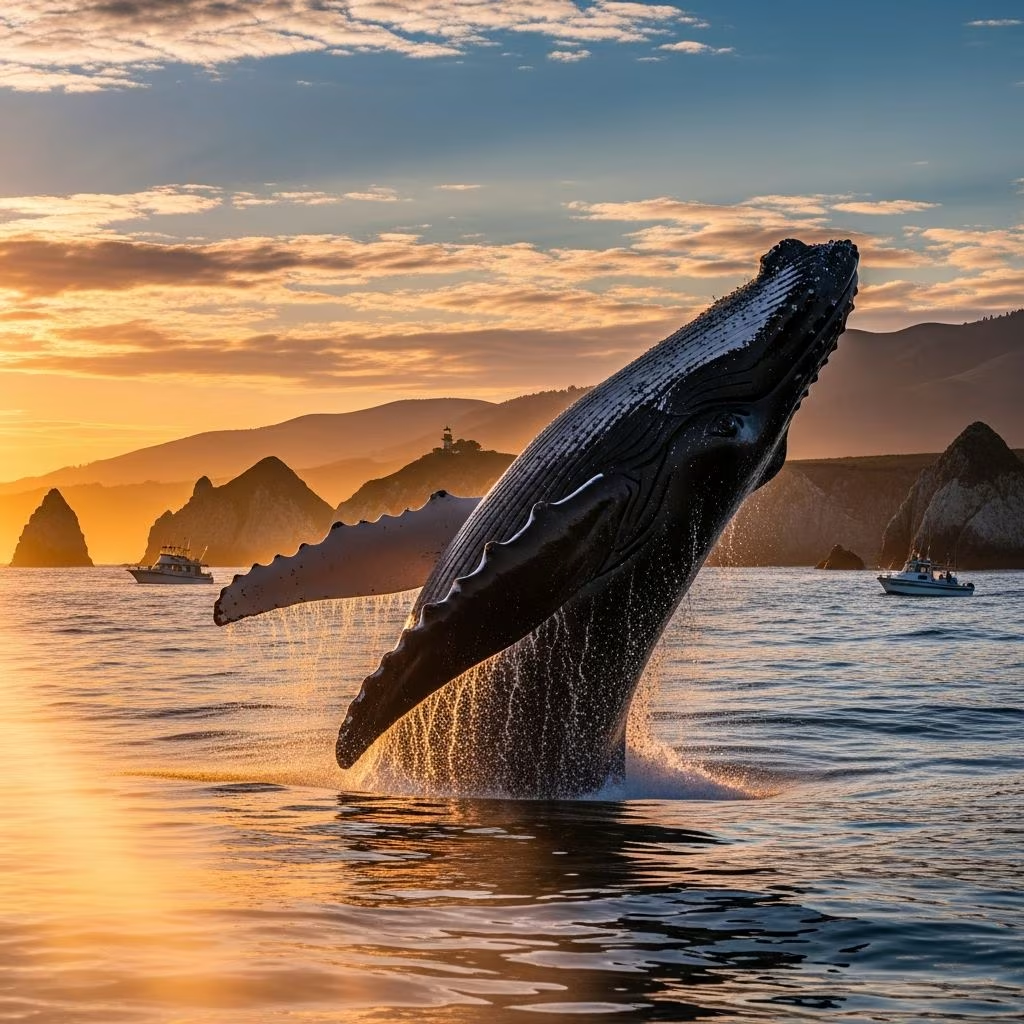
Beyond gray whales, California hosts year-round populations of multiple whale species. Blue whales, the largest animals ever to inhabit Earth, arrive during summer months when nutrient-rich upwelling creates abundant krill populations. Humpback whales, known for their acrobatic breaching and complex vocalizations, appear seasonally with varying intensity. Smaller cetaceans like orcas, finback whales, and minke whales add diversity to offshore encounters, appearing throughout the year with peak visibility during specific months.
Monterey Bay stands as California’s most consistently productive whale watching destination, recognized by marine scientists as exceptionally reliable for marine mammal sightings. The bay’s extraordinary productivity stems from its unique underwater geography. The Monterey Submarine Canyon descends to depths exceeding two and a half miles, plunging dramatically from the shoreline. This underwater topography creates powerful nutrient upwelling, channeling cold, mineral-rich water to the surface where it sustains massive populations of krill and small fish species that form the foundation of the whale food chain.
During summer months, humpback whales congregate by the hundreds in Monterey Bay to feast on abundant food resources. Winter brings gray whale migrations, while late spring and early summer attract blue whales seeking krill concentrations. Orca sightings reach their peak reliability during April and May. Year-round charter operations departing from Fisherman’s Wharf provide access to these waters, with experienced naturalists interpreting marine ecosystem dynamics during voyages.
Southern California’s extensive coastline provides multiple excellent vantage points for whale watching, with several specialized regions offering distinct advantages. The region’s appeal derives from its geographic position directly along major whale migration routes and the availability of both boat-based and land-based viewing options.
San Diego County combines accessibility with exceptional marine wildlife viewing. The region benefits from proximity to gray whale migration corridors and reliable populations of multiple whale species throughout the year. The San Diego area offers both elevated land-based vantage points and active charter operations providing close-encounter experiences.
High-elevation coastal reserves near San Diego, including locations on the Torrey Pines bluffs and the Birch Aquarium area in La Jolla, provide viewing platforms positioned directly above offshore waters. These land-based locations prove most productive during winter months when gray whales migrate closest to shore. For those preferring boat-based excursions, multiple operators conduct daily trips throughout the year, with specialized underwater viewing capability available aboard some vessels, allowing simultaneous observation of whales both above and below the water surface.
Orange County’s coastal harbors represent consistently productive whale watching locations with multiple tour operator choices. Dana Point Harbor hosts charter services operating half-century-long track records of successful marine wildlife encounters. Catamaran-based operations from this location provide comfortable platforms for extended voyages, while specialized underwater observation windows create unique viewing angles.
Newport Beach’s harbor system similarly supports multiple daily departures year-round, making these locations ideal for visitors seeking flexible scheduling options. The region’s geography funnels migrating whales close to shore, while offshore waters attract year-round resident species. Types of whales frequently encountered in this region include gray whales from December through April, humpback whales from May through November, blue whales during summer months, and occasional orca sightings.
The Los Angeles and Long Beach harbor complex, often overlooked by whale watching enthusiasts focused on distant coastal destinations, provides accessible marine wildlife viewing. The Palos Verdes Peninsula creates a distinctive underwater geography that concentrates whale activity, particularly during migration seasons. Multiple tour operators maintain facilities at Long Beach’s waterfront adjacent to the Aquarium of the Pacific.
Deep offshore waters accessible from these harbors produce strong blue whale activity from June through October, while gray whale migrations pass relatively close to the Palos Verdes Peninsula from December through mid-May. Point Vicente Interpretive Center on the peninsula provides one of Southern California’s most effective land-based viewing stations, offering elevated positions above the migration corridor.
Point Reyes National Seashore represents California’s finest land-based whale watching location, with geographic advantages unmatched by any other accessible coastal point. The peninsula extends approximately ten miles into the Pacific Ocean, positioning observers dramatically closer to migrating gray whales than virtually any alternative accessible vantage point. Scientific studies by the National Park Service and the Golden Gate National Parks Conservancy indicate that 94 percent of migrating Pacific gray whales pass within one mile of the Point Reyes headlands, creating extraordinary viewing probabilities during migration seasons.
During January’s peak southbound migration, over 1,000 gray whales may pass this point in a single day, creating nearly guaranteed sighting opportunities for visitors present during optimal conditions. The National Park Service operates shuttle buses to the lighthouse during peak season to manage visitor volumes drawn by exceptional viewing probabilities. Point Reyes accessibility, located approximately 27 miles north of San Francisco, makes this destination practical for Bay Area visitors seeking marine wildlife encounters without requiring extensive boat-based tours.
Peak viewing seasons at Point Reyes include December through February for southbound gray whale migration and March through May for northbound movement. Summer and fall months offer opportunities to observe humpback whales feeding offshore, though these sightings require greater distance and typically benefit from boat-based excursions rather than land-based viewing.
Mendocino represents California’s northernmost accessible whale watching region, distinguished by elevated coastal bluffs providing genuine effectiveness for shore-based observation without requiring boat access. The town’s position directly above the gray whale migration corridor creates excellent winter and spring viewing opportunities. Peak visibility from land runs from December through April for migrating gray whales, with both southbound and northbound populations visible during these months.
Point Arena Lighthouse, located approximately 15 miles south of Mendocino, occupies one of Northern California’s most dramatic elevated positions, offering spectacular coastal vistas combined with exceptional marine mammal sighting probabilities. Mendocino hosts an annual whale festival each March featuring guided viewing sessions led by experienced naturalists, providing educational context for seasonal whale activity.
Bodega Bay and the Sonoma Coast provide 55 miles of accessible shoreline along California’s least-visited whale watching regions. This area represents an excellent choice for visitors seeking uncrowded land-based viewing experiences. Whale Watch Point at Gualala Point Regional Park offers another elevated vantage location. Mother-calf pairs traveling north during spring tend to remain closer to shore than southbound adults, making March through May particularly productive for nearshore viewing from coastal bluffs.
Beyond Monterey Bay itself, the broader central coast provides excellent marine wildlife viewing opportunities. Santa Cruz offers charter departures and land-based viewing locations, while Big Sur’s dramatic coastal scenery combines marine mammal viewing with extraordinary landscape photography opportunities. The Channel Islands, positioned offshore from Oxnard, host dedicated whale watching expeditions through waters surrounding Channel Islands National Park and the National Marine Sanctuary.
Channel Islands-based whale watching operations conduct daily 3.5-hour excursions aboard specialized vessels, with guaranteed whale sightings or complimentary return trips. These expeditions provide close encounters with California gray whales and other baleen whale species, departing morning hours and returning by midday for convenient scheduling.
Visitors must evaluate whether boat-based or land-based whale watching better suits their preferences and circumstances. Both approaches offer distinct advantages:
Point Reyes, Dana Point Headlands, Cabrillo National Monument at Point Loma in San Diego, Point Vicente on the Palos Verdes Peninsula, and Mendocino bluffs all offer productive land-based viewing during gray whale migration. Boat tours produce closer encounters and access to offshore species like blue whales that rarely approach the shoreline.
| Season | Best Locations | Primary Species | Viewing Conditions |
|---|---|---|---|
| Winter (Dec-Feb) | Point Reyes, San Diego, Dana Point, Mendocino | Gray whales, occasional orcas | Peak southbound migration, excellent land-based viewing |
| Spring (Mar-May) | Monterey Bay, Central Coast, Northern locations | Gray whales (northbound), humpbacks, orcas | Migration continues, spring storms may limit boat tours |
| Summer (Jun-Oct) | Monterey Bay, Santa Cruz, Central Coast | Blue whales, humpbacks, finbacks | Warmest water temperatures, most reliable boat tour weather |
| Fall (Sep-Nov) | Monterey Bay, Santa Cruz, Southern locations | Humpbacks, blue whales, occasional gray whales | Transition season with variable conditions |
Successfully observing whales requires managing expectations and understanding marine mammal behavior. Whales are wild animals whose movements remain unpredictable despite seasonal patterns. Even during peak seasons and in reliable locations, whale sightings cannot be guaranteed. Tour operators offering guaranteed sightings or complimentary return trips provide insurance against disappointing encounters, though exceptional sighting probabilities at locations like Monterey Bay and Point Reyes create naturally high success rates.
Morning hours typically offer calmer ocean conditions and superior visibility compared to afternoon departures. Calm weather conditions prove essential for both boat comfort and visual whale spotting capability. Weekend trips attract larger crowds at popular locations, while weekday excursions often provide more intimate viewing experiences with reduced passenger numbers.
Combining land-based and boat-based viewing approaches during extended California coastal visits provides comprehensive marine mammal observation opportunities. Visitors spending multiple days in regions like Monterey Bay can conduct morning land-based observation combined with afternoon boat tours, maximizing sighting probabilities and viewing diversity.
