

 Travel Essentials
 Travel Essentials

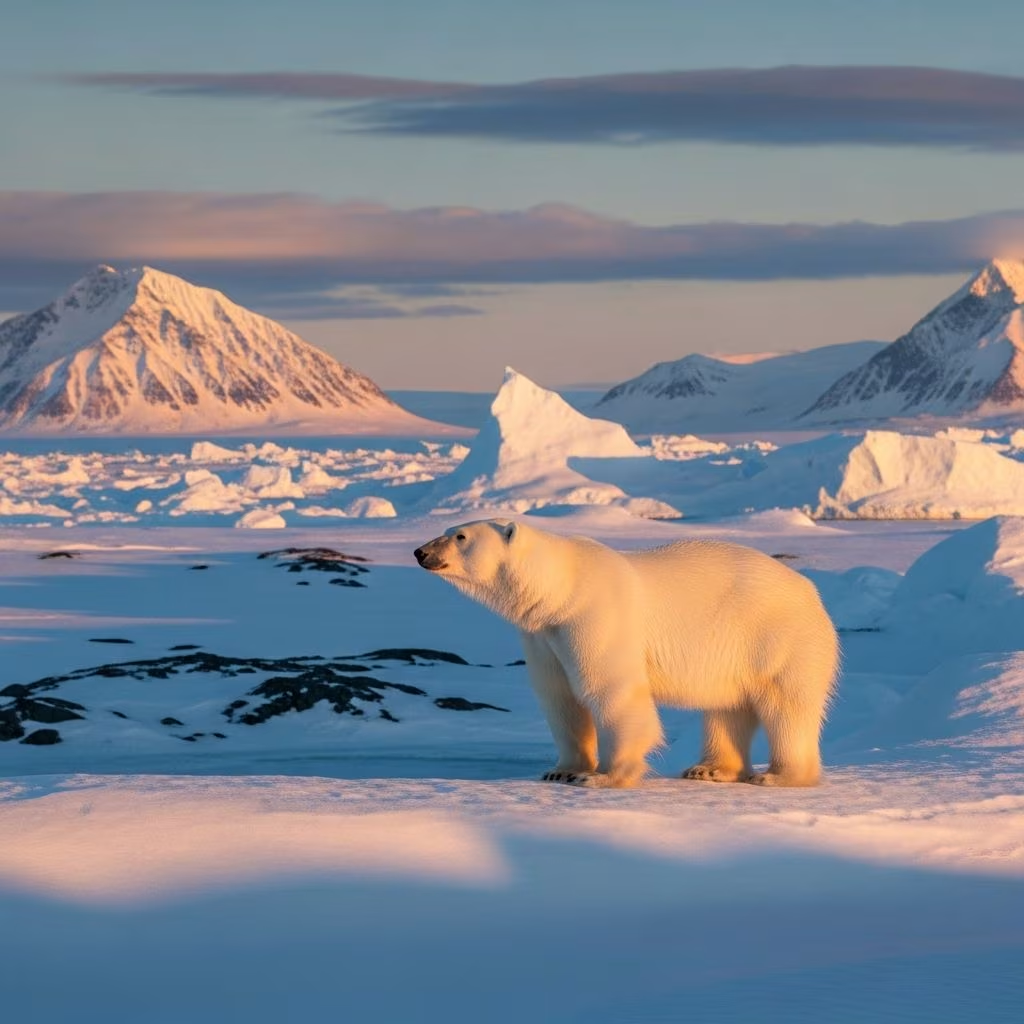
Explore top Arctic locations for viewing polar bears in their natural habitat, from Hudson Bay to Svalbard, with expert tips on timing and logistics.
 Travel Essentials
The Arctic represents one of Earth’s final frontiers, a realm of pristine ice, dramatic landscapes, and unparalleled wildlife encounters. Among the most coveted Arctic experiences is observing polar bears in their native environment, creatures that have adapted to thrive in extreme conditions where few other animals can survive. These magnificent predators inhabit regions spanning the Arctic Circle, encompassing territories across multiple nations and demanding careful planning for responsible wildlife observation.
Witnessing polar bears demands more than mere geographical proximity—it requires understanding seasonal patterns, bear behavior, and environmental conditions that influence wildlife distribution. The Arctic’s brief summer months and extended winters create distinct viewing windows, each offering unique advantages and challenges for expedition planners and wildlife enthusiasts. Successful observations combine scientific knowledge with logistical precision, ensuring both visitor safety and minimal ecological disruption.
Polar bears concentrate in specific Arctic regions where environmental conditions support their survival and hunting patterns. The Barents Sea population, encompassing territories near Svalbard and surrounding waters, represents one of the most substantial populations globally, with estimates ranging between 2,500 to 3,000 individuals. This concentration results from abundant marine resources and stable sea-ice formations that persist through multiple seasons.
Similarly, the Western Hudson Bay population demonstrates remarkable predictability in annual migration patterns, drawing approximately 900 polar bears through Churchill annually as they navigate seasonal transitions. These populations have become subjects of intensive scientific study, allowing researchers to track behavioral patterns and environmental responses with unprecedented precision.
Additional subpopulations inhabit the Northwest Passage and Canadian Arctic Archipelago regions, with Lancaster Sound hosting one of the largest populations, exceeding 2,500 bears. Understanding these population centers enables travelers to strategically plan expeditions aligned with bear activity patterns and seasonal movements.
Located on Hudson Bay’s shores in Manitoba, Churchill functions as the most developed polar bear viewing destination globally. The town’s nickname—”Polar Bear Capital of the World”—reflects decades of infrastructure development specifically tailored toward sustainable wildlife tourism and bear observation. Accessibility distinguishes Churchill from other Arctic locations, with regularly scheduled flights connecting to Winnipeg enabling relatively straightforward international access.
Churchill’s unique positioning creates a natural convergence point where bear behavior becomes predictable and observable. When summer warmth causes Hudson Bay sea ice to retreat northward, polar bears congregate along the tundra and shoreline, fasting while awaiting autumn freeze-up. This predictable seasonal pattern creates optimal viewing conditions during autumn months, typically from October through November, when bears mass along the bayshore in anticipation of returning ice.
The town has developed specialized infrastructure for bear observation, most notably the iconic tundra buggies—specially engineered vehicles designed to provide elevated viewing platforms while maintaining safe distances from wildlife. These vehicles enable ground-level observation without disturbing bear activity, offering photographers and naturalists unobstructed visual access. Additional viewing opportunities emerge through boat-based tours and helicopter expeditions, each providing distinctive perspectives of bear behavior and landscape features.
Churchill’s established tourism infrastructure includes multiple lodges offering accommodation, guiding services, and expedition coordination. The Western Hudson Bay population, concentrated near Churchill, represents probably the most intensively studied polar bear stock anywhere globally, enabling guides to draw upon decades of accumulated behavioral knowledge and population patterns.
The Svalbard archipelago, positioned halfway between mainland Norway and the North Pole in the High Arctic, represents a destination where polar bear viewing probabilities rank among Earth’s finest. This Norwegian territory maintains a polar bear population higher than its human inhabitants, creating an environment where bears are ubiquitous rather than exceptional encounters. The Barents Sea subpopulation inhabits Svalbard year-round, establishing established territories across the archipelago’s islands and surrounding ice.
Svalbard’s geographical characteristics contribute to its superiority as a viewing destination. The archipelago’s far northern positioning, relatively confined landmass, and absence of adjacent terrestrial territories create concentrated bear populations with limited dispersal options. This geographic constraint paradoxically benefits wildlife observers, as bear concentrations remain localized and predictable.
Unlike seasonal viewing windows in other Arctic regions, Svalbard offers extended observation opportunities throughout multiple seasons. The archipelago’s prominence has attracted international filming expeditions, including BBC’s acclaimed Frozen Planet II series, suggesting its exceptional wildlife viewing credentials. Visitors encounter bears across various seasons, observing diverse behavioral patterns from hunting sequences to maternal care activities.
Svalbard’s status as a Norwegian territory ensures regulated tourism frameworks and established environmental protections, distinguishing it from more remote Arctic regions lacking comparable governance structures. Accommodation options and expedition services have developed substantially, supporting both casual visitors and specialized wildlife photographers.
East Greenland presents an alternative for visitors prioritizing remote wilderness experiences over guaranteed bear encounters. The region encompasses the world’s largest national park—Northeast Greenland National Park spanning 972,000 square kilometers—devoid of roads, commercial airstrips, and conventional development. This vast wilderness harbors substantial polar bear populations despite low human presence, creating an environment approximating pre-industrial Arctic conditions.
Greenland’s landscape features fortified fjords, dramatic peaks, and expansive glacial systems creating visually spectacular but logistically challenging terrain. Bear sightings occur throughout coastal regions, though specific locations including Dove Bay and King Oscar Fjord demonstrate particularly high encounter frequencies. The Greenland Ice Sheet blankets approximately 80 percent of Northeast Greenland National Park, creating dynamic ice formations that concentrate bear activity in predictable coastal zones.
Observing Greenland’s polar bears requires specialized expedition planning, typically involving cruise-based approaches navigating fjords and coastal areas where bears congregate. The region’s remoteness limits accessibility compared to Churchill or Svalbard, demanding extended timelines and higher expedition costs. However, this remoteness simultaneously offers advantages for visitors seeking authentic wilderness experiences minimally affected by tourism infrastructure.
Greenland paradoxically features a polar bear on its national flag despite remarkably low sighting probabilities for casual visitors. Finding bears in Greenland resembles “finding a needle in a haystack” without specialized knowledge and positioned timing. This contrast underscores how geographical expanse—while hosting substantial populations—doesn’t necessarily translate to accessible viewing opportunities.
Kaktovik, situated on Barter Island off Alaska’s North Slope, offers a distinctive Arctic viewing experience combining polar bear observation with indigenous Inupiat cultural immersion. The small settlement’s strategic location within the Southern Beaufort Sea population range positions it as Alaska’s premier bear viewing destination. Climate change impacts have intensified bear concentrations near Kaktovik, as declining sea ice forces more individuals toward coastal areas and terrestrial habitats.
A compelling aspect of Kaktovik’s bear ecology involves the sustainable subsistence whaling practices conducted by the resident Inupiat community. Legal bowhead whale hunting produces carrion that attracts and concentrates polar bears in accessible proximity to the village. This phenomenon demonstrates how traditional indigenous practices, conducted sustainably and respectfully, can inadvertently create spectacular bear observation opportunities while maintaining ecological balance.
Seasonal variations dramatically influence Kaktovik’s bear populations. During summer months, visitors observe bears hunting seals along ice floes at the ice pack’s edge. March visits coincide with pregnant females emerging from winter dens with newborn cubs, offering rare maternal behavior observations. Historical records document up to 80 or more bears congregating simultaneously near the village during peak whaling seasons.
Accessing Kaktovik requires significant logistical planning, with a 50-minute flight from Churchill serving as the primary transportation link. The village’s small size and limited infrastructure demand advance coordination with local guides and accommodation providers. However, visitors gain authentic glimpses into modern Inupiat Arctic life alongside wildlife observation experiences.
Lancaster Sound, positioned at the Northwest Passage entrance in Arctic Canada, establishes itself as a premier viewing location for travelers prioritizing deep Arctic expeditions. The region hosts one of Earth’s largest polar bear populations, with over 2,500 individuals inhabiting the Lancaster Sound area. This concentration ranks second globally only to the Barents Sea population, positioning Lancaster Sound as a major Arctic wildlife zone.
Lancaster Sound’s significance extends beyond polar bears. The region functions as a wildlife corridor where bowhead whales and narwhals migrate during brief ice-free summer months, creating opportunities for comprehensive Arctic megafauna observation. The Inuit name—Tallurutiup Tariunga—reflects indigenous peoples’ deep historical connections to this ecologically vital region.
Accessing Lancaster Sound demands specialized expedition planning, typically involving icebreaker-class vessels capable of navigating Arctic waters. Extended voyages characterize most expeditions, with multi-week itineraries required to adequately explore the region and observe wildlife patterns. This remote positioning and extended timeline appeal particularly to dedicated naturalists and polar bear researchers.
Arctic bear observation success depends fundamentally upon understanding seasonal dynamics and environmental transitions. Churchill’s primary viewing season spans October through November, when bears accumulate along Hudson Bay shorelines anticipating sea ice formation. This autumn window captures bears exhibiting concentrated behavior patterns and social interactions including low-key male sparring competitions.
Spring expeditions offer distinctive opportunities, particularly March visits targeting maternal denning sites where females emerge with newborn cubs for the first time. These specialized spring trips command premium pricing and require years of advance booking due to limited capacity and exceptional demand.
Summer months present challenges in most Arctic regions as retreating sea ice disperses bear populations across vast territories. However, some locations including coastal Kaktovik enable summer seal-hunting observations as bears interact with ice floes at ecosystem edges.
Reaching primary polar bear destinations involves multi-stage transportation sequences. Churchill operates a small airstrip served regularly by flights from Winnipeg, enabling North American travelers relatively straightforward access. International visitors typically route through major Canadian hubs before connecting to regional services.
Svalbard accessibility benefits from established Norwegian infrastructure, with flights connecting to mainland Scandinavia and broader European networks. The archipelago’s developed tourism sector streamlines visitor processing and expedition logistics.
More remote destinations including Lancaster Sound and East Greenland require cruise-based approaches or specialized expedition vessels, extending journey timelines but providing comprehensive Arctic experiences. These extended voyages necessitate vacation periods measured in weeks rather than days.
October through November represents peak viewing season in Churchill, when bears concentrate along Hudson Bay shorelines. March provides spring opportunities featuring mothers with newborn cubs. Timing varies by location, with Svalbard offering extended viewing windows throughout multiple seasons.
Churchill combines established infrastructure, accessible logistics, predictable bear concentrations, and decades of tourism development. However, “best” depends upon individual priorities—Svalbard offers superior bear densities, Greenland provides remote wilderness experiences, and Kaktovik offers cultural immersion alongside wildlife observation.
Costs vary dramatically by destination and expedition type. Churchill lodge stays with guided viewing typically range from $3,000 to $8,000 for week-long packages. Specialized cruises to remote regions may exceed $10,000 per person. Spring denning expeditions command premium pricing due to limited availability.
Professional expeditions implement safety protocols minimizing risk, though Arctic conditions themselves present inherent hazards. Tundra buggies and established viewing structures provide secure observation platforms. Trained guides understand bear behavior patterns enabling safe encounters. Weather, not bears, typically poses greatest challenges.
Viewing availability varies by location. Churchill operates seasonal tourism concentrated in autumn. Svalbard and northern Greenland enable multi-season observation. Most destinations recommend specific seasonal windows aligning with bear behavior patterns and accessible weather conditions.
Successful polar bear observation requires thorough physical and mental preparation. Arctic conditions demand specialized cold-weather equipment including insulated parkas, thermal layers, waterproof outerwear, and engineered footwear rated for extreme temperatures. Professional expedition providers typically supply detailed equipment lists ensuring visitors arrive adequately prepared.
Physical conditioning enables visitors to withstand extended outdoor exposure and challenging terrain navigation. Previous high-latitude travel experience proves beneficial, though operators accommodate various fitness levels through expedition design and pacing.
Mental preparation encompasses understanding realistic expectations regarding bear encounter frequency and naturalistic behavior observation. Not all expeditions guarantee sightings despite careful planning. Many visitors find Arctic landscapes and alternative wildlife equally rewarding to dedicated bear encounters.
