

 Travel Essentials
 Travel Essentials

Explore premier African safari destinations for viewing both black and white rhinos, with practical advice for maximizing wildlife encounters.
 Travel Essentials
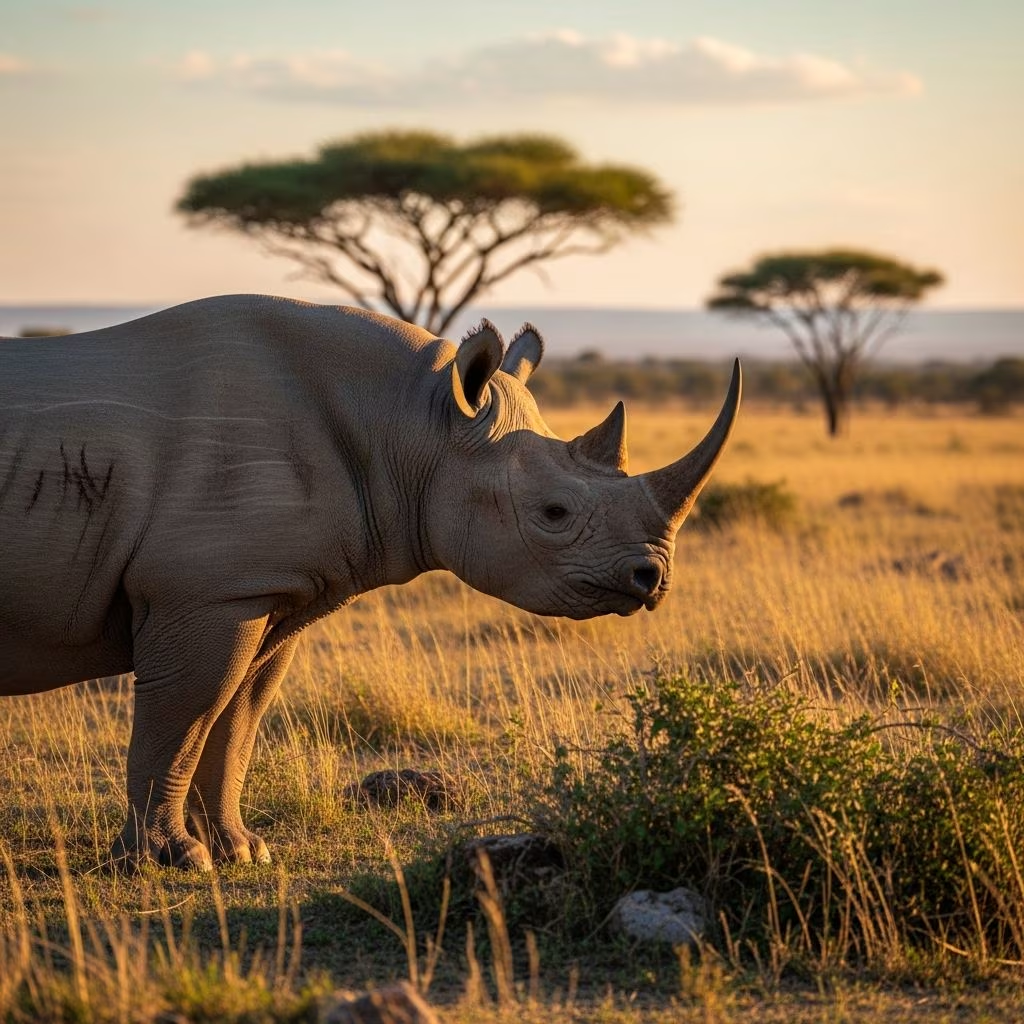
Few wildlife experiences compare to the thrill of encountering a rhinoceros in its natural environment. These magnificent creatures represent one of Africa’s most iconic and endangered megafauna, making sightings a cherished moment for safari enthusiasts worldwide. Whether you’re planning your first African adventure or returning for another expedition, understanding where and how to find rhinos transforms your safari from memorable into truly unforgettable.
Rhinos hold a unique place in the African safari experience. As one of the continent’s most sought-after sightings, encountering these massive herbivores in their native habitat creates an emotional connection that extends far beyond standard wildlife tourism. Unlike many other animals that can be reliably spotted throughout the year, rhino encounters require patience, timing, and often, considerable luck. This rarity amplifies the significance of a successful sighting, transforming it into a milestone moment many travelers cherish for decades.
The African continent hosts two primary rhino species: the white rhino and the black rhino. Each species exhibits distinct characteristics, behaviors, and habitat preferences that influence where and when you’re most likely to encounter them. Understanding these differences enhances your safari strategy and increases your chances of a successful encounter.
Rhino populations concentrate across specific regions of Africa, with particular nations serving as primary strongholds. South Africa dominates the white rhino landscape, harboring approximately 90% of the world’s remaining white rhino population. This geographic concentration makes South Africa the most reliable destination for white rhino sightings, particularly in well-established reserves and national parks where populations remain relatively stable.
Black rhinos, by contrast, present a more dispersed distribution pattern across East African nations. Kenya emerges as the black rhino capital, hosting more black rhinos than any other country on the continent. Tanzania follows as another significant destination for black rhino encounters, while Uganda offers unique opportunities for those seeking more intimate wildlife experiences in smaller, less-trafficked reserves.
South Africa remains the premier destination for reliable rhino sightings, particularly for those targeting white rhinos. Kruger National Park stands as the flagship destination, where sightings are exceptionally common throughout the sprawling reserve. The park’s extensive road network and well-developed infrastructure make rhino-spotting accessible to visitors of varying experience levels and physical abilities.
Beyond Kruger’s boundaries, numerous private reserves and national parks provide alternative venues for rhino encounters. Hluhluwe-iMfolozi Park offers a more intimate safari experience, while Madikwe Game Reserve presents another excellent option for those seeking substantial populations without excessive tourist crowds. These reserves maintain healthy rhino populations supported by rigorous conservation programs and professional wildlife management.
For black rhino enthusiasts, Kenya represents the most promising African destination. The Laikipia Plateau region, located in central Kenya’s highlands, concentrates significant black rhino populations within dedicated conservancies. Ol Pejeta Conservancy and Lewa Wildlife Conservancy both maintain thriving black and white rhino populations, offering visitors opportunities to encounter both species during extended safaris.
Lake Nakuru National Park provides another compelling Kenyan destination, particularly for white rhino observations. Set within the dramatic Rift Valley landscape, this scenic reserve offers excellent probabilities for rhino sightings even during brief visits. Early morning game drives along the lakeshore frequently yield white rhino sightings, with the rising mist creating atmospheric conditions perfect for wildlife photography.
Additional Kenyan venues including Nairobi National Park, Tsavo West, Meru National Park, and Aberdare National Park round out Kenya’s diverse rhino-viewing opportunities, each presenting unique landscapes and varying rhino density levels.
Ngorongoro Crater distinguishes itself as Tanzania’s most dependable rhino-viewing destination. This massive volcanic caldera hosts a healthy and notably relaxed black rhino population that spends considerable time in open grassland, facilitating excellent sighting opportunities. Unlike many reserves where rhinos remain elusive, Ngorongoro’s resident population exhibits relatively predictable patterns, often visible throughout daylight hours across the crater floor.
For those unable to locate rhinos during the main day, the picturesque Lerai Forest provides a secondary viewing location. Rhinos typically retreat to this forested area during late afternoon hours, offering additional opportunities for encounters before nightfall.
Uganda offers a distinctive alternative for travelers seeking close-encounter rhino experiences. Ziwa Rhino and Wildlife Ranch, located in central Uganda, hosts the nation’s sole rhino population. This specialized reserve permits foot-based tracking experiences, allowing visitors to approach white rhinos on foot under expert guide supervision. The experience delivers an unparalleled sense of intimacy and perspective, enabling travelers to comprehend the true scale and presence of these two-ton animals in ways vehicle-based safaris cannot replicate.
Khama Rhino Sanctuary represents Botswana’s primary rhino conservation hub, operated as a community-driven initiative. This Kalahari wilderness reserve welcomes visitors interested in viewing white rhinos while supporting ongoing conservation efforts. The sanctuary’s community-based management model offers travelers the opportunity to contribute directly to rhino protection through their visit expenditures.
Beyond traditional vehicle-based game drives, specialized walking safaris offer transformative alternatives for rhino encounters. These foot-based expeditions, conducted by expert trackers and experienced guides, provide unprecedented proximity to rhino populations. Walking safaris inherently create a more immersive wilderness experience, heightening sensory engagement and deepening emotional connections with wildlife.
Premier walking safari operators maintain strict protocols ensuring both visitor safety and rhino wellbeing. Expert guides possess intimate knowledge of rhino movement patterns, behavioral indicators, and optimal tracking conditions. They utilize wind direction awareness, spoor reading, and habitat knowledge to locate rhinos while maintaining appropriate distances.
Notable walking safari operators include Rhino Ridge, Saruni Rhino, and Desert Rhino Camp. Each institution combines specialized training with deep conservation commitments, ensuring experiences that educate while delivering unforgettable wildlife encounters. The hands-on approach characteristic of walking safaris typically instills visitors with profound appreciation for conservation challenges and personal responsibility toward species protection.
Some reserves offer multi-hour tracking experiences where visitors pursue rhinos across substantial distances. Pongola Game Reserve in South Africa’s Zululand region exemplifies this approach, permitting tracking expeditions lasting up to three hours across extensive bush terrain. These extended experiences demand physical stamina but reward dedicated trackers with exceptional opportunities for observation and photography.
Seasonal variations significantly influence rhino visibility patterns. Early morning hours typically present optimal viewing windows, as rhinos often graze during cool dawn periods. Late afternoon hours provide secondary opportunities, particularly for species retreating to specific habitats before nightfall.
Dry seasons generally improve rhino spotting probabilities. During drought periods, reduced water sources concentrate animal populations near available waterholes, predictably gathering rhinos in specific locations. Conversely, wet seasons disperse populations across broader territories, reducing encounter likelihood.
Engaging experienced safari guides significantly enhances sighting probabilities. Professional guides possess comprehensive knowledge of rhino behavioral patterns, preferred habitats, seasonal movements, and recent sighting locations. Their expertise transforms safari experiences from random game drives into targeted wildlife expeditions with substantially improved encounter rates.
Reputable safari operators emphasizing guide training and specialization typically deliver superior results compared to budget-oriented services. Guides specifically trained in rhino tracking represent a worthwhile investment for travelers prioritizing reliable sightings.
White rhinos represent the larger of Africa’s two species, weighing up to 2,500 kilograms. Despite their name, these animals display gray coloring identical to black rhinos. The distinction derives from historical terminology rather than actual coloration. White rhinos possess squared, flat upper lips adapted for grazing on grasses, making them grazers consuming vegetation close to ground level.
Black rhinos weigh considerably less than their white counterparts, typically ranging up to 1,350 kilograms. These animals feature distinctive triangular-shaped upper lips specifically adapted for browsing on leaves, shoots, and elevated vegetation. This physical distinction reflects their dietary preferences for plants and woody vegetation rather than ground-level grasses.
Understanding rhino conservation status profoundly affects safari experiences. Both African rhino species face persistent threats from poaching, habitat loss, and human-wildlife conflict. Most reserves employing visitor revenues for anti-poaching operations and habitat protection depend upon sustained tourism interest for funding conservation programs.
Responsible safari tourism directly supports conservation objectives. Visitor fees finance ranger patrols, veterinary care, fence maintenance, and community engagement initiatives essential for species survival. Choosing operators demonstrating genuine conservation commitments ensures your safari expenditures meaningfully contribute to rhino protection rather than mere profit extraction.
| Destination | Primary Species | Sighting Reliability | Best Season | Experience Type |
|---|---|---|---|---|
| South Africa – Kruger | White Rhino | Very High | May-September | Vehicle-Based |
| Kenya – Laikipia | Black Rhino | High | June-October | Vehicle-Based |
| Tanzania – Ngorongoro | Black Rhino | High | June-October | Vehicle-Based |
| Uganda – Ziwa | White Rhino | Very High | Year-Round | Walking-Based |
| Botswana – Khama | White Rhino | High | May-September | Vehicle-Based |
Sighting probabilities vary dramatically by destination and season. Highly managed reserves like Ziwa Rhino Ranch near Uganda and South Africa’s premier reserves offer sighting probabilities exceeding 80-90% during peak seasons. Less-developed reserves and dispersed populations present substantially lower probabilities. Professional guides accessing recent sighting data improve odds considerably compared to independent exploration.
Professional walking safari operations maintain exemplary safety records through expert guide training, strict distance protocols, and behavioral understanding. Guides maintain upwind positioning and carefully monitor rhino behavior, retreating immediately upon detecting stress indicators. Thousands of visitors annually experience safe walking encounters worldwide.
Extended visits substantially increase encounter probabilities. A single-night reserve visit might yield rhino sightings through fortune alone, but three to five-night stays enable systematic search patterns and multiple daily game drives, dramatically improving reliability. Dedicated rhino-focused itineraries often include multiple reserve visits across the full safari region.
Telephoto lenses (400mm-600mm) capture excellent detail at safe distances. Longer focal lengths reduce disturbance risk while maintaining image quality. Early morning and late afternoon light provides superior photographic conditions compared to harsh midday sun. Professional wildlife photographers often utilize stabilization equipment for image sharpness.
Dry seasons concentrate populations near limited water sources, dramatically increasing encounter probability. Rainy seasons disperse animals across broader territories as dispersed water availability reduces dependence on specific waterholes. Individual reserve characteristics influence this pattern variably.
Encountering African rhinos represents a transformative travel experience connecting visitors with some of our planet’s most ancient and magnificent megafauna. Whether pursuing these iconic animals through South African reserves, Kenya’s highland conservancies, Tanzania’s volcanic landscapes, or Uganda’s specialized sanctuaries, each destination offers unique perspectives on rhino ecology, conservation, and human responsibility toward wildlife protection.
Your rhino safari choice should balance personal preferences, physical capacity, temporal availability, and conservation values. Each destination presents legitimate opportunities for successful encounters when approached strategically with qualified expertise. The investment of time, resources, and attention yields not merely wildlife sightings but profound experiences that reshape perspectives on human relationships with nature and species preservation imperatives.
