

 Travel Essentials
 Travel Essentials

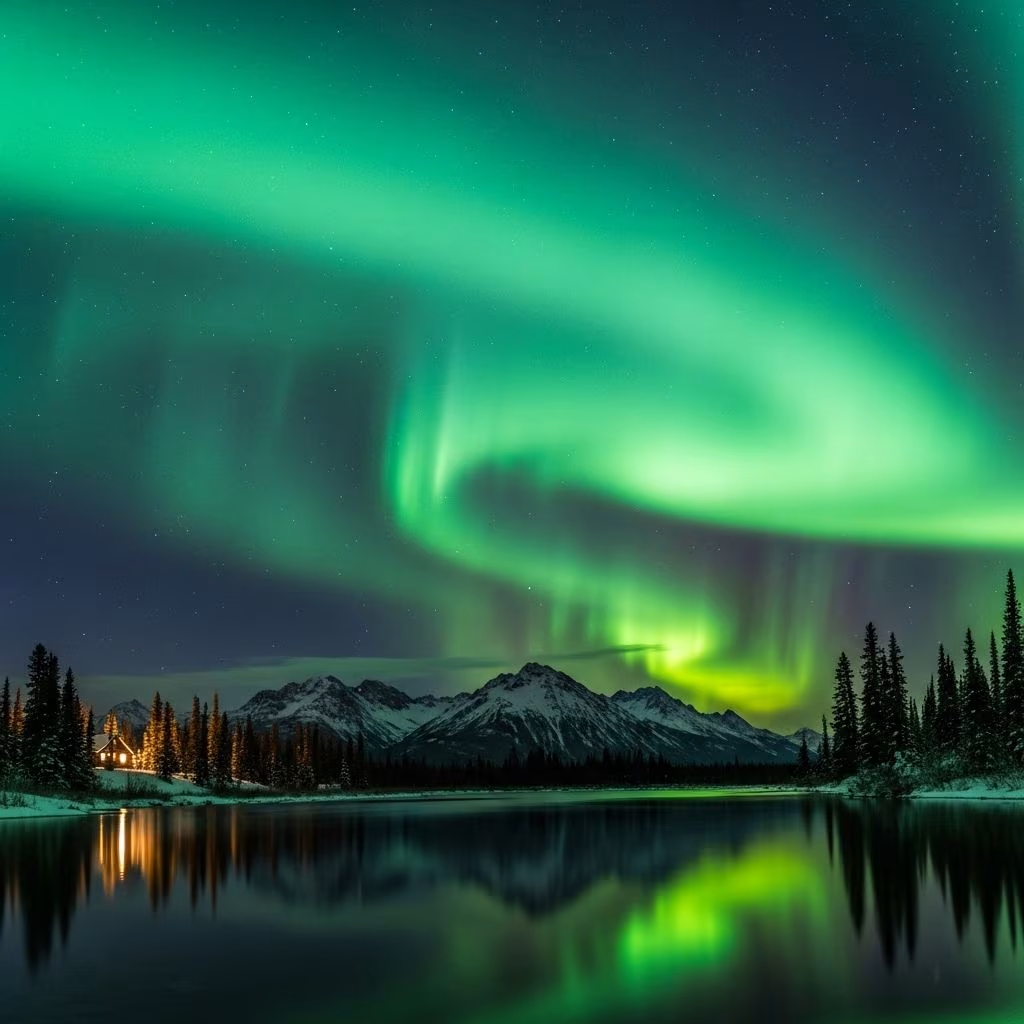
Explore premier locations in the US for viewing the Northern Lights, from Alaska's wilderness to Midwest lakeshores, with tips on timing and viewing spots.
 Travel Essentials
The aurora borealis, commonly known as the Northern Lights, captivates with its vibrant dances of green, purple, and red across the night sky. Caused by charged particles from the sun colliding with Earth’s atmosphere, this natural light show is visible in northern latitudes during periods of high solar activity. While Arctic regions like Scandinavia and Canada are famous hotspots, the United States offers exceptional viewing opportunities in states closer to the magnetic pole, particularly Alaska and the northern Midwest. Factors such as minimal light pollution, clear winter nights, and proximity to the auroral oval—the ring-shaped zone of frequent displays—make these areas ideal.
This guide highlights premier US destinations, drawing from expert insights and aurora forecasts. Expect details on prime seasons (typically September to March), specific viewpoints, accessibility, and practical tips. Whether you’re a seasoned aurora chaser or a first-timer, these spots promise breathtaking spectacles amid diverse landscapes from rugged mountains to serene lakes.
Alaska stands unrivaled as the top US state for Northern Lights viewing, thanks to its position within the auroral oval and extended dark winters. Communities here experience auroras on over 200 nights annually, with peak activity from late August to April. Fairbanks earns acclaim as a hub, blending urban amenities with easy access to remote viewing sites.
In Fairbanks, head to the University of Alaska’s Georgeson Botanical Garden or Cleary Summit for unobstructed panoramas. Guided tours enhance the experience, using real-time forecasts from NOAA’s Space Weather Prediction Center to pinpoint active periods. Further north, Utqiagvik (formerly Barrow) offers relentless darkness from November to January, ideal for intense displays, though extreme cold demands preparation.
Anchorage provides accessible viewing despite its size; escape to Chugach State Park or Girdwood for pollution-free skies. Late November to January aligns with minimal daylight, amplifying aurora visibility. Denali National Park complements trips, where clear nights reveal lights over snow-capped peaks. Solar maximum years, like the current cycle peaking around 2025, boost frequency across Alaska.
The Great Lakes region surprises with reliable aurora sightings due to expansive dark skies and reflective water surfaces that mirror the lights. Northern Minnesota’s North Shore along Lake Superior stretches 150 miles of coastline, offering frequent displays from September to December. Grand Marais and Tettegouche State Park provide elevated overlooks with minimal interference.
Voyageurs National Park, hugging the Canadian border, excels with its labyrinth of lakes that amplify auroral reflections. Boat-accessible sites during summer transitions yield unique perspectives, though winter snowshoeing accesses interior spots. Isle Royale National Park in Lake Superior demands a ferry from Michigan or Minnesota but rewards with superior visibility owing to its isolated position.
Michigan’s Upper Peninsula shines at Pictured Rocks National Lakeshore and Porcupine Mountains Wilderness State Park. Copper Harbor, at the tip, minimizes light pollution, with September-December optimal. These areas combine aurora hunting with hiking amid cliffs and forests.
Montana’s Glacier National Park rivals Alaska for clarity, its alpine meadows framing vivid auroras from September to March. Logan Pass offers high-elevation views, though winter closures necessitate backcountry skills. Northern Montana’s big skies enhance displays during geomagnetic storms.
Idaho’s Heyburn State Park and Priest Lake provide serene settings in the Idaho Panhandle. Panhandle State Forest and Schweitzer Mountain elevate vantage points, with views from September to early March. Low population density ensures dark conditions. North Dakota’s Fargo and surrounding prairies benefit from flat horizons, linking seamlessly with Minnesota and Montana hotspots.
Though farther south, New England’s northern realms occasionally host auroras during strong solar events. Maine’s Acadia National Park dazzles with coastal cliffs; Cadillac Mountain’s summit grants 360-degree vistas from October to December. Baxter State Park extends opportunities into Maine’s wild interior.
New Hampshire’s White Mountains, home to the East’s highest peaks, deliver elevated sightings. Mount Washington, Cannon Mountain, Artist Bluff, and Mount Lafayette stand out from September to early January, doubling as fall foliage magnets. Pennsylvania’s Cherry Springs State Park, the East’s darkest sky park, features dedicated astronomy fields for rare southern sightings.
Washington State’s northwestern reaches, including Olympic National Park’s Hurricane Ridge and Lake Crescent, boast clear skies from September to February. Cape Flattery’s dramatic shores add ocean foregrounds to celestial shows. Northern Washington’s sparse lights amplify visibility during active periods.
Auroras peak near equinoxes (September-October, March) and during solar maximum, with winter nights (November-February) offering longest darkness. Monitor NOAA’s aurora viewline for 30-27+ day forecasts showing oval expansion southwards. Apps like Aurora Forecast track Kp index (0-9 scale), targeting 4+ for continental US views.
| Region | Peak Months | Kp Threshold | Key Factors |
|---|---|---|---|
| Alaska | Aug-Apr | 3+ | Dark winters, auroral oval |
| Midwest Lakes | Sep-Dec | 4+ | Lake reflections, low pollution |
| Rockies/Plains | Sep-Mar | 4-5 | Open skies, elevation |
| Northeast | Sep-Jan | 5+ | Strong storms only |
| Pacific NW | Sep-Feb | 4+ | Coastal clarity |
Solar wind particles interact with Earth’s magnetosphere and atmosphere, exciting gases to emit colored light.
Primarily winter, but Alaska sees them August-April; equinoxes yield strongest shows.
Alaska, especially Fairbanks, due to frequency and infrastructure.
Solo viable with forecasts, but tours optimize locations and comfort.
Use 15-30s exposures, ISO 1600-3200, f/2.8 lenses on tripods.
