

 Travel Essentials
 Travel Essentials

Explore the best global locations to see the Northern Lights, from Alaska's wild frontiers to Scandinavia's fjords, with tips on timing, viewing spots, and unique adventures.
 Travel Essentials
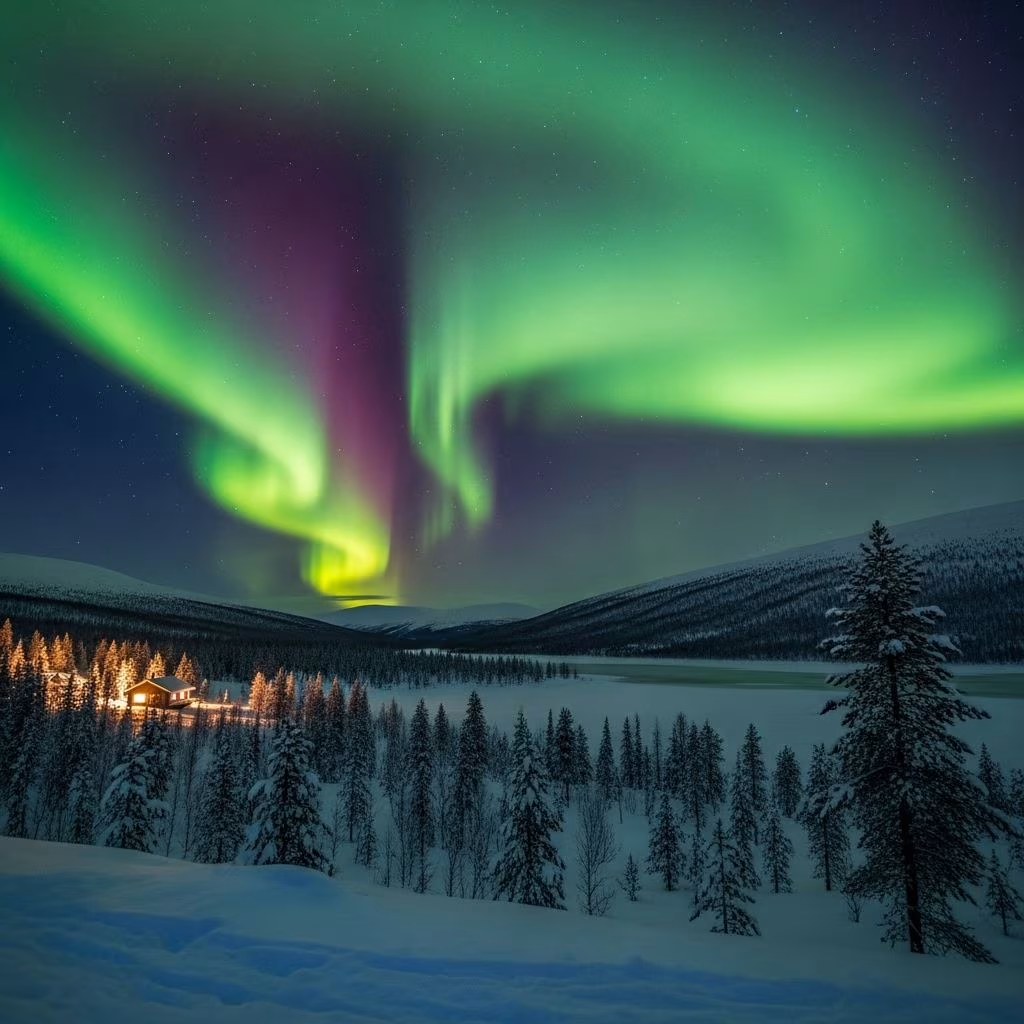
The aurora borealis, often called the Northern Lights, captivates travelers with its ethereal dance of green, purple, and pink hues across polar skies. This natural light display results from charged particles from the sun colliding with Earth’s atmosphere, creating a spectacle best seen in high-latitude regions during winter months. Prime viewing requires clear, dark nights away from city lights, typically from September to April. This guide highlights exceptional destinations, drawing from reliable travel insights to help you plan an unforgettable chase.
To maximize your chances, grasp the basics. The aurora occurs near the magnetic poles, favoring locations above 60 degrees north latitude. Solar activity peaks every 11 years; the current cycle promises heightened displays through 2025. Optimal months vary by region but generally span late fall to early spring when nights lengthen.
Alaska stands out for reliable sightings due to its northern position and vast dark expanses. Fairbanks serves as a hub, boasting over 200 clear nights annually and infrastructure tailored for aurora hunters.
In Fairbanks, the University of Alaska’s Geophysical Institute provides free forecasts. Venture to nearby Chena Hot Springs for soaking while watching lights reflect on geothermal pools. Winter activities include dog sledding across frozen trails and visiting the Morris Thompson Cultural Center to learn Athabascan stories tied to the aurora, known locally as ‘sky spirits.’
Southward, Girdwood’s Alyeska Resort offers luxury with mountaintop viewing from its aerial tram, recognized globally for prime aurora vistas. Nearby, Wrangell-St. Elias National Park provides remote backcountry spots amid glaciers and peaks.
| Location | Best Season | Unique Activity | Sighting Probability |
|---|---|---|---|
| Fairbanks | Sep-Apr | Hot springs viewing | High (240+ nights) |
| Alyeska Resort | Nov-Mar | Aerial tram rides | Very High |
| Wrangell-St. Elias | Oct-Mar | Glacier hikes | Moderate-High |
Norway’s dramatic landscapes amplify the aurora’s drama. The Finnmark Peninsula in the northeast delivers pristine darkness bordering Finland and Russia. Stay in glass-domed cabins or remote lodges for uninterrupted views.
Tromsø, a vibrant Arctic city, combines urban amenities with easy access to the Lyngen Peninsula’s rugged Alps. Cruise fjords spotting orcas by day, then chase lights at night. Dog sledding, ice fishing, and Sami cultural encounters enrich trips. Base in mountain lodges with saunas for post-viewing recovery.
Snäfellsnes Peninsula? Wait, no—Norway’s Lofoten Islands offer jagged peaks framing the lights, accessible by ferry from Bodø.
Iceland’s geothermal wonders pair perfectly with auroras. The Golden Circle route includes Thingvellir National Park and Geysir hot springs, but extend to Hvolsvöllur Valley for rural darkness. South Iceland’s Skaftafell National Park in Vatnajökull area features ice caves illuminated by auroras.
Snaefellsnes Peninsula on the west coast provides isolation with black-sand beaches and Snæfellsjökull volcano as a backdrop. Reykjavik tours depart for remote spots, but self-drive for flexibility. Combine with glacier walks or Northern Lights hunts via superjeep.
Finland excels in comfort for aurora viewing. Inari in Lapland, home to the Sámi people, offers sacred Lake Inari views from glass igloos. Reindeer safaris by snowmobile lead to viewing hides.
Luosto’s lakeside resorts feature ‘aurora alarms’—phone alerts or staff wake-ups. Opt for wilderness huts for immersion. Oulanka National Park’s Karhunkierros trail winds through forests ideal for backpackers seeking lights over rapids.
Snowshoeing or fat-biking enhances daytime exploration, with huskies pulling sleds at dusk.
Swedish Lapland’s ancient boreal forests provide low-light-pollution havens. Abisko National Park’s ‘blue hole’—a microclimate of clear skies—attracts pros. Train via the Aurora Sky Station for elevated views.
Combine with ice climbing, snow rafting, or visits to the Icehotel in Jukkasjärvi, where art suites glow under lights. Kiruna offers urban access with Sami-guided tours.
Though less highlighted, Canada’s north shines. Whitehorse in Yukon Territory delivers frequent shows over Marsh Lake. Drive the Alaska Highway through Kluane National Park for roadside views, stopping at hot springs.
Dawson City evokes Gold Rush history under auroras. Further afield, Northwest Territories’ Yellowknife freezes Great Slave Lake for ice road viewing.
Reserve 6-12 months ahead for peak season. Choose dark-sky certified lodges with northern exposures. Multi-night stays (4+) boost odds.
Tread lightly: Stick to trails, support Indigenous-led tours, minimize vehicle use. Dark skies are fragile ecosystems.
Shoot in manual mode: ISO 1600-3200, f/2.8, 10-30s exposures. Foreground elements like trees or cabins add depth. Apps like PhotoPills predict positions.
Solar wind particles interact with atmospheric gases, excited near poles.
Rarely, due to midnight sun; stick to equinoxes or winter.
Alaska offers more nights, Europe better infrastructure.
Use NOAA’s Space Weather Prediction Center for Kp forecasts.
$2,000-$6,000 per person for 5-7 days, excluding flights.
