

 Travel Essentials
 Travel Essentials

Comprehensive guide to observing Welsh wildlife including seals, dolphins, puffins, and raptors across diverse natural habitats and protected reserves.
 Travel Essentials
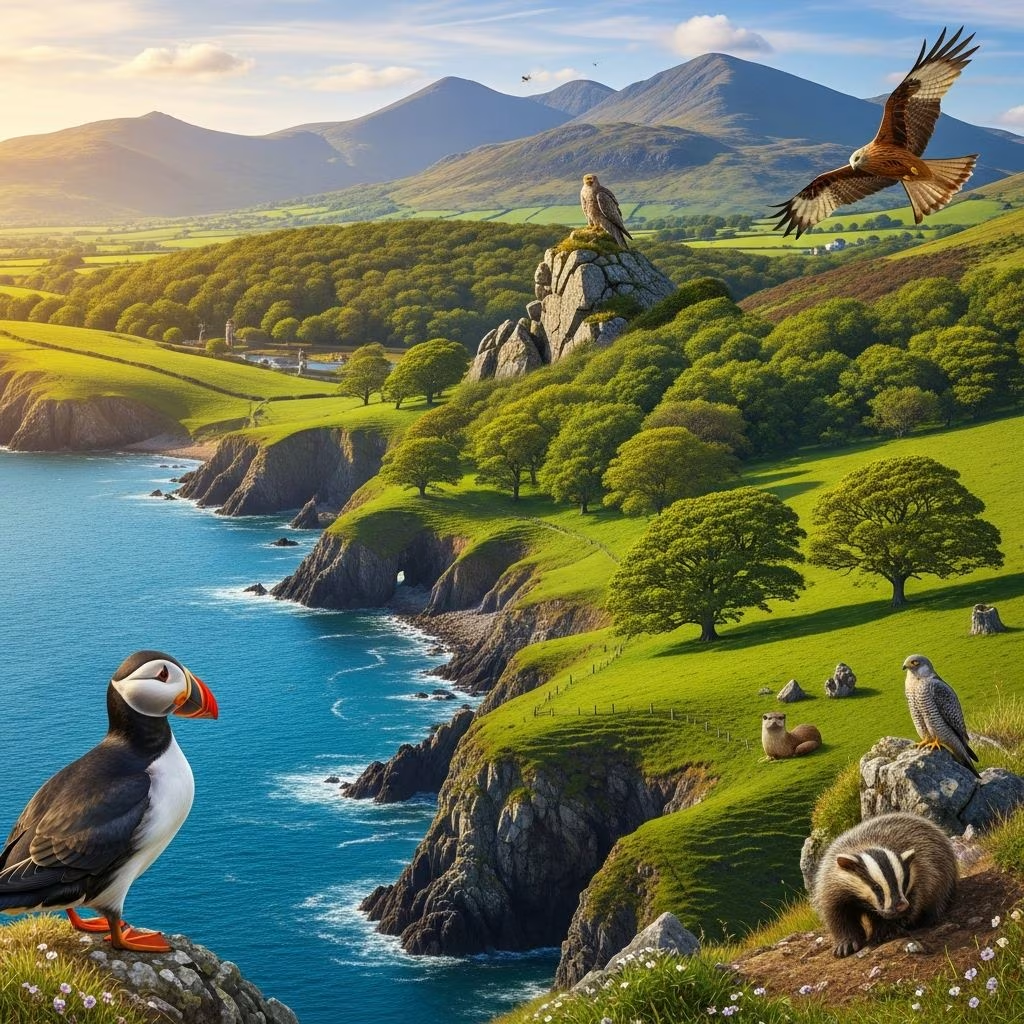
Wales presents one of the United Kingdom’s most diverse and accessible opportunities for observing wildlife in natural settings. Spanning from remote coastal islands to inland forest reserves, the Welsh landscape hosts an impressive array of native creatures, migratory species, and marine mammals. Whether you’re a seasoned birder, casual nature enthusiast, or family seeking outdoor adventure, Wales offers year-round opportunities to witness animals in their native habitats. The combination of dramatic geography, protected marine zones, and dedicated nature reserves creates ideal conditions for wildlife observation across multiple ecosystems.
The waters surrounding Wales support thriving populations of marine mammals and seabirds. Cardigan Bay has established itself as one of Europe’s premier locations for cetacean observation, hosting substantial populations of bottlenose dolphins and harbour porpoises. The harbour town of New Quay serves as a primary departure point for dedicated marine wildlife cruises, allowing visitors to experience close encounters with these intelligent marine creatures. The bay’s designation as an important marine habitat reflects its ecological significance and the conservation efforts that maintain its biodiversity.
For those seeking a more immersive island experience, several Welsh islands offer unparalleled wildlife viewing opportunities. These island destinations feature distinct ecosystems where seabirds, seals, and marine mammals congregate in remarkable concentrations. The strategic positioning of these islands along major migration routes and breeding grounds makes them particularly valuable for observing seasonal species movements and breeding behaviours.
Beyond daytime wildlife observation, certain Welsh locations offer distinctive experiences combining astronomical interest with marine biology. Ynys Enlli, situated 2 miles off the Llŷn Peninsula near Porthmadog, gained international recognition in 2023 as Europe’s first International Dark Sky Sanctuary. This designation reflects the island’s exceptional freedom from light pollution, creating ideal conditions for both stargazing and wildlife observation. Boat crossings from Porth Meudwy provide opportunities to observe Risso’s dolphins, porpoises, and seals in Bardsey Sound, while clifftop walks reveal additional marine wildlife. Overnight stays on the island allow visitors to experience the dramatic contrast between daylight wildlife activity and night-time astronomical observation.
Welsh coastal islands function as critical breeding and resting grounds for multiple seabird species and marine mammals. These islands experience dramatic seasonal fluctuations in population density, with spring and summer months bringing concentrated breeding activity. The harsh marine environment surrounding these islands provides natural protection from terrestrial predators, allowing seabirds and seals to establish stable populations.
Ramsey Island, positioned off St David’s Head in Pembrokeshire, demonstrates the ecological richness possible within relatively compact island territories. Rising 394 feet from turbulent seas, the island’s dramatic cliffs host nesting colonies of choughs, guillemots, razorbills, fulmars, and kittiwakes, particularly during spring through mid-August breeding season. The island’s rugged topography creates multiple microhabitats supporting distinct species compositions across different cliff faces and ledges. Visitors can observe complex social behaviours, feeding patterns, and territorial disputes among these concentrated seabird populations.
Marloes Sands in Pembrokeshire provides distinctive opportunities for seal observation, particularly during late summer when Atlantic grey seals and their pups gather on remote beaches. Approximately 150 pups are born annually, and clifftop vantage points from the adjacent Deer Park offer optimal viewing positions without disturbing breeding colonies. The surrounding coast’s Marine Conservation Zone designation protects the diverse habitats supporting varied marine and coastal creatures.
Beyond marine environments, Wales’s freshwater ecosystems support distinct wildlife communities adapted to inland water conditions. These habitats experience pronounced seasonal variations in species presence and activity levels, creating different observation opportunities throughout the year.
The WWT Llanelli Wetland Centre represents a professionally managed approach to wildlife observation and conservation education. Spanning 450 acres of lakes, pools, streams, and lagoons adjacent to Burry Inlet in Carmarthenshire, the centre combines natural habitat preservation with visitor infrastructure enabling close wildlife encounters. Programmes include handfed goose interactions, flamingo observation, bird-hide viewing, and invertebrate exploration. This model allows visitors of varying ages and mobility levels to engage meaningfully with wetland ecology.
Lake Vyrnwy in Powys, managed as an RSPB nature reserve surrounding a Victorian-era reservoir, offers contrasting experiences amid grassy hills and mature woodlands. Buzzards, siskins, and grebes populate the water environment, while pied flycatchers, wood warblers, and redstarts inhabit surrounding vegetation. The reservoir’s history as human-engineered infrastructure demonstrates successful habitat restoration and conversion to conservation use.
Teifi Marshes attracts substantial wintering populations of wildfowl, including teal and wigeon during colder months. The reserve’s wetland structure—combining open water, reed beds, and managed grasslands—creates layered habitats supporting diverse species compositions. Canoe hire options enable waterborne exploration of the Teifi Gorge, providing opportunities to observe kingfishers and otters in their natural aquatic environments. Water buffalo herds, though non-native species, maintain marshy conditions through grazing patterns that benefit dependent insect and amphibian populations, which subsequently attract higher trophic level birds and mammals.
Welsh wetlands support exceptional dragonfly and damselfly diversity, with certain reserves hosting 20 or more species. Cosmeston Lakes Country Park in the Vale of Glamorgan features rewilded quarries and reed beds supporting 16 dragonfly and damselfly species, with peak activity occurring between late May and September. Afternoon visits during sunny conditions optimise observation opportunities, as temperature and light conditions directly influence insect activity levels. The Bosherston Lily Ponds near Stackpole in Pembrokeshire showcase similar aquatic insect diversity, while resident otters hunt beneath water lilies during summer months when the ponds reach peak flowering.
Welsh forests and woodlands host distinct assemblages of mammals, birds, and reptiles adapted to wooded habitats. These environments present different observation challenges compared to open water or coastal settings, requiring patience, silence, and familiarity with species-specific behaviour patterns.
Margam Country Park near Swansea maintains a managed fallow deer herd across 200 hectares of estate land, providing reliable observation opportunities during rutting season when male competitive behaviours intensify. Red deer, the UK’s largest wild mammal, inhabit the elevated terrain of Brecon Beacons National Park, but observation requires hiking away from human habitation during quieter seasonal periods. Autumn rutting season presents optimal viewing opportunities when males become vocal and visible during competitive displays.
Coed y Brenin forest near Dolgellau in North Wales and Clocaenog Forest provide opportunities to observe woodland bird species in natural settings. These established forests support canopy-dwelling and mid-storey species less commonly encountered in open habitats. Early morning visits yield higher observation success rates, as birds demonstrate increased activity during dawn hours when competing acoustic signals are minimal.
Wales hosts several raptor species, from resident breeding pairs to migratory hunters. Peregrine falcons, the world’s fastest animals achieving diving speeds of 200 mph (320 km/h), nest in multiple Welsh locations including Cemlyn Nature Reserve on Anglesey. These agile predators demonstrate spectacular hunting behaviours, stooping from height to intercept airborne prey with precision-guided velocity. Symonds Yat at the Wye Valley’s English terminus also supports peregrine breeding pairs with observable nesting activity during spring and early summer.
The Llŷn Peninsula’s coastal cliffs attract fulmar, puffin, chough, raven, buzzard, and peregrine falcon populations, creating opportunities for comparative raptor observation. Bardsey Island nearby hosts the only accredited bird observatory in Wales, facilitating systematic avian population monitoring and research. Fortunate visitors may observe bottlenose dolphins and porpoises while traversing the peninsula’s coastal pathways.
Dedicated nature reserves provide structured access to wildlife communities with professional interpretation and conservation context. The Welsh Wildlife Centre near Cardigan operates as a Visit Wales Gold Award recipient, offering nature trails suitable for walking and cycling, canoe hire, and managed habitat observation. Water buffalo grazing maintains optimal marsh conditions for dependent species assemblages, demonstrating how non-native livestock can support native wildlife diversity through targeted habitat management.
Parc Slip Nature Reserve in Bridgend, South Wales, functions as the Wildlife Trust’s flagship reserve, encompassing 300 acres of grassland, woodland, and wetland habitat. Summer wildflower displays featuring oxeye daisy, ragged robin, and orchids create scenic environments while supporting pollinator populations. Weekly Reptile Rambles enable guided observation of great crested newts, slow worms, adders, and grass snakes within controlled group contexts.
The Wales Coast Path provides continuous access to maritime environments supporting wildlife observation without formal reserve infrastructure. Mudflats at Traeth Lafan near Bangor, Pen Llŷn’s coastal heath, and Afon Dyfi estuary each support distinct species communities within Gwynedd’s coastal zone. Grey seals frequent Llŷn beaches, resting on rocks or swimming in secluded coves, while bottlenose and common dolphins navigate the surrounding waters.
The RSPB’s Osprey Project at Glaslyn near Porthmadog provides structured observation of breeding raptors within their operational conservation programme. Flat Holm Island in the Bristol Channel supports seabird colonies and maritime grassland wildlife accessible through organised boat trips from South Wales coastal communities. Kenfig National Nature Reserve and Merthyr Mawr Warren each demonstrate distinct invertebrate habitat richness, with Merthyr Mawr Warren containing some of Britain’s most significant invertebrate communities.
Wildlife observation success depends substantially on understanding seasonal movement patterns, breeding cycles, and migratory timing specific to target species.
| Season | Primary Wildlife Events | Optimal Locations |
|---|---|---|
| Spring (March-May) | Seabird breeding begins, migratory birds arrive, dragonfly emergence | Coastal cliffs, wetland reserves, forests |
| Summer (June-August) | Peak breeding activity, lily pond flowering, dragonfly abundance | Islands, breeding colonies, freshwater lakes |
| Autumn (September-November) | Deer rutting season, bird migration peaks, seal pupping begins | Forests, coastal sites, Marloes Sands |
| Winter (December-February) | Wintering wildfowl, wading birds, raptor hunting activity | Wetland reserves, estuaries, grasslands |
Successful wildlife observation requires research into species-specific distribution, habitat requirements, and seasonal occurrence patterns. Early morning hours typically yield highest activity levels across most species. Binoculars, field guides, and camera equipment enhance observation experiences without physically disturbing wildlife. Respecting wildlife boundaries, moving quietly, and exercising patience prove essential for meaningful encounters. Many destinations offer guided tours with professional naturalists providing species identification, behaviour interpretation, and ecological context unavailable through independent exploration.
Wales’s wildlife populations depend on habitat preservation and visitor practices minimising disturbance to breeding, feeding, and resting activities. Marine Conservation Zone designations, national park protections, and nature reserve management structures reflect commitments to ecosystem preservation. Visitors contribute to these conservation goals through respectful observation practices, adherence to established access guidelines, and support for reserve operations and research programmes.
