

 Travel Essentials
 Travel Essentials

Explore top destinations worldwide for swimming with humpback whales, including seasonal timing, marine sanctuaries, and wildlife encounter tips.
 Travel Essentials
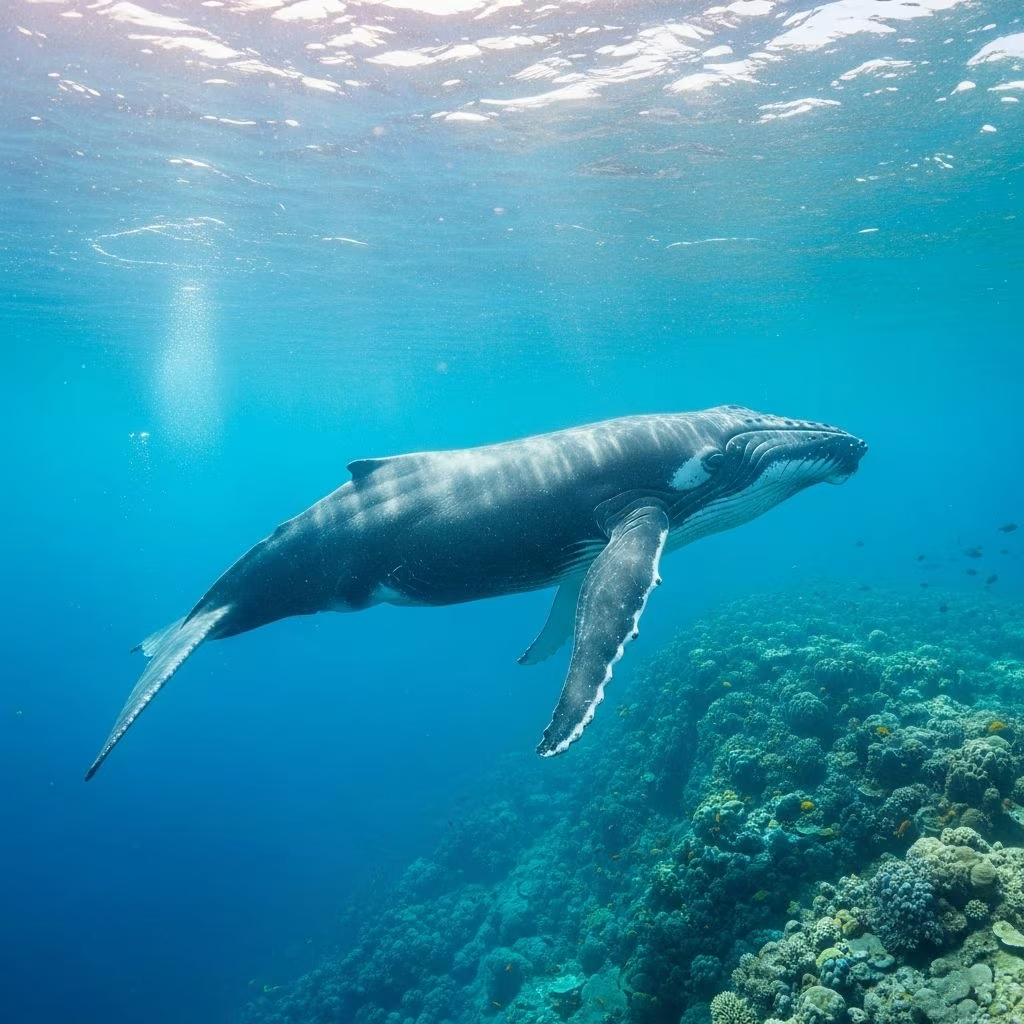
Encountering humpback whales in their natural habitat represents one of the most profound wildlife experiences available to travelers. These magnificent marine mammals, weighing up to 40 tons, undertake extraordinary annual migrations that create predictable opportunities for swimmers and snorkelers to witness their behaviors up close. The practice of swimming with humpback whales has become increasingly popular among adventure travelers seeking meaningful connections with marine life, though success depends heavily on understanding seasonal patterns and choosing appropriate destinations.
Humpback whales are highly migratory creatures that follow consistent annual routes between feeding grounds in polar regions and breeding grounds in tropical waters. Their migrations are among the longest undertaken by any mammal, with some populations traveling over 16,000 miles annually. This predictability has made certain ocean regions reliable destinations for whale encounters during specific months.
The whales’ movements are driven by two primary biological imperatives: feeding and reproduction. After spending months in nutrient-rich polar waters consuming massive quantities of krill and small fish, humpback whale populations journey toward warmer tropical and subtropical seas where breeding and calf-rearing occur. These warm waters, though offering limited food sources, provide ideal conditions for mating activities and allow newborn calves to develop in protective environments.
Understanding these migration cycles allows travelers to time their visits strategically. Different populations follow distinct migration routes, meaning various global destinations experience peak whale activity during different months of the year. This geographic diversity creates year-round opportunities for whale swimming experiences across multiple continents.
French Polynesia’s islands, particularly Mo’orea, have established themselves as premier whale-swimming destinations due to formal conservation protections and exceptional water conditions. The region designated itself a Marine Mammal Sanctuary in 2002, providing legal protections that enhance both whale welfare and visitor experiences.
During the July to November season, substantial humpback whale populations migrate to Mo’orea’s warm waters for breeding and calving purposes. The island’s positioning on outer reefs creates natural concentration points where whales gather, making encounters relatively reliable compared to other destinations. The clear turquoise waters and excellent visibility allow swimmers to observe whale behaviors including courtship displays, mother-calf interactions, and the signature breaching movements humpbacks are famous for.
The accessibility of Mo’orea whale encounters distinguishes this destination from many alternatives. Many operators launch from beachfront hotels, with boat rides to optimal viewing locations typically requiring only 10-15 minutes. September represents the peak month for visits, balancing reliable whale sightings with favorable weather conditions. Visitors should note that encounters are facilitated through guided tours with trained operators who understand whale behavior and maintain appropriate distances respecting both animal welfare and regulatory requirements.
Tonga has gained international recognition as a premier destination for freediving with humpback whales, attracting photographers and adventure seekers worldwide. The Kingdom of Tonga comprises 169 islands across the South Pacific, with the Vava’u region emerging as the primary whale-encounter zone. The specific humpback population frequenting Tongan waters demonstrates remarkable fidelity to breeding grounds, returning annually and remaining for extended periods from July through October.
What distinguishes Tonga from other whale-swimming destinations is the opportunity for close encounters in deep, clear blue waters that provide extraordinary photographic opportunities. However, the popularity of Tongan whale experiences has necessitated strict regulatory frameworks to prevent overexploitation. Authorities limit interaction pressure by restricting only four tourists in the water simultaneously and issuing permits to only 21 boats annually. These conservation measures ensure that wildlife tourism remains sustainable and minimally disruptive to breeding whale populations.
Swimmers should understand that Tongan whale encounters involve freediving rather than boat-based snorkeling, requiring reasonable swimming fitness and comfort in open ocean conditions. The deeper waters and strong currents demand that visitors work exclusively through licensed operators with expertise in whale behavior and water safety. The trade-off of additional physical demands is rewarded by intimate encounters and photographic opportunities that rival any other global destination.
Silver Bank, located north of Dominican Republic waters, hosts the world’s largest gathering of Northern Atlantic humpback whales during winter months. Between January and April, as many as 3,000 humpbacks congregate in these shallow, protected waters for mating and calving activities. This extraordinary concentration creates unparalleled opportunities for multiple daily encounters and the chance to observe complex social behaviors within whale populations.
The Caribbean destination benefits from official designation as a Marine Mammal Sanctuary, providing regulatory protections that complement natural geographic features creating ideal whale habitat. The shallow bank depths enable swimmers to observe maternal behavior as female whales nurse calves in protective waters. Male humpbacks engage in competitive singing and physical displays as they vie for mating opportunities, providing visitors with insights into whale reproductive biology rarely witnessed elsewhere.
Access to Silver Bank requires boat-based adventures, with the Turks and Caicos Aggressor II representing one of the few liveaboard vessels authorized to operate in this sensitive marine area. Multi-day expeditions combine reef diving opportunities with dedicated whale swimming sessions, maximizing exposure to diverse marine ecosystems within single trips. The January-April window creates a distinct seasonal tourism pattern different from Pacific destinations, allowing travelers flexibility in scheduling year-round whale adventures.
Ningaloo Reef in Western Australia offers swimming opportunities with humpback whales during their southern migration period, with up to 30,000 individuals passing through between August and October. The reef’s shallow waters and protected conditions create ideal environments for both whale observation and snorkeling activities. Unlike equatorial destinations where whales remain for breeding, Australian humpbacks use these waters primarily as migratory corridors, creating a distinct encounter dynamic.
The August-October window coincides with Australian winter, when air temperatures are cool but ocean conditions remain suitable for snorkeling. The enormous number of migrating whales increases encounter probabilities compared to destinations where smaller populations concentrate for breeding. Visitors should recognize that these are typically active migration animals rather than the stationary, behavioral animals observed in breeding grounds, potentially reducing opportunities for the intimate observations available in other locations.
Beyond the primary four destinations, several additional locations merit consideration for humpback whale encounters. Socorro Islands off Mexico’s Baja California host migrating humpbacks from January through March as they journey from Alaska, offering diving opportunities alongside whale watching. Mozambique’s northern archipelagos provide viewing opportunities from July through October, with white sandy islands offering distinctive observation platforms. These secondary destinations often receive fewer visitors, potentially offering more intimate experiences with less commercialized tourism infrastructure.
| Destination | Optimal Season | Primary Activity | Encounter Type |
|---|---|---|---|
| Mo’orea, French Polynesia | July – November | Breeding/Calving | Snorkeling from boats |
| Tonga (Vava’u) | July – October | Breeding/Mating | Freediving |
| Silver Bank, Caribbean | January – April | Mating/Calving | Liveaboard diving |
| Ningaloo Reef, Australia | August – October | Migration | Snorkeling |
Responsible whale swimming requires understanding and adhering to established behavioral protocols developed to minimize stress on marine mammals. International guidelines recommend maintaining specified distances from whales, limiting group sizes in water at any time, and avoiding aggressive pursuit or manipulation of animal movements. These standards reflect scientific understanding of whale stress responses and represent ethical best practices that visitors should embrace actively.
Conservation considerations extend beyond individual behavior to encompass broader ecosystem impacts of marine tourism. Choosing operators with demonstrated commitment to sustainable practices, supporting marine protected areas through appropriate fees, and participating in citizen science initiatives contribute to long-term whale population health. Many whale-swimming destinations implement permit systems, visitor caps, and operator licensing specifically to maintain ecological balance while accommodating tourism demand.
Successful whale encounters require appropriate physical preparation and equipment selection. Swimmers should possess reasonable fitness levels, comfort in open ocean environments, and ideally some snorkeling or diving experience depending on destination requirements. Specialized wetsuits provide thermal protection in tropical waters and improve visibility, while high-quality underwater cameras capture photographic memories of encounters.
Mental and emotional preparation proves equally important as physical readiness. Whale swimming experiences can provoke profound emotional responses, with many participants reporting transformative feelings during close encounters. Setting realistic expectations regarding encounter certainty, animal behavior, and environmental conditions contributes to satisfying experiences. Whales remain wild animals unpredictably responding to environmental stimuli; swimmers must embrace the authentic uncertainty inherent in wildlife observation.
Whale swimming adventures range dramatically in cost depending on destination, expedition length, and included amenities. Caribbean liveaboard options typically require 5-7 day commitments costing $3,000-$6,000 per participant. Pacific destinations often feature more economical day-trip options ranging from $300-$1,000. Budget-conscious travelers should consider Australian and Mozambique options, which frequently offer more affordable entry points than Caribbean or Polynesian destinations.
The premium pricing reflects genuine operational costs including specialized vessel requirements, trained guides, marine protection area fees, and the inherent risks of ocean-based tourism. Higher-priced expeditions typically offer better safety protocols, superior guide expertise, and enhanced encounter probabilities. Evaluating cost against experience expectations helps travelers select appropriate options within their budgets and comfort levels.
Humpback whales exhibit no inherent aggression toward humans and have never been documented attacking swimmers. Their massive size creates potential for accidental injury through collision or tail strikes, but such incidents remain extraordinarily rare when visitors follow established guidelines and maintain appropriate distances from animals.
Remain calm and still in the water. Avoid sudden movements or vocalizations that might startle the animal. Allow the whale to dictate the encounter distance. Most whales approach out of curiosity rather than aggression and will typically maintain safe distances. Trained guides present during organized tours provide real-time behavioral interpretation and safety management.
Scientific evidence indicates that well-regulated whale tourism creates minimal population-level impacts when proper protocols are maintained. Marine sanctuaries, permit systems, and visitor caps employed at premier destinations demonstrate that tourism and conservation can coexist successfully. The economic incentives tourism creates for marine protection often exceed conservation benefits of non-tourism-based management approaches.
Optimal timing depends on your selected destination and preferred encounter types. Breeding and calving season (roughly July-November in Pacific, January-April in Atlantic) offers the most active whales and highest encounter probabilities. Migration season provides different dynamics with traveling whales showing distinct behaviors. Individual preference regarding weather, crowd levels, and travel logistics should inform specific timing decisions.
Swimming with humpback whales represents an accessible yet profound wildlife experience available at multiple carefully managed global destinations. Understanding seasonal patterns, destination characteristics, and encounter expectations enables travelers to select experiences aligning with personal preferences, physical capabilities, and budget constraints. Whether pursuing Instagram-famous Tongan freediving, Caribbean breeding ground observations, or Australian migratory encounters, whale swimming adventures offer transformative connections with magnificent marine mammals while supporting conservation through responsible tourism practices.
