

 Travel Essentials
 Travel Essentials

Navigate Asia's richest destinations with insights on cultural immersion, natural wonders, urban exploration, and practical travel strategies for 2026.
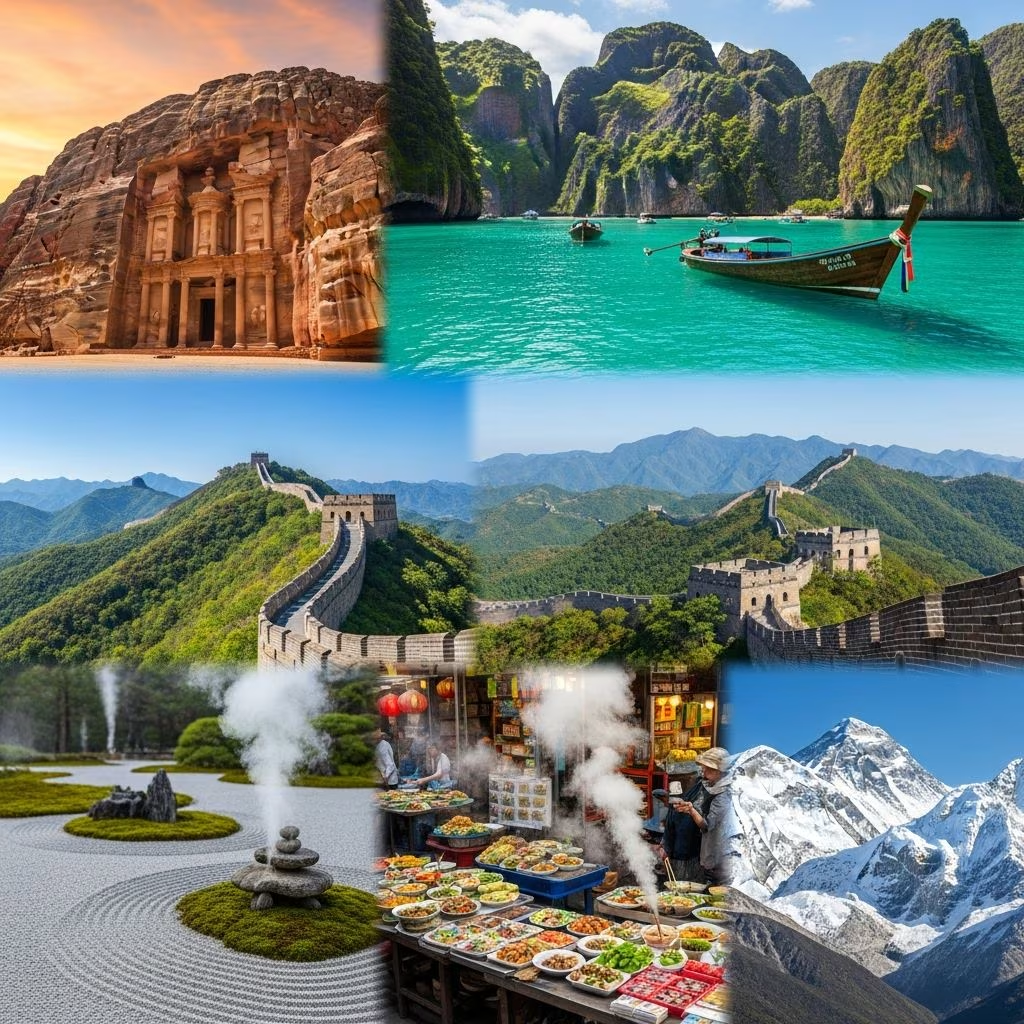 Travel Essentials
Asia represents one of the world’s most dynamic and captivating travel regions, drawing millions of visitors annually with its extraordinary blend of ancient civilizations, cutting-edge modern cities, pristine natural landscapes, and deeply rooted cultural traditions. From the soaring peaks of the Himalayas to tropical island paradises, from bustling metropolitan centers to serene rural villages, Asia offers an unparalleled spectrum of experiences that cater to every type of traveler. Whether you seek spiritual enlightenment, culinary adventures, architectural marvels, or thrilling outdoor pursuits, this vast continent delivers transformative journeys that leave lasting impressions.
Contemporary travel trends reveal a significant shift in how visitors approach Asian exploration. Rather than rushing through popular tourist circuits, modern travelers increasingly prioritize meaningful engagement with local communities, sustainable practices, and authentic cultural experiences. This evolution reflects broader changes in global travel preferences, where quality interactions supersede quantity of destinations visited. Asia’s diverse offerings align perfectly with this transformation, providing abundant opportunities for visitors to connect meaningfully with the regions they explore.
The continent continues to strengthen its position as a premier global destination due to enhanced air connectivity, improved transportation infrastructure, and strategic tourism investments across multiple nations. These developments make multi-country itineraries more accessible and convenient than ever before, enabling travelers to craft personalized journeys that span several distinct cultures and landscapes within a single trip.
Asia’s major metropolitan centers serve as gateways to both modern innovation and historical richness. These cities function as cultural crossroads where centuries-old traditions coexist with ultramodern architecture, innovative culinary scenes, and vibrant contemporary art movements.
Asia’s richest cultural experiences often involve traversing multiple locations that collectively reveal the continent’s complex history and diverse traditions. Several established routes have emerged as particularly rewarding for travelers seeking deep cultural immersion.
China’s Golden Triangle Route: This comprehensive journey links three essential Chinese cities within a two-week timeframe. Visitors begin in Beijing, where they explore Tiananmen Square, the Forbidden City, and the Temple of Heaven before taking day excursions to nearby sections of the Great Wall such as Mutianyu. The itinerary continues via high-speed train to Xi’an, home to the astonishing Terracotta Army and ancient city walls that provide cycling and walking opportunities. The journey concludes in Shanghai via an overnight sleeper train, creating an immersive experience spanning five millennia of Chinese civilization.
Southeast Asian Cultural Trail: The classic route often called the “Banana Pancake Trail” guides first-time visitors through Southeast Asia’s most accessible and culturally rich destinations. This journey typically flows from Bangkok through Chiang Mai in northern Thailand, continues to Luang Prabang in Laos with its peaceful riverside setting and sacred waterfalls, then progresses through Vietnam’s Hanoi and coastal towns like Hoi An before concluding in Cambodia’s Siem Reap near the magnificent Angkor Wat complex. This route benefits from established tourism infrastructure, convenient transportation connections, and diverse experiences within each location.
Beyond urban centers, Asia showcases some of Earth’s most spectacular natural phenomena and landscapes. These environments provide opportunities for adventure, wildlife observation, and spiritual connection with pristine wilderness areas.
| Destination | Primary Appeal | Best Experience |
|---|---|---|
| Halong Bay, Vietnam | Limestone karst formations | Multi-day cruises through emerald waters |
| Komodo Island, Indonesia | Endemic wildlife | Guided treks and diving adventures |
| Lake Toba, Sumatra | Largest volcanic lake | Cultural immersion in Batak communities |
| Himalayan Region, Nepal | Mountain peaks and monasteries | Trekking circuits with teahouse stays |
| Borneo Rainforest | Orangutan habitat | Jungle expeditions and wildlife sanctuaries |
The Himalayan region presents particularly compelling trekking opportunities, especially the seven-day circuit from Kathmandu that traverses high mountain passes while connecting ancient Buddhist monasteries and Sherpa villages. This immersive experience combines physical challenge with cultural engagement and spiritual significance. Travelers stay in rustic village teahouses, sharing meals with local families and developing authentic connections with mountain communities.
Asia’s extensive coastlines and island territories offer diverse beach and water-based experiences, ranging from luxury resort settings to laid-back beach towns and adventure destinations.
Optimal travel timing varies significantly across Asia’s diverse climate zones. Strategic planning around seasonal patterns enhances comfort and experience quality.
Early Year Travel (January-February): Northern regions and elevated areas offer ideal conditions, with comfortable temperatures and low rainfall. This period suits trekking, cultural touring, and activities in Nepal, northern Thailand, and China’s mountainous regions.
Mid-Year Periods (March-May): Malaysia and Singapore present excellent opportunities for food-focused tourism and urban exploration, with culinary tourism emphasizing street food scenes and traditional markets. Visitors should plan activities for cooler morning and evening hours while remaining hydrated during peak heat.
Monsoon Season Navigation: While traditionally considered a challenging travel period, monsoon season in Southeast Asia offers advantages including reduced tourist crowds, lush landscapes, and lower accommodation rates. Cambodia’s Angkor Wat sunrise visits become particularly breathtaking during this period as vegetation reaches its verdant peak.
Asia’s remarkable food cultures represent a primary motivation for many travelers. Regional cuisines carry centuries of history, reflect local agricultural traditions, and embody spiritual and philosophical approaches to nourishment. Food-focused tourism encompasses street food tours through urban centers, cooking classes in rural homes, market explorations with local guides, and farm-to-table experiences in agricultural regions.
Tea plantations in Sri Lanka, street markets in Bangkok and Hanoi, coastal seafood regions throughout Vietnam and Thailand, and the Muslim Quarter in Xi’an showcase how culinary tourism deepens cultural understanding while supporting local economies and food producers.
Itinerary Flexibility: While established routes like the Banana Pancake Trail provide convenient frameworks, travelers benefit from adapting itineraries based on personal interests. Many experienced travelers recommend spending deeper time in 2-3 countries rather than rushing through numerous destinations, allowing fuller immersion into local culture and rhythms.
Transportation Networks: Asia’s improving transportation infrastructure, including high-speed trains connecting major Chinese cities, extensive bus networks across Southeast Asia, and improving flight connectivity, enables efficient movement between destinations. Understanding these options helps travelers optimize their time and budget.
Budget Optimization: Southeast Asia remains particularly accessible for budget-conscious travelers, with affordable accommodation, inexpensive street food, and reasonable activity costs throughout the region. Mid-range options and luxury experiences also abound for travelers with varying budgets, ensuring accessibility across economic ranges.
Beyond conventional tourism circuits, Asia offers distinctive specialized experiences that appeal to particular interests. Wellness retreats combine yoga, meditation, and spa treatments within natural settings. Adventure tourism encompasses rock climbing, scuba diving, jungle trekking, and mountaineering. Educational tourism focuses on language study, martial arts training, and historical archaeology programs. Spiritual journeys visit Buddhist monasteries, Hindu pilgrimage sites, and sacred mountains.
Two to three weeks allows sufficient time to experience 2-3 countries meaningfully without excessive travel fatigue. This duration balances convenience with adequate time for cultural immersion and multiple activities.
The established “Banana Pancake Trail” through Thailand, Laos, Vietnam, and Cambodia offers excellent infrastructure, diverse experiences, and convenient transportation for first-time Asian travelers.
Optimal timing depends on specific destinations, but generally, January through March offers favorable conditions across much of the continent, with lower rainfall and comfortable temperatures.
Southeast Asia remains affordable, with daily budgets ranging from $30-50 for budget travelers to $100-200+ for mid-range experiences. East Asia costs somewhat higher, while luxury options exist throughout the region.
Yes, modern transportation networks including flights, trains, and buses facilitate inter-country travel. Multiple visa options and border crossing points make regional travel increasingly accessible.
