

 Travel Essentials
 Travel Essentials

A comprehensive guide to Algeria's most compelling attractions, from Roman archaeological sites to Saharan petroglyphs and vibrant urban centers.
 Travel Essentials
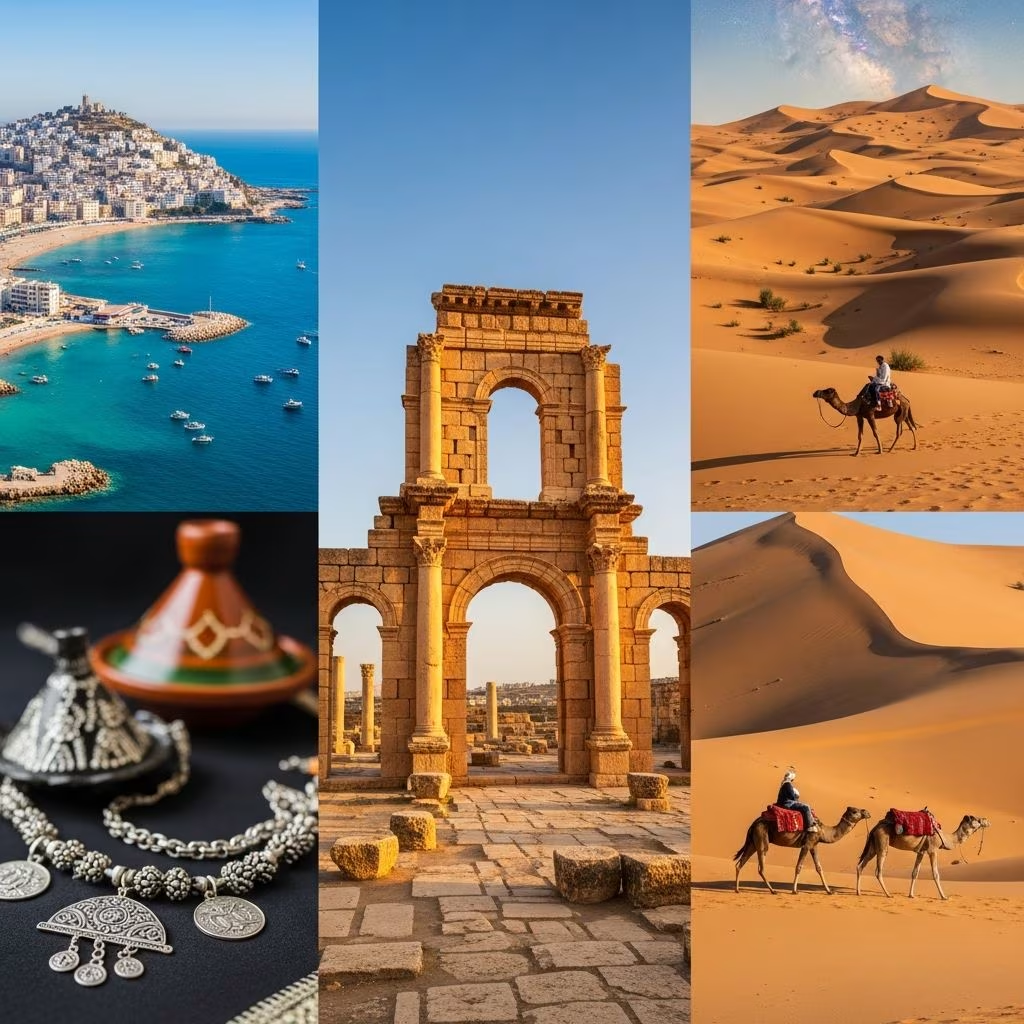
Algeria represents one of North Africa’s most underexplored travel destinations, offering visitors an extraordinary range of experiences that span thousands of years of history and diverse geographical landscapes. From Mediterranean coastlines to vast desert expanses, this expansive nation provides travelers with opportunities to connect with ancient civilizations, witness stunning natural phenomena, and experience authentic cultural traditions. Whether you are drawn to archaeological wonders, dramatic landscapes, or bustling urban centers, Algeria delivers memorable experiences that challenge conventional perceptions of travel in the region.
Algeria’s archaeological landscape reveals remarkable remnants of Roman civilization that once flourished across North Africa. The country preserves some of the most impressive Roman sites on the continent, offering visitors tangible connections to centuries-old empires and societies.
Located in northeastern Algeria, Timgad stands as a testament to sophisticated Roman urban design and engineering prowess. This archaeological site encompasses extensive ruins that require a full day to properly explore, featuring multiple forums, temples, markets, public bathhouses, theaters, law courts, and residential villas. The site even includes a rare public library, demonstrating the importance Romans placed on intellectual pursuits and cultural development. Among the most striking features is an inscription preserved in the forum that reads “venari lavari ludere ridere occ est vivere,” which translates to “to hunt, to go to the bath, to play, to laugh: this is to live”—a reminder of how the ancients balanced work with leisure and enjoyment. The on-site museum houses an exceptional collection of over 200 floor mosaics, many remarkably well-preserved despite their age, providing insights into daily life and artistic expression during the Roman period.
The city of Sétif and the nearby archaeological site of Djemila showcase some of the finest Roman mosaics in the world. Sétif’s archaeological museum features extraordinary examples of this ancient art form, including the renowned Triumph of Dionysus mosaic. Djemila, formerly known as Cuicul, represents a UNESCO-heritage Roman city that sits picturesquely on a hillside within the Petit Kabyle mountains. The site’s excellent on-site museum displays incredible mosaics that cover nearly entire wall spaces, creating an immersive visual experience of Roman artistry. Most artifacts displayed in Sétif originate from Djemila’s excavations, and visitors can tour the scenic ruins in approximately half a day, though the beautiful mountain setting encourages lingering to absorb the atmosphere.
Algeria’s Saharan regions present some of Earth’s most dramatic and otherworldly landscapes, where geological formations and prehistoric art create an environment unlike anywhere else on the planet.
Spanning 72,000 square kilometers, Tassili n’Ajjer National Park encompasses one of the world’s most significant collections of prehistoric petroglyphs and rock paintings. This extraordinary desertscape features a surreal sandstone rock forest adorned with approximately 15,000 prehistoric petroglyphs and carmine-colored rock paintings depicting herds of elephants, giraffes, and buffalo. These images serve as a historical record of the Saharan steppeland approximately 10,000 to 15,000 years ago, when Neolithic pastoralists roamed alongside megafauna species that have since vanished. The park’s geological formations create an otherworldly environment that transports visitors to a primordial era.
Beyond surface attractions, Algeria offers remarkable underground cave systems and desert adventure opportunities. The Caves of Beni Aad represent the longest and most visually striking cave system in Algeria, featuring intricate rock formations and underground chambers that showcase nature’s sculptural artistry. Desert towns serve as gateways to adventure activities including quad biking, sandboarding, and guided tours through abandoned villages that stand frozen in time amid towering dunes. The Sebkha Circuit, for instance, takes adventurous travelers on a roller-coaster-like route over dramatic sand formations, passing through crumbling settlements that reveal how harsh desert conditions challenge human habitation.
Beyond deserts and coasts, Algeria’s mountain cities offer distinctive architectural character, historical significance, and cultural experiences that reflect centuries of diverse influences.
Constantine occupies a remarkable geographical position atop a rocky pinnacle above the Rhumel River, surrounded by ravines reaching depths of 200 meters. Since the 4th century BCE, this city has maintained its position on this improbable hilltop location, showcasing human ingenuity in adapting to challenging terrain. Modern visitors can admire panoramic views from the Sidi M’Cid Bridge and the Monument aux Morts, a World War I memorial offering bird’s-eye perspectives of the city and surrounding landscape. Within Constantine’s streets, travelers discover the ornately decorated Ottoman Palace of Ahmed Bey, the National Museum housing important historical artifacts, and the contemporary Emir Abdelkader Mosque, one of Africa’s largest religious structures.
Tlemcen presents visitors with stunning mountain panoramas accessible via scenic drives to the Lala Seti Plateau, offering breathtaking landscapes that blend natural beauty with urban architecture. The Royal Palace of Mechouar stands as a significant historical structure, frequently compared to Spain’s famous Alhambra Palace. Nearby natural attractions include the Cascades of Elourit, where waterfalls provide refreshing contrast to the region’s historical sites. The combination of palace architecture, mountain scenery, and natural water features creates a multifaceted destination experience.
Oran represents Algeria’s vibrant Mediterranean hub, where colonial architecture, bustling markets, and cultural attractions reflect centuries of diverse influences and contemporary energy.
Place d’Armes serves as Oran’s historic heart, surrounded by majestic buildings that embody centuries of architectural history and urban development. Fort Rosalcazar, constructed in the 16th century by Spanish colonizers, stands as Africa’s largest fortress, though currently undergoing restoration work. Fort and Chapel of Santa Cruz crown a hilltop position, rewarding climbers with breathtaking vistas across the city and surrounding landscape.
The Old Quarter of Sidi Elhouari features narrow streets where colonial facades tell stories of Oran’s complex history and reveal authentic local life through everyday details. Bastille Market immerses visitors in sensory experiences combining colors, scents, and voices of a traditional marketplace. The Albert Camus House preserves the childhood residence of the celebrated writer, offering literary enthusiasts glimpses into the author’s formative years and the city that inspired his work.
Algiers, the nation’s capital, combines Mediterranean charm with modern development, featuring significant cultural institutions, historical monuments, and green spaces that appeal to diverse visitor interests.
The Great Mosque of Algiers, also known as Djamaa el Kebir, stands as one of the world’s most impressive religious structures. Completed in 2019, this mosque ranks among Africa’s largest and the world’s third-largest, behind only Mecca’s Masjid al-Haram and Medina’s Al-Masjid an-Nabawi. The structure features the world’s tallest minaret at approximately 265 meters, combining traditional Algerian architectural elements with contemporary design principles. The Basilique Notre Dame d’Afrique represents another significant religious landmark, while the Ketchaoua Mosque showcases Islamic architectural traditions within the historic Casbah district.
The Palais des Raïs, dating to 1750, now functions as the Centre des Arts et de la Culture, hosting fine arts and photographic exhibitions within its beautifully preserved halls. Dar Abd-el-Tif, a historical Ottoman-era monument, hosts cultural events and concerts through its role as the Institute of Cultural Evolution. The Martyrs’ Memorial Monument, prominently positioned on a hill overlooking the city, commemorates Algerian independence fighters killed between 1954 and 1962 during the conflict against French colonial rule. The structure’s iconic three-hand design symbolizes unity, while the underground Mudjahid Museum provides historical context and education about this pivotal period.
Le Jardin d’Essai du Hamma represents a verdant oasis within urban Algiers, spanning five hectares of meticulously maintained gardens. Originally designed in 1832 as a test garden during French colonial administration, this botanical space showcases over 1,000 plant species amid bubbling fountains and shaded pathways. The garden’s bayside location provides excellent Mediterranean views, while its lush greenery famously served as a filming location for the original 1932 Tarzan motion picture. This peaceful refuge offers visitors respite from urban activity while providing educational opportunities regarding botanical diversity.
The M’Zab Valley represents a unique cultural landscape where traditional Berber architecture and customs have survived for centuries. This UNESCO-recognized area features five historic towns designed with defensive architecture and sophisticated urban planning that reflects the community’s religious principles and social organization. The Sidi Brahim mosque in El-Atteuf inspired renowned architect Le Corbusier’s design philosophy, demonstrating how traditional North African architecture influences contemporary design thinking. Ghardaïa’s markets showcase traditional carpet weaving, an ancient craft that remains central to local cultural identity and economic activity. Guided tours through these closed communities provide opportunities to observe traditional lifestyles, religious practices, and architectural innovations that distinguish the M’Zab Valley from other North African destinations.
Algeria’s Mediterranean regions enjoy mild winters and warm summers, while desert areas experience extreme temperature variations. Spring (March-May) and autumn (September-November) offer optimal conditions for exploring both coastal and desert regions. Summer heat in Saharan areas can reach temperatures exceeding 40°C (104°F), making winter months preferable for desert exploration.
Timimoun’s S’Boue Festival, lasting seven days, draws thousands of visitors celebrating at the mausoleum of Sidi El Hadj Belkacem. This event features sacred music, traditional poetry recitations, and cultural dances that provide authentic glimpses into local traditions and spiritual practices.
Spring and autumn offer ideal conditions, with moderate temperatures and less extreme weather. These seasons are particularly suitable for desert exploration and archaeological site visits.
Plan full days for extensive archaeological sites like Timgad and Djemila. Coastal attractions, museums, and urban centers typically require half-day visits, allowing flexible itinerary construction.
Professional guides enhance experiences significantly, providing historical context, navigational expertise, and cultural insights. Hotels can arrange appropriate guide services matching your interests and fitness levels.
Respect local customs by dressing modestly, particularly when visiting religious sites. Learn basic French or Arabic phrases to facilitate interactions with local communities and show cultural respect.
