

 Travel Essentials
 Travel Essentials

Explore Kyrgyzstan's most compelling destinations: high-altitude lakes, trekking routes, historical landmarks, and authentic cultural experiences in Central Asia.
 Travel Essentials
Nestled in the heart of Central Asia, Kyrgyzstan stands as one of the world’s most underrated travel destinations. This mountainous republic, characterized by dramatic peaks, crystalline waters, and centuries-old traditions, offers adventurers and cultural enthusiasts an extraordinary tapestry of experiences. From the legendary Tian Shan mountain range to remote valleys where ancient petroglyphs tell stories spanning millennia, Kyrgyzstan invites travelers to immerse themselves in landscapes of raw natural beauty and rich cultural heritage. The following guide unveils the most compelling reasons to visit this remarkable country.
Kyrgyzstan’s most iconic natural feature is its collection of alpine lakes, scattered across plateaus and mountain valleys at elevations exceeding 3,000 meters above sea level. These crystalline bodies of water represent the country’s most photographed destinations, attracting visitors seeking both spiritual renewal and photographic opportunities.
Son-Köl Lake stands as perhaps the most celebrated alpine destination. Perched atop a high plateau, this 28-kilometer-long lake is encircled by snow-capped peaks of the Tian Shan range. The lake serves as an important ecological waypoint, providing crucial stopover habitat for migratory birds including geese, gulls, and cranes. During summer months, the shoreline becomes dotted with traditional yurt camps and grazing herds, creating the quintessential image many travelers envision when imagining Central Asian landscapes. The surrounding grasslands, at such extreme elevation, transform into verdant meadows where nomadic herders still practice their ancestral traditions.
Beyond Son-Köl, numerous other alpine lakes offer distinct experiences. Ala-Köl Lake provides panoramic vistas that rank among the region’s most impressive mountain scenery, while Kel-Suu Lake attracts those seeking less-visited alternatives with equally stunning surroundings. Each lake represents a different facet of Kyrgyzstan’s geographical diversity, with their own unique ecological characteristics and accessibility levels.
The Sary-Chelek Biosphere Reserve presents a contrasting alpine environment, featuring six interconnected glacial lakes nestled within a rolling, forested landscape. Unlike the exposed alpine plateaus surrounding Son-Köl, Sary-Chelek is cradled by rugged cliff faces from which cascading waterfalls plunge, while gnarled trees cling precariously to steep slopes. A winding dirt road guides visitors around these glacial waters, and the reserve remains relatively undiscovered by international tourism despite being a cherished destination among residents of nearby Jalalabad.
For those preferring immersion in mountain wilderness, an eleven-kilometer circular walking trail connects the reserve’s smaller lakes and delivers expansive vistas across the entire protected area. Even during mid-summer, the water temperature remains frigid, offering an invigorating experience rather than leisurely swimming.
Kyrgyzstan’s unique geological heritage includes Tuz-Kol, a remarkable salt lake that rivals the Dead Sea in salinity. Located near the massive Issyk-Kul Lake, Tuz-Kol’s mineral-rich waters possess extraordinary buoyancy properties, rendering traditional swimming mechanics unnecessary. Visitors naturally float, offering an otherworldly sensation. Beyond its recreational novelty, the lake’s geothermal mud carries purported therapeutic properties, drawing locals seeking relief from skin conditions such as psoriasis. The contrast between this hypersaline environment and the freshwater alpine lakes exemplifies Kyrgyzstan’s geographical complexity.
For serious mountaineers and dedicated hikers, the Ak-Suu Transverse represents one of Central Asia’s most demanding and rewarding trekking experiences. This seven-day expedition traverses seven mountain passes across a horizontal distance of 100 kilometers, connecting the ecotourism hub of Jyrgalan with the distinctive red rock formations of Jeti-Ögüz.
The route navigates through alpine terrain characterized by pristine lakes, powerful waterfalls, and towering peaks at varying elevations. A particularly celebrated section rises above Ala-Köl Lake, delivering panoramic mountain vistas that define high-altitude trekking experiences. The trek incorporates diverse accommodation options, ranging from wild camping beneath starlit skies to stays in traditional yurt camps operated by local communities. Additionally, the route incorporates access to thermal hot springs at Altyn Arashan, providing weary trekkers opportunities for muscle recovery and restoration.
Beyond the Ak-Suu Transverse, Kyrgyzstan offers numerous shorter hiking opportunities catering to varying fitness levels and time constraints. The Kok Bell waterfall trail near Jyrgalan serves as an accessible day hike option, while more ambitious hikers can tackle the Turnaluu Kol circuit, which combines waterfall viewing with visits to scenic panoramic viewpoints. The Ala Archa area near Bishkek provides hiking trails ranging from casual riverside walks to challenging alpine expeditions, all within reasonable driving distance from the capital.
In the remote Saimaluu Tash valley, near the town of Kazarman, an extraordinary archaeological treasure awaits discovery. Over 90,000 individual petroglyphs are carved into more than 10,000 rocks scattered throughout this valley. These engravings span millennia, with some dating back at least to the 3rd millennium BCE. Each carving represents a cultural record—narratives of hunting expeditions, warfare, spiritual worship, and daily life preserved in stone by successive generations of shamans and pilgrims.
The valley functions as one of Central Asia’s most significant cultural sites, yet remains relatively unknown to international travelers. Access to Saimaluu Tash requires hiring local guides familiar with the terrain, making the experience simultaneously remote and culturally enriching. The petroglyphs offer silent testimony to human settlement patterns, spiritual beliefs, and economic practices spanning thousands of years.
In the Naryn Province, the Tash Rabat caravanserai stands as one of Central Asia’s few remaining intact structures from the fifteenth century. These fortress-like buildings once sheltered merchants, traders, and travelers traversing the legendary Silk Route. Tash Rabat represents a crucial window into historical commerce, cultural exchange, and architectural traditions that connected East and West for centuries. The structure’s preservation allows contemporary visitors to visualize the logistical infrastructure supporting ancient trade networks.
The town of Jeti-Ögüz takes its name from a remarkable natural phenomenon—distinctive red rock formations towering above the settlement, locally interpreted as seven bulls. These impressive geological structures, carved by millennia of wind and precipitation, create a visually stunning landscape that has earned recognition as potentially Kyrgyzstan’s most famous natural landmark. The dramatic coloration and unusual formations provide endless photography opportunities and geological interest for visitors.
South of Issyk-Kul Lake, approximately 100 kilometers from Karakol, lies the Skazka Canyon, known colloquially as the Fairytale Canyon in English. This reddish-hued canyon system features intricate gorges, unusual peaks, and geological formations that create a landscape resembling a storybook illustration. The canyon can be explored completely within a few hours, making it accessible for travelers with limited time but significant photographic ambitions. The geological processes that created this landscape demonstrate the dramatic natural forces constantly reshaping Central Asian geography.
Bishkek, Kyrgyzstan’s capital city, serves as most travelers’ initial contact point with the country. Beyond its function as a transportation hub, Bishkek offers valuable cultural orientation and opportunities to understand contemporary Kyrgyz urban life. Key attractions include Ala Too Square, the Osh Bazaar representing traditional commerce practices, Oak Park providing green urban respite, and diverse examples of Soviet-era architecture. Notable nearby attractions include Ala Archa National Park and the historical Burana Tower.
Osh, one of Central Asia’s oldest cities, represents a crucial cultural and commercial center. The Jayma Bazaar ranks among Central Asia’s largest marketplaces, though visitors should note that Sunday provides optimal shopping conditions while Monday sees many merchants closed. The city features the Lenin Statue, one of Asia’s largest remaining monuments to Soviet leadership.
Most significantly, Suleiman-Too (Solomon Mountain) dominates Osh’s landscape as a UNESCO World Heritage Site—notably, the only such designation in the entire Kyrgyz Republic. This sacred mountain holds profound spiritual importance for Muslim communities and served as a pilgrimage destination since pre-Islamic eras. The mountain encompasses caves, religious relics, a functioning mosque, museums, and trekking trails, with summit access providing panoramic city vistas.
Karakol functions as the eastern gateway to Kyrgyzstan and provides access to multiple significant attractions. The Dungan Mosque showcases distinctive architectural aesthetics blending Asian and Islamic design traditions. The Holy Trinity Cathedral represents Orthodox Christian heritage within Kyrgyzstan’s diverse religious landscape. From Karakol, visitors can undertake extensive horseback riding expeditions, some lasting up to ten days, facilitated through Community Based Tourism organizations. The nearby Altyn Arashan thermal springs provide therapeutic hot water experiences, while the Barskoon Waterfall, featuring a ninety-meter descent, showcases dramatic hydrological power.
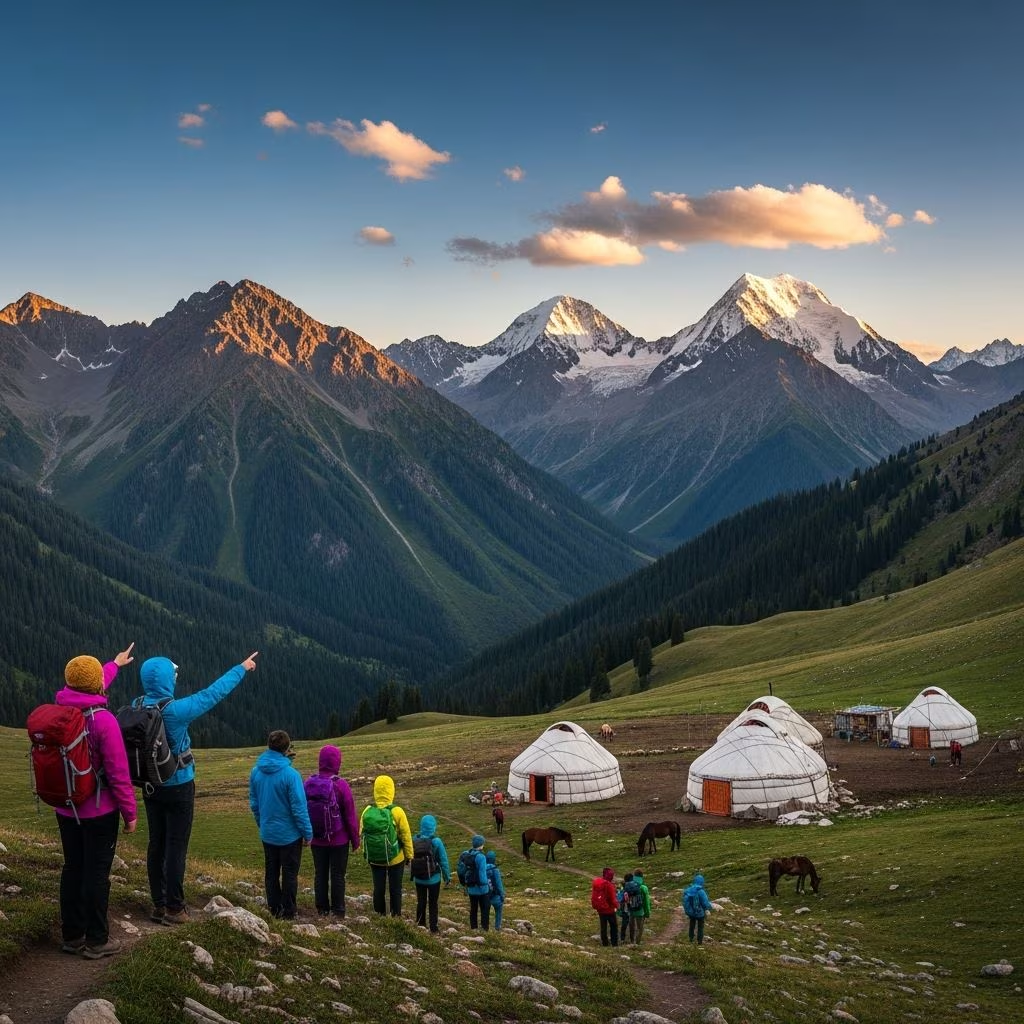
Throughout Kyrgyzstan, particularly near alpine lakes, traditional yurt camps welcome visitors eager to experience nomadic existence firsthand. These camps provide authentic accommodation while supporting local herding communities. During summer months, nomadic Kyrgyz herders migrate to high-altitude meadows like those surrounding Son-Köl, creating seasonal communities where livestock grazing sustains both traditional economies and contemporary tourism.
Kumis, fermented mare’s milk, represents a cornerstone of Kyrgyz food culture and nomadic heritage. This traditional beverage, consumed by semi-nomadic Kyrgyz populations for centuries, offers contemporary visitors direct sensory connection to historical lifeways. Visitors can sample authentic kumis in rural communities and yurt camps throughout the country.
Educational opportunities exist for visitors seeking deeper cultural engagement. Communities along the southern shore of Issyk-Kul Lake offer workshops where participants learn traditional yurt construction techniques, gaining practical understanding of how nomadic families engineer portable, weather-resistant dwellings.
Horseback riding represents a quintessential Kyrgyzstan experience, available through multiple operators offering day rides to ten-day expeditions. Routes connect major landmarks and traverse mountain passes, with guides providing historical context and cultural interpretation.
Beyond summer trekking, Kyrgyzstan accommodates winter sports enthusiasts with opportunities for winter mountaineering and specialized activities. Mountain biking routes traverse diverse terrain from alpine plateaus to river valleys.
Summer months (June through September) provide the most favorable conditions for trekking and lake visits, with alpine passes accessible and weather relatively stable. Winter mountaineering requires specialized skills and equipment.
This challenging seven-day trek demands substantial mountaineering experience, altitude acclimatization capabilities, and strong physical conditioning. Novice hikers should pursue shorter, lower-elevation routes first.
Local guides are essential for safe navigation through this remote valley. Hiring guides through community tourism organizations ensures cultural sensitivity and logistical reliability.
The Kyrgyzstani som is the official currency. Rural areas often operate on cash-only systems, while urban centers increasingly accept card payments. Currency exchange is available in major cities.
Visa requirements vary by nationality. Many nationalities enjoy visa-free entry for tourist visits. Consult official government sources for current regulations specific to your country of residence.
