

 Travel Essentials
 Travel Essentials

Explore Peru's premier travel spots including Machu Picchu, Cusco, Lake Titicaca, and more for history, culture, and nature lovers.
 Travel Essentials
Peru captivates travelers with its blend of ancient civilizations, dramatic landscapes, and vibrant cultures. From towering Andean peaks to lush rainforests, the nation offers endless exploration opportunities. This guide highlights the essential spots, providing practical insights for planning your itinerary.
The Andes dominate Peru’s geography, cradling some of the world’s most renowned archaeological sites. These high-altitude treasures reveal the ingenuity of the Inca Empire and pre-Inca societies.
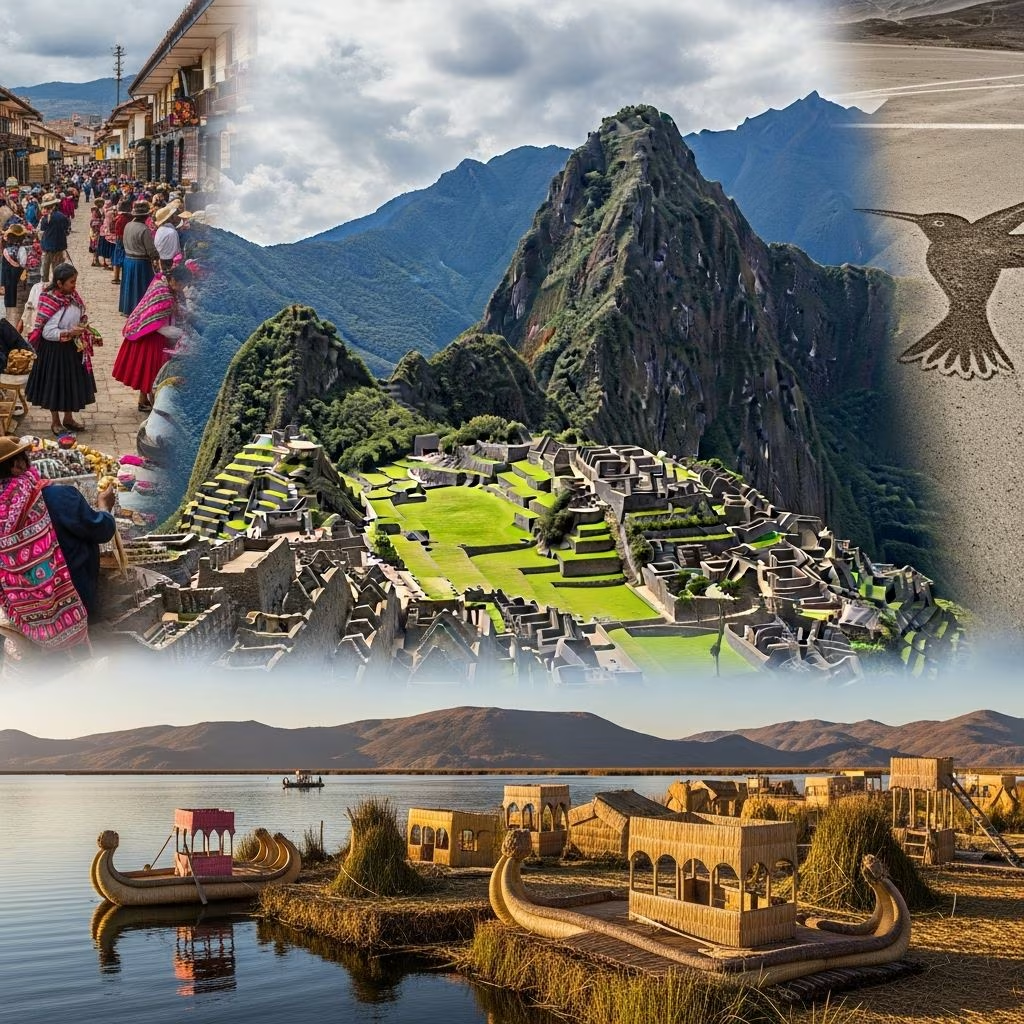
Perched at 2,430 meters amid mist-shrouded mountains, Machu Picchu stands as Peru’s premier attraction and a UNESCO World Heritage Site. This 15th-century Inca citadel features precisely cut stone terraces, temples, and residences that have endured centuries. Discovered in 1911 by Hiram Bingham, it escaped Spanish conquest, preserving its mystical aura. Visitors often describe a sense of timeless magic, with structures aligning to celestial events.
Access involves a scenic train from Cusco or the challenging four-day Inca Trail hike, which passes ruins like Wiñay Wayna. Daily visitor limits and timed tickets ensure preservation; book months ahead. Early morning visits avoid crowds, allowing serene wanders along Intihuatana, the solar observatory.
At 3,400 meters, Cusco was the Inca Empire’s capital, blending colonial architecture with indigenous roots. Its cobblestone streets host Plaza de Armas, flanked by the grand Cathedral and Qorikancha, the Temple of the Sun. Nearby Sacsayhuamán fortress showcases massive cyclopean stones, a testament to Inca engineering.
The city serves as a base for Sacred Valley excursions and Machu Picchu. Markets brim with alpaca textiles and quinoa-based cuisine. Evening festivals showcase traditional dances, immersing visitors in Quechua heritage.
Stretching from Cusco to Ollantaytambo, the Sacred Valley’s mild microclimate supported Inca agriculture. Verdant fields and rushing Urubamba River frame villages like Pisac, famed for hillside ruins and Sunday markets selling vibrant weavings.
Ollantaytambo’s towering fortress and water channels highlight defensive prowess. Nearby Moray’s concentric terraces experiment with crop microclimates, while Maras salt ponds yield mineral-rich crystals harvested traditionally. Activities include horseback riding, ziplining, and river rafting, appealing to adventure seekers.
| Site | Highlight | Distance from Cusco |
|---|---|---|
| Pisac | Markets & Ruins | 32 km |
| Ollantaytambo | Fortress | 70 km |
| Moray | Agricultural Labs | 50 km |
South of Cusco, Peru’s landscapes shift to volcanoes, canyons, and high plateaus, offering raw beauty and biodiversity.
Straddling Peru and Bolivia at 3,812 meters, Lake Titicaca is South America’s largest lake and a cradle of Andean mythology as the sun’s birthplace. From Puno, boats reach Uros floating islands, crafted from totora reeds by indigenous communities sustaining ancient lifestyles.
Taquile Island impresses with terraced fields and intricate textiles, where men weave and women embroider, reflecting social status. Sillustani’s chullpa tombs nearby evoke pre-Inca funerary practices. Homestays provide cultural immersion through shared meals of lake trout.
Nicknamed the White City for sillar volcanic stone buildings, Arequipa at 2,335 meters boasts monasteries like Santa Catalina, a self-contained “city within a city.” Three volcanoes, including active El Misti, frame the skyline.
Colca Canyon, twice Grand Canyon’s depth at 3,400 meters, reveals Andean condors soaring from Cruz del Cóndor viewpoint. Trekking trails wind through villages, hot springs, and terraced farmlands. Nearby Salinas and Aguada Blanca Reserve features vicuñas, llamas, and wetlands teeming with flamingos.
Peru’s Pacific coast delivers enigmatic geoglyphs, marine reserves, and desert oases contrasting inland highlands.
The Nazca Lines, etched between 500 BCE and 500 CE, depict animals and shapes visible from small planes. Theories link them to astronomy or rituals; over 800 figures span 450 square kilometers. Nearby Chauchilla Cemetery exposes mummified remains.
Paracas National Reserve protects Ballestas Islands, dubbed “Peru’s Galápagos,” hosting sea lions, penguins, and dolphins. Huacachina Oasis near Ica offers dune buggy rides and sandboarding amid palm-fringed lagoons, with pisco tastings in surrounding vineyards.
Chimú culture’s Chan Chan near Trujillo is the world’s largest adobe city, with 10 citadels illustrating urban planning. Kuelap, a mountaintop fortress predating Machu Picchu, features massive walls accessed by cable car, overlooking cloud forests.
Puerto Maldonado gateways the Amazon, where lodges offer canopy walks, piranha fishing, and macaw clay licks. In the north, Huascarán National Park in the Cordillera Blanca boasts Peru’s highest peaks, turquoise lagoons, and trekking routes like Santa Cruz.
Máncora’s beaches provide a relaxed contrast with surfing and whale watching from June to September.
Peru’s capital fuses pre-Columbian, colonial, and modern vibes. Miraflores’ cliffs overlook the ocean, ideal for paragliding and ceviche tasting. Historic center’s Plaza de Armas and Larco Museum house gold artifacts. Barranco’s bohemian scene pulses with street art and nightlife.
Peru’s diversity demands strategic routing. Fly into Lima, then connect domestically. Altitude preparation includes coca tea and hydration. Sustainable tourism supports communities via fair-trade purchases. Best season: dry May-October; rainy season greens landscapes but muddies trails.
| Region | Top Activity | Altitude Challenge |
|---|---|---|
| Andes | Hiking | High |
| Coast | Wildlife Tours | Low |
| Amazon | Jungle Treks | Low |
10-14 days covers Lima, Cusco, Sacred Valley, Machu Picchu, and Lake Titicaca; extend for Amazon or Arequipa.
Yes, with precautions like avoiding isolated areas at night and using reputable tours.
Standard with bus; circuit 2 for Huayna Picchu hike requires advance booking.
Abundant; try quinoa soups, stuffed peppers, and causa in markets.
Most nationalities get 90-day visa-free entry; check updates.
