

 Travel Essentials
 Travel Essentials

Uncover Sierra Leone's most captivating destinations from coastal paradises to rainforests teeming with rare wildlife and vibrant cultural heritage sites.
 Travel Essentials
Sierra Leone, a small West African nation, punches well above its weight when it comes to travel destinations. This remarkable country offers an extraordinary diversity of experiences that can satisfy any traveler’s wanderlust, whether you seek adventure, cultural immersion, or natural beauty. The challenge for visitors often isn’t finding things to do—it’s deciding which spectacular attractions to prioritize within a limited timeframe.
Freetown, the nation’s capital, serves as the primary entry point for most visitors and deservedly earns its reputation as one of West Africa’s most captivating urban centers. Perched across rolling hills that cascade down to the Atlantic Ocean, this vibrant city seamlessly blends colonial heritage with contemporary African energy. The urban landscape presents a fascinating juxtaposition of architectural styles, from weathered structures bearing witness to centuries of history to colorful residential neighborhoods that pulse with daily life.
The historic quarters of Freetown warrant dedicated exploration, particularly for those interested in understanding the region’s complex past. The city’s downtown area reveals layers of architectural history through its structures, many of which showcase distinctive design elements that reflect various periods of settlement and governance. Walking through these districts, visitors encounter buildings adorned with intricate window frames and painted facades that tell stories of the city’s multicultural heritage.
Several key institutions help visitors grasp Freetown’s significance. The Sierra Leone National Museum houses an impressive collection spanning cultural artifacts, historical documents, and artistic pieces that illuminate the nation’s past. Rotating exhibitions often feature photography and anthropological studies, providing contemporary perspectives on traditional cultures. State House, positioned prominently on Tower Hill with commanding views of downtown Freetown, exemplifies traditional Krio architectural principles with its vibrant colors and decorative elements that harken back to the original 19th-century fort structure.
The National Railway Museum offers another dimension of historical understanding, chronicling the evolution of transportation infrastructure while featuring a specially commissioned carriage from the early 1960s. These institutions collectively provide context for understanding how Freetown developed from its origins as a freed slave settlement into a major West African city.
Beyond formal attractions, Freetown’s markets represent the true heartbeat of urban life. Vibrant trading areas bustle with vendors, goods, and the sounds of negotiation—spaces where visitors can directly engage with locals and experience authentic daily commerce. These markets offer opportunities to purchase local crafts, fresh produce, and artisanal goods while observing the city’s commercial traditions.
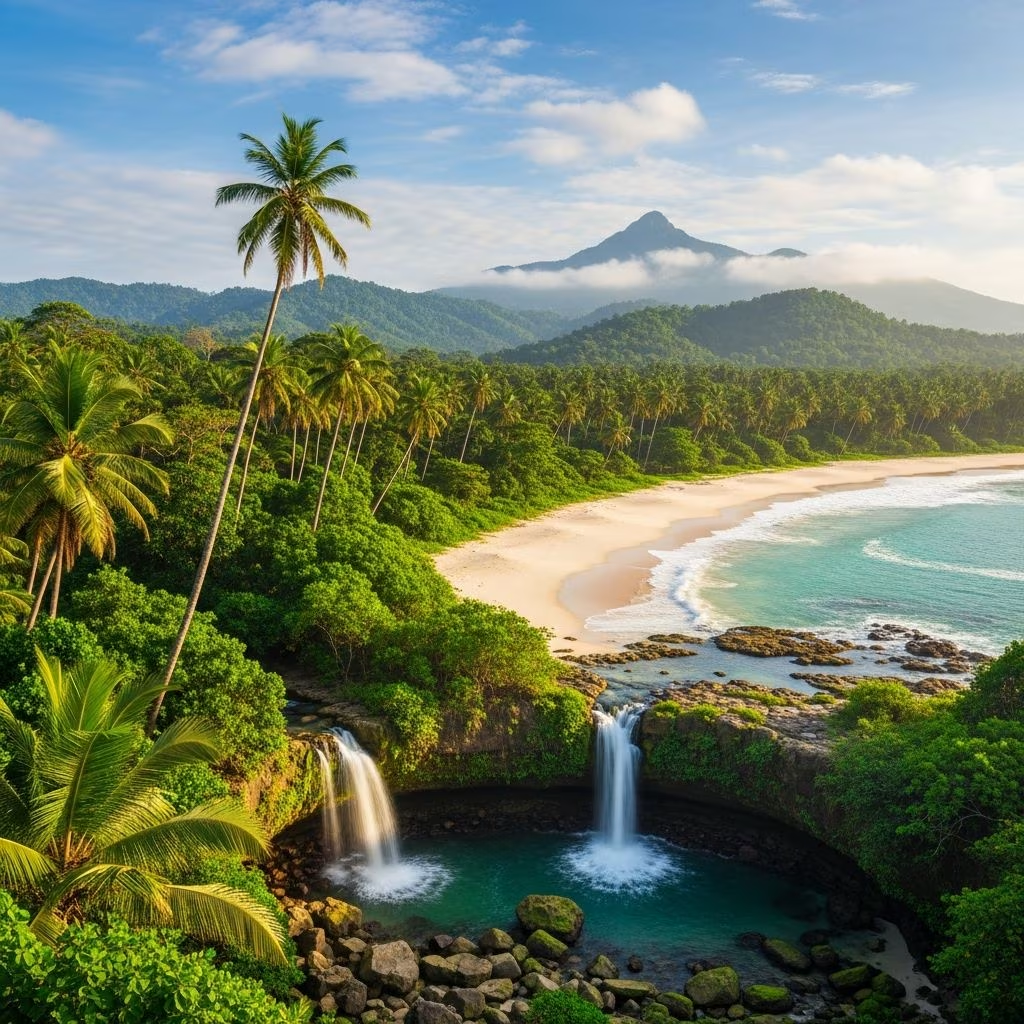
The Freetown Peninsula extends beyond the capital city proper, offering a chain of spectacular beaches that showcase why Sierra Leone ranks among Africa’s premier coastal destinations. These stretches of sand provide stark contrasts to urban environments—crystalline waters, palm-fringed shores, and opportunities for swimming, water sports, and simple relaxation.
The peninsula’s beaches attract visitors seeking both activity and tranquility. Some areas cater to tourists with established amenities, while others remain relatively undeveloped, offering more secluded experiences. The combination of accessible facilities and pristine natural settings makes the peninsula adaptable to various travel preferences. Visitors might spend mornings engaging in water activities and afternoons lounging on white sand, watching fishermen bring in their daily catches.
The coastal geography provides natural protection in many areas, with reef formations and rocky outcroppings creating safe swimming conditions. The warm Atlantic waters remain welcoming throughout the year, though seasonal variations affect overall weather patterns and humidity levels.
Several distinct island environments merit dedicated visits for travelers with sufficient time. These islands represent some of West Africa’s most pristine natural environments, each offering distinct ecological characteristics and experiences.
Located inland along river systems, Tiwai Island functions as a community-led conservation initiative protecting one of Africa’s most biodiverse ecosystems. The island occupies an ancient rainforest setting, its humid and wet conditions providing ideal habitat for species found nowhere else in similar concentrations. The reserve demonstrates how local communities and international conservation organizations can collaborate effectively to protect vulnerable ecosystems.
The island’s significance lies primarily in its primate population, representing the highest concentration of these species in the country. Western chimpanzees swing through the dense canopy, while other primates including distinctive black-and-white Diana monkeys inhabit various forest strata. Bush babies emerge during twilight hours, and over 135 bird species utilize the island’s diverse vegetation layers.
Lesser-known residents include the elusive pygmy hippo, a shy species that inhabits the island’s riverine areas but remains challenging to observe. The island also serves as habitat for forest elephants, otters, and marine turtles, alongside over 700 plant species that comprise the foundation of this complex ecosystem. Visitors typically experience the island through guided explorations that include daytime forest walks and evening nature experiences that reveal different species activity patterns.
The ecological importance of Tiwai Island and adjacent Gola Rainforest National Park has attracted international recognition, with both areas currently under consideration for UNESCO World Heritage designation. This formal acknowledgment reflects their global significance as irreplaceable natural resources. Conservation initiatives focus on maintaining habitat integrity while allowing sustainable visitation that generates economic incentives for protection.
The northern regions of Sierra Leone harbor vast protected areas established to preserve ecosystems and wildlife populations facing pressure from habitat conversion and other human activities. These landscapes represent dramatically different environmental conditions compared to coastal zones, offering distinct opportunities for nature-focused tourism.
This expansive protected area encompasses diverse habitat types—from savannah grasslands to dense forests and riverine corridors—creating ecological complexity that supports exceptional wildlife populations. The park derives its name from two defining geographical features: Outamba Mountain and the Kilimi River, which structure the landscape and influence ecosystem dynamics.
The park’s establishment in 1995 marked a commitment to protecting biodiversity threatened by deforestation and habitat fragmentation. Subsequent conservation efforts, involving Sierra Leonean governmental agencies, international NGOs, and local stakeholders, continue focusing on ecosystem restoration and species recovery. The park currently harbors five charismatic megafauna species that function as conservation emblems: forest elephants, western chimpanzees, Cape buffalo, specialized hippo populations distinct from both pygmy and East African varieties, and an elusive leopard population.
Unlike traditional African safari experiences featuring vehicles and guided tours, Outamba-Kilimi emphasizes intimate, human-powered exploration. Visitors traverse the landscape on foot or by canoe, experiences that create different perspectives compared to vehicular safaris. This approach often yields more nuanced wildlife encounters and deeper engagement with natural environments.
Canoe-based exploration along the Kilimi River provides unique vantage points for observing wildlife congregating at water sources, particularly during dry seasons when water availability concentrates animal populations. Forest walks facilitate discovery of arboreal species and ground-dwelling inhabitants, with experienced rangers interpreting ecological relationships and behavioral patterns.
Seasonal timing significantly influences accessibility and observation opportunities. The dry season provides easier road access and optimal conditions for wildlife spotting, as vegetation thins and animals congregate predictably around remaining water sources. Conversely, the rainy season transforms roads into muddy impediments, complicating logistics while simultaneously creating lush vegetation that can challenge visual observation of distant animals.
With over 300 bird species recorded within park boundaries, the area attracts serious birders from across the globe. Migratory patterns bring seasonal influxes of species, while resident populations maintain year-round presence. Red colobus monkeys, though not birds, add another visual dimension to canopy exploration, their acrobatic movements through treetop networks offering spectacular viewing opportunities.
Beyond coastal and lowland environments, Sierra Leone’s highland regions offer distinctly different terrain experiences. Mountain landscapes provide hiking opportunities with progressive physical challenges and reward panoramic perspectives of surrounding geography.
The highest elevations attract trekkers seeking sustained physical challenge combined with natural scenery. These highland areas offer cooler temperatures compared to lowland regions and expose visitors to different vegetation zones, each supporting distinct species assemblages. Mountain environments provide refuges for species displaced from lowland habitats through land conversion, making highland areas increasingly important for conservation.
Several facilities throughout the country focus on protecting primates facing existential threats. These sanctuaries combine conservation missions with educational tourism, creating opportunities for visitors to engage meaningfully with wildlife protection efforts while observing remarkable animals at close range.
Sanctuary locations typically occupy protected forest areas within or near urban regions, balancing accessibility for visitors with adequate habitat for animal residents. These facilities welcome guests to observe rescued and rehabilitated animals, learning about individual histories and broader conservation challenges. Guided visits often include forest trekking combined with sanctuary structure tours, providing comprehensive understanding of both wild populations and captive care requirements.
Strategic planning maximizes experiences within time constraints. A two-week itinerary allows comfortable exploration of Freetown and the peninsula while visiting one or two remote attractions. Shorter stays might focus exclusively on the capital region, while extended visits enable comprehensive country exploration.
Seasonal considerations significantly impact travel experiences. The dry season (November through March) provides ideal conditions for national park visitation, reliable road access, and generally comfortable weather. The rainy season brings lush vegetation and reduced tourist crowds, creating trade-offs between comfort and solitude.
Transportation between attractions ranges from easily accessible peninsula destinations to remotely located northern reserves requiring substantial travel commitment. Urban-based visitors might complete Freetown attractions in several days before assessing whether to undertake longer journeys to more distant reserves. The diversity of options allows tailoring experiences to individual preferences, fitness levels, and available time.
Accommodation Options: Freetown offers varied lodging from budget guesthouses to upscale hotels. Peninsula beach communities provide resort-style options, while remote sanctuary areas typically feature basic facilities requiring advance arrangement.
Transportation: Freetown has local transport including taxis and shared minibuses. Inter-city travel typically involves private vehicles, organized tours, or arranged transportation through accommodation providers.
Guides and Services: Professional guides enhance experiences at natural sites, providing species identification, ecological context, and safety assurance. Most attractions arrange guides through established channels.
Health and Safety: Standard travel precautions apply, including vaccinations, malaria prophylaxis in relevant areas, and travel insurance. Remote areas lack advanced medical facilities, influencing activity selection.
This West African nation offers experiences unavailable in more heavily trafficked African destinations. The combination of accessible coastal attractions with remote wilderness areas, coupled with rich cultural heritage and genuine conservation efforts, creates a distinctive appeal. Visitors often discover that Sierra Leone’s modest international profile masks extraordinary natural and cultural treasures worthy of far greater recognition.
The country’s relatively small geographic scale makes comprehensive exploration feasible within reasonable timeframes, while its ecological and cultural diversity prevents any visit from feeling repetitive. Whether prioritizing wildlife observation, beach relaxation, historical understanding, or adventure activities, Sierra Leone accommodates varied travel objectives within a single, manageable destination.
