

 Travel Essentials
 Travel Essentials

Discover South America's top travel destinations in 2026, from iconic Machu Picchu and Patagonian adventures to emerging luxury hotels and remote trekking experiences.
 Travel Essentials
South America stands as one of the world’s most diverse and captivating travel regions, offering everything from ancient archaeological wonders to pristine natural landscapes and vibrant urban centers. As we enter 2026, the continent presents an exciting mix of timeless classics and newly unveiled luxury experiences that cater to every type of traveler. Whether you seek adventure in remote mountain ranges, cultural immersion in historic cities, or relaxation in newly opened boutique properties, South America delivers unforgettable journeys.
The landscape of luxury travel in South America is evolving with the emergence of carefully curated properties that prioritize exclusivity and purposeful design. Bolivia’s luxury tourism sector is experiencing a significant shift with the introduction of sophisticated accommodations that blend cultural appreciation with contemporary comfort.
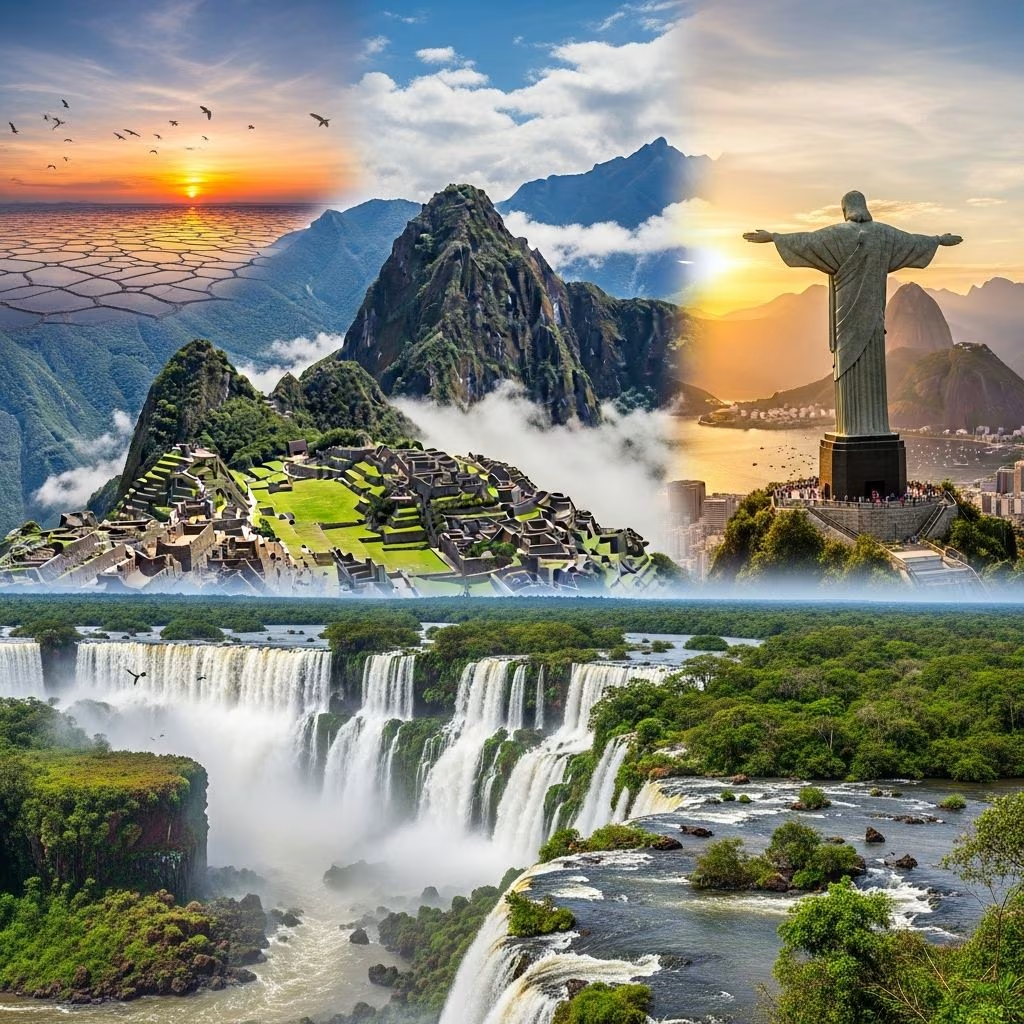
Casa Gastón represents a paradigm shift in Bolivia’s tourism offerings, opening in March 2026 near the remote village of Jirira at the base of the sacred Tunupa Volcano. This exclusive property overlooks the mesmerizing Salar de Uyuni salt flats and functions as Bolivia’s inaugural luxury hotel museum. The property features just ten suites, each meticulously oriented toward the expansive white landscape of the Salar, with private terraces equipped with open-air lithium baths that provide a unique wellness experience. This development signals a new era for Bolivia on the international travel stage, having been recognized by Condé Nast Traveler as one of the best destinations to visit in 2026.
The Chilean and Argentine Patagonia regions have also embraced this trend toward purposeful luxury. Explora has established two new lodges positioned strategically on both sides of the Chilean-Argentine border: Torres del Paine Conservation Reserve and Explora El Calafate. These properties are designed as stationary bases from which guests explore outward, allowing for deeper immersion in the landscape rather than constant relocations.
While Machu Picchu remains an essential pilgrimage for many South America visitors, 2026 presents compelling opportunities to experience Peru’s mountainous terrain beyond the established circuit. The high Andes offer scale, silence, and challenge for those seeking authentic adventure.
The Cordillera Blanca and Cordillera Huayhuash mountain ranges form one of the world’s most extraordinary trekking regions, featuring glaciated peaks, turquoise alpine lakes, and routes that remain remarkably under-visited. These cordilleras provide a stark contrast to crowded tourism areas, offering solitude and raw natural beauty. The region’s dramatic topography creates diverse ecosystems and stunning vistas that reward the physical effort required to reach them.
In southern Peru’s Tinajani valley, a different form of adventure awaits. This region is characterized by vast open plains and dramatic red rock formations sculpted by millennia of erosion. The valley offers a tented hamlet experience that combines comfort with authentic high-altitude immersion, allowing travelers to experience the Andean landscape in an environmentally conscious manner while supporting local communities.
South America’s Caribbean coastlines offer distinct cultural and natural attractions. Colombia’s Caribbean coast features Cartagena, a historic fishing village renowned for its excellent beaches, entirely walkable historic old town, and beautifully preserved colonial architecture. The city provides an ideal blend of cultural exploration, beach relaxation, and authentic Caribbean atmosphere without the overdevelopment found in some competing destinations.
Ecuador’s Galápagos Islands remain an unparalleled destination for wildlife observation and ecological learning. These volcanic islands host endemic species found nowhere else on Earth, making them essential for naturalists and those seeking profound connections with pristine ecosystems. Cruise-based exploration allows visitors to access multiple islands while maintaining minimal environmental impact through carefully managed tourism practices.
Rio de Janeiro continues to captivate visitors with its dramatic natural setting and cultural energy. The city’s geography, combining plentiful beaches with dramatic mountains and a distinctive musical heritage rooted in samba and bossa nova traditions, creates an intoxicating atmosphere. Iconic attractions include Ipanema Beach, where visitors experience the city’s casual elegance, and the Christ the Redeemer statue—the world’s largest Art Deco sculpture—which towers above Corcovado Mountain providing panoramic city views. The annual Carnaval celebration represents the pinnacle of the city’s festive spirit, featuring elaborate costumed processions, feasting, music, and dance.
Rio’s Tijuca National Park, surprisingly overlooked by many visitors to the city, offers urban forest trekking, waterfall encounters, and exceptional photography opportunities. This protected area demonstrates how natural spaces can exist within metropolitan environments.
Argentina encompasses multiple distinct travel experiences across its vast territory. Buenos Aires, the nation’s capital, presents European-influenced urban sophistication with neighborhoods like La Boca, Puerto Madero, and the historic Plaza de Mayo offering distinct characters and architectural styles. The city’s cultural scene, tango traditions, and culinary excellence make it a compelling urban destination.
Beyond the capital, Argentina’s Patagonian region offers dramatic natural wonders. Bariloche provides access to pristine lakes and mountain scenery, while the region’s varied terrain accommodates both adventure activities and relaxation. The Atacama region, spanning Argentina’s northern regions, presents otherworldly desert landscapes including the Valley of the Moon with its distinctive rust-colored rock formations.
Chilean Patagonia, particularly Torres del Paine National Park, represents one of South America’s premier trekking destinations. The region’s January-February summer season offers mild temperatures ranging from 50-60°F with extended daylight hours and clear skies ideal for hiking. Granite peaks rising 3,000 meters, turquoise glacier-fed lakes, and pristine wilderness characterize the landscape.
The famous W Trek provides a five-day hiking experience crossing well-maintained trails with panoramic mountain views and comfortable refugio accommodations. This trek represents an accessible entry point to Patagonian mountaineering while maintaining challenging topography and wilderness immersion.
The Atacama Desert offers a contrasting experience to Patagonian mountains. Unlike many desert destinations, the Atacama provides excellent roads and guided excursions accessing the Valley of the Moon, El Tatio Geysers at sunrise, and Laguna Cejar—a salt lake so mineral-rich that visitors float effortlessly. The desert’s exceptional atmospheric clarity makes it one of the world’s premier stargazing locations, with night sky tours revealing the Milky Way in extraordinary detail.
Medellín has undergone a remarkable transformation from its troubled past to become a vibrant cultural destination. Rising from the Aburrá Valley, the city leverages natural beauty for hiking, zip-lining, and horseback riding adventures. The journey through lush jungle to Piedra de Penol, followed by climbing 740 steps to the summit, rewards adventurers with unforgettable panoramic views. Bogotá, another Colombian city highlighted by Lonely Planet, offers cultural and historical attractions reflecting the nation’s diverse heritage.
A comprehensive two-week South America itinerary might combine Peru’s highlands with either Bariloche’s lakes or the Atacama Desert’s otherworldly landscapes. Such an itinerary allows visitors to experience diverse ecosystems, altitude variations, and cultural regions within a single trip. Starting with Machu Picchu and the Sacred Valley provides iconic experiences, while subsequent segments introduce less-visited regions offering deeper cultural and natural immersion.
Southern Hemisphere summer (January-February) presents optimal conditions for Patagonian and high-altitude Andean experiences. Conversely, winter months in northern South America may offer better conditions for rainforest exploration and Caribbean beach activities. The Atacama Desert’s extreme clarity makes stargazing exceptional year-round, though summer provides more comfortable hiking conditions.
Planning ahead for popular destinations proves essential—Patagonian lodges and trekking accommodations book months in advance as serious adventurers secure preferred dates. Bringing layers for unpredictable weather remains important even during peak seasons, as mountain environments shift rapidly and coastal areas experience variable conditions.
South America’s major cities maintain well-developed transportation infrastructure with international airports, domestic flight networks, and increasingly sophisticated ground transport systems. Ecuador’s Quito serves as an ideal entry point for northern South America exploration, while Peru’s Lima provides access to Andean regions. These hub cities connect to remote destinations through regional airlines and tour operators specializing in expedition logistics.
South America in 2026 presents unprecedented opportunities to balance iconic experiences with emerging luxury properties and undiscovered regions. Whether pursuing archaeological wonders, mountain trekking adventures, desert exploration, or cultural immersion, the continent accommodates diverse travel styles and preferences. The addition of thoughtfully designed luxury properties like Casa Gastón and Explora’s new lodges provides new options for travelers seeking comfort and exclusivity without sacrificing authentic experiences. Planning considerations should include seasonal variations, altitude acclimatization timelines, and advance bookings for popular destinations. South America’s combination of natural grandeur, cultural richness, and evolving tourism infrastructure ensures that 2026 represents an ideal time to explore this transformative continent.
