

 Travel Essentials
 Travel Essentials

Explore the world's most exceptional whale watching destinations, from Iceland's northern waters to Australia's southern coasts, with optimal timing and species.
 Travel Essentials
Observing whales in their natural habitat represents one of the most profound wildlife experiences available to travelers. These magnificent marine mammals undertake some of the longest migrations in the animal kingdom, traveling thousands of miles across ocean basins to feeding and breeding grounds. Understanding where and when to encounter these creatures requires knowledge of their behavioral patterns, migratory routes, and the specific characteristics of prime observation locations worldwide.
Whales follow predictable seasonal migration cycles that are intimately connected to water temperature, food availability, and breeding cycles. Most whale species spend their summers in polar and sub-polar waters where nutrient-rich currents support abundant krill and fish populations. As temperatures drop and food sources diminish, whales migrate toward warmer, tropical waters where they breed and birth their calves during winter months. This cyclical behavior creates distinct seasonal windows for whale watching across different latitudes.
The migration timeline varies considerably by species and geographic location. Gray whales, for instance, undertake one of the longest migrations of any mammal, traveling roughly 12,000 miles annually between Arctic feeding grounds and Mexican breeding lagoons. Humpback whales follow similar north-south patterns, while other species like sperm whales maintain more resident populations in specific productive ocean zones. Successful whale watching depends on aligning travel plans with these natural migration windows.
Husavik, Iceland has earned recognition as the “Whale Watching Capital of Europe” through its exceptional combination of accessibility and species diversity. Located on Iceland’s northern coast adjacent to Skjalfandi Bay, this charming town provides opportunities to observe humpback whales, minke whales, blue whales, and fin whales. The bay’s plankton-rich waters attract substantial cetacean populations, particularly from May through September when surface water temperatures are optimal for whale activity. Electric boat tours represent the most environmentally responsible approach to observation, minimizing disturbance to marine life while providing silent platforms for wildlife viewing.
Eastern Canadian Territories present another premier North Atlantic observation region. Tadoussac in Quebec hosts multiple whale species including blue whales, humpback whales, and beluga whales, particularly between June and September. The Saguenay Fjord maintains a resident population of beluga whales, nicknamed “sea canaries” for their high-pitched vocalizations. These northern Canadian waters demonstrate year-round whale activity, though summer months offer the most reliable sighting opportunities.
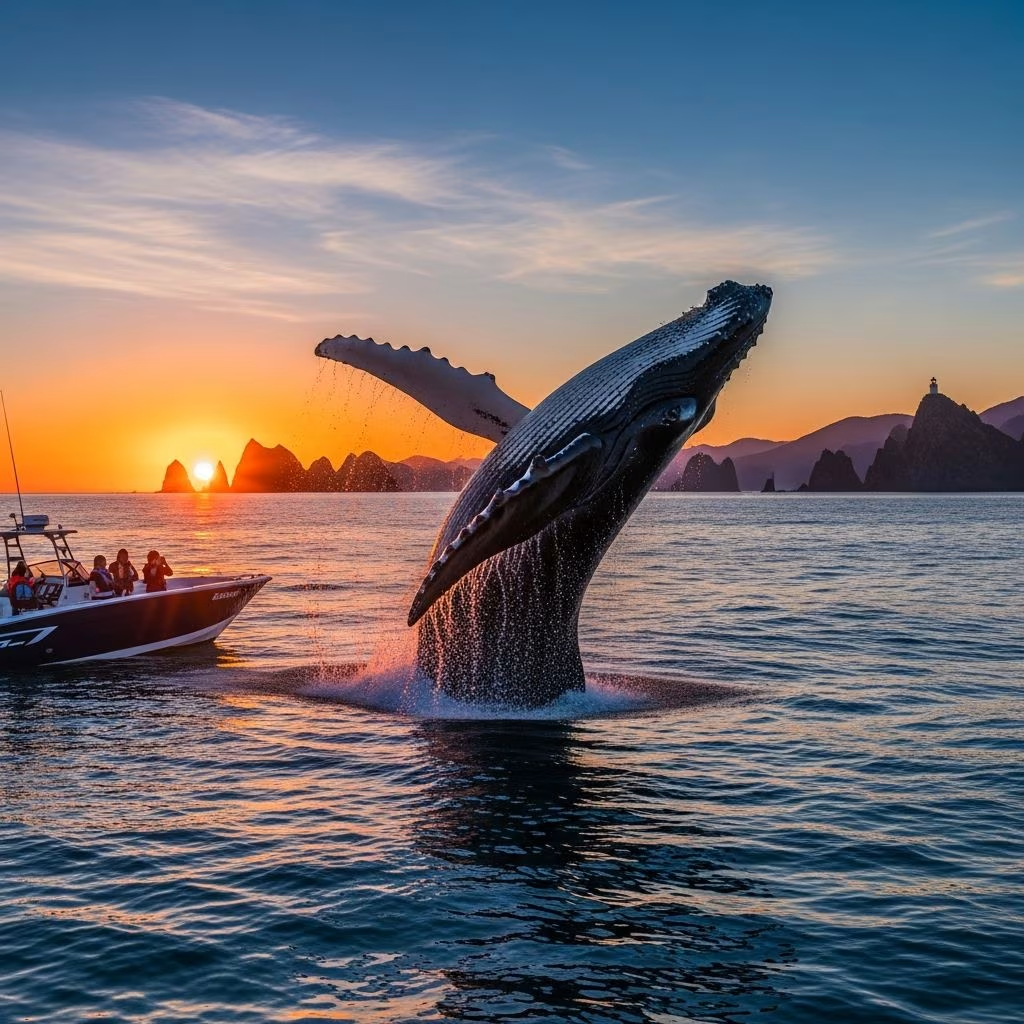
Baja California, Mexico functions as a critical breeding ground for multiple cetacean species, most notably gray whales. The peninsula’s unique geography—bordered by the Pacific Ocean and the Sea of Cortez—creates diverse marine environments supporting various whale populations. San Ignacio Lagoon presents exceptional opportunities to observe newborn gray whales from February through April, while the Sea of Cortez supports sightings of blue whales, humpback whales, and fin whales throughout the year. Los Cabos serves as a primary departure point for expeditions targeting these species.
New Zealand’s Kaikoura region offers year-round whale watching opportunities centered on a dramatic underwater topography that shapes local marine ecology. The Kaikoura Canyon descends to depths exceeding 1,400 meters immediately offshore, creating ideal feeding conditions for sperm whales that maintain resident populations in these waters. Migratory humpback and southern right whales supplement these sightings between June and August. The combination of resident and migratory species produces consistent viewing opportunities across multiple seasons.
Australian East Coast locations provide distinctive seasonal whale watching experiences. Hervey Bay in Queensland earns designation as the “Whale Watch Capital of the World” due to its exceptional humpback whale populations. Sheltered waters provide ideal conditions for migrating whales to rest and socialize during their annual migration cycles from July through October. Tasmania’s Freycinet National Park offers land-based whale watching opportunities, with clifftop vantage points and hiking trails providing elevated observation platforms for viewing humpback and southern right whale migrations along the island’s rugged eastern coastline.
Hermanus, South Africa specializes in southern right whale observation during the species’ migration through Walker Bay from June through November. This Western Cape town features dramatic clifftop viewpoints that eliminate the need for boat-based observation, making shore-based whale watching both accessible and spectacular. The annual Hermanus Whale Festival celebrates the arrival of these marine mammals, attracting international visitors and whale enthusiasts.
French Polynesian waters, particularly around Moorea Island, transform into a humpback whale nursery from July through November. Warm tropical waters attract large populations of these marine mammals during their breeding season. Expert-guided boat expeditions provide opportunities to observe mothers with calves, particularly during the August through October window when maternal bonding behaviors are most visible.
| Destination | Primary Species | Optimal Season | Viewing Method |
|---|---|---|---|
| Husavik, Iceland | Humpback, Minke, Blue | May-September | Boat Tours |
| Baja California | Gray, Humpback, Blue | February-April (Gray) | Boat Tours |
| Kaikoura, New Zealand | Sperm, Humpback | Year-Round | Boat Tours |
| Hermanus, South Africa | Southern Right, Humpback | June-November | Shore-Based |
| Moorea, French Polynesia | Humpback | July-November | Boat Tours |
| Quebec, Canada | Blue, Humpback, Beluga | June-September | Boat Tours |
Humpback Whales represent the most commonly observed cetaceans for recreational whale watching due to their migratory predictability and distinctive behaviors. These marine mammals undertake extensive seasonal migrations, making them accessible across numerous global locations during predictable windows. Their characteristically long pectoral fins, complex vocalizations, and acrobatic breaching behaviors make them particularly rewarding subjects for observation.
Blue Whales constitute Earth’s largest animal and migrate across ocean basins following nutrient-rich currents that support krill populations. Reliable blue whale viewing occurs in the North Atlantic near Quebec, around Iceland’s northern waters, and in the Sea of Cortez off Baja California. These whales require specific oceanic conditions that limit viewing opportunities to particular seasons and locations.
Gray Whales undertake the longest mammalian migration, creating exceptional viewing opportunities during their passage through coastal waters. Baja California specializes in gray whale observation, particularly when newborn calves accompany mothers during their southbound winter migration. These bottom-feeding whales travel predictable coastal routes, making them accessible to shore-based and boat-based observers.
Sperm Whales maintain deep-diving populations in productive submarine canyons like those surrounding Kaikoura, New Zealand, where their presence reflects specialized oceanographic conditions. These deep-diving cetaceans exhibit behaviors distinct from surface-feeding whales, providing unique observation experiences for marine mammal enthusiasts.
Responsible whale watching prioritizes marine mammal welfare through adherence to approach distances, noise minimization, and behavioral respect protocols. Electric-powered boats exemplify sustainable observation platforms, eliminating engine noise pollution that disrupts whale communication and navigation systems. Tourism operators increasingly employ marine biologists and naturalists who educate observers while monitoring whale behavior for signs of distress.
Many established whale watching destinations implement regulatory frameworks governing boat approach distances, observation duration, and seasonal closure periods. These regulations reflect scientific understanding of how human activity impacts whale populations and their essential behaviors including feeding, breeding, and migration. Travelers seeking ethical whale watching experiences should research operator certifications and adherence to established conservation guidelines.
Destination Selection Criteria: Choose locations based on desired species, preferred observation method (boat-based versus shore-based), and personal comfort with extended ocean travel. Some locations emphasize close encounters with multiple species, while others specialize in single-species observation experiences. Consider your budget, physical abilities, and tolerance for maritime conditions when evaluating options.
Temporal Planning: Align travel dates precisely with species migration cycles specific to your chosen destination. Arriving during peak migration periods substantially increases sighting probabilities. Research indicates that traveling during recommended seasons enhances the likelihood of successful whale encounters, though shorter shoulder-season trips may offer fewer crowds and reduced tourism pressure on marine populations.
Logistical Considerations: Most established whale watching destinations offer multiple tour operators, accommodation options, and supporting infrastructure including restaurants, museums, and complementary outdoor activities. Researching operator ratings, vessel specifications, and guide credentials enhances the quality of your observation experience. Many destinations provide land-based observation alternatives for travelers who experience seasickness or prefer non-maritime approaches.
What is the best time of year for whale watching globally? Seasonal timing varies dramatically by location and species. Northern hemisphere locations like Iceland and Baja California offer peak viewing May through September, while southern hemisphere destinations like Hermanus and Kaikoura provide optimal conditions June through October. Tropical locations like French Polynesia operate on a July through November schedule.
Can I observe whales year-round anywhere? Kaikoura, New Zealand stands as a premier year-round destination due to resident sperm whale populations supplemented by migratory species during specific seasons. Most other locations operate seasonally, corresponding to migration patterns or breeding cycles.
What species are easiest for beginners to observe? Humpback whales offer the most accessible observation experience due to their predictable migration routes, acrobatic behaviors, and presence across numerous global destinations. Gray whales in Baja California provide excellent coastal viewing opportunities, while beluga whales in Canadian Arctic regions offer distinctive observation experiences.
How close can boats approach whales? Regulatory guidelines typically mandate minimum approach distances ranging from 100 to 300 meters depending on jurisdiction and species. These distances protect marine mammals while providing adequate viewing opportunities for observers using modern optical equipment and photography technology.
Whale watching tourism generates substantial economic benefits for coastal communities while potentially creating financial incentives for marine conservation efforts. Studies indicate that responsible whale watching operations support local employment, infrastructure development, and wildlife protection initiatives. However, excessive tourism pressure can negatively impact whale populations through noise pollution, vessel strikes, and behavioral disruption.
The sustainability of whale watching tourism depends on maintaining ecological integrity of critical marine habitats while managing visitor volumes through regulatory frameworks and operator licensing requirements. Communities that successfully balance tourism revenue with conservation objectives demonstrate that economic development and environmental stewardship can coexist.
Beyond established destinations, emerging whale watching regions offer distinctive experiences with reduced tourism infrastructure. Peru’s Miraflores district in Lima provides unexpected humpback whale viewing opportunities from July through October. Portugal’s remote Azores archipelago, located approximately 850 miles west of mainland Portugal, offers exceptional whale watching across multiple species within pristine marine environments. These emerging destinations appeal to experienced whale watchers seeking novel experiences and deeper connection with marine ecosystems.
Coastal regions of Eastern Canada, including Vancouver Island and surrounding waters, host migrating gray whales, humpbacks, and orcas, providing Pacific Northwest alternatives to more established observation destinations. The flexibility of less-developed regions permits personalized expedition experiences tailored to individual interests and comfort preferences.
