

 Travel Essentials
 Travel Essentials

Explore France's diverse regions from Alpine peaks to Mediterranean shores. Find your perfect destination based on interests, season, and travel style.
 Travel Essentials
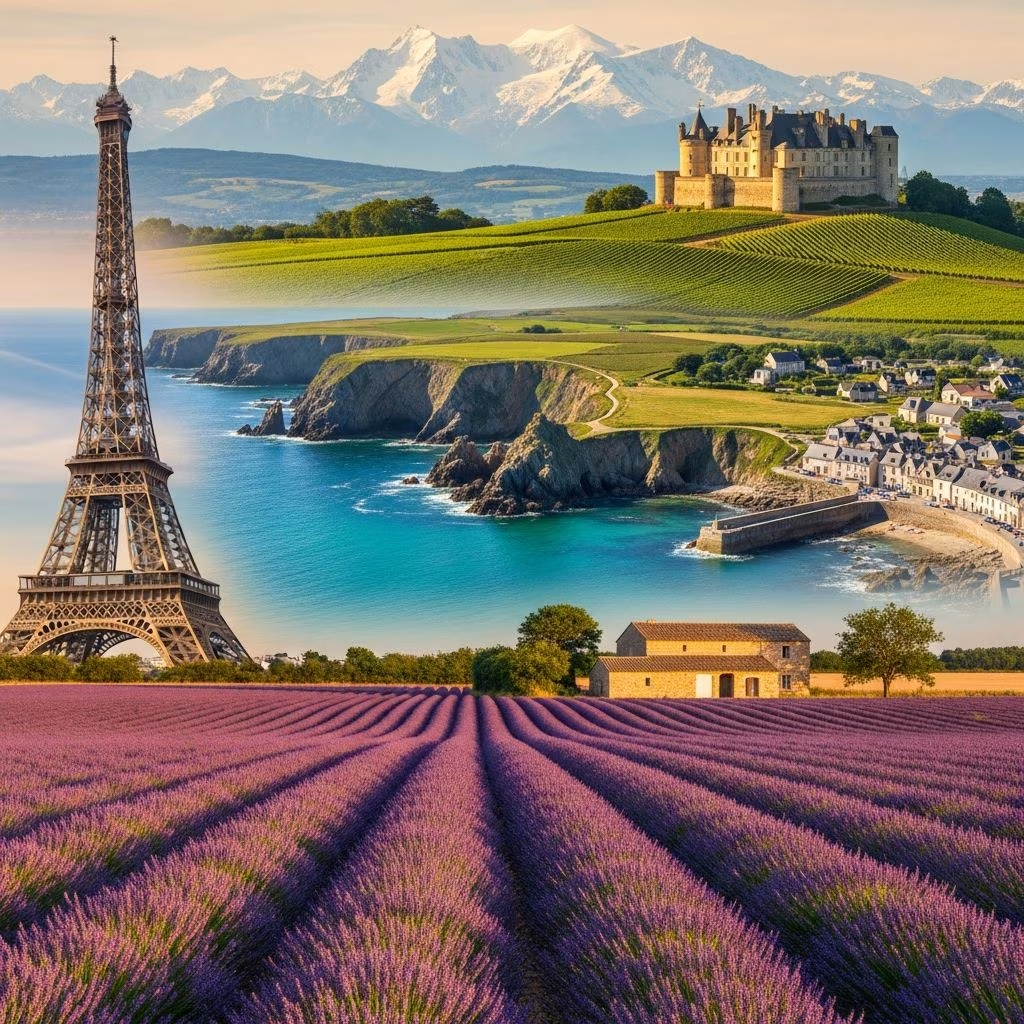
France captivates millions of visitors annually with its extraordinary diversity of landscapes, cultures, and experiences. While Paris dominates the tourist imagination, the country’s regions offer equally compelling attractions that reveal the true character of French life. Understanding France’s geographic and cultural divisions helps travelers craft meaningful journeys tailored to their interests, whether seeking mountain adventures, wine country exploration, historical discoveries, or Mediterranean relaxation.
The mountainous eastern portions of France present dramatic landscapes and year-round recreational opportunities. The French Alps represent one of Europe’s premier alpine destinations, featuring snow-capped peaks, pristine lakes, and charming mountain communities. Mont Blanc, the highest peak in the Alps, anchors this region and provides the centerpiece for outdoor adventures ranging from summer hiking to winter skiing.
Chamonix stands as the primary hub for alpine tourism, offering access to mountaineering, cable car excursions, and stunning valley views. Val d’Isère serves as another premier destination for winter sports enthusiasts and summer travelers seeking high-altitude activities. The region accommodates diverse visitor preferences, from leisurely lakeside strolls in charming towns to challenging mountain expeditions.
The Rhône-Alpes district extends beyond mountains to include picturesque communities that seem suspended in time. Towns constructed from honey-colored stone reflect centuries of alpine tradition. Lyon and Annecy represent the region’s urban centers, each offering cultural attractions, fine dining, and distinctive local character. Annecy particularly appeals to visitors seeking alpine charm combined with urban amenities, featuring a pristine lake surrounded by medieval architecture.
Eastern and central France encompasses several world-renowned wine-producing regions that define French viticulture and gastronomic excellence. These areas represent not merely commercial enterprises but living traditions where centuries-old practices continue shaping both landscapes and communities.
Burgundy (Bourgogne-Franche-Comté) commands respect among wine connoisseurs as the source of some of the world’s finest wines. The region stretches across historic departments including Côte-d’Or, known particularly for exceptional Pinot Noirs and Chardonnays. Beyond wine production, Burgundy showcases Romanesque architectural heritage, Renaissance and medieval castles, and exceptional regional gastronomy that pairs perfectly with local vintages. Dijon serves as the regional capital, offering cultural institutions and authentic Burgundian atmosphere.
The Loire Valley represents the “Garden of France,” with the Loire River bisecting a landscape dotted with Renaissance châteaux that rival Italian palaces in architectural ambition. These castles—including the magnificent Chambord with its distinctive silhouette and the graceful Chenonceau spanning an arched bridge—transformed this valley into a symbol of French cultural achievement. The region’s white wines pair beautifully with sophisticated local cuisine, creating memorable dining experiences in charming riverside towns like Tours and Blois.
Alsace in the Grand Est region presents a distinctly different wine culture influenced by its unique geographic position and multicultural heritage. The region’s Rieslings and Gewürztraminers reflect climatic conditions and winemaking traditions shaped by proximity to Germany and Switzerland. Beyond wine appreciation, Alsace captivates visitors with fairytale villages, ornate half-timbered houses, and enchanting Christmas markets that transform the region into a winter wonderland.
| Region | Primary Wines | Main Cities | Best Season |
|---|---|---|---|
| Burgundy | Pinot Noir, Chardonnay | Dijon, Beaune | September-October |
| Loire Valley | White wines, Cabernet Franc | Tours, Blois, Amboise | May-June |
| Alsace | Riesling, Gewürztraminer | Colmar, Strasbourg | November-December |
| Bordeaux | Cabernet Sauvignon, Merlot | Bordeaux | August-September |
Southern France draws visitors seeking Mediterranean warmth, sophisticated coastal towns, and artistic inspiration. The Provence-Alpes-Côte d’Azur region encompasses diverse attractions ranging from famous beaches to lavender-covered hillsides.
The French Riviera represents the Mediterranean’s most glamorous coastline, featuring upscale resorts, yacht-lined harbors, and trendy restaurants. Nice serves as the region’s largest city, offering cultural attractions alongside seaside charm. Nearby communities present distinct characters: Cannes emphasizes film industry prestige and fashionable shopping, while smaller towns like Villefranche-sur-Mer and Menton provide more intimate Mediterranean experiences. The Opal Coast in the north presents a different seaside aesthetic, featuring charming Channel beach resorts and dramatic clifftop vistas.
Provence inland captivates travelers with lavender fields that surge with purple blooms during summer, stone villages perched dramatically on hillsides, and landscapes that inspired post-Impressionist painters. Gordes and Lacoste represent quintessential Provençal hilltop towns where narrow streets wind between ancient buildings and local markets brim with regional produce. Avignon contributes UNESCO World Heritage significance with its impressive walled city and historical importance as a papal residence. Roman ruins scattered throughout the region—including amphitheaters and temples—connect visitors directly to classical antiquity.
Normandy in northwestern France carries profound historical weight alongside pastoral beauty. D-Day beaches commemorate crucial World War II events, attracting visitors seeking to understand this pivotal historical moment. Beyond military history, Normandy presents Norman architecture, charming port towns, and the striking Mont-Saint-Michel—a fortified monastery island that ranks among Europe’s most iconic landmarks.
Eastern regions including Alsace and Lorraine reflect complex European history through their architecture, museums, and cultural traditions. Lorraine’s association with its namesake quiche extends to broader regional cuisine emphasizing hearty, flavorful dishes. Metz showcases contemporary art at the striking Centre-Pompidou-Metz, while refined Nancy presents elegant neoclassical architecture and cultural sophistication. The WWI battlefields of Verdun provide sobering historical perspectives on industrial-scale warfare and human sacrifice.
Central France’s historical significance emerges through sites connected to Joan of Arc and medieval religious traditions. Orléans marks the location where Joan of Arc influenced pivotal events in 1429. Le Puy-en-Velay features a dramatic volcanic pinnacle crowned by a 10th-century church serving as pilgrimage destination and symbolic religious landmark.
The Dordogne region in southwestern France preserves prehistoric heritage and bucolic countryside that appeals to travelers seeking authentic rural France. Vézère Valley caverns contain rock art dating back millennia, connecting visitors to humanity’s earliest artistic expressions. Medieval towns like Sarlat-la-Canéda maintain historical character through narrow cobbled streets and traditional architecture while hosting markets selling local specialties including truffles, geese, pâtés, walnuts, and regional cheeses.
Auvergne in central France remains among France’s least-explored regions, preserving authentic character and welcoming fewer tourists than better-known destinations. Volcanic formations create distinctive landscapes, with the Parc Naturel Régional des Volcans d’Auvergne showcasing cinder cones and lava formations that shape both topography and regional identity. Clermont-Ferrand, the largest city, features a mighty cathedral constructed from black lava stone and houses the Michelin museum documenting the tire company’s history. Local specialties including Le Puy lentils and exceptional cheeses sustain visitors exploring hiking trails through relatively undiscovered terrain.
Burgundy, Alsace, Loire Valley, and Bordeaux regions offer distinct wine experiences combined with cellar tours, tastings, and regional gastronomy. Visiting during harvest seasons (August-October) provides opportunities to witness winemaking traditions firsthand.
Loire Valley châteaux, Normandy’s medieval sites, Alsatian towns, and southern French Roman ruins provide centuries-spanning architectural and historical narratives. Spring and fall offer pleasant weather for extended exploration.
The French Riviera and Mediterranean Provence deliver sunshine, seaside charm, and sophisticated coastal culture. Summer months bring peak warmth but also substantial crowds; shoulder seasons provide better balance between weather and visitor volume.
Alpine regions accommodate skiing, hiking, mountaineering, and lake activities across seasons. Winter attracts snow sports enthusiasts, while summer appeals to trekkers and climbers.
Successful regional travel in France emphasizes selecting destinations aligned with personal interests rather than geographic proximity. Each region deserves sufficient time to appreciate local food, markets, and everyday rhythms that characterize authentic French life.
Consider visiting during shoulder seasons (April-May or September-October) when weather remains favorable, attractions remain accessible, and crowds diminish compared to peak summer tourism. Spring brings wildflowers and renewed vineyard activity, while autumn offers harvest season excitement and dramatic landscape colors.
Understanding regional specialties—whether wines, cheeses, architectural styles, or recreational opportunities—enables travelers to craft itineraries reflecting their passions. France’s regional diversity ensures that nearly every traveler discovers destinations providing memorable, personally meaningful experiences far removed from standardized tourist circuits.
Shoulder seasons (April-May and September-October) offer ideal conditions with pleasant weather, fewer crowds, and moderate prices. Summer peak season brings warmth and festive atmosphere but attracts substantial tourism. Winter suits Alpine sports and Christmas markets but limits outdoor activities in other regions.
Plan minimum 3-4 days per region to experience local culture authentically. Larger regions like Provence or wine country benefit from 5-7 days allowing leisure pace and deeper exploration.
Yes, France’s efficient transportation infrastructure enables multi-region journeys. Focus on geographically proximate regions to minimize travel time. A two-week itinerary might combine Loire Valley châteaux with Burgundy wine exploration, then descend toward Provence.
Each region emphasizes local specialties: Burgundy excels in coq au vin and cheese, Loire Valley features lighter preparations paired with white wines, Alsace showcases choucroute and pretzels, Mediterranean regions emphasize seafood and olive oil, while Dordogne celebrates duck and truffles.
