


 Food & Culture
Food & Culture
Best Restaurants in Hong Kong: Michelin Stars, Dim Sum & Local Favorites
Explore Hong Kong's vibrant food scene with curated recommendations spanning fine dining, traditional Cantonese cuisine, and iconic local favorites.
 Food & Culture
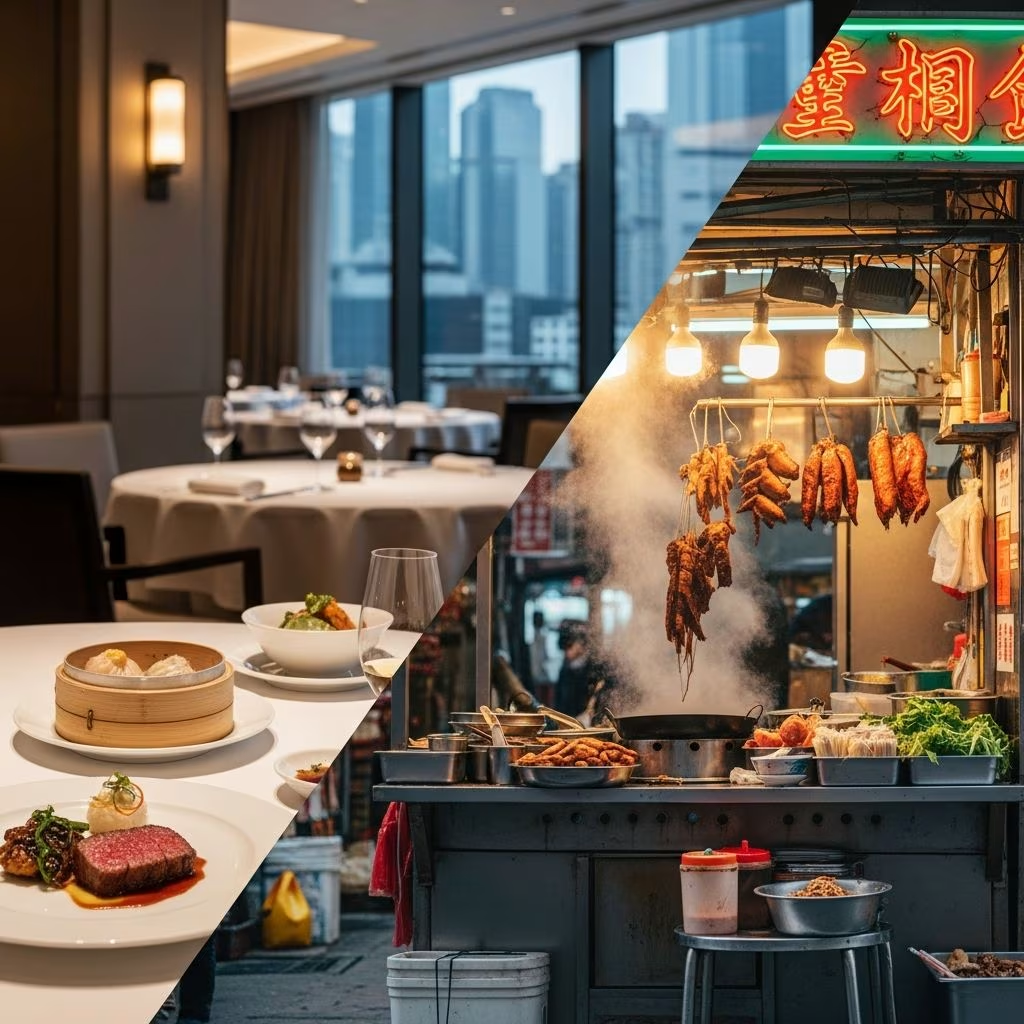
Hong Kong stands as one of Asia’s most dynamic culinary destinations, blending centuries-old Cantonese traditions with contemporary international gastronomy. The city’s food scene reflects its unique cultural heritage, incorporating influences from across China, Southeast Asia, and the Western world. Whether seeking refined fine dining experiences or authentic street-level authenticity, Hong Kong offers exceptional options for every palate and budget.
Understanding Hong Kong’s Michelin Recognition
The Michelin Guide’s 2026 edition recognizes Hong Kong’s exceptional gastronomic landscape with significant distinction. The city maintains thirteen two-Michelin-starred establishments, representing the highest echelon of culinary achievement. These restaurants exemplify meticulous technique, innovative approaches to traditional ingredients, and service standards comparable to Europe’s most celebrated establishments.
Beyond the two-star tier, Hong Kong boasts fifty-seven one-Michelin-starred restaurants spanning diverse cuisines and price points. This breadth demonstrates the city’s capacity to maintain excellence across multiple dining philosophies and culinary traditions. Additionally, the Michelin Guide identifies seventy-two selected restaurants warranting attention, creating a comprehensive landscape of recognized quality establishments.
Fine Dining Excellence: The Two-Star Tier
Among Hong Kong’s most prestigious dining venues, Lung King Heen occupies a prominent position within the Four Seasons hotel on Hong Kong Island. This establishment represents classical Cantonese refinement executed at the highest technical level. The restaurant commands panoramic views across Victoria Harbour toward Kowloon’s skyline, creating an elegant ambiance that complements its meticulously prepared cuisine. Service standards maintain European-caliber professionalism, with staff demonstrating extensive knowledge of the menu’s refined offerings.
The 2026 Michelin Guide introduces several newly recognized two-star establishments, including Cristal Room by Anne-Sophie Pic, which recently achieved promotion to this tier. This venue represents the convergence of French culinary philosophy with Asian ingredient applications, offering diners a distinctive perspective on contemporary fine dining. L’Atelier de Joël Robuchon appears as a new two-star addition, bringing the legendary French chef’s signature approach to Hong Kong’s dining landscape.
Modern Cantonese Cuisine: Contemporary Interpretations
Hong Kong’s culinary identity remains rooted in Cantonese tradition, yet contemporary chefs continuously reinterpret these foundations through modern techniques and presentation philosophies. Ho Lee Fook exemplifies this contemporary approach, operating as a vibrant, trendy establishment in Hong Kong’s Central district. The restaurant creates an energetic dining atmosphere while maintaining respect for Cantonese culinary fundamentals, appealing to diners seeking familiar flavors within modern contexts.
Chef Vicky Lau’s newest venture, Jija, represents another significant development in Hong Kong’s modern Cantonese evolution. This establishment reinterprets the regional cuisines of Guizhou and Yunnan provinces through refined contemporary techniques. Signature preparations include dry-aged roasted pigeon, demonstrating Lau’s commitment to ingredient quality and sophisticated flavor development. The restaurant’s location within Kimpton Hong Kong positions it accessibly within the city’s hotel infrastructure.
Traditional Dim Sum and Steamed Specialties
Sun Hing distinguishes itself among Hong Kong’s dim sum destinations through its exceptional quality and remarkable accessibility. Operating continuously from 3 AM onward, this Kennedy Town establishment caters to night workers, early risers, and dedicated dim sum enthusiasts seeking authentic preparations. The restaurant maintains genuinely traditional preparation standards, creating exceptional examples of steamed dumplings, har gow (shrimp dumplings), and siu mai (pork dumplings) that showcase foundational Cantonese techniques.
The recent 2026 Michelin Guide additions include Hau Tak Restaurant in Causeway Bay, presenting expertly crafted Cantonese dim sum within a modernized dining environment. This establishment deliberately moves away from traditional banquet hall formality, creating more intimate and accessible dim sum experiences. Recommended preparations include sautéed conch and chicken paired with honey-glazed Yunnan ham, demonstrating sophisticated flavor combinations within the dim sum format.
Roasted Specialties and Wok-Fired Excellence
Hong Kong’s roasted meat traditions represent a distinctive culinary cornerstone, particularly within Cantonese cooking. Kam’s Roast Goose and Yat Lok represent the highest achievements in this specialized category, each earning Michelin recognition for their mastery of traditional roasting techniques. These establishments maintain proprietary approaches to seasoning, temperature management, and execution that distinguish their products from casual competitors.
The art of wok-fired cooking achieves particular prominence at Oi Man Sang, one of Hong Kong’s remaining dai pai dong (open-air street food restaurants). This establishment employs powerful kerosene-fueled wok burners that generate exceptional wok hei (breath of the wok) flavor—a characteristic regarded as the holy grail of Cantonese stir-frying. Diners at this venue experience genuinely authentic preparation methods increasingly rare within modernized urban environments.
Communal Dining: Hot Pot Experiences
Big JJ Seafood Hotpot provides memorable communal dining centered on this interactive cooking format. Hot pot dining emphasizes participation, allowing diners to select ingredients and control cooking temperatures according to personal preference. This interactive element creates social dining experiences distinct from traditional service models, making it particularly appealing for groups seeking shared culinary adventures.
Noodle and Wonton Craftsmanship
Hong Kong maintains exceptional noodle preparation traditions through establishments like Mak Man Kee and Mak’s Noodles, recognized for their mastery of both noodle craftsmanship and wonton preparation. These venues often operate within casual, efficient service formats that prioritize ingredient quality and technical execution over elaborate ambiance. Their continued recognition within competitive dining landscapes demonstrates persistent consumer appreciation for foundational culinary excellence.
Emerging Venues: 2026 Michelin Guide Additions
The 2026 Michelin Guide acknowledged nine newly recognized restaurants, representing both recently established venues and longer-operating establishments achieving first-time recognition. This cohort includes Akira Back, Fiata Pizza, Hau Tak Restaurant, Jean-Pierre, Jija, Lai’s Kitchen, Mesa, Sol, and Twelve25. Notably, five of these establishments opened within the preceding twelve months, while others had operated for several years before gaining recognition.
Lai’s Kitchen deserves particular attention for its modernized dai pai dong concept, maintaining the interactive, communal spirit of traditional street-food restaurants within contemporary facilities. Their stir-fries and claypot rice specialties—including perilla black bean eel and golden garlic crab preparations—showcase refined technique applied to working-class culinary foundations.
Practical Dining Considerations
| Restaurant Category | Price Range | Best For | Booking Requirements |
|---|---|---|---|
| Two-Michelin-Star Fine Dining | HK$800-2000+ per person | Special occasions, refined experiences | Essential advance reservation |
| One-Michelin-Star Establishments | HK$300-800 per person | Serious dining enthusiasts | Recommended reservation |
| Selected/Recognized Restaurants | HK$150-400 per person | Quality dining without premium pricing | Often walk-ins accepted |
| Casual Dim Sum/Noodles | HK$50-200 per person | Authentic local experiences | Usually walk-in only |
| Hot Pot/Interactive Dining | HK$200-500 per person | Group dining, social experiences | Varies by establishment |
Frequently Asked Questions
What is Hong Kong’s most acclaimed restaurant?
Among Hong Kong’s thirteen two-Michelin-starred establishments, Lung King Heen at the Four Seasons represents the most publicly recognized venue. However, several other two-star restaurants maintain equally sophisticated reputations within culinary circles.
Where can tourists find authentic Cantonese food?
Establishments like Oi Man Sang, Kam’s Roast Goose, and Sun Hing maintain authenticity while remaining accessible to visitors. These venues preserve traditional preparation methods despite Hong Kong’s modernization.
Are reservations necessary for dining in Hong Kong?
Fine dining venues require advance reservations, typically booked weeks in advance. Casual restaurants and dim sum establishments often accommodate walk-in diners, though peak hours may involve brief waits.
What cuisines beyond Cantonese are well-represented?
The Michelin Guide’s selections demonstrate significant representation of French, Spanish, Italian, and other international cuisines alongside Cantonese establishments. This diversity reflects Hong Kong’s cosmopolitan character.
Strategic Dining Planning
Visitors should consider timing strategies that maximize culinary variety. Early morning dim sum experiences provide authentic atmospheres with fewer tourists, particularly at establishments like Sun Hing. Lunch hours often feature shorter wait times at popular casual venues. Evening reservations at Michelin-recognized establishments provide structured, memorable dining experiences, while late-night food exploration captures Hong Kong’s vibrant nocturnal food culture.
Hong Kong’s culinary landscape continues evolving, with the 2026 Michelin Guide recognizing emerging establishments while maintaining traditions spanning generations. This balance between innovation and heritage defines the city’s distinctive food identity, offering sophisticated travelers exceptional opportunities for gastronomic discovery.
References
- 11 of the Best Restaurants In Hong Kong (2026) — Paris Eater. April 2026. https://www.pariseater.com/travel/best-restaurants-hong-kong/
- Michelin Guide has newly added nine restaurants to its Hong Kong-Macau edition — Timeout Hong Kong. April 2026. https://www.timeout.com/hong-kong/news/michelin-guide-has-newly-added-nine-restaurants-to-its-hong-kong-macau-edition-022726
On This Page
Understanding Hong Kong's Michelin Recognition Fine Dining Excellence: The Two-Star Tier Modern Cantonese Cuisine: Contemporary Interpretations Traditional Dim Sum and Steamed Specialties Roasted Specialties and Wok-Fired Excellence Communal Dining: Hot Pot Experiences Noodle and Wonton Craftsmanship Emerging Venues: 2026 Michelin Guide Additions Practical Dining Considerations Frequently Asked Questions Strategic Dining Planning← Previous
San Miguel de Allende Named World’s Best City by Travel + Leisure
Next →
Caribbean Travel Mistakes to Avoid: Expert Tips for a Better Trip
Related Reading
More in Food & Culture
Food & Culture Food & Culture
 Food & Culture
Best Places to Eat in Rome: Neighborhood Dining Guide
 Food & Culture
 Food & Culture