

 Travel Essentials
 Travel Essentials

A comprehensive guide to Chile's premier self-drive routes, from remote Patagonian highways to coastal scenic passages and lake-filled territories.
 Travel Essentials
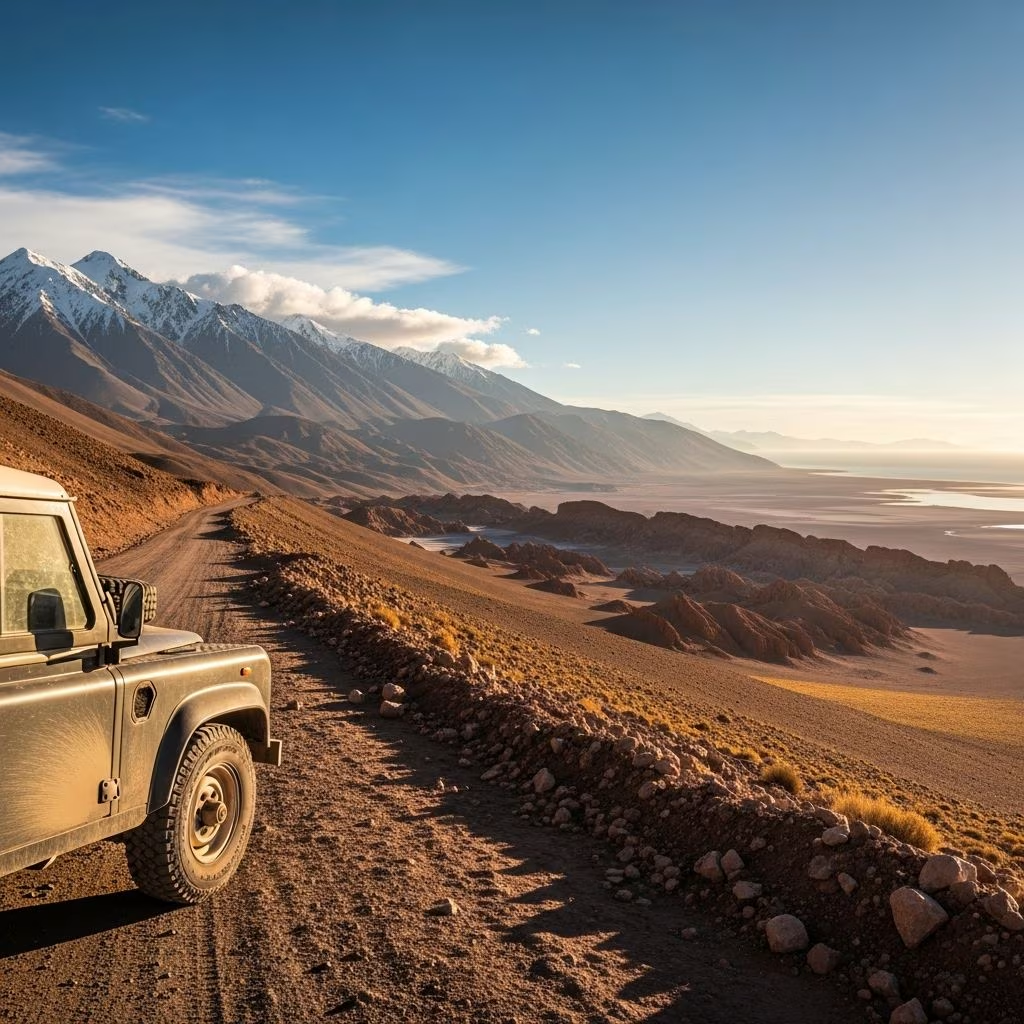
Chile stretches across nearly 4,000 kilometers along South America’s western edge, presenting one of the world’s most dramatic ranges of terrain accessible by vehicle. From the arid deserts of the far north to the ice-laden fjords of the south, the nation offers an exceptional collection of driving experiences that showcase diverse landscapes, distinct regional cultures, and natural wonders that inspire awe in even the most seasoned travelers. Whether you’re seeking remote mountain passes, pristine coastlines, or vibrant agricultural valleys, Chile’s network of highways and scenic routes provides unparalleled opportunities for self-directed exploration.
The Carretera Austral represents one of South America’s most extraordinary driving experiences, stretching approximately 1,200 kilometers through the heart of Chilean Patagonia. This route, formally known as Ruta 7, connects Puerto Montt in the north to Villa O’Higgins in the south, requiring approximately two weeks to complete at a comfortable pace that allows for exploration and sightseeing. The highway traverses some of the continent’s most pristine and untouched wilderness areas, passing through regions that remain relatively isolated and undeveloped compared to other major travel corridors.
The northern sections of the Carretera Austral wind through temperate rainforests where ancient alerce trees create towering natural cathedrals above the roadway. This zone encompasses portions of three significant national parks—Alerce Andino, Hornopirén, and Pumalín—each offering distinct ecosystems characterized by cascading waterfalls, emerald-hued lakes, and dense forest canopies. The terrain becomes so extreme as the route approaches coastal fjords that conventional road construction becomes impossible in certain stretches, necessitating the integration of ferry services as critical components of the transportation infrastructure.
As travelers progress southward, the landscape transforms dramatically. The dense forests gradually recede, revealing expansive open steppe punctuated by jagged mountain ranges that pierce the horizon. The route approaches Lago General Carrera, a massive turquoise body of water renowned for its striking natural formations. Within this region sits one of Patagonia’s most photographed attractions—the Marble Caves, whose wind- and wave-sculpted chambers bear evocative names like the Chapel and the Cathedral. Nearby, the San Rafael Glacier calves massive icebergs directly into an emerald lagoon, creating a dynamic natural spectacle that shifts with seasonal variations.
South of the Coyhaique region, the highway navigates through terrain described as Patagonia’s premier trekking country, with hiking opportunities rivaling those found in Torres del Paine National Park but characterized by dramatically fewer visitors. The Cerro Castillo National Park offers particularly impressive trail networks that provide day-hiking opportunities without requiring specialized mountaineering experience. The extreme natural beauty throughout these sections invites spontaneous exploration, with countless pullouts where adventurous drivers might venture into the surrounding mountains on foot.
The culmination of the journey approaches Patagonia National Park, one of Chile’s newest protected areas representing an ambitious ecological rewilding initiative. This reserve demonstrates successful efforts to restore natural balance to lands previously dedicated to logging and ranching operations. Wildlife viewing within the park often includes sightings of wild guanacos—South American camelids resembling llamas—grazing in open meadows adjacent to visitor accommodations.
The route extending between Pucón and Puerto Varas encompasses approximately 525 kilometers and typically requires five to seven days to traverse comfortably. This journey functions as an interconnected series of stops linking numerous lakes and volcanic features scattered throughout Chile’s lake district. The region represents one of South America’s most geologically active zones, with multiple volcanoes—some still active—providing dramatic backdrops to crystalline alpine lakes.
This corridor offers exceptional opportunities for travelers seeking a blend of outdoor recreation and comfortable infrastructure. Resort towns punctuate the route, providing dining, accommodation, and retail services at regular intervals. The driving itself remains relatively straightforward, making this journey accessible to a broader range of travelers compared to more remote southern routes. Volcanic peaks dominate the visual landscape throughout the journey, with opportunities to hike to crater rims, explore geothermal features, and camp beside pristine mountain lakes.
The route connecting La Serena to Pisco Elqui spans 110 kilometers through Chile’s famous wine and astronomical observation regions. This three-to-five-day journey passes through areas renowned for their clear skies and minimal light pollution, characteristics that have attracted major international observatories and astronomical research facilities. The route provides access to some of the world’s finest stargazing opportunities, with numerous small communities offering telescope-based viewing programs and overnight astronomical experiences.
The Elqui Valley itself represents a unique convergence of agricultural production and celestial science, where vineyards and pisco distilleries coexist with cutting-edge astronomical infrastructure. The specific atmospheric conditions that make this region ideal for astronomical observation—rare cloud cover, minimal humidity, and low atmospheric turbulence—also create dramatic visual experiences during daytime driving, with exceptional visibility extending many kilometers across the landscape.
Multiple shorter routes provide opportunities to explore Chile’s diverse coastal regions. The journey from Santiago to Santa Cruz, spanning 180 kilometers and requiring one to three days, introduces travelers to Central Chile’s wine country and colonial architecture. This route passes through agricultural heartlands where traditional farming practices persist alongside modern viticulture operations.
The Puerto Saavedra circuit, a 100-kilometer loop requiring two to three days, focuses on the southern coastal region with emphasis on indigenous cultural heritage and fishing community traditions. This less-traveled route provides insight into Chile’s diverse populations and traditional lifestyles less visible in major tourist destinations.
| Route Section | Primary Attractions | Recommended Activities | Ideal Duration |
|---|---|---|---|
| Northern Carretera Austral | Rainforests, National Parks, Fjords | Hiking, Forest Walks, Kayaking | 4-5 days |
| Central Carretera Austral | Marble Caves, Glaciers, Lakes | Boating, Photography, Trekking | 4-5 days |
| Southern Carretera Austral | Patagonia Park, Mountain Scenery | Wildlife Viewing, Backcountry Hiking | 3-4 days |
| Lake District | Volcanoes, Alpine Lakes, Villages | Day Hikes, Water Sports, Sightseeing | 5-7 days |
| Astronomical Route | Observatories, Vineyards, Desert | Stargazing, Wine Tasting, Photography | 3-5 days |
Successful navigation of Chilean routes begins with thorough pre-journey preparation. International driving permits supplement domestic licenses and facilitate smoother interactions with authorities and rental agencies. Travelers should understand Chile’s specific traffic regulations, speed limit enforcement patterns, and parking conventions to avoid unexpected complications.
Vehicle rental companies operate throughout major cities, with options for both standard and specialized vehicles. International visitors typically require valid passports, credit cards, and valid driving licenses from their home countries. Insurance considerations deserve particular attention, especially for routes traversing remote areas where roadside assistance availability diminishes significantly.
Navigation technology has transformed long-distance driving in Chile, though offline maps prove essential in regions with limited cellular coverage. Establishing alternative communication methods—satellite messengers or international roaming capabilities—provides safety assurance for extended remote explorations.
Chile’s latitudinal span creates distinct seasonal variations from north to south. Northern regions experience arid conditions year-round, while southern areas encounter significant winter precipitation and occasional road closures between June and August. Spring (September through November) and autumn (March through May) represent optimal travel windows, offering favorable weather conditions, moderate temperatures, and fewer seasonal disruptions.
Summer months (December through February) attract peak tourist traffic, resulting in crowded accommodations and longer wait times at popular attractions. However, this season offers maximum daylight hours—particularly valuable in southern regions where summer darkness recedes to minimal levels, and numerous outdoor attractions operate at full capacity.
Beyond scenic grandeur, Chile’s driving routes provide opportunities for meaningful cultural engagement. Small communities along major routes maintain traditional practices, local food specialties, and artisanal crafts reflecting regional heritage. Market visits, restaurant experiences, and conversations with residents enrich journeys beyond visual landscape appreciation alone.
Indigenous communities, particularly visible in northern routes and certain southern regions, offer cultural perspectives extending back centuries. Respectful engagement with these communities—through guided tours, educational programs, or direct commercial interaction—supports local economies while providing travelers with deeper contextual understanding of Chilean geography and history.
Chilean highways maintain generally good infrastructure standards, though remote southern sections present unique challenges. Road conditions can deteriorate rapidly during adverse weather, and emergency services respond more slowly in sparsely populated areas. Maintaining vehicles in excellent mechanical condition, carrying spare parts and tools, and establishing communication protocols before departing populated areas enhances overall safety.
Wildlife encounters remain minimal on established routes, though travelers should understand local fauna and maintain appropriate distances when photographing animals. Border regions require special attention to understanding and complying with national regulations regarding movement, documentation, and vehicle requirements.
