

 Travel Essentials
 Travel Essentials

Explore America's most breathtaking camping destinations, from alpine retreats to coastal havens, offering diverse landscapes and outdoor adventures.
 Travel Essentials
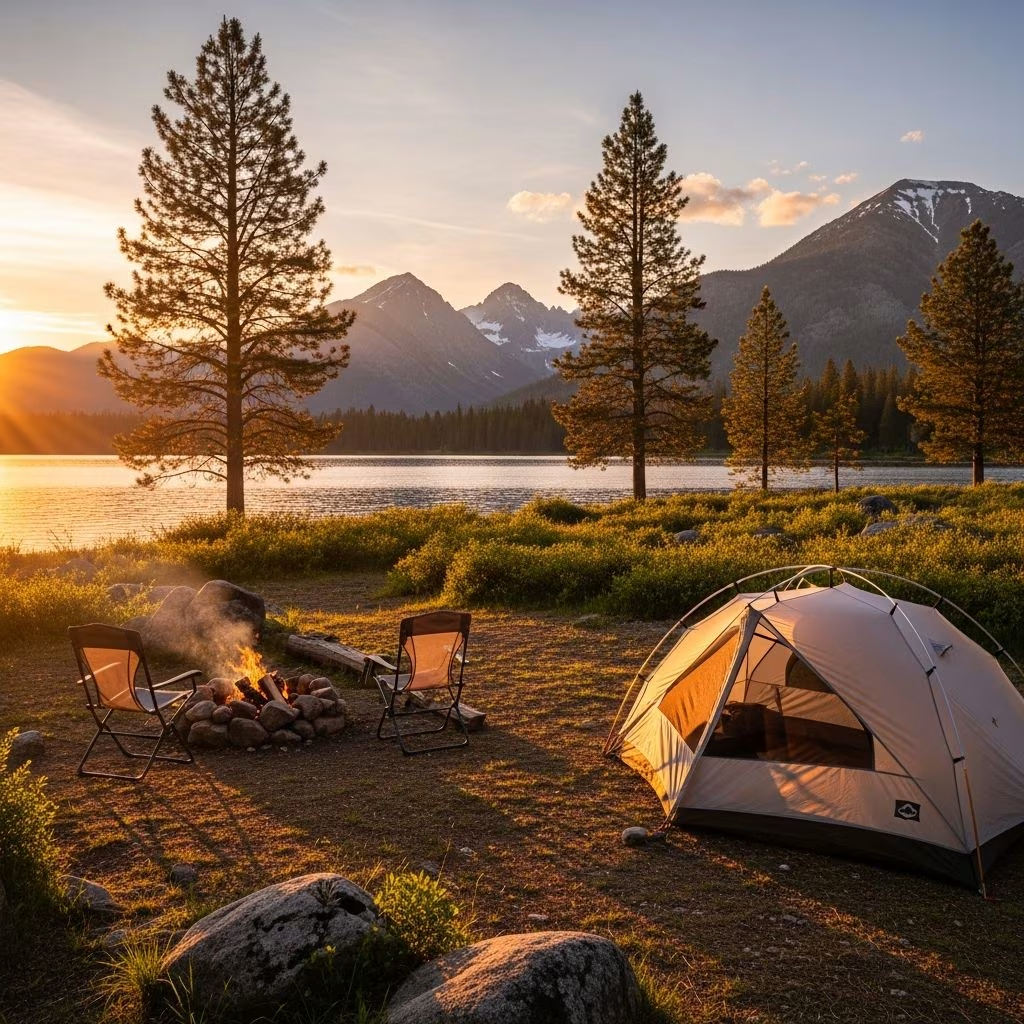
Camping enthusiasts seeking authentic wilderness experiences combined with extraordinary visual landscapes have numerous exceptional options throughout the United States. From towering mountain ranges to pristine coastlines, the nation offers diverse environments where travelers can immerse themselves in nature while enjoying memorable outdoor adventures. This guide highlights some of the country’s most remarkable camping locations, each offering distinct characteristics that appeal to different types of outdoor adventurers.
The mountainous regions of the United States provide some of the most dramatic and inspiring camping experiences available. Alpine environments offer cooler temperatures, cleaner air, and panoramic vistas that extend for miles across varied terrain. These elevated locations are particularly attractive during summer months when weather conditions remain stable and accessible trails abound.
Colorado stands out as a premier destination for mountain camping, with numerous facilities nestled within national forests and mountain parks. The White Star Campground, positioned at 9,200 feet elevation at the base of Mount Elbert, represents an exemplary mountain camping experience. This location combines accessibility with genuine wilderness character, providing campers with stunning reservoir views and straightforward access to extensive outdoor recreation opportunities. The elevation alone ensures crisp mountain air and clear starry nights, fundamental elements that distinguish mountain camping from lower-altitude alternatives.
Rocky Mountain ranges throughout Colorado, Wyoming, and Montana feature similar advantages, with well-maintained campgrounds that accommodate various camping styles. Whether visitors prefer developed facilities with amenities or more rustic environments, mountain regions typically offer choices suitable for different comfort levels and experience levels.
Campgrounds positioned adjacent to high-elevation lakes provide unique combinations of water recreation, dramatic mountain backdrops, and ecological diversity. These locations attract photographers, fishing enthusiasts, kayakers, and those seeking tranquil natural settings.
The Lost Lake Campground within Gunnison National Forest near Paonia, Colorado exemplifies this category. Positioned in a serene alpine setting, this facility operates on a first-come, first-served basis and welcomes tent campers, RV visitors, and those with equestrian interests. The alpine lake environment creates distinctive opportunities for water-based activities while maintaining the peaceful character that defines quality camping experiences.
Twin Lakes near Colorado’s Mount Elbert region similarly showcases how high-elevation water bodies enhance camping value through recreation potential and visual appeal. These alpine lake settings typically experience dramatic seasonal changes, with summer offering optimal conditions for swimming, paddling, and shore-based exploration.
America’s ocean coastlines provide fundamentally different camping environments compared to mountain regions, with distinct advantages including milder temperatures, unique wildlife viewing opportunities, and the therapeutic benefits of proximity to ocean waters. Coastal campgrounds often feature beach access, tide pool exploration, and seasonal marine wildlife observation possibilities.
Doe Bay on Orcas Island, Washington exemplifies premium coastal camping. This location combines beach bluff positioning that delivers exceptional sunset viewing with practical amenities including spacious tent sites and private hike-in options. The proximity to Fort Bragg enables campers to acquire forgotten supplies while maintaining access to pristine natural environments. Seasonal wildlife viewing, including winter and spring whale observation, adds ecological interest to stays.
Coastal locations often feature tide pools supporting diverse marine life, opportunities for beachcombing, and access to maritime ecosystems rarely experienced in landlocked regions. The combination of beach recreation and ocean views creates distinctive camping atmospheres distinct from mountain or forest environments.
National parks represent federally protected landscapes offering exceptional combinations of geological features, ecological diversity, and established infrastructure. Camping within national park boundaries provides unparalleled access to iconic natural wonders while supporting conservation missions.
Glacier Bay National Park in Alaska houses the Bartlett Cove Campground, a facility distinguished by crystal-clear glacial waters and authentic remote wilderness character. This location combines accessibility through established camping infrastructure with genuine isolation and natural spectacle. Visitors experience glacial landscapes, forest ecosystems, and marine environments within compact geographic areas, enabling diverse activities including kayaking and backcountry hiking.
Yosemite National Park’s Tuolumne Meadows represents another exceptional national park camping opportunity. This location captures Yosemite’s defining characteristics including granite formations and cascading waterfalls while experiencing fewer crowds than valley-based facilities. The meadows environment provides distinctive ecological experiences contrasting with crowded lower-elevation alternatives.
America’s vast desert and plateau regions offer camping experiences dramatically different from forested or mountainous areas. These environments feature expansive horizons, distinctive geological formations, and opportunities for observing vast star fields unobstructed by light pollution or tree canopies.
The Scoria Pit location combines elevation and prairie characteristics, providing panoramic vistas from elevated positions. This environment supports diverse wildlife including bison and prairie dog populations, creating opportunities for nature observation and wildlife photography. Gravel road access accommodates most vehicles, though larger RVs may encounter challenging terrain conditions.
Desert and plateau camping typically offers excellent stargazing opportunities due to minimal light pollution and clear atmospheric conditions. These environments appeal particularly to photographers, astronomers, and those seeking solitude in expansive open landscapes.
Campground quality and visitor experience depend substantially on infrastructure and available facilities. Options range from minimal development emphasizing wilderness character to comprehensive resort-style environments offering extensive services.
| Facility Type | Characteristics | Best For |
|---|---|---|
| Primitive Tent Sites | Minimal development, no utilities, basic sanitation | Backcountry enthusiasts, minimal comfort requirement |
| Developed Campgrounds | Electric hookups, water access, maintained roads | Families, RV travelers, those seeking comfort |
| Hike-In Facilities | Walk-only access, enhanced privacy, remote character | Hikers, those prioritizing solitude |
| Luxury Resort Camping | Full amenities, accommodations, dining services | Comfort-oriented travelers, group gatherings |
Copper Falls State Park Campground in Wisconsin offers multiple facility tiers including developed sites with electric service and primitive non-electric alternatives. This approach accommodates diverse visitor preferences within single locations, enabling families to select suitable arrangements based on specific needs.
Geographic location determines optimal camping seasons and weather patterns substantially. Understanding regional seasonal characteristics enables better planning and more satisfying experiences.
Alaska’s Glacier Bay Campground operates optimally during summer months when extended daylight maximizes outdoor activity opportunities and eliminates risks from ice accumulation and severe cold. The extended summer days characteristic of high-latitude locations provide more active hours for exploration and recreation.
Mountain regions similarly experience shortened comfortable camping seasons, with July and August typically offering optimal weather conditions. Spring and fall provide alternative seasons with pleasant temperatures but potentially unpredictable precipitation.
Coastal and lower-elevation locations often extend camping seasons substantially, with spring, summer, and fall remaining accessible for most North American coastal regions. This extended seasonality makes coastal camping appealing for travelers with schedule flexibility.
Successful camping experiences require adequate preparation including vehicle readiness, supply gathering, and realistic expectation setting. Different campground types demand varying equipment and preparation levels.
Scenic campgrounds attract photography enthusiasts seeking to capture landscapes and wildlife. Different locations offer distinct photographic opportunities based on geological features, lighting patterns, and seasonal wildlife.
Splitrock Farm and Retreat represents a location offering diverse photographic subjects including ancient tree groves, massive granite boulders, and expansive vistas encompassing coastlines and mountain ranges. The combination of near and distant visual elements enables photographers to compose layered landscape images incorporating foreground, middle ground, and background elements.
Optimal photography typically occurs during early morning and late afternoon hours when sunlight angles create dramatic shadows and warm tones. Understanding local landscape characteristics enables photographers to position themselves for optimal compositions.
Quality camping destinations accommodate diverse visitor types including families with young children, experienced backcountry enthusiasts, individuals with mobility considerations, and group gatherings. Facility design and location selection substantially influence accessibility.
Silver Bell Campground near Aspen, Colorado exemplifies accessibility through selective development limiting site numbers to 14 locations. This approach maintains scenery and wilderness character while preventing overcrowding. Such selective development balances accessibility with environmental protection.
Essential equipment includes a tent appropriate to season and weather, sleeping bag rated for expected temperatures, sleeping pad providing insulation and comfort, portable stove or cooking equipment, lighting sources, and basic tools. Many campgrounds offer rental options enabling beginners to acquire experience before purchasing expensive equipment.
Popular campgrounds, particularly during peak summer season, require reservations months in advance. Many facilities accept reservations up to one year ahead. Less popular locations and off-season camping often permit last-minute bookings or operate on first-come, first-served bases.
Most campgrounds accommodate pets with restrictions including leashing requirements and designated pet areas. Verify specific pet policies before arrival, as regulations vary substantially between facilities and jurisdictions.
Essential precautions include proper food storage preventing wildlife encounters, water purification using established treatment methods, awareness of weather and terrain hazards, and maintenance of emergency communication capability. Local ranger stations provide current condition updates and safety recommendations.
Many campgrounds limit group sizes or require special reservations for larger gatherings. Early contact with facility management enables appropriate arrangement for group activities.
America’s exceptional campground diversity enables outdoor enthusiasts to select locations matching specific preferences including elevation, climate, activity opportunities, and comfort level requirements. Whether seeking mountain solitude, coastal recreation, national park proximity, or desert stargazing, established campgrounds throughout the United States provide gateways to authentic wilderness experiences while maintaining practical infrastructure and safety systems. Careful research and appropriate planning transform camping from simple recreational activity into memorable adventures creating lasting personal connections with natural environments.
