

 Travel Essentials
 Travel Essentials

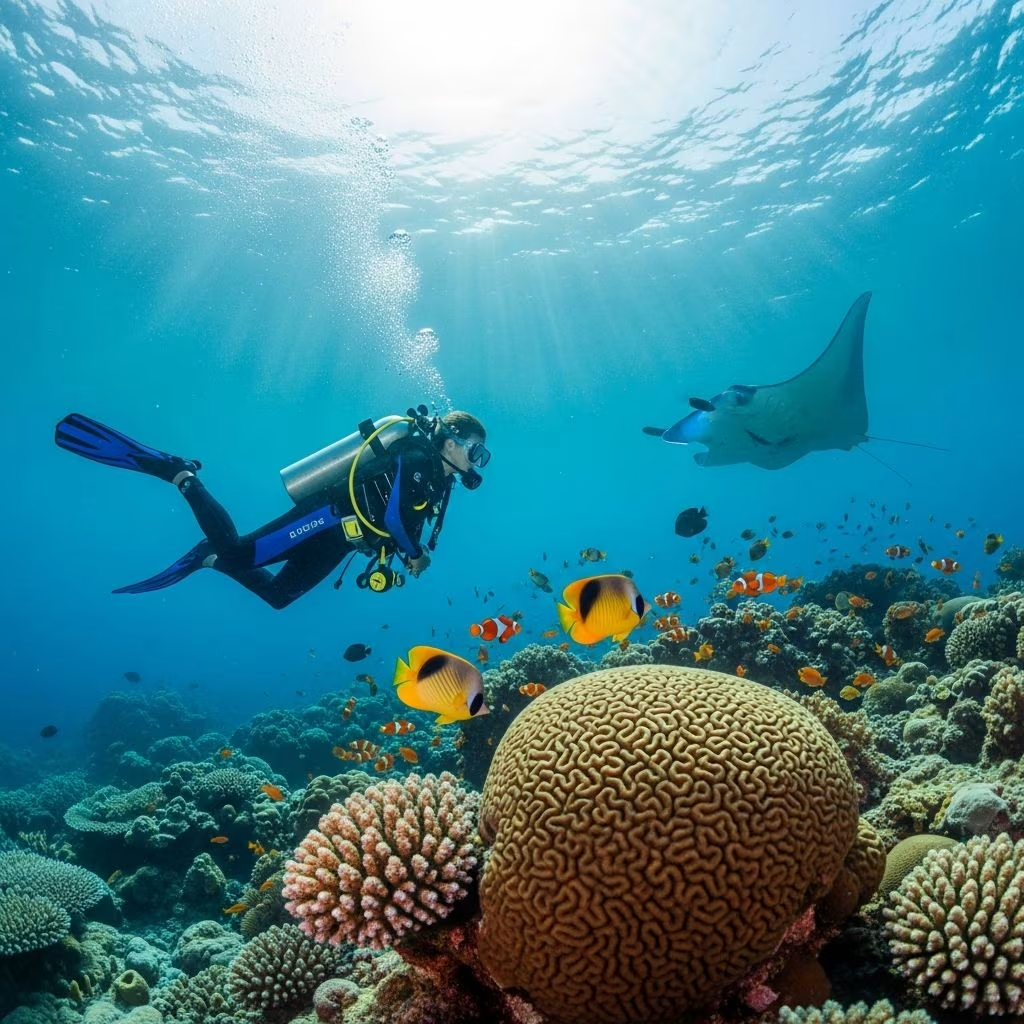
Explore top global scuba spots like Galapagos, Raja Ampat, and Great Barrier Reef, featuring diverse marine life, reefs, and expert tips for divers.
 Travel Essentials
Scuba diving offers a gateway to extraordinary underwater realms teeming with life, color, and mystery. From vast coral systems to dramatic sinkholes and remote archipelagos, the planet’s oceans hide some of its most spectacular secrets. This guide highlights premier locations favored by seasoned divers, drawing on global insights to help you choose your next plunge. Whether you’re chasing big pelagics or macro critters, these spots deliver unparalleled experiences.
Exceptional scuba sites share traits like high biodiversity, excellent visibility, and varied topography. Healthy reefs support thousands of fish species, while currents attract sharks, rays, and turtles. Accessibility matters too—some are beginner-friendly with calm shallows, others challenge experts with deep walls and drifts. Seasonal factors influence conditions: warmer months often mean calmer seas, but peak times bring crowds. Always check certifications; advanced open-water or specialty training unlocks deeper sites.
The Pacific dominates diving fame with its expansive reefs and remote islands. Here, soft corals sway in currents, and schools of fish create living walls.
Earth’s largest living structure spans 1,400 miles, a UNESCO site buzzing with tropical fish, sharks, and turtles. Divers navigate from shallow gardens to wall drops, spotting clownfish in anemones and eagle rays gliding by. Visibility averages 50-100 feet in clear shallows (30-70 feet deep). Best from June to October for fewer crowds; liveaboards access outer reefs. Beginners thrive on sheltered sites, while pros tackle Ribbon Reefs.
Dubbed the Coral Triangle’s crown jewel, this archipelago boasts unmatched diversity: vivid reefs, mantas, and pygmy seahorses amid emerald isles. Dives hit 25-100 feet with 80+ feet visibility year-round. Currents vary, suiting intermediates; macro fans love nudibranchs and critters. Topsides dazzle with lagoons—perfect non-dive days. Dive resorts cluster in Sorong; visit December-April for calm seas.
Fiji’s waters explode in color from fan corals and gorgonians at sites like Rainbow Reef. Expect turtles, reef sharks, and barracuda schools in 60-100 foot vis at 30-130 feet depths. Great White Wall offers stunning swim-throughs for advanced divers. Warm waters (78-82°F) welcome all levels; dry season (May-October) shines. Resorts on Viti Levu provide easy access.
Crystal-clear shallows and drift dives define this region’s easy-access magic, ideal for North American travelers.
Part of the Mesoamerican Reef, Cozumel’s walls and swim-throughs teem with sponges, eagle rays, and turtles. Depths 30-130 feet with 100-200 foot vis in 80°F waters. Drift dives suit all levels; nearby cenotes add freshwater thrills. Year-round diving peaks March-May. Ferries from Playa del Carmen make it hassle-free.
This iconic sinkhole, a UNESCO reserve, plunges 300+ feet with stalactites at 100-130 feet. Divers descend through arches amid nurse sharks and groupers in 100-foot vis. Requires advanced certification; pair with nearby reefs. Dry season (February-May) best. Ambergris Caye bases trips.
UNESCO-listed pinnacles draw massive sharks—hammerheads, silkies—in strong currents at 60-130 feet. Comparable to Galapagos but closer to Cabo San Lucas. Liveaboards only, February-May for giants. 100-foot vis in 75-82°F seas challenges experts.
Atolls and volcanic seascapes here promise luxury meets adventure.
26 atolls ring thilas (pinch points) channeling mantas, whale sharks, and grey reefs. Channels drop steeply; 100+ foot vis at 30-100 feet. Resorts offer house reefs for all levels. High season (December-April) calms northeast monsoons.
Borneo’s gem features turtle tombs, barracuda tornadoes, and hammerheads at 40-130 feet. 100-foot vis year-round; permits limit crowds. Advanced only due to currents. March-May optimal.
Besides dragons, reefs burst with mantas, turtles, and mandarin fish. Night dives reveal nudibranchs in 80-foot vis at 20-100 feet. Labuan Bajo hubs trips; dry season (April-November).
For bucket-list thrills, venture to isolated outposts.
Volcanic isolation breeds sea lions, hammerheads, penguins amid currents. Sites like Darwin’s Arch host whales; 60-100 feet depths, 50-80 foot vis. Liveaboards required, year-round but cooler June-November suits seals. Advanced skills needed.
Blue Corner’s walls swarm sharks, mantas; Jellyfish Lake stings mildly. 100-foot vis at 40-130 feet. Eels, napoleon wrasse abound. Dry season (December-April).
Muck diving heaven for macro: frogfish, seahorses in 60-foot vis at 20-80 feet. Beginner-friendly; typhoon-free December-May.
Shark fest: whitetips, scalloped hammers in schools. Remote liveaboards, June-October rainy but diveable.
Versatile: walls, reefs, sardine runs. All levels, 70-100 foot vis.
Freshwater caves near Tulum glow ethereally. No fish, but haloclines dazzle. Cave cert required; year-round.
Preparation elevates safety and enjoyment. Book PADI/SSI certified operators; pack 5mm wetsuits for cooler spots. Budget $100-300/day for dives, more for liveaboards. Monitor El Niño for currents. Respect no-touch policies to preserve reefs.
| Destination | Best Season | Water Temp (°F) | Vis (ft) | Skill Level |
|---|---|---|---|---|
| Great Barrier Reef | Jun-Oct | 75-82 | 50-100 | All |
| Raja Ampat | Dec-Apr | 80-85 | 80+ | Int-Adv |
| Cozumel | Mar-May | 80 | 100-200 | All |
| Galapagos | Jun-Nov | 70-80 | 50-80 | Adv |
| Maldives | Dec-Apr | 82 | 100+ | All |
Cozumel and Fiji offer calm, shallow reefs with great vis and instructors.
Socorro, Galapagos, and Cocos Island for hammerheads and silkies.
Daily costs range $100-500; liveaboards $3,000-7,000/week. Packages save money.
Rentals common; own mask, fins, computer. BCD/regulator provided.
Yes, Great Barrier Reef and Maldives have shallow sites and kids’ programs.
