

 Travel Essentials
 Travel Essentials

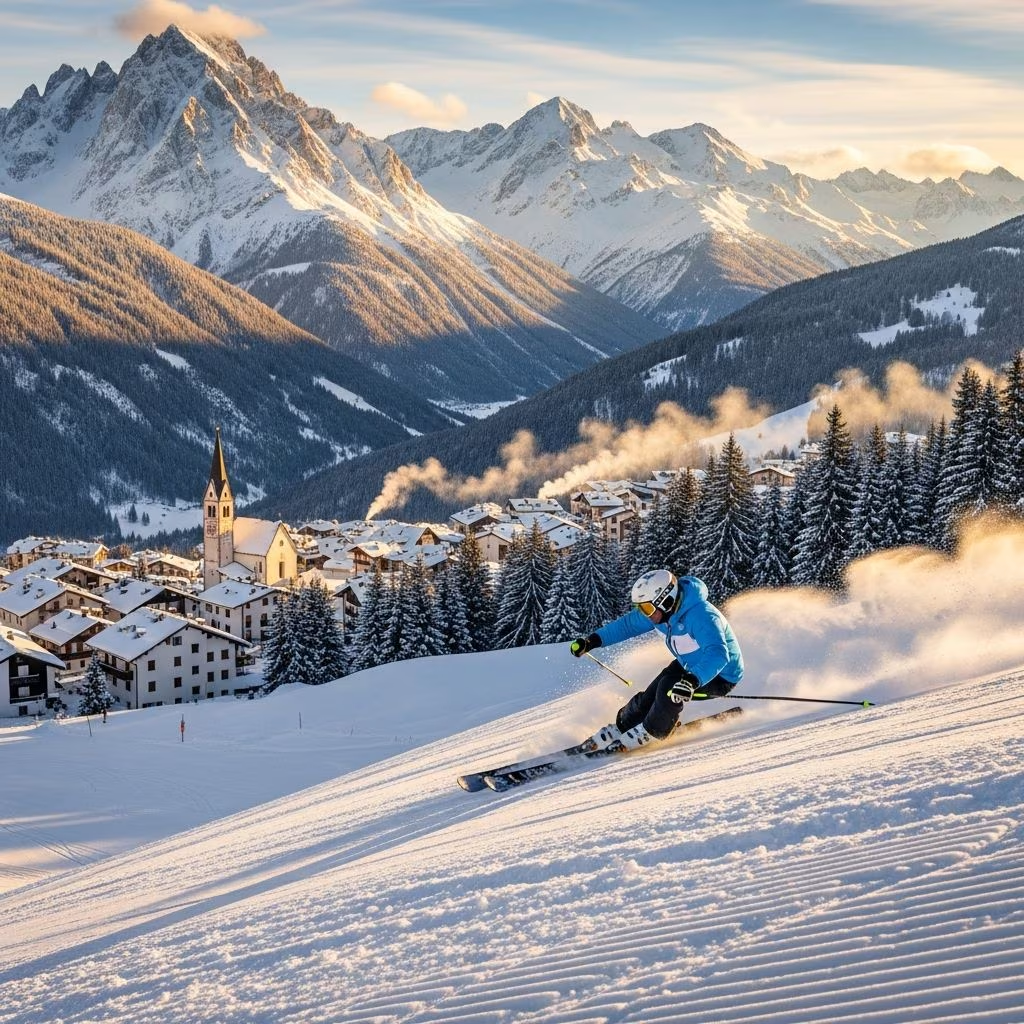
Discover Italy's top ski destinations, from the sprawling Dolomiti Superski network to exclusive Alpine resorts offering diverse terrain for all skill levels.
 Travel Essentials
Italy’s mountainous regions offer some of Europe’s most captivating skiing experiences, combining world-class terrain with authentic Alpine culture and exceptional hospitality. From the expansive Dolomites to isolated mountain valleys, Italian ski destinations cater to everyone from beginners seeking gentle slopes to expert skiers pursuing challenging backcountry adventures. The country’s strategic location and varied elevation create ideal conditions for extended winter seasons and diverse snow coverage.
At the heart of Italy’s skiing renaissance stands the Dolomiti Superski network, an extraordinary collection that fundamentally transforms how skiers approach Alpine winters. This interconnected system spans 3,000 square kilometers and incorporates 12 distinct resorts linked by seamless lift infrastructure, creating the world’s largest ski area by terrain acreage. The network encompasses more than 1,200 kilometers of meticulously groomed slopes, allowing skiers to traverse multiple valleys and mountain faces during a single day without retracing routes.
The magnitude of this network means visitors can experience dramatically different atmospheric conditions, varying trail difficulties, and distinct village characteristics while remaining within the same unified pass system. Skiers benefit from economies of scale regarding lift pricing while enjoying unprecedented trail diversity that would require multiple separate destination visits elsewhere in Europe.
Alta Badia represents a compelling intersection of refined Alpine tradition and modern ski infrastructure, establishing itself as a premier destination within the broader Dolomiti network. This region emphasizes cultural preservation alongside winter sports development, with villages maintaining distinct Ladin traditions that predate modern European nation-states. The terrain encompasses approximately 130 kilometers of slopes ranging from wide, perfectly-groomed beginner routes to technically demanding descents through narrow couloirs.
The resort distinguishes itself through exceptional mountain hut dining culture, where skiers traditionally pause mid-day at high-altitude refugios to sample regional specialties. This integration of culinary experience with skiing creates a uniquely Italian approach to winter sports vacations, where gastronomic enjoyment ranks equally with athletic accomplishment.
Val Gardena maintains recognition as one of the Dolomites’ most technically accomplished ski areas, hosting World Cup downhill competitions that attract elite athletes annually. The valley’s distinctive geography creates dramatic vertical drops and challenging pitch angles that demand solid technique and decisiveness. Beyond competition venues, Val Gardena offers sufficient intermediate terrain to prevent experienced recreational skiers from feeling restricted to exclusively challenging descents.
The surrounding landscape presents the Dolomites’ signature aesthetic: jagged pale limestone peaks creating silhouettes that inspired Italian Romantic painters throughout the nineteenth century. This visual drama enhances the skiing experience beyond mere physical satisfaction, engaging aesthetic appreciation during lifts and rest periods.
Livigno occupies a distinctive geographical position that historically isolated the valley from neighboring territories, resulting in unique tax status that persists in modern economic arrangements. This geographic separation created self-reliant communities with distinctive cultural characteristics and independent economic development trajectories. Contemporary Livigno combines this heritage with modern ski infrastructure, offering surprising facility sophistication for a valley that technically remains somewhat remote.
The resort appeals particularly to skiers seeking authentic mountain community experiences without sacrificing contemporary amenities, creating a balance that many larger, commercialized resorts struggle to maintain. Livigno’s elevation and continental positioning generate reliable snow coverage extending into spring months.
Positioned directly beneath Mont Blanc at the valley’s terminus, Courmayeur functions as a cosmopolitan mountain town with distinctly international clientele and refined infrastructure. The resort’s location represents a geographical threshold where Alpine skiing transitions into high-altitude mountaineering and serious backcountry pursuits. Locally, Courmayeur maintains strong associations with extreme skiing and off-piste opportunities, attracting experienced skiers specifically seeking challenging ungroomed terrain.
The town itself projects sophisticated elegance with accomplished restaurants, luxury accommodations, and boutique shopping that attracts wealthy ski tourists prioritizing comprehensive resort experiences beyond slopes alone. This positioning distinguishes Courmayeur from more purely skiing-focused destinations.
Madonna di Campiglio consistently receives top-tier ratings from international ski publications, earning distinction as Italy’s highest-rated ski resort with 4.7 out of 5 stars. This exceptional recognition reflects comprehensive excellence across multiple resort dimensions: terrain variety, facility quality, service standards, and peripheral amenities. The resort maintains approximately 150 kilometers of slopes accommodating all proficiency levels, with particular strength in intermediate terrain that ensures diverse family experiences.
The destination gained historical prominence as an early Italian ski resort development, cultivating century-old hospitality traditions that contemporary management builds upon continuously. This heritage positioning attracts returning visitors who prioritize established resort culture alongside modern facilities.
While alpine skiing dominates Italian ski destination marketing, Val di Fiemme functions as the peninsula’s primary center for cross-country skiing and Nordic sports. This specialization reflects historical traditions where valley communities developed cross-country techniques long before alpine skiing achieved popularity. The region maintains sophisticated trail networks spanning hundreds of kilometers, providing structured progression from beginner-friendly loops to competitive-level courses.
Val di Fiemme integrates into the Dolomiti Superski network while maintaining independent identity through Nordic specialization, allowing combined vacations where families can incorporate variety across skiing disciplines. The valley’s relatively gentle topography and forested terrain create ideal cross-country conditions distinct from alpine resort environments.
For travelers prioritizing combined ski vacation and urban exploration, Roccaraso within the Alto Sangro ski area presents strategic advantages through accessibility to Rome and Naples winter escapes. This positioning allows vacationers to integrate cultural experiences within ski holidays, visiting historical sites and urban attractions between mountain days. The Alto Sangro region operates as Italy’s largest Apennine ski area, positioned at elevations between 1,300 and 2,150 meters that generate consistent snow coverage throughout extended winter seasons.
This southern positioning creates climatic distinctions from northern Alpine resorts, affecting snow characteristics, season duration, and atmospheric conditions skiers encounter regularly. Southern resorts often attract destination-switching skiers seeking contrast experiences within single vacations.
Via Lattea functions as an interconnected French-Italian ski system featuring extensive terrain accessible from multiple valley approaches. This cross-border positioning creates logistical flexibility and expanded terrain options for extended mountain vacations. The region emphasizes sophisticated on-piste grooming and varied pitch angles accommodating intermediate progression through advanced techniques.
Via Lattea appeals particularly to skiers prioritizing high-altitude skiing experiences with consistent snow reliability and modern lift infrastructure. The area maintains strong associations with consistent terrain quality across extensive trail networks.
| Destination | Primary Characteristics | Best For | Elevation Range |
|---|---|---|---|
| Alta Badia | Cultural heritage, refined dining, technical terrain | Culturally-minded experienced skiers | 1,200-2,600m |
| Val Gardena | World Cup terrain, dramatic landscape, challenging slopes | Advanced technical skiers | 1,175-2,518m |
| Livigno | Isolated valley culture, reliable snow, authentic community | Independent travelers, intermediate skiers | 1,816-2,798m |
| Courmayeur | Mont Blanc proximity, backcountry access, luxury accommodations | Affluent advanced skiers, mountaineers | 1,224-3,899m |
| Madonna di Campiglio | Balanced excellence, family-friendly, heritage resort | Mixed-ability family groups | 1,550-2,600m |
| Val di Fiemme | Nordic skiing specialization, forested terrain, tradition | Cross-country skiers, nordic enthusiasts | 900-2,050m |
Italian ski seasons typically extend from December through April, with optimal conditions occurring January through March when elevated resorts receive consistent precipitation and base depths maximize. Northern Dolomite resorts at elevations exceeding 2,000 meters maintain superior snow preservation compared to lower-altitude southern alternatives. Season timing affects pricing significantly, with shoulder periods offering reduced accommodation costs alongside less crowded conditions.
The Dolomiti Superski network’s expansive terrain ensures skiers locate untracked conditions following snowfall events, even during peak season periods when heavily-used resorts elsewhere become mogul-dominated. This characteristic attracts serious skiers specifically during prime winter months.
Northern Italian resorts maintain excellent accessibility through international airports at Milan, Verona, and Venice, with road networks connecting valley communities efficiently. Transportation infrastructure supports both independent travelers and organized tour groups, with rental car availability facilitating exploration across multiple resorts during extended vacations. Direct rail connections serve selected major resorts, providing alternatives to vehicle rentals for environmentally-conscious travelers.
Italian ski destinations accommodate all budget categories through luxury five-star properties, mid-range contemporary hotels, traditional mountain hut accommodations, and budget-conscious apartment rentals. This diversity allows families to customize vacation expenditures according to priorities and financial parameters. Shoulder-season travel offers substantial savings without sacrificing skiing quality, particularly in February and March when spring snow-making supplements natural accumulation.
Italian ski destinations integrate non-skiing activities that enhance complete family vacations, particularly for mixed-ability groups. Snowshoeing through forested valleys provides accessible outdoor engagement for non-skiers, while organized dog sledding programs offer memorable alternative experiences. Mountain villages maintain traditional shops, museums, and cultural venues where skiers transition between days on slopes and indoor pursuits.
The culinary culture deserves particular attention, with mountain restaurants and valley trattorias showcasing regional specialties that reward skiers with gastronomic satisfaction following physical exertion. This integration of cultural and athletic experiences distinguishes Italian ski vacations from purely sport-focused alternatives elsewhere in Alpine Europe.
Skiers developing fundamental techniques benefit from resorts emphasizing wide, gentle slopes with comprehensive instruction infrastructure. Madonna di Campiglio and select Dolomiti Superski areas provide extensive beginner terrain connected through straightforward lift systems, allowing learners to build confidence through progression without overwhelming complexity.
Skiers transitioning beyond beginner proficiency require resorts offering sustained intermediate challenge that builds technical capability progressively. The Dolomiti Superski network’s 1,200 kilometers provides extensive intermediate terrain spanning multiple valleys, allowing skiers to explore varied conditions and terrain characteristics while maintaining appropriate difficulty levels.
Accomplished skiers pursue destinations featuring challenging vertical drops, technical pitch angles, and backcountry access that demand sophisticated decision-making. Val Gardena, Courmayeur, and specialized areas within the Dolomiti network appeal to this demographic through World Cup-hosting terrain and challenging off-piste opportunities.
January through March typically offers the most consistent snow coverage, longest ski days, and most favorable weather patterns. December and April present shoulder-season alternatives with reduced crowding and lower accommodation costs, though snow reliability decreases.
A single day permits sampling multiple resort areas through strategic lift-to-lift connectivity. However, comprehensive exploration of varied terrain characteristics warrants four to seven days minimum, allowing skiers to experience distinct valley environments and specializations thoroughly.
Italian resorts emphasize cultural heritage integration, distinctive regional cuisines, and more affordable pricing compared to Alpine neighbors, while maintaining comparable infrastructure quality and terrain diversity.
Extensive beginner terrain, comprehensive ski schools, and abundant non-skiing activities make Italian destinations particularly family-friendly compared to many specialized expert-focused resorts elsewhere.
