

 Travel Essentials
 Travel Essentials

Explore Japan's top ski resorts across Hokkaido and Honshu, featuring legendary powder conditions, diverse terrain, and unique cultural experiences for all skill levels.
 Travel Essentials
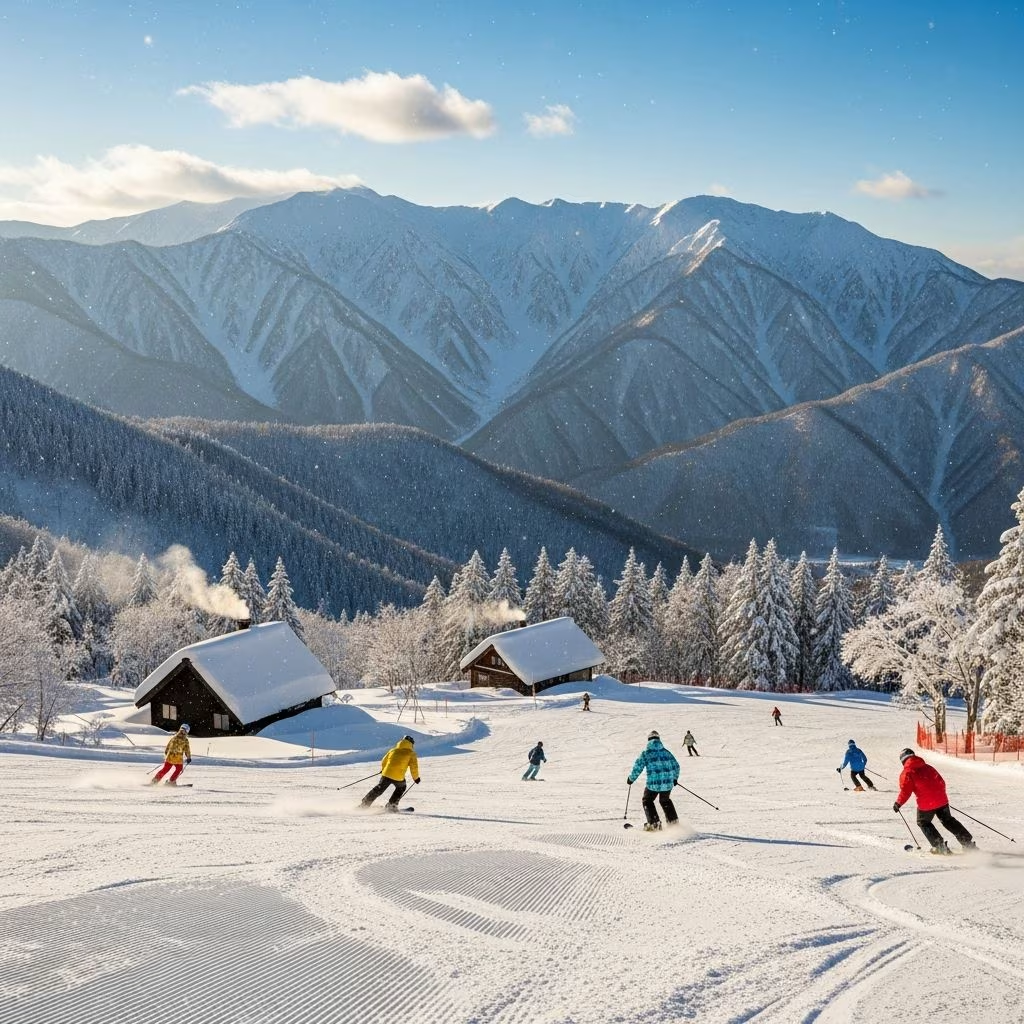
Japan has firmly established itself as one of the world’s most coveted winter sports destinations, attracting enthusiasts from across the globe seeking exceptional skiing and snowboarding experiences. The country boasts an impressive collection of over 450 ski resorts, rivaling the United States in sheer quantity while offering distinct advantages in snow quality and cultural immersion. Thanks to geographic and meteorological conditions, particularly the cold winds that sweep across the Sea of Japan, the nation receives some of the highest annual snowfall totals on the planet, creating legendary powder conditions that keep resorts in premium skiing condition throughout the season.
The accessibility and diversity of Japan’s ski infrastructure make it an ideal destination for visitors of varying abilities and interests. Whether you’re an experienced backcountry skier seeking untouched terrain, a beginner looking for gentle slopes with comprehensive instruction, or a family desiring both winter sports and cultural enrichment, Japan delivers exceptional value and memorable experiences.
Japan’s most celebrated skiing regions concentrate in two primary geographic zones that serve as gateways to world-class winter sports. Hokkaido, the northernmost island of the Japanese archipelago, contains several legendary resorts renowned for their consistent snow depth and powder quality. The main island of Honshu, particularly the prefectures of Nagano and Niigata, hosts equally impressive facilities that benefit from their location along the mountainous spine of the archipelago.
This geographic concentration simplifies trip planning for international visitors, as the major resorts cluster within accessible distances, allowing skiers to explore multiple mountains during extended visits. Transportation networks connecting these regions have become increasingly sophisticated, with efficient rail systems and highway infrastructure facilitating seamless transitions between different resort areas.
Niseko stands as Japan’s largest and most comprehensively developed ski resort, earning its position as the nation’s premier destination for winter sports tourism. Situated in western Hokkaido, this mountain village has undergone substantial infrastructure expansion over the past two decades, transforming into a world-class resort community that rivals international Alpine standards. The resort’s elevation and exposure to prevailing weather patterns create ideal conditions for powder accumulation, with consistent deep snow throughout the season.
Niseko’s vertical terrain encompasses multiple interconnected peaks accessible through an extensive lift system, providing diverse ski routes for different ability levels. The resort infrastructure includes luxury accommodations ranging from traditional Japanese ryokan-style lodges to contemporary international hotels, high-end dining establishments featuring both Japanese and international cuisine, and comprehensive spa facilities offering hot spring experiences that complement mountain activities.
The resort’s commitment to international standards extends beyond skiing infrastructure. Niseko has cultivated a robust après-ski culture with upscale restaurants, bars, and entertainment venues that cater to cosmopolitan visitors. The village maintains English-language signage and multilingual staff throughout major facilities, significantly enhancing accessibility for non-Japanese speakers. This development has attracted substantial international real estate investment, resulting in numerous vacation homes and luxury residences that create a year-round community atmosphere.
Beyond Niseko, Hokkaido offers additional premier destinations providing distinct experiences. Sapporo Teine, located less than an hour from Japan’s fifth-largest city, provides convenient access to urban amenities while maintaining mountain authenticity. The resort benefits from its proximity to Sapporo’s cultural institutions, restaurants, and entertainment options, making it attractive for visitors seeking balanced experiences combining skiing with metropolitan exploration.
Tomamu represents another major Hokkaido asset, distinguished by its reputation for high-standard amenities and family-focused programming. The resort emphasizes accessibility for visitors of all ages and abilities, with extensive beginner terrain, professional instruction programs, and entertainment facilities designed for non-skiing family members. Tomamu’s off-piste opportunities attract advanced skiers seeking backcountry experiences and ungroomed terrain adventures.
Located within the Japan Alps of Nagano Prefecture, Hakuba has emerged as a primary destination for visitors seeking convenient access from Tokyo combined with exceptional terrain variety. The region’s proximity to Japan’s capital city—approximately two hours by train—makes it ideal for weekend trips and extended mountain vacations. Hakuba encompasses multiple interconnected ski areas, each offering distinct characteristics and terrain options.
The Hakuba region attracts winter sports enthusiasts through its comprehensive resort development, featuring modern lift systems, diverse slope gradients, and extensive trail networks. Accommodations range from budget-friendly lodges catering to younger travelers to luxury properties offering premium services. The area has developed a lively après-ski atmosphere with restaurants, bars, and entertainment venues supporting both Japanese and international visitor communities.
The Myoko Kogen region represents one of Japan’s oldest and most storied ski zones, encompassing not a single resort but rather nine distinct ski areas clustered around the charming Akura village. This cluster includes Akakura Onsen, Akakura Kanko, Ikenotaira Onsen, Myoko Suginohara, and Seki Onsen, among others, creating a comprehensive destination for extended stays allowing exploration of multiple mountains. The region’s location in Niigata Prefecture positions it at the confluence of skiing and cultural tourism, with traditional hot spring villages complementing mountain activities.
Myoko Kogen distinguishes itself through its exceptional backcountry and off-piste skiing opportunities, attracting experienced skiers seeking unmarked terrain and powder adventures. The region’s elevation and steep aspects create dynamic snow conditions requiring advanced technical skills, while dedicated backcountry guiding services support visitors pursuing this specialized skiing discipline.
The Tohoku region hosts several distinguished resorts that merit consideration despite somewhat greater distances from major metropolitan areas. Zao Onsen Ski Resort, situated on the border between Yamagata and Miyagi prefectures, achieves prominence through its distinctive natural phenomenon and cultural significance. The resort’s slopes feature “juhyo,” or snow monsters—ice-encrusted trees created by specific weather conditions that generate visually striking landscape formations. Beyond their aesthetic appeal, these snow monsters represent authentic Japanese natural beauty integrated into the skiing experience. Zao Onsen combines mountain recreation with traditional hot spring facilities, allowing visitors to alternate between vigorous skiing activity and relaxation in naturally heated mineral baths.
Appi Kogen, located in Iwate Prefecture, distinguishes itself as the largest ski resort in the Tohoku region. At approximately 1,300 meters elevation, Appi benefits from north-facing slopes that preserve snow quality throughout the season, maintaining “consistently smooth conditions and powder that sticks around long after a big dump”. The resort’s northern exposure and elevation combination create ideal conditions for extended season skiing into spring months when lower-elevation areas experience deteriorating snow quality.
One significant advantage of Japan’s ski resort distribution involves convenient access from major cities. Multiple resorts maintain proximity to Tokyo, Japan’s largest metropolitan area, enabling weekend skiing trips and short mountain vacations. This accessibility has historically supported the development of Japanese domestic ski tourism while increasingly attracting international visitors seeking efficient use of limited vacation time.
| Travel Style | Recommended Resort | Primary Advantage |
|---|---|---|
| International Visitors | Niseko | Developed infrastructure and multilingual support |
| Urban Proximity Seekers | Sapporo Teine, Naiba | Short distance from major cities |
| Backcountry Enthusiasts | Myoko Kogen, Tomamu | Extensive off-piste and unmarked terrain |
| Beginner-Friendly Environment | Tomamu, Hakuba | Comprehensive instruction and gentle slopes |
| Cultural Immersion | Zao Onsen, Myoko Kogen | Traditional hot springs and rural villages |
Japan’s ski season typically extends from December through March, with peak conditions occurring from January through February when consistent cold temperatures and regular snowfall create ideal skiing environments. Hokkaido resorts generally open earlier in the season and maintain operations into April due to superior snow depth and cooler temperatures, while lower-elevation Honshu resorts experience somewhat shorter operating periods.
Early season skiing offers advantages of fewer crowds and developing snow conditions, though coverage may not yet reach optimal levels. Late season skiing provides familiar resort operations and established trail conditions but carries risks of temperature fluctuations and reduced operating windows. Mid-season travel (January-February) typically offers the best combination of abundant snow, reliable conditions, and established resort operations.
Japan’s ski resorts accommodate the entire spectrum of skiing abilities through thoughtful terrain distribution. Beginner-friendly resorts feature extensive gentle-slope networks with professional instruction programs conducted in multiple languages, welcoming newcomers to winter sports. Intermediate skiers benefit from the variety of blue-run networks at major resorts, allowing gradual skill development through progressively challenging terrain. Advanced skiers discover extensive black-diamond runs and off-piste terrain throughout most major resorts, particularly in Hokkaido regions with reliable snow depth enabling challenging descent options.
Skiers seeking unmarked terrain and backcountry experiences find exceptional opportunities throughout Japanese mountains, particularly in Myoko Kogen and Tomamu regions. Professional backcountry guides operate throughout the season, providing essential avalanche safety expertise, route finding, and cultural knowledge that enhance wilderness skiing experiences. The combination of reliable snow depth, established guiding services, and properly managed avalanche terrain creates outstanding backcountry skiing without requiring expedition-level logistics.
Japan’s ski destinations distinguish themselves through cultural authenticity that extends beyond the skiing experience itself. Traditional hot spring facilities (onsen) integrated into resort communities provide relaxation opportunities complementing mountain activity. Accommodations range from modern hotels to authentic ryokan-style lodges offering Japanese hospitality traditions, kaiseki multi-course dining, and communal bathing experiences.
Many Japanese ski resorts maintain proximity to traditional mountain villages featuring local restaurants, artisan shops, and cultural attractions that provide non-skiing family members with engaging activities. This integration contrasts with some international resort destinations that operate as self-contained bubbles disconnected from surrounding communities. The village-centered approach creates more authentic travel experiences while supporting local economies and cultural preservation.
January through February typically offers optimal conditions with consistent snowfall and established resort operations. However, early December and late March provide advantages of smaller crowds and developing or lingering snow depending on preference.
Niseko offers the most comprehensive international infrastructure and multilingual support, making it ideal for first-time visitors to Japanese resorts. Hakuba provides convenient Tokyo access combined with excellent terrain variety.
Major resorts including Niseko, Hakuba, and Tomamu provide extensive English signage, multilingual staff, and instruction in multiple languages. However, smaller resorts may have limited English support, making Japanese language preparation valuable.
Japan receives some of the world’s highest annual snowfall totals, creating legendary powder conditions throughout the season. Hokkaido resorts maintain deeper snow than Honshu locations due to geographic advantages.
Yes, efficient rail networks connect major resorts, allowing visitors to experience multiple mountains during extended trips. Many visitors structure week-long journeys exploring three to four different resort areas.
Complete rental equipment is available at all major resorts, eliminating transportation challenges. Most visitors bring only personal clothing, accessories, and comfort items, renting skis and snowboards locally.
