

 Travel Essentials
 Travel Essentials

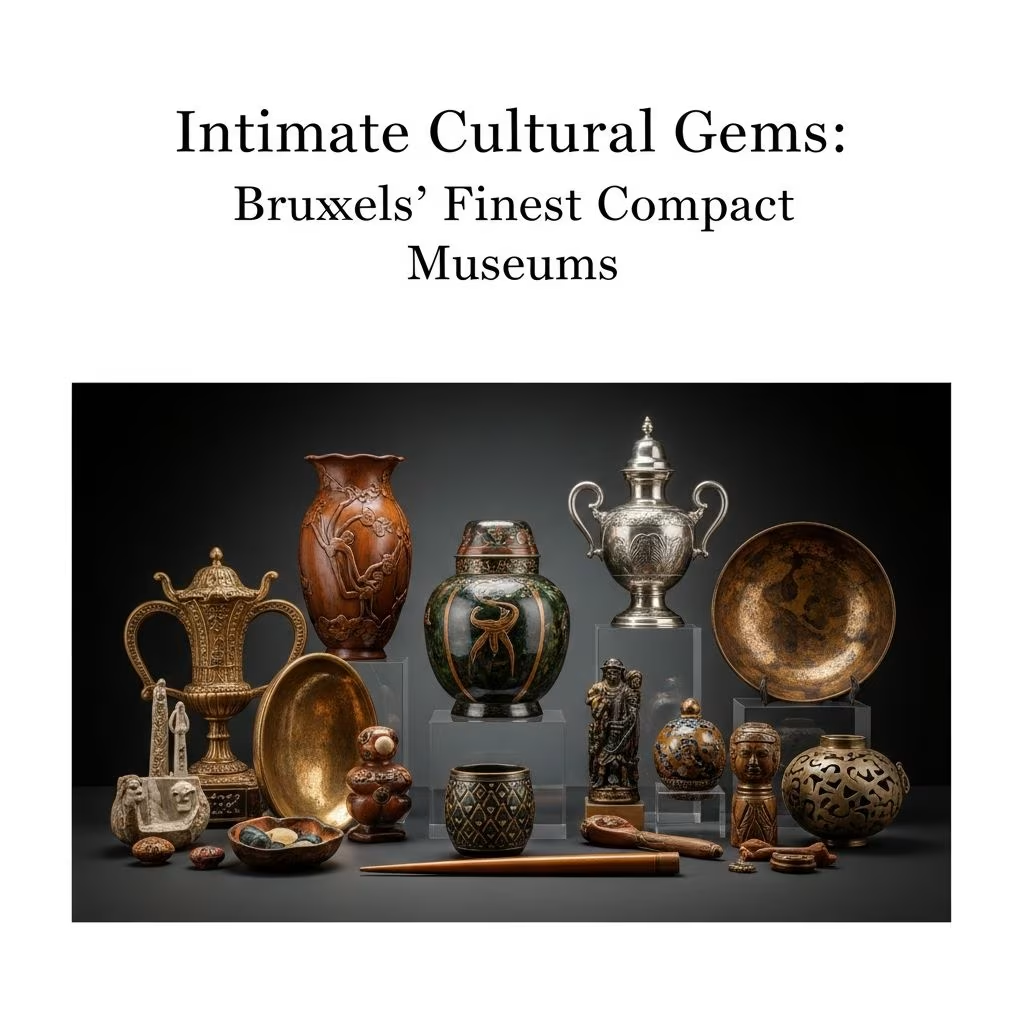
Explore Brussels' best-kept museum secrets featuring art, history, and unique collections in intimate settings that rival major institutions.
 Travel Essentials
Brussels, the capital of Belgium, is renowned for its grand architecture, historic landmarks, and world-class institutions. However, beyond the crowded corridors of major museums lies a collection of smaller, more intimate cultural spaces that offer equally compelling experiences. These compact venues provide visitors with the opportunity to engage with art, history, and specialized collections in settings that feel personal and accessible rather than overwhelming. For travelers seeking authentic cultural immersion without the tourist masses, Brussels’ smaller museums represent an exceptional opportunity to discover the city’s rich heritage.
One of the most distinctive approaches to art presentation in Brussels emerges from galleries that prioritize comfort and approachability over formal exhibition protocols. These spaces recognize that art need not be presented in sterile, clinical environments to command respect or convey significance. Instead, by placing artworks within carefully curated domestic settings, these institutions encourage visitors to imagine how contemporary pieces might enhance their own living spaces.
This philosophy transforms the traditional gallery experience entirely. Rather than standing before works behind velvet ropes, visitors recline on comfortable seating, allowing themselves to contemplate pieces at leisure. The curatorial approach emphasizes that art exists not as a separate, elite pursuit but as an integrated component of everyday life. Temporary loans from passionate private collectors populate these galleries, ensuring fresh perspectives and diverse aesthetic viewpoints.
This model proves particularly effective for contemporary art enthusiasts who might feel intimidated by conventional museum settings. By normalizing the relationship between viewers and artwork, these galleries democratize appreciation and foster genuine engagement rather than performative observation.
Brussels’ architectural landscape showcases remarkable examples of early twentieth-century design, particularly the Art Nouveau movement that left an indelible mark on the cityscape. One prominent structure exemplifies this aesthetic while simultaneously serving as a repository for one of Europe’s most significant collections of musical instruments.
Originally conceived as a commercial department store, this building’s transformation into a specialized museum demonstrates how adaptive reuse can preserve both architectural heritage and enable cultural programming. The structure itself demands attention—an intricate interplay of steel and glass that captures the optimistic spirit of its era. However, the institutional mission housed within proves equally noteworthy.
The collection encompasses thousands of instruments spanning continents and centuries. Rather than relegating these objects to silent display cases, the museum employs audio technology that activates when visitors approach specific exhibits. As individuals stand before each instrument, recorded performances emanate, allowing auditory appreciation alongside visual inspection. This multisensory approach transforms passive observation into active listening and learning.
The curatorial team recognizes that understanding musical instruments requires more than visual documentation. By integrating sound, the institution creates an immersive environment that contextualizes each piece within its cultural and sonic landscape.
Brussels’ medieval history encompasses periods of fortification, commerce, and strategic importance within European geopolitics. A significant gateway structure that once anchored the city’s defensive infrastructure now functions as a museum dedicated to explaining Brussels’ medieval character and urban development.
Opening in the early twenty-first century, this institution focuses specifically on how cities protected themselves during the medieval period. Collections emphasize weapons, armor, and architectural elements that comprised the urban defensive system. Rather than presenting these objects as historical abstractions, the museum encourages hands-on engagement—visitors may don period armor, gaining visceral understanding of the physical realities soldiers faced.
This tactile approach to history education proves particularly effective for diverse visitor demographics. Families with children benefit from interactive elements, while serious history enthusiasts appreciate the scholarly depth behind collections. The museum thus serves multiple constituencies simultaneously, avoiding the false choice between accessibility and intellectual rigor.
The building itself carries historical significance, its placement marking the former entrance through which inhabitants and travelers passed. This spatial continuity between historical function and contemporary use creates meaningful connections between past and present.
Located adjacent to one of Brussels’ most recognizable architectural landmarks, a comprehensive museum explores human civilization through artifacts, decorative arts, and archaeological materials spanning millennia and continents. This institution approaches its collection through the lens of material culture—understanding societies through the objects they created and valued.
The permanent collections encompass funerary objects from ancient Egypt, decorative elements from Mediterranean civilizations, and everyday items from Southeast Asian cultures. Rather than organizing displays purely chronologically or geographically, curators emphasize thematic connections across cultures and time periods. This approach encourages visitors to recognize universal human concerns transcending cultural boundaries.
A particular strength involves domestic and decorative arts from Belgium itself, with substantial holdings of Art Deco and Art Nouveau objects. These collections ground the museum within local context while demonstrating how Belgium participated in broader European aesthetic movements. The juxtaposition of local works alongside international materials illustrates Brussels’ significance within continental cultural networks.
The museum’s scale permits intimate engagement with materials that larger institutions might present in overwhelming quantities. Visitors can spend extended periods with individual objects, reading detailed labels and contemplating significance without feeling pressured by crowds or time constraints.
Beyond the major categories of art and general history, Brussels hosts several museums dedicated to specific subjects reflecting the city’s particular heritage and cultural preoccupations. These specialized venues serve enthusiasts while introducing casual visitors to subjects they might not have otherwise encountered.
| Museum Category | Primary Appeal | Typical Duration | Best For |
|---|---|---|---|
| Art & Design Galleries | Contemporary works, domestic integration | 1-2 hours | Art enthusiasts, collectors, interior designers |
| Musical Institutions | Instrument collections, audio experiences | 2-3 hours | Musicians, cultural historians, families |
| History & Defense | Medieval artifacts, interactive exhibits | 1.5-2.5 hours | History buffs, families with children |
| Civilizations Museums | Archaeological materials, decorative arts | 2-4 hours | Anthropology enthusiasts, serious scholars |
| Specialized Collections | Niche subjects, technical traditions | 1-2 hours | Subject enthusiasts, casual explorers |
Visitors planning trips to Brussels often prioritize major attractions, inadvertently overlooking smaller institutions that provide distinct advantages. Compact museums typically feature shorter wait times, more attentive curatorial experiences, and greater accessibility for visitors with mobility considerations. Additionally, these venues often cluster geographically, allowing visitors to construct walking tours that maximize cultural engagement while minimizing transit time.
Strategic planning enables visitors to combine multiple smaller museums within single days, creating customized itineraries reflecting personal interests rather than following standardized tourist routes. A morning spent exploring decorative arts might transition into an afternoon examining medieval history, followed by an evening devoted to specialized collections. This flexibility distinguishes smaller institutions from larger museums that typically consume entire days.
Many Brussels museums participate in discount card programs that substantially reduce per-venue costs for visitors exploring multiple institutions. These economic considerations render smaller museums particularly attractive for budget-conscious travelers seeking maximum cultural exposure.
Smaller museums frequently pursue distinctive collecting strategies that reflect community interests, institutional missions, or individual curator passions. Rather than attempting comprehensive coverage of broad subjects, these institutions often develop deep expertise within specific domains. This specialization permits scholarly rigor while maintaining accessibility for non-specialist audiences.
The intimate scale of smaller institutions enables direct curator engagement—visitors frequently encounter knowledgeable staff capable of providing detailed context, answering questions, and facilitating genuine dialogue rather than serving merely as admission gatekeepers. This human element enriches the museum experience substantially.
Collection development reflects local significance and community values. Museums celebrate regional contributions to broader European cultural movements, honor local artisans and historical figures, and preserve heritage that might otherwise disappear. This commitment to community memory distinguishes smaller institutions from national museums serving broader constituencies.
Smaller museums often pioneer accessibility innovations that larger institutions subsequently adopt. Reduced architectural complexity, shorter walking distances, and lower visitor volumes create naturally accessible environments. Additionally, the intimate scale enables staff to provide personalized assistance adapting experiences to diverse visitor needs and capabilities.
Families with children discover that smaller museums prove less overwhelming than major institutions, permitting extended engagement without exhaustion. Interactive and hands-on elements, common in specialized museums, facilitate learning across age groups and educational backgrounds.
The contemplative atmosphere characterizing smaller institutions provides respite from urban intensity. Visitors seeking quiet cultural engagement find these venues superior to crowded major museums where tourism often overwhelms genuine appreciation.
Smaller museums typically feature specialized collections, curatorial intimacy, shorter visit durations, and more accessible environments. They celebrate niche subjects and local heritage rather than attempting comprehensive encyclopedic coverage.
Yes. Despite their compact size, Brussels’ smaller museums maintain rigorous professional standards, employ trained curators, and frequently participate in international museum networks. Scale reflects intentional curatorial choice rather than limited resources.
Geographic clustering enables walking tours connecting proximate venues. Research transportation options and consulting museum websites regarding hours and admission information beforehand optimizes planning. Many museums participate in discount card programs reducing cumulative costs.
Both. Specialized museums serve enthusiasts while remaining accessible to curious generalists. Curatorial practices prioritize multiple entry points for diverse knowledge levels and interests.
