

 Travel Essentials
 Travel Essentials

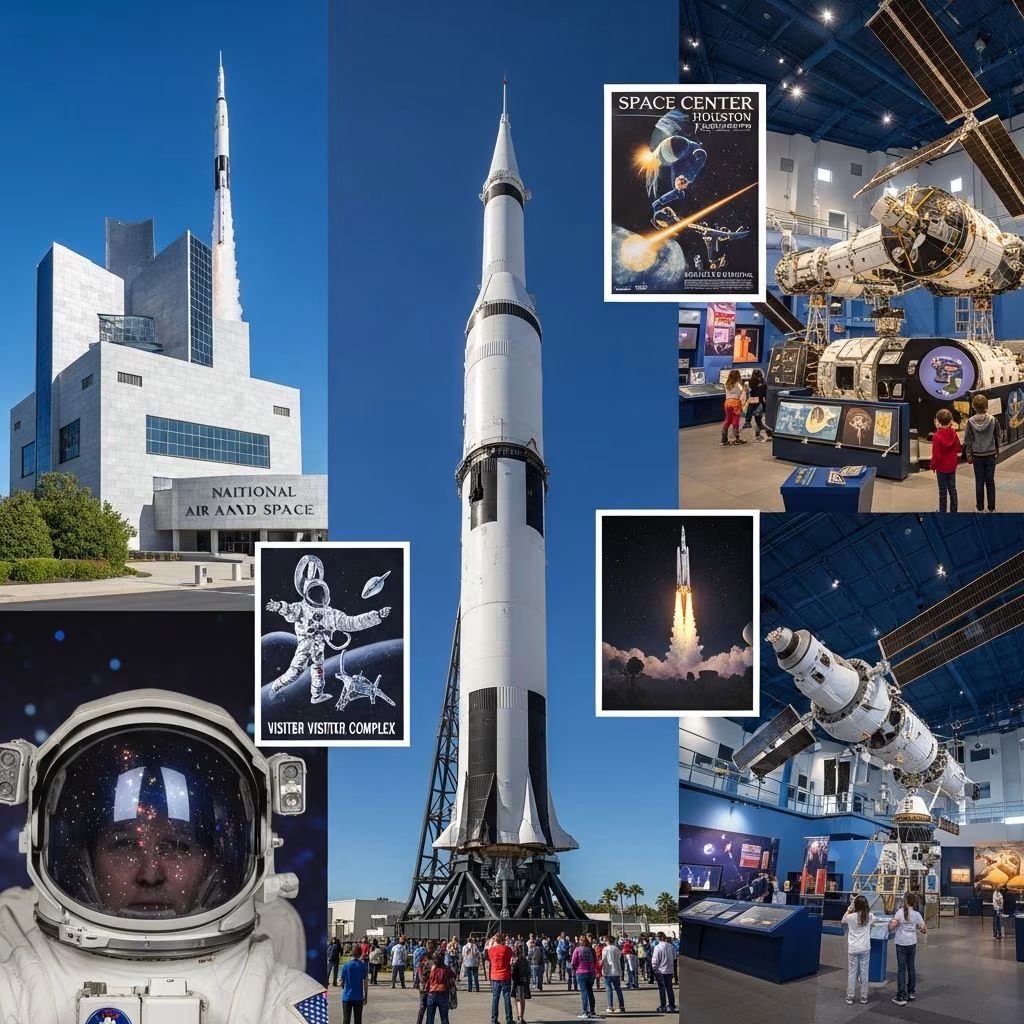
Explore the best U.S. space museums featuring rockets, shuttles, and hands-on experiences at iconic sites like Kennedy Space Center and the Smithsonian.
 Travel Essentials
Space exploration has captivated humanity for decades, and the United States boasts some of the world’s most impressive museums dedicated to this frontier. These institutions house actual spacecraft, interactive simulations, and artifacts from pivotal missions, offering visitors a tangible connection to the stars. Whether you’re traveling with family or pursuing a personal passion for astronomy, these destinations provide educational depth and thrilling experiences.
These museums serve as gateways to understanding human ingenuity in conquering space. They feature everything from Apollo-era capsules to modern rocket prototypes, blending history with cutting-edge science. Many offer planetariums, IMAX theaters, and hands-on zones where guests can simulate astronaut training. Admission often includes access to observatories, making them ideal for stargazing enthusiasts.
The eastern U.S. is home to clusters of space heritage sites, drawing millions annually for their proximity to historic launch pads and national landmarks.
Nestled in Cape Canaveral, this sprawling complex is the epicenter of American spaceflight. Visitors can tour actual launch facilities, stand beneath the massive Saturn V rocket, and explore the Space Shuttle Atlantis exhibit. Recent additions include live stage shows blending puppetry with NASA narratives, appealing to younger audiences.
Key attractions include:
Plan for a full day; tickets grant access to astronaut encounters and bus tours of active pads.
The Smithsonian’s flagship in the nation’s capital houses over 140 space artifacts, including the Wright Flyer and Space Shuttle Discovery. Free entry makes repeat visits feasible, though timed tickets are required amid renovations.
Highlights encompass:
Arrive early at 10 a.m. and download guides for optimal navigation. The Einstein Planetarium offers immersive shows.
This companion to the D.C. museum in Chantilly displays larger artifacts like the Enola Gay bomber and Concorde jet. No passes needed, it’s perfect for aviation buffs.
Explore hangars with Space Shuttle Enterprise and SR-71 Blackbird, plus observation decks overlooking runway action.
In Hampton, this center showcases original Orion and Apollo capsules alongside IMAX films. It’s a compact yet comprehensive stop for mission history.
The heartland preserves key pieces from early space races, emphasizing engineering triumphs.
Chicago’s Griffin Museum stands out with its Henry Crown Space Center, featuring the Apollo 8 capsule—the first to orbit the moon—and Aurora 7 module. Hands-on replicas of the International Space Station let kids don spacesuits and sample astronaut meals.
Don’t miss the VR Spacewalk for a simulated extravehicular activity. This science mecca integrates space with broader exhibits on weather and transport.
Wapakoneta honors Neil Armstrong with his original spacesuits and Soviet garments from Apollo and Shuttle eras. Open daily, it chronicles flight evolution from hometown hero to lunar pioneer.
Exhibits trace Armstrong’s path, including Gemini and Apollo hardware.
Alabama’s Rocket City pulses with space legacy, adjacent to NASA’s Marshall Space Flight Center.
Huntsville’s facility, official NASA visitor center, boasts the largest Saturn V display. Daily simulations and space camp programs immerse guests in astronaut life.
Attractions include:
The West Coast offers celestial views paired with engineering showcases.
Tucson’s center features planetarium shows and reciprocal admissions via ASTC programs. Nearby Pima Air and Space adds aircraft variety.
Concord’s 20,000 sq ft space includes Mercury-Redstone replicas, digital planetarium, and observatory. Educational programs extend learning off-site.
Los Angeles’ hilltop icon mesmerizes with its Samuel Oschin Planetarium, Foucault pendulum, and Tesla coil. Exhibits on telescopes and planetary science inspire.
To maximize enjoyment:
| Museum | Location | Key Features | Admission Tips |
|---|---|---|---|
| Kennedy Space Center | Florida | Shuttles, launches | Buy online |
| Smithsonian NASM | DC | Free artifacts | Timed tickets |
| U.S. Space & Rocket | Alabama | Saturn V | Full-day pass |
| Griffin Museum | Illinois | Apollo capsules, VR | Combo tickets |
Check for memberships like ASTC Passport for free entry. Summers extend hours; book planetarium seats ahead.
Yes, most feature kid zones, simulators, and minimal reading requirements.
Weekdays, early mornings avoid crowds. Florida sites peak during launches.
All major sites provide wheelchairs, ASL tours, and sensory guides.
Absolutely—capsules, suits, and rocks from multiple museums.
Space camps at Rocket Center; observatory sleepovers elsewhere.
These museums not only educate but safeguard history amid evolving tech like Artemis. They foster future innovators by blending past glories with tomorrow’s missions. Whether marveling at a moonwalker’s suit or piloting a virtual shuttle, each visit propels curiosity skyward.
(Word count: 1678)
