

 Travel Essentials
 Travel Essentials

Explore top destinations like Chichen Itza, Stonehenge, and Angkor Wat where sunlight reveals celestial secrets during the spring equinox. Plan your trip to witness these timeless spectacles.
 Travel Essentials
The spring equinox marks a pivotal moment when day and night balance perfectly, a phenomenon celebrated across cultures through remarkable architectural feats. Ancient builders crafted monuments that capture this event with light beams and shadows, offering modern travelers profound connections to history and the cosmos. This guide highlights exceptional locations where the equinox sun performs natural spectacles, drawing visitors eager for awe-inspiring sights.
Every year around March 20-21 in the Northern Hemisphere, the Earth’s tilt positions the sun directly above the equator, equalizing daylight and darkness. Ancient civilizations, lacking modern tools, observed these patterns meticulously, embedding them into their sacred sites. These alignments served religious, agricultural, and calendrical purposes, demonstrating sophisticated knowledge of celestial mechanics.
Visiting during this brief window reveals shadows forming serpents, sunbeams piercing chambers, or rays framing towers. Crowds gather, but the displays endure, making planning essential for optimal viewing.
Mexico boasts some of the most dramatic equinox events, rooted in prehispanic empires that revered solar deities.
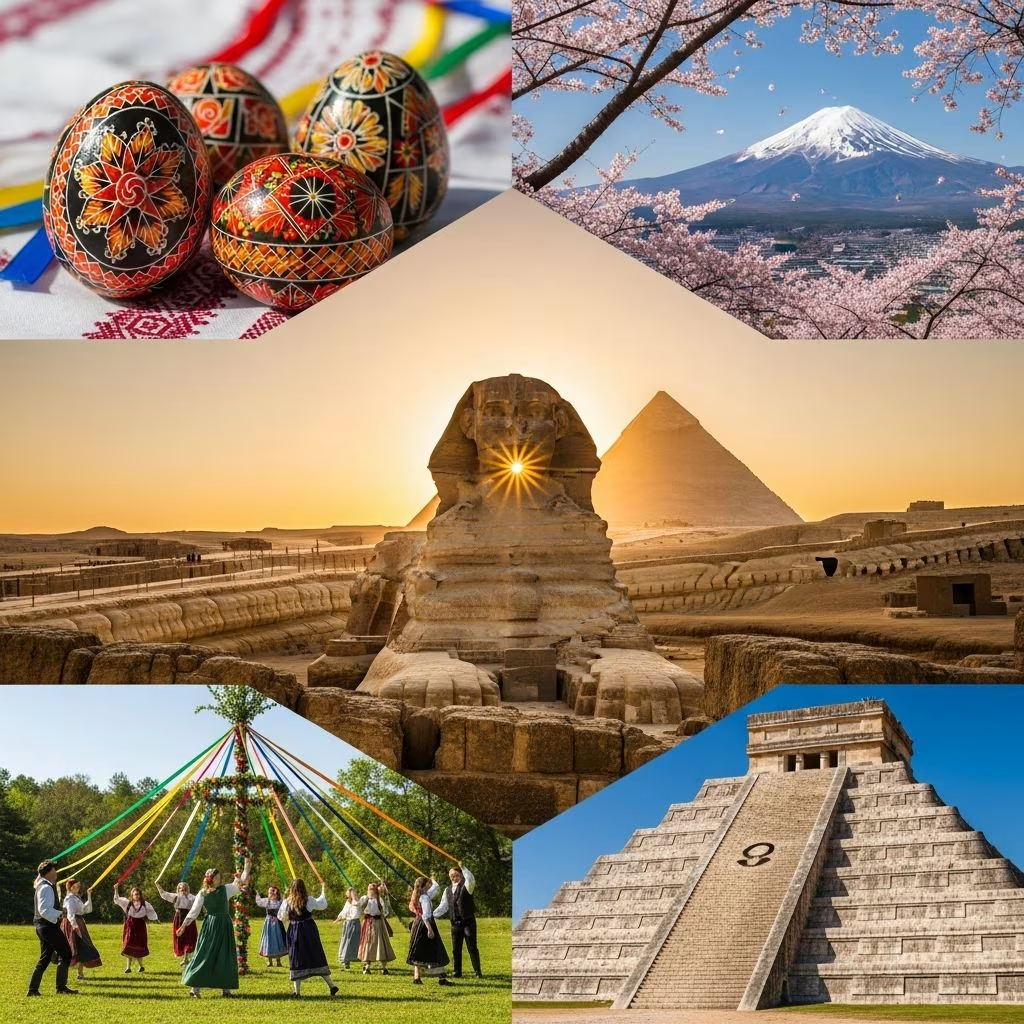
The iconic Pyramid of Kukulkan at Chichen Itza, a UNESCO site in Yucatan, stands 30 meters tall amid jungle ruins. On equinox days, sunlight cascades down its northern staircase, projecting a jagged shadow that merges with a carved serpent head at the base, simulating Kukulkan’s descent. This 37-meter illusion lasts about 45 minutes at sunset, symbolizing renewal for the Maya. Thousands flock here; arrive early for space near the structure.
Near Mexico City, Teotihuacán’s Palace of Quetzalpapálotl features carvings of solar motifs. Equinox morning light casts a shadow climbing these symbols, evoking the god Quetzalcoatl. Though climbing the Pyramid of the Sun is prohibited, ground-level views from the Avenue of the Dead offer clear sights of this interplay. The site’s vast pyramids amplify the event’s grandeur.
Europe’s prehistoric monuments, built millennia ago, align with solstices and equinoxes, hinting at early astronomical prowess.
England’s Stonehenge, with its massive sarsen stones transported from Wales around 2500 BCE, orients toward midsummer sunrise but opens for equinox dawn. Public access allows viewing the sun rise over the Heel Stone, aligning with the circle’s axis. Druids and pagans often assemble, drumming to greet the light, though parking fees apply. Preservation limits inner access otherwise.
On Malta’s southern coast, the 3600 BCE Mnajdra complex channels equinox sunrise through its main doorway into a niche shrine. Solstice light shifts left or right, showcasing precise orientation. These limestone temples, among the world’s oldest freestanding structures, reward early risers with solitude before tours arrive.
Near Evora, this 6000 BCE granite circle—older than Stonehenge—features over 95 menhirs on a hillside. Equinox sun rises along the monument’s east-west axis, aligning shadows dramatically. Less crowded than other sites, it offers peaceful exploration of Iberian prehistory.
In County Meath, Loughcrew’s passage tombs, dating to 3200 BCE, see equinox sun penetrate Cairn T, spotlighting megalithic art on a backstone for over 45 minutes. Queues form pre-dawn; bundling up against Irish chill enhances the mystic vibe.
Asia’s vast complexes integrate equinox views into spiritual landscapes.
Cambodia’s 12th-century Angkor Wat, the planet’s largest religious monument spanning 402 acres, frames equinox sunrise behind its 65-meter central tower from the west entrance. This rare westward alignment silhouettes the spires against dawn skies, a Khmer astronomical triumph now Buddhist. Monsoon-free March timing is ideal.
In Japan, Nagoya’s sites blend Shinto reverence with equinox sunrises, though specific alignments vary. Local festivals mark the season, complementing global patterns.
Indigenous North American cultures engineered equinox markers in arid canyons and mounds.
New Mexico’s Chaco Canyon, an Ancestral Puebloan hub from 850 CE, features Casa Rinconada kiva where spring sun streams through aligned doors into a wall niche. This remote UNESCO site reveals advanced solar tracking amid great houses.
Oklahoma’s Spiro Mounds, Mississippian culture remnants, align with equinox events, showcasing regional mound-building aligned to celestial cycles.
Beyond classics, other sites merit attention.
Equinox travel demands preparation. Dates shift slightly yearly (March 19-21); check UNESCO or park sites. Book accommodations early, as sites like Chichen Itza swell. Respect rules: no climbing, stay on paths. Weather varies—jungle heat in Mexico, damp chills in Europe.
| Site | Location | Best Viewing Time | Crowd Level |
|---|---|---|---|
| Chichen Itza | Mexico | Sunset | High |
| Stonehenge | England | Sunrise | Medium |
| Angkor Wat | Cambodia | Sunrise | Medium |
| Chaco Canyon | USA | Midday | Low |
| Mnajdra | Malta | Sunrise | Low |
It occurs when the sun crosses the celestial equator, typically March 20-21 Northern Hemisphere, varying by year due to Earth’s orbit.
Most require entry fees; equinox access is often standard, but premium tours exist for restricted areas like Stonehenge interiors.
Yes, with precautions: hydrate, follow guides, avoid unauthorized climbs. Sites enforce capacity.
No, alignments are date-specific, though laser shows mimic some, like Chichen Itza’s.
Comfortable shoes, layers for variable weather, binoculars, camera with tripod, snacks for early starts.
These sites transcend tourism, hosting indigenous ceremonies, solstice festivals, and scientific studies. They remind us of humanity’s quest to harmonize with nature’s rhythms. Whether pagan rituals at Stonehenge or Maya reenactments, equinox visits foster reflection on time and seasons.
Combine sites for itineraries: Mexico pyramids in one trip, European megaliths via rail. Sustainable travel—support locals, minimize impact—preserves these wonders for future gazes skyward.
