

 Travel Essentials
 Travel Essentials

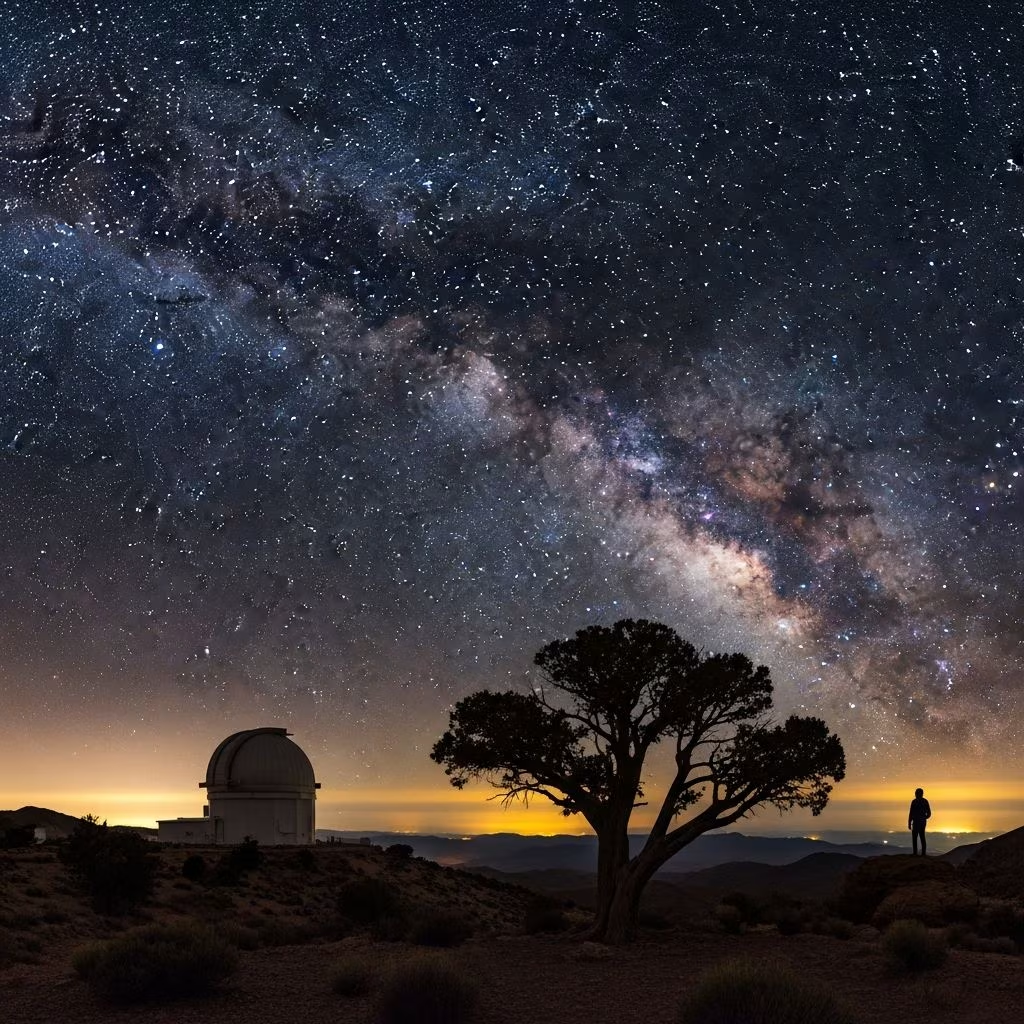
Explore exceptional locations for stargazing, featuring dark sky reserves, observatories, and guided tours in Chile, New Zealand, USA, and beyond.
 Travel Essentials
Stargazing offers a profound connection to the universe, revealing millions of stars invisible in urban areas. Remote locations with minimal light pollution, high altitudes, and clear atmospheres provide the clearest views of constellations, galaxies, and celestial events. This guide highlights premier global spots, drawing from certified dark sky reserves and astronomy hotspots, ideal for travelers seeking cosmic wonders.
Ideal stargazing sites share key traits: low light pollution, dry air, elevation above 2,000 meters, and distance from cities. Organizations like the International Dark-Sky Association (IDA) certify reserves meeting strict criteria, preserving night skies for future generations. High-altitude deserts like Chile’s Atacama minimize atmospheric distortion, while southern hemisphere sites reveal unique sights such as the Magellanic Clouds.
Chile’s northern regions dominate stargazing due to extreme dryness—the driest non-polar place on Earth—and elevations over 2,500 meters. The Atacama Desert hosts the ALMA Observatory, featuring 66 radio antennas probing deep space. Visitor centers and private observatories like those in San Pedro de Atacama provide guided sessions viewing nebulae and planets.
Elqui Valley complements Atacama with over 300 clear nights annually. Observatories such as Cerro Mamalluca welcome tourists for telescope viewings of Saturn’s rings and distant galaxies. Pair stargazing with daytime pisco tastings and valley hikes for a full experience. Best visited May to September for mild weather.
| Feature | Atacama Desert | Elqui Valley |
|---|---|---|
| Elevation | 2,400m+ | 1,500-2,000m |
| Key Attractions | ALMA, multiple observatories | Cerro Mamalluca, Pangue |
| Clear Nights | ~320/year | ~300/year |
The Aoraki Mackenzie International Dark Sky Reserve, the world’s largest at 1,800 square miles, spans New Zealand’s South Island. Encircled by mountains, the Mackenzie Basin blocks city lights from nearby Christchurch. Mt. John Observatory offers tours spotting the Milky Way, Southern Cross, and Magellanic Clouds—visible only south of the equator.
Tekapō village enhances the experience with hot pools under stars and a historic Brashear telescope. Earth & Sky guides lead nighttime hikes, blending Maori astronomy lore with modern tools. Winter (June-August) aligns with peak Southern Hemisphere viewing.
Mauna Kea, Hawaii’s dormant volcano rising 13,796 feet from sea level (10,203 feet above), hosts the world’s largest optical telescopes. Summit closures at night direct visitors to the 9,200-foot visitor center for free lectures and 11-16 inch telescopes peering at Jupiter and star clusters. Guided 4WD tours mitigate altitude sickness risks and rugged roads.
Dress in layers for sub-zero temperatures; sunsets transition to vivid starfields. The site’s equatorial proximity yields year-round observations, though permits regulate access.
Bryce Canyon’s hoodoos silhouette against Milky Way brilliance, earning IDA Gold Tier status. New moon nights cast starlit shadows; astronomy programs at the visitor center include laser-guided tours. Utah’s high desert ensures 200+ clear nights yearly.
Joshua Tree National Park, straddling Mojave and Colorado Deserts, offers eastern areas free from Palm Springs glow. Campground stargazing reveals zodiacal light and meteor showers; avoid full moons for optimal darkness.
Alberta’s Jasper, an IDA Dark Sky Preserve, frames Rockies under pristine skies. The annual Dark Sky Festival (October) features solar viewings, rocket launches, and workshops. Year-round camping at 100+ sites suits adventurers; wildlife like elk adds daytime allure.
This 82-acre park saw northern lights four times in 2014, rare for its latitude. The Black Forest Star Party draws amateurs for communal viewing. Rustic cabins and minimal facilities preserve solitude.
IDA-certified reserves ensure quality: Namibia’s NamibRand (first Gold Tier) offers dune camps and Wolwedans star beds. Tenerife, Canary Islands, legislates flight paths for clear views, hosting Starmus Festival. Nova Scotia’s Trout Point Lodge, the first Starlight Hotel, integrates Mi’kmaq stories with platforms.
Plan around new moons, check weather apps for cloud cover, and book tours in advance. Pack red flashlights to preserve night vision, wide-angle cameras for Milky Way shots, and warm layers. Respect IDA guidelines: use shielded lights and stay on trails.
Combine with astro-tourism: stay in dark sky lodges, join festivals, or visit observatories. Health prep includes altitude acclimation and hydration.
Death Valley National Park, California’s largest IDA Dark Sky Park at 13,700 sq km, offers minimal pollution for exceptional views.
June to August, winter months, provide longest nights and clearest conditions in places like Chile and New Zealand.
Not always, but recommended for remote sites like Mauna Kea to handle logistics, equipment, and expertise.
Use tripods, wide lenses (14-24mm), long exposures (15-30s), and low ISO (800-3200). Apps like Stellarium aid planning.
Alqueva, Portugal; Exmoor, England; and Cévennes, France—IDA reserves with low pollution.
