

 Travel Essentials
 Travel Essentials

Explore luxury hotels and resorts across the globe offering exceptional dark sky viewing, guided astronomical programs, and immersive cosmic experiences for travelers.
 Travel Essentials
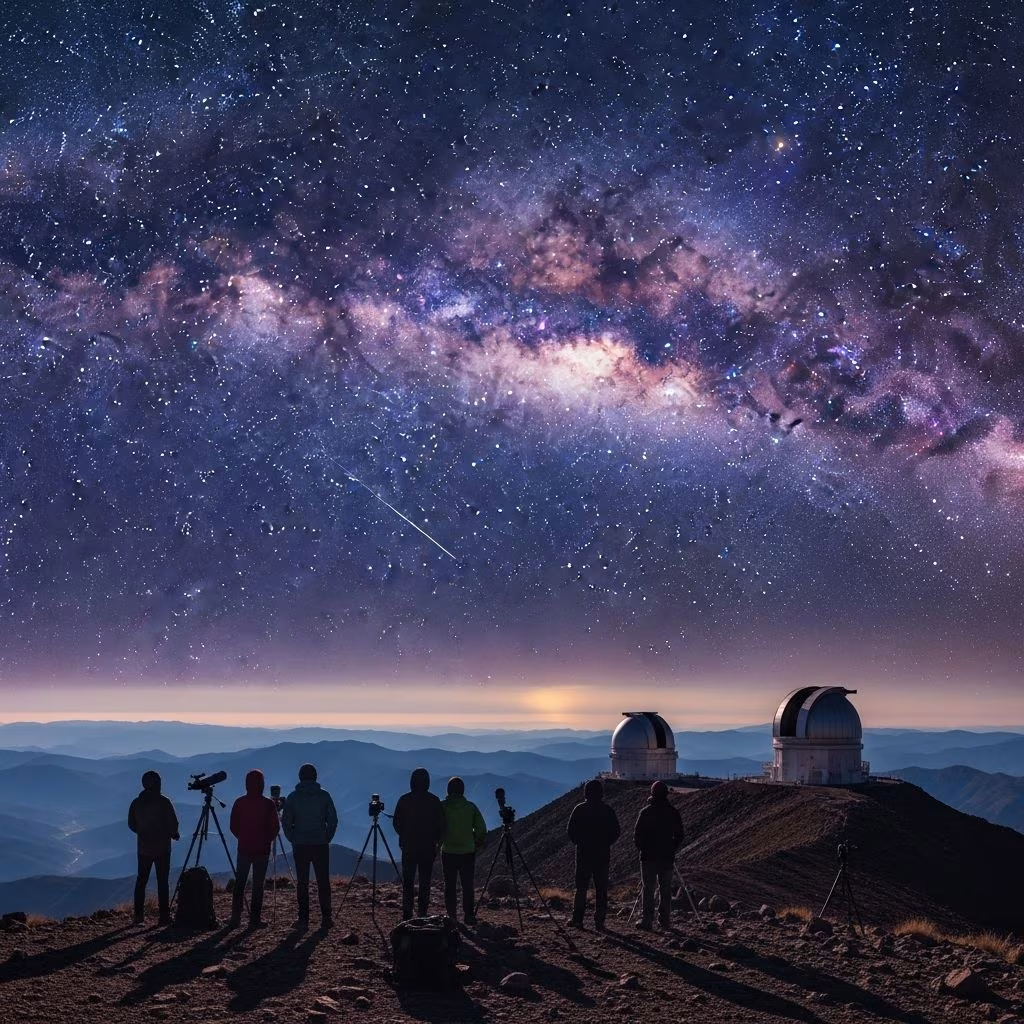
The night sky has captivated human imagination for millennia, yet the opportunity to experience it in its full glory has become increasingly rare in our modern world. Light pollution obscures the stars above most populated areas, making truly dark skies a precious commodity. A growing segment of the hospitality industry has recognized this demand, creating specialized accommodations that prioritize cosmic viewing experiences. These establishments combine luxury amenities with scientific infrastructure, allowing guests to reconnect with the cosmos while enjoying world-class hospitality.
The International Dark-Sky Association designates certain areas as International Dark Sky Communities, Parks, or Reserves based on rigorous environmental and light management standards. Hotels located within these certified zones offer visitors authentic stargazing opportunities unavailable in conventional tourism destinations. These designations ensure that light pollution remains minimal, preserving the natural nocturnal environment and allowing celestial features—from individual stars to the Milky Way—to remain visible in their natural brilliance.
Properties earning these certifications implement comprehensive lighting protocols throughout their grounds. Outdoor illumination is carefully managed through directional fixtures, warm color temperatures, and strategic placement to eliminate unnecessary light scatter into the atmosphere. Guest rooms often feature specialized fixtures that can be dimmed or extinguished entirely, enabling visitors to control their personal light environment while enjoying private stargazing from balconies or terraces.
Arid landscapes have become premier destinations for astronomical tourism due to their naturally low cloud cover and minimal humidity. The Sonoran Desert region of Arizona hosts several exceptional properties that combine desert hospitality with serious stargazing infrastructure. These establishments leverage the region’s natural advantages—high altitude, low precipitation, and sparse population density—to provide consistently clear night skies.
Contemporary desert resorts typically feature dedicated stargazing zones equipped with professional-grade telescopes and binoculars. Guest accommodations often include private viewing areas with unobstructed sightlines, heated outdoor hot tubs positioned for comfortable viewing, and architectural designs that frame celestial vistas. Many properties partner with local astronomy clubs or hire resident astronomers to conduct weekly or nightly guided observations, transforming casual stargazing into educational experiences.
The red rock formations characteristic of southwestern desert environments create stunning visual contrasts with the night sky. When combined with astronomical viewing, these natural features provide memorable settings for cosmic exploration. Properties in this region frequently offer additional nocturnal activities, including guided night hikes that explore local geology while highlighting seasonal constellations and celestial events.
Mountain accommodations offer distinctive advantages for astronomical tourism. Elevated terrain positions observers above significant atmospheric layers, reducing turbulence and moisture that typically degrade starlight quality. Properties situated at higher elevations often experience clearer, more stable atmospheric conditions, enabling superior telescope performance and enhanced visibility of celestial details.
Boutique mountain lodges have begun emphasizing their astronomical potential, marketing their high-altitude locations as natural advantages for cosmic observation. These properties often feature observatory buildings housing multiple telescopes with varying magnifications and specifications. Professional staff members guide guests through proper telescope operation, constellation identification, and interpretation of celestial phenomena observable from that specific location and season.
Mountain properties frequently combine stargazing with other nocturnal activities suited to their geographic location. Northern latitude mountain resorts may emphasize aurora viewing, particularly during geomagnetic storm activity. Southern hemisphere mountain accommodations often highlight seasonal meteor showers and planetary alignments. This multi-dimensional approach to night sky tourism appeals to visitors with varying levels of astronomical interest.
Locations at high northern latitudes offer unique opportunities to experience the Aurora Borealis alongside traditional stargazing activities. Iceland, Finland, and northern Scandinavia have developed specialized accommodations specifically designed for aurora observation combined with stellar viewing.
Properties in these regions often feature innovative architectural solutions for nighttime viewing. Glass-roofed cabins allow guests to observe the sky from the comfort of heated interiors, combining comfort with accessibility for visitors who may find extended outdoor exposure challenging. Many accommodations provide specialized clothing, thermal blankets, and heated outdoor facilities to facilitate extended viewing sessions during long arctic nights.
The combination of celestial phenomena available at high latitudes—including the midnight sun during summer months and extended darkness during winter—creates opportunities for year-round astronomical tourism. Winter aurora displays coincide with excellent stargazing conditions due to stable atmospheric patterns and minimal light pollution in remote arctic regions. Staff members at these properties typically possess extensive knowledge of solar activity patterns, geomagnetic forecasting, and historical aurora frequency, enabling informed guidance for optimal viewing timing.
Island locations provide distinct advantages for astronomical observation, including minimal atmospheric turbulence and access to unique celestial features invisible from northern latitudes. Tropical resorts have increasingly incorporated sophisticated observatories, transforming vacation accommodations into legitimate astronomical research and education centers.
Island properties often feature observatories open to both guests and local communities, serving educational functions beyond tourism hospitality. These facilities may host astronomy classes, STEM internship programs for local students, and cultural programs connecting indigenous navigation traditions with modern astronomical knowledge. This integrated approach combines tourism revenue with community service and educational mission.
The equatorial regions and southern pacific locations provide visibility of southern hemisphere constellations and celestial objects invisible from northern viewing locations. Properties positioned to showcase these unique astronomical features attract visitors seeking comprehensive sky knowledge, including constellation recognition across both hemispheres.
Contemporary stargazing-focused hotels have pioneered architectural innovations specifically designed to enhance cosmic viewing experiences. Room designs now frequently incorporate:
These design elements transform standard hotel rooms into functional observation platforms, democratizing access to serious stargazing without requiring guests to remain outdoors for extended periods. Premium room categories often offer enhanced features such as private outdoor hot tubs positioned for comfortable sky observation, heated lounging areas, and direct telescope access from private spaces.
Quality stargazing-focused properties distinguish themselves through robust educational programming and professional astronomical guidance. Full-time astronomers or trained astronomy guides conduct nightly or weekly observation sessions, providing context for visible celestial features, explaining seasonal variations in visible constellations, and identifying planetary positions and meteor shower activity.
Many properties offer tiered programming accommodating varying expertise levels—from absolute beginners unfamiliar with constellation recognition to advanced amateur astronomers seeking challenging observational targets. Guided sessions typically include telescope operation instruction, mythology and cultural significance of constellations, planetary science education, and observation of deep-sky objects including galaxies, nebulae, and star clusters.
Supplementary educational resources enhance the guest experience. Constellation maps provided in accommodations enable self-guided identification, while stargazing audio experiences offer narrated information accessible through personal devices during private observation sessions. Some properties provide binoculars calibrated specifically for astronomical observation, enabling comfortable naked-eye enhancement without requiring telescope expertise.
| Property Type | Key Features | Ideal Guest Profile | Geographic Advantages |
|---|---|---|---|
| Desert Resorts | Low humidity, high altitude, color-changing desert skies, professional observatories, hot spring amenities | Comfort-focused travelers, families, beginner stargazers | Minimal cloud cover, naturally dark skies, accessible locations |
| Mountain Lodges | Elevated positioning, thin atmosphere, multiple telescopes, alpine ambiance | Experienced amateur astronomers, adventure enthusiasts | Altitude advantage, stable atmospheric conditions |
| Arctic Cabins | Aurora phenomena, extended darkness, innovative glass architecture, heated facilities | Aurora chasers, photography-focused visitors | Geomagnetic aurora activity, minimal light pollution |
| Tropical Observatories | Southern hemisphere constellation access, community education, cultural integration | Educational travelers, international astronomy buffs | Equatorial perspectives, unique celestial visibility |
Successful stargazing vacations require thoughtful planning aligned with seasonal astronomical events and weather patterns. Visitors interested in meteor shower observation should schedule visits coinciding with major shower peaks such as the Perseids in August or Geminids in December. Those prioritizing aurora viewing should visit high-latitude properties during winter months when extended darkness increases observation hours and geomagnetic activity typically intensifies.
Weather patterns significantly impact stargazing success. Arid regions maintain more consistent clear skies throughout the year, while high-latitude properties may experience extended cloud cover during certain seasons. Researching historical weather data and cloud cover patterns for intended destinations ensures realistic expectations for viewing conditions.
Many specialized stargazing properties implement flexible booking policies or rebooking provisions accounting for weather-related disappointments. These customer-friendly policies acknowledge that cloud cover may prevent astronomical observation despite perfect planning, offering rescheduling options or partial refunds when viewing conditions prove inadequate.
Certified properties implement directional outdoor lighting that minimizes upward light scatter, use warm color temperatures below 3000K, position fixtures to eliminate glare, and maintain comprehensive protocols ensuring no unnecessary illumination reaches the night sky. Guest rooms feature controllable lighting enabling visitors to minimize interior light pollution from their accommodations.
No experience is necessary. Quality stargazing hotels provide comprehensive guidance for all skill levels, from constellation identification for beginners to advanced observational techniques for experienced astronomers. Binoculars and telescopes are available with instruction, and guided evening programs accommodate participants with varying backgrounds.
The best season depends on location and interests. Winter offers extended darkness and excellent atmospheric stability in many regions. Specific meteor showers peak during designated months. Aurora viewing requires winter visits to high northern latitudes. Consult property staff for location-specific recommendations aligned with your astronomical interests.
Higher elevations position observers above atmospheric water vapor and turbulence, improving image stability and clarity. Arid regions maintain naturally low humidity and clear conditions. Low-latitude locations provide access to different constellations than high-latitude areas. Properties leverage their geographic positioning to optimize views of location-specific celestial phenomena.
Yes. Many specializing-stargazing hotels accommodate families with age-appropriate programming, daytime activities, and flexible viewing schedules. Properties offer tiered experiences enabling children to participate in guided observation while allowing adults to pursue more advanced astronomical interests.
The emerging segment of dedicated stargazing accommodations reflects broader trends emphasizing immersive experiences, educational travel, and reconnection with natural phenomena. As light pollution continues expanding globally, these specialized properties become increasingly valuable for preserving authentic stargazing opportunities. Investment in professional astronomical infrastructure, educational programming, and innovative architecture suggests continued development and expansion of this hospitality niche.
The convergence of luxury hospitality and serious astronomical science creates unique value propositions unavailable through conventional tourism. These properties serve both casual travelers seeking memorable experiences and dedicated amateur astronomers pursuing meaningful observational opportunities. This dual functionality ensures sustained appeal and business viability as demand for dark sky tourism continues growing.
