

 Travel Essentials
 Travel Essentials

Explore New Zealand's elite stargazing locations, from vast Dark Sky Reserves to remote sanctuaries, with guided tours, unique accommodations, and tips for cosmic viewing.
 Travel Essentials
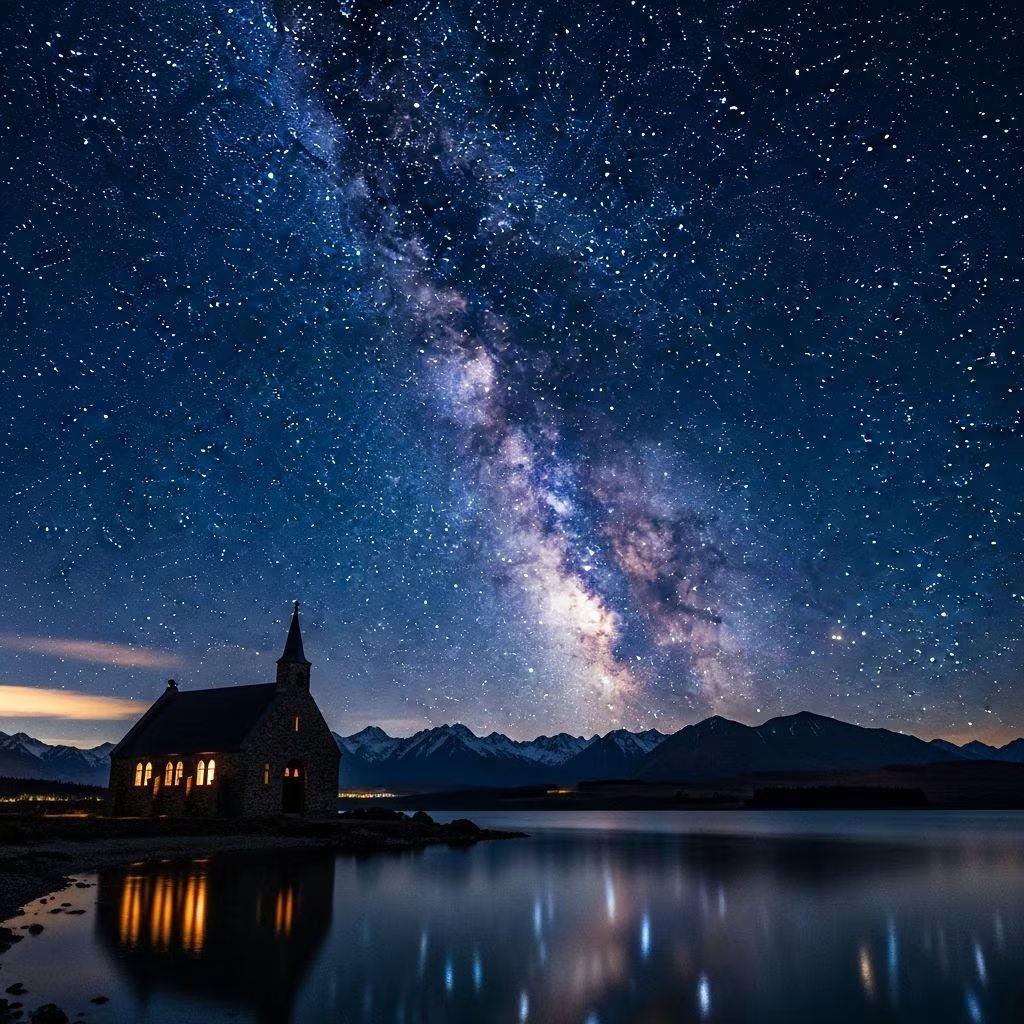
New Zealand stands out as a global haven for stargazers, boasting some of the clearest night skies on Earth thanks to its remote locations, low population density, and dedicated dark sky protections. Home to multiple International Dark Sky Reserves, Sanctuaries, and Parks, the country offers unparalleled views of the Milky Way, southern constellations, and occasional auroras. These areas minimize light pollution, allowing visitors to witness up to 50 million stars on a single night.
The nation’s geography plays a pivotal role in its stargazing supremacy. Southern Hemisphere skies reveal unique celestial phenomena invisible from the north, such as the Southern Cross and Magellanic Clouds. Winter months provide optimal conditions with drier air reducing atmospheric interference, though clear nights occur year-round. Strict lighting regulations in protected zones ensure pristine darkness, certified by the International Dark-Sky Association. Communities actively preserve these skies, balancing tourism with conservation.
New Zealand hosts two of the world’s 22 Dark Sky Reserves, three Sanctuaries, and three Parks, each offering distinct experiences. Here’s a breakdown of the standout regions:
At the heart of the Aoraki Mackenzie Reserve, Lake Tekapo’s turquoise waters reflect starlit skies, drawing global crowds. Ascend Mt John Observatory for New Zealand’s most powerful telescope, revealing galaxies and nebulae. The Church of the Good Shepherd provides an iconic foreground for astrophotographers.
Near New Zealand’s highest peak, this area offers boutique private tours at Pukaki Observatory in secluded rural settings. Big Sky Stargazing and Dark Sky Project tours blend astronomy with Māori star lore from experts like Victoria Campbell.
From Bob’s Peak via gondola, overlook mountains under glittering skies. Nearby Tāhuna Glenorchy shines for aurora potential and waterfront trails.
Kaikōura’s zipline adventures and star-grazing dinners elevate experiences. On Otago Peninsula, Sandfly Bay delivers wildlife bonus with penguins alongside stars.
Stewart Island promises kiwi spotting interrupted by Aurora Australis. Wairarapa’s Martinborough pairs wine with telescopes delivered to your door. Great Barrier Island’s beachside moon chair sessions feel otherworldly.
Elevate your visit with professional guides. Popular options include:
| Location | Tour Operator | Highlights |
|---|---|---|
| Lake Tekapo | Dark Sky Project / Tekapo Springs | Telescope viewing, Māori astronomy, hot pool relaxation under stars |
| Aoraki/Mt Cook | Big Sky Stargazing / Pukaki Observatory | Private sessions, storytelling, galaxy spotting |
| Kaikōura | EcoZip / Moana Skies | Ziplining, private dinners, seabird protection focus |
| Great Barrier Island | Good Heavens | Beach moon chairs, small groups |
| Wairarapa | Star Safari / Under the Stars | Stonehenge Aotearoa, accommodation visits |
These tours cater to all levels, often including lasers for constellation tracing and myths from Māori navigators who used stars for voyaging.
Many lodges integrate sky views:
Campervan trips shine here; park at designated sites in reserves for midnight shows.
| Season | Key Sights | Best Locations |
|——–|————|—————|
| Summer | Southern Cross, Scorpius | Tekapo, Queenstown |
| Autumn | Milky Way core | Glenorchy, Stewart Island |
| Winter | Large Magellanic Cloud, auroras | All reserves |
| Spring | Eta Carinae nebula | Mt Cook, Kaikōura |
Winter offers the clearest views due to low humidity, but any clear night works year-round.
No—naked-eye viewing suffices in these dark skies, but tours enhance details.
Yes, Aurora Australis appears strongest in southern spots like Stewart Island and Glenorchy during solar peaks.
Reserves cover larger areas with community involvement; Sanctuaries are smaller, highly protected zones.
Absolutely—many tours welcome kids over 12; others adapt for all ages.
Efforts like Kaikōura’s seabird protections highlight integrated conservation. Visitors contribute by using shielded lights and advocating locally. Future events like Glenorchy’s 2028 eclipse promise more wonders. New Zealand’s commitment ensures these skies remain for generations.
