

 Travel Essentials
 Travel Essentials

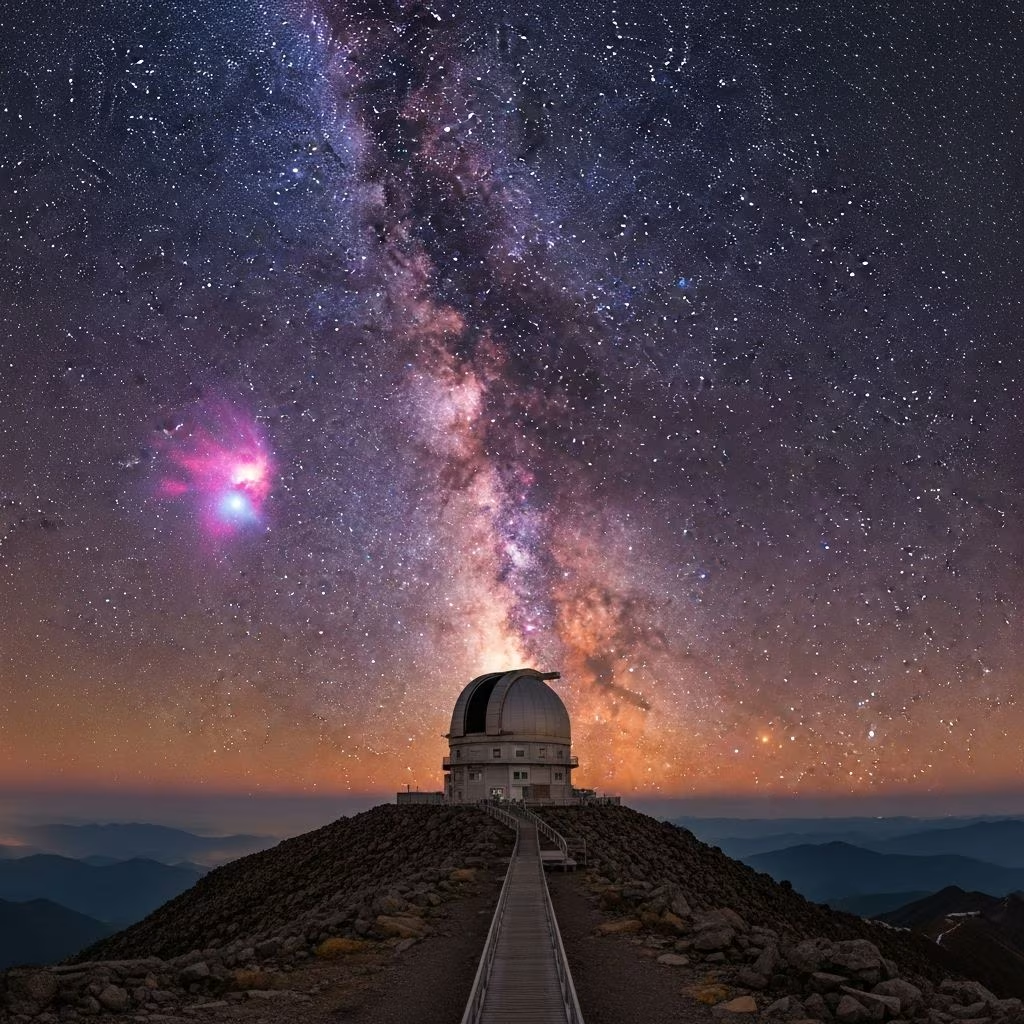
Discover Asia’s best dark-sky destinations, from Himalayan peaks to remote islands, for unforgettable views of the Milky Way and meteor showers.
 Travel Essentials
Asia offers some of the world’s most spectacular opportunities to gaze at the stars, thanks to its diverse landscapes ranging from towering mountains to isolated islands and vast deserts. These locations stand out due to their low light pollution, high elevations, and clear atmospheric conditions, making them ideal for observing constellations, the Milky Way, and meteor showers. Whether you’re a seasoned astronomer or a casual skywatcher, planning a trip to these spots can transform a simple vacation into a mesmerizing encounter with the universe.
The continent’s geography plays a crucial role in creating perfect stargazing environments. High-altitude sites reduce atmospheric interference, while remote areas away from urban centers minimize artificial light. Equatorial regions near the equator reveal more constellations, and dry climates prevent cloud cover. Many of these places are now recognized as International Dark Sky Parks, certified for their preservation of natural night skies.
Mountains in Asia provide elevated platforms where the air is thinner and skies darker, enhancing the clarity of celestial objects. These peaks not only offer stunning daytime hikes but also unparalleled nighttime spectacles.
Situated at over 3,400 meters in Taroko National Park, Hehuan Mountain is Taiwan’s premier stargazing destination. As the island’s first International Dark Sky Park, it benefits from strict light control measures. Accessible by a two-hour drive from Taichung Airport, visitors can hike trails during the day and settle in for evening observations. The peak’s remoteness ensures vivid displays of the Milky Way, especially during new moon phases.
Camping is popular here, with platforms designed for telescopes. Winter months bring crisp, cold nights perfect for spotting planets like Jupiter and Saturn. Local observatories occasionally host guided sessions, teaching visitors to identify southern hemisphere constellations rarely visible elsewhere.
Known locally as the “City of Stars,” this 2,175-meter peak in northern Thailand lives up to its name. Part of the Daen Lao range, it requires a guided two-day trek, culminating in a night spent above the clouds. The trail opens from late November to early March, aligning with the dry season for optimal conditions.
At the summit, the absence of light pollution reveals a canopy of stars stretching horizon to horizon. Trekkers often report seeing shooting stars and deep-sky objects with minimal equipment. Nearby lodges provide base camps for those preferring shorter hikes, complete with star maps and binoculars.
Nestled at the edge of the Himalayas in Yunnan Province, this dramatic gorge offers mountain stargazing amid rugged cliffs. The high elevation and isolation create one of Asia’s darkest skies. Trails along the gorge allow access to viewpoints perfect for overnight stays under the stars.
Combining hiking with astronomy, visitors can witness the Milky Way arching over snow-capped peaks. The site’s proximity to Lijiang provides logistical ease, with guesthouses offering rooftop viewing areas.
Remote islands in Asia boast low population densities and surrounding oceans that block city lights, creating natural dark sky sanctuaries. These spots blend beach relaxation with cosmic wonders.
Including Hateruma and Iriomote Islands, this chain in Okinawa Prefecture hosts Japan’s first International Dark Sky Park. Hateruma, the southernmost point, offers equatorial views of unique constellations. Ferries connect the islands, making multi-stop itineraries feasible.
Beaches serve as natural observatories, with resorts providing telescopes and astronomy guides. Meteor showers like the Geminids are spectacular here, and the “green flash” at sunset adds to the magic.
Floating in the Indian Ocean, Baa Atoll combines luxury overwater villas with pristine night skies. Low light pollution and clear waters amplify the stargazing experience. Resorts organize boat trips for horizon-to-horizon views, often coinciding with meteor events.
Diving by day and stargazing by night, guests can observe southern skies from private decks. The atoll’s UNESCO status ensures environmental protection, preserving its dark skies.
This equatorial island promises vibrant constellations due to its latitude. Resorts like Soneva Kiri feature private observatories with professional telescopes, allowing views of Jupiter’s moons and Saturn’s rings. Canopy pods and beach setups cater to romantic or adventurous nights.
Budget options include kayaking to secluded lagoons for personal stargazing sessions. New moon periods, like super black moons, intensify the display.
Protected parks and highland regions prioritize darkness preservation, attracting astronomers worldwide.
Asia’s first International Dark Sky Park, located five hours from Seoul, features firefly trails by day and star-filled skies by night. On-site telescopes reveal lunar craters and distant planets. Meteors and the Milky Way are visible to the naked eye.
Eco-lodges offer workshops on astronomy, blending Korean folklore with modern science. Summer brings firefly-synced stargazing events.
At altitudes up to 4,000 meters, Bhutan’s passes like those between Paro and Haa Valley provide Himalayan dark skies. Sacred new moon periods draw locals and visitors to temples for skywatching. Crisp post-monsoon air from October to February enhances visibility.
Prayer flags frame views of Orion rising over Mount Jomolhari. Homestays arrange guided hikes with butter tea under the stars.
In Kinabalu National Park, this Southeast Asia highpoint offers inky nights far from urban glow. Summit climbers reward themselves with expansive skies, while park trails provide accessible viewing. Photography thrives here with tripods capturing star trails.
Resorts within the park host astronomy nights, emphasizing biodiversity alongside celestial beauty.
To maximize your experience, consider these essentials:
| Factor | Tips |
|---|---|
| Best Time | November-March for dry weather; avoid full moons. |
| Gear | Binoculars, star app, warm layers, red flashlight. |
| Access | Rent cars, hire guides; check park fees. |
| Accommodation | Dark Sky-friendly resorts with telescopes. |
Apps like Stellarium help identify objects in real-time. Respect local customs, especially in sacred sites.
These are areas certified for low light pollution, with policies to protect night skies for astronomy and wildlife.
No, naked-eye viewing suffices, but binoculars enhance details like nebulae.
Most are, but join guided tours in remote mountains for safety.
Yes, use long exposures and tripods; many sites have platforms.
Dry seasons are best; check forecasts for clear nights.
