

 Travel Essentials
 Travel Essentials

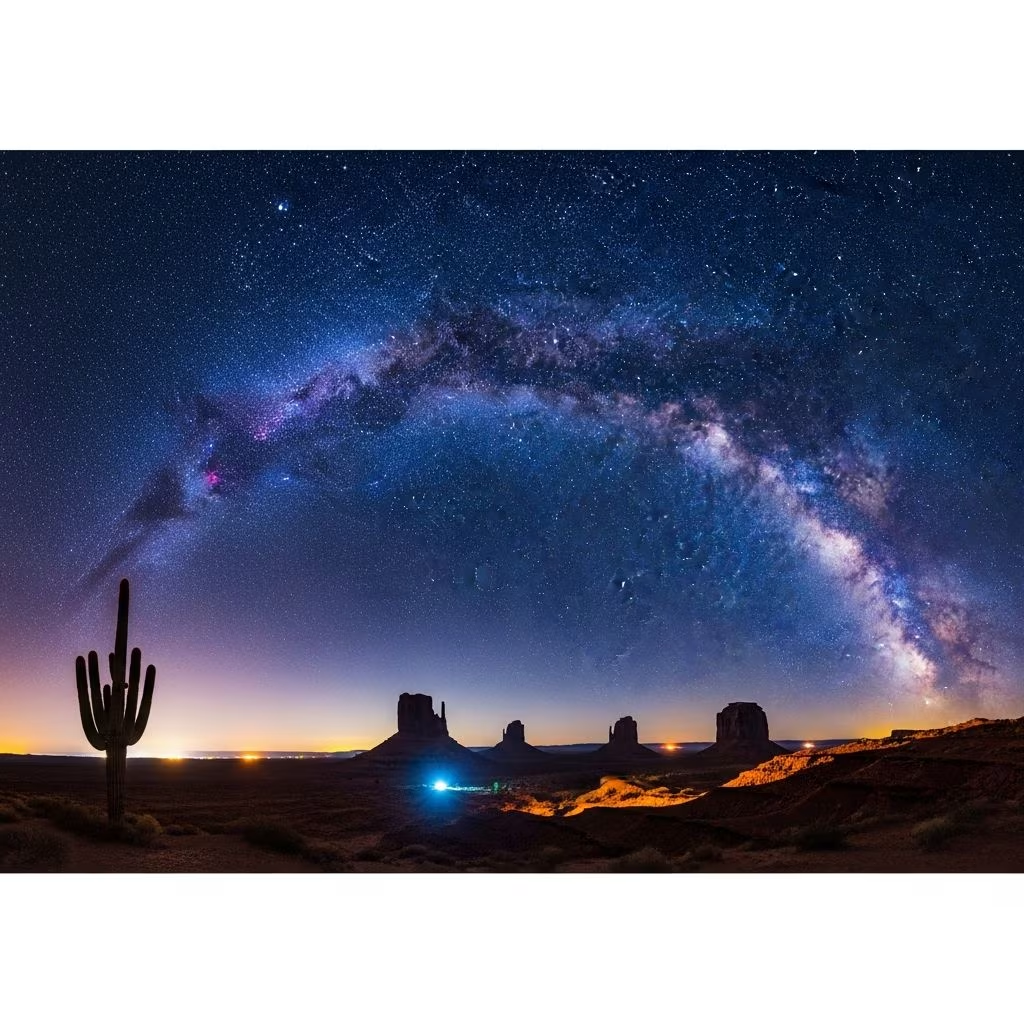
Explore top destinations like Big Bend, Grand Canyon, and Cosmic Campground for Milky Way views, star parties, and dark sky sanctuaries in the arid Southwest USA.
 Travel Essentials
The Southwest United States boasts some of the clearest, darkest skies on the continent, thanks to vast deserts, high elevations, and stringent light pollution controls. This region, spanning Arizona, New Mexico, Utah, and beyond, features numerous International Dark Sky Parks and Sanctuaries where the Milky Way blazes across the heavens on most nights. With over 300 clear nights annually in many areas, it’s an ideal destination for both novice skywatchers and seasoned astronomers seeking breathtaking celestial displays.
Arid climates minimize cloud cover, while remote locations far from urban glow preserve natural darkness. The Colorado Plateau, covering parts of Arizona, Utah, and New Mexico, hosts a concentration of protected dark sky sites. These areas allow visibility of up to 2,000 stars on clear evenings, far surpassing city limits where only a few dozen are discernible.
National parks dominate the Southwest’s stargazing scene, with official designations ensuring preserved darkness. Here’s a curated selection of standout locations.
Spanning 800,000 acres along the Rio Grande, Big Bend offers horizon-to-horizon views with minimal interference. Nearly any spot within the park delivers exceptional clarity, ideal for spotting the Milky Way’s core during summer months. For beginners, the Rio Grande Village Nature Trail provides paved access and nearby camping, combining accessibility with remote vibes.
This iconic wonder’s South Rim, particularly Yavapai and Lipan Points, elevates stargazing to poetic heights. Gaze from canyon edges into infinity, where the river’s faint glow adds ambiance without overpowering stars. The park’s vast 2,000 square miles shield skies from distant lights, making it a top pick for romantic or contemplative nights.
The world’s first International Dark Sky Park, this Utah gem features massive rock bridges that silhouette against starry backdrops. Astro-photographers flock here to capture the Milky Way arching over Owachomo Bridge. Thirteen primitive campsites encourage overnight stays, with Bluff nearby for lodging alternatives along the San Juan River.
| Location | Key Feature | Best For | Accessibility |
|---|---|---|---|
| Big Bend NP | 2,000+ visible stars | Overnight hikes | Trails & campsites |
| Grand Canyon NP | Canyon rim vistas | Naked-eye viewing | Roadside points |
| Natural Bridges NM | Rock bridge frames | Astrophotography | Primitive camping |
Beyond parks, dedicated sites amplify the experience with programs and equipment.
Nestled in Gila National Forest, this 2016-designated International Dark Sky Sanctuary enforces strict no-light rules post-sunset—red filters on flashlights only. Concrete pads accommodate telescopes, but the naked-eye sky mesmerizes for hours. Its remoteness guarantees pristine conditions year-round.
In Dark Sky City Flagstaff, this historic site lets visitors peer through the telescope that discovered Pluto in 1930. Nightly programs cover solar system models, eclipses, and live views. Pair it with nearby McDonald Observatory in Texas, which hosts weekly star parties with twilight lectures.
Though not a campground, this radio astronomy array near Socorro offers public tours by day and dark skies for self-guided nights. The surreal dish fields under stars provide a unique sci-fi backdrop.
Venture further for less-crowded alternatives drawing from the Southwest’s expanse.
A multi-state itinerary maximizes variety. Start in Arizona’s Grand Canyon, head to Utah’s Natural Bridges and Canyonlands, dip into New Mexico’s Cosmic Campground, and loop through Texas’ Big Bend.
Capture the cosmos with these tips: Use wide-angle lenses (14-24mm), long exposures (15-30s), and foreground elements like hoodoos or dunes. Annual events include Bryce Canyon’s star party, Capitol Reef’s festival, and Grand Canyon’s programs.
| Event | Location | Season |
|---|---|---|
| Astronomy Festival | Capitol Reef NP | June |
| Summer Star Party | Cedar Breaks NM | May |
| Star Parties | McDonald Observatory | Year-round |
New moon periods in spring and fall offer darkest skies; summers showcase the Milky Way prominently.
No—naked-eye viewing suffices in these dark skies, but bring one for planets and deep-space objects.
Yes, parks like Canyonlands and observatories offer ranger programs and telescope viewings.
Most sites are Bortle 1-2 (pristine), vs. urban Bortle 8-9.
Not always; nearby towns like Bluff or Flagstaff provide hotels with dark sky access.
Support dark sky initiatives by using red lights, staying on trails, and advocating for protections. Organizations like the International Dark-Sky Association certify sites, ensuring future generations witness unspoiled heavens.
