

 Travel Essentials
 Travel Essentials

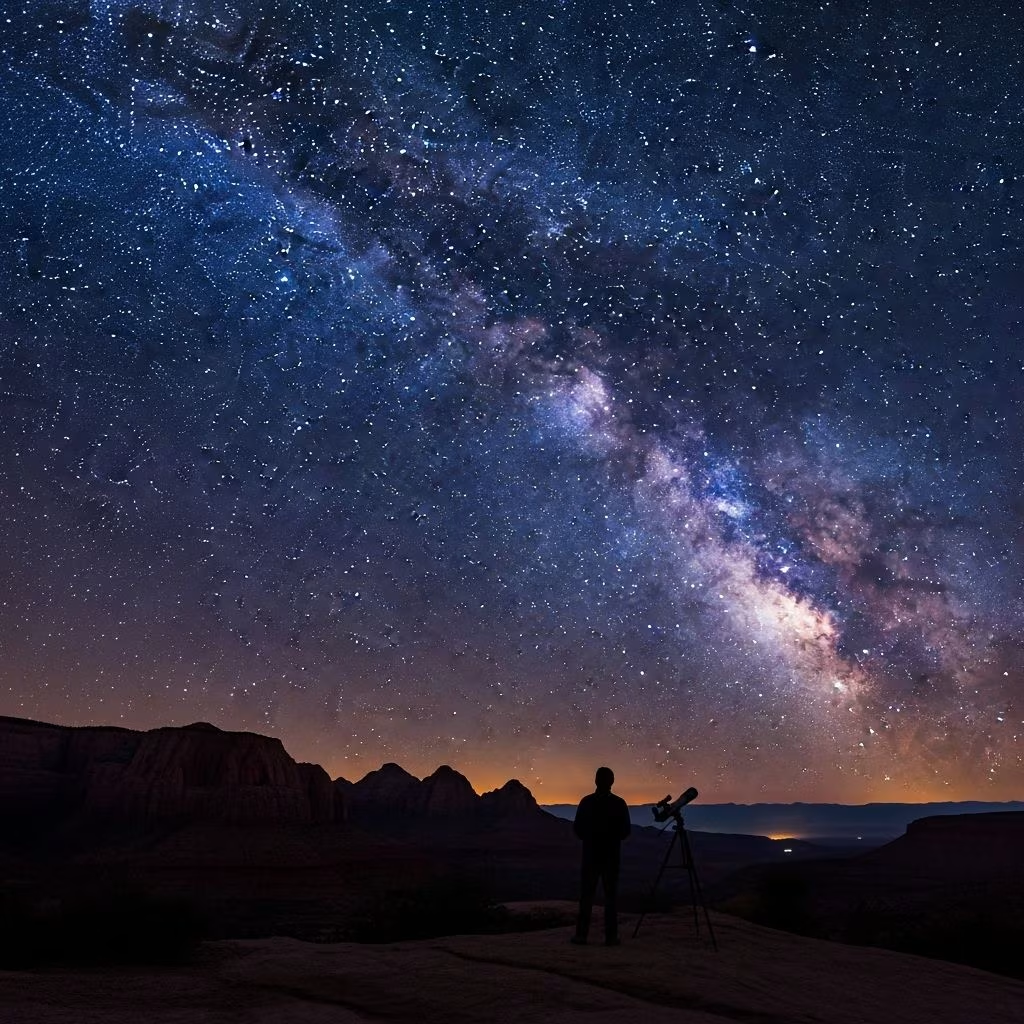
Explore the best places in the United States for stargazing, featuring International Dark Sky Parks with minimal light pollution and vivid Milky Way views.
 Travel Essentials
Under the vast expanse of the American night sky, away from urban glows, lie some of the world’s most spectacular celestial viewing opportunities. The United States boasts numerous designated International Dark Sky Parks and reserves, where light pollution is meticulously controlled to preserve the natural brilliance of stars, planets, and galaxies. These locations offer not just stargazing but a profound connection to the cosmos, often enhanced by unique landscapes and cultural histories tied to the heavens.
The country’s diverse geography—from arid deserts to rugged mountains and remote forests—provides ideal conditions for observing the night sky. Organizations like DarkSky International certify places that maintain low light levels, ensuring visibility of phenomena like the Milky Way, which can appear so bright it casts shadows. Factors such as elevation, dry air, and distance from cities amplify the experience. National parks lead this effort, with many implementing lighting policies to protect these resources for future generations.
The Southwest’s clear, dry atmospheres and sparse populations make it a stargazing haven. These arid regions minimize atmospheric interference, allowing sharp views of deep-space objects.
This ancient site, designated an International Dark Sky Park in 2013, reveals how Ancestral Puebloans aligned structures with solar and lunar cycles. Today, visitors witness the same pristine skies, free from modern light intrusion. Optimal viewing occurs during spring and fall, avoiding extreme summer heat and winter chills.
Renowned for extremes, Death Valley’s remoteness and basin topography shield it from light pollution. On moonless nights, the Milky Way illuminates the valley floor dramatically. Summer offers peak clarity but crowds; shoulder seasons provide cooler, quieter nights.
Certified in 2016, this iconic park allows gazes into the abyss by day and the universe by night. Indigenous groups like the Navajo have long revered these skies. Arizona hosts the most dark-sky sites, underscoring its astronomical legacy.
Elevated terrains in the Rockies and Appalachians cut through haze, delivering exceptional transparency.
At high elevation, this park’s hoodoos frame vivid starry displays. It hosts astronomy programs year-round, revealing thousands of stars and planets. Clear nights showcase the Milky Way arching overhead.
Dune fields by day transform into serene stargazing arenas at night. Minimal light pollution ensures next-level celestial views, making it a road trip essential.
Even in greener regions, protected forests block urban lights effectively.
One of the East’s darkest spots since 2008, surrounded by state forest, its Astronomy Field offers 360-degree panoramas. Expect 60-85 prime nights yearly, with summer peaks drawing crowds—reserve spots ahead.
Overlooking twin Great Lakes, this 2011-certified park features old-growth woods and an observatory. Milky Way views are routine; northern lights add winter magic. Summers suit comfort, winters extend darkness.
Nestled in Appalachian forests, advanced telescopes peer into the cosmos amid southeastern darkest skies. High altitude and clear weather enhance observations.
Far-flung areas push darkness to extremes.
Texas’ vast Chihuahuan Desert delivers some of North America’s darkest skies. The park’s certification highlights its stellar potential.
The world’s first Dark Sky Park, its bridges and canyons frame unparalleled night skies.
Straddling the US-Canada border in Waterton-Glacier International Peace Park, glaciers and peaks amplify auroral and starry spectacles.
To maximize your experience:
| Location | Best Season | Key Feature |
|---|---|---|
| Chaco Culture, NM | Spring/Fall | Ancient alignments |
| Death Valley, CA | Summer | Milky Way shadows |
| Cherry Springs, PA | May-Sep | 360° field |
| Grand Canyon, AZ | Year-round | Cultural legacy |
| Bryce Canyon, UT | Year-round | Astronomy programs |
A certified area with policies reducing light pollution for optimal stargazing.
May to September in the Northern Hemisphere, during new moon phases.
No—naked-eye wonders abound, but binoculars enhance details.
Some parks need overnight reservations; check NPS sites.
It obscures faint stars; dark sky sites mitigate this.
Efforts by the National Park Service and DarkSky International combat light pollution. Visitors play a role by using shielded lights and supporting conservation. These skies, integral to ecosystems and heritage, deserve protection.
