

 Travel Essentials
 Travel Essentials

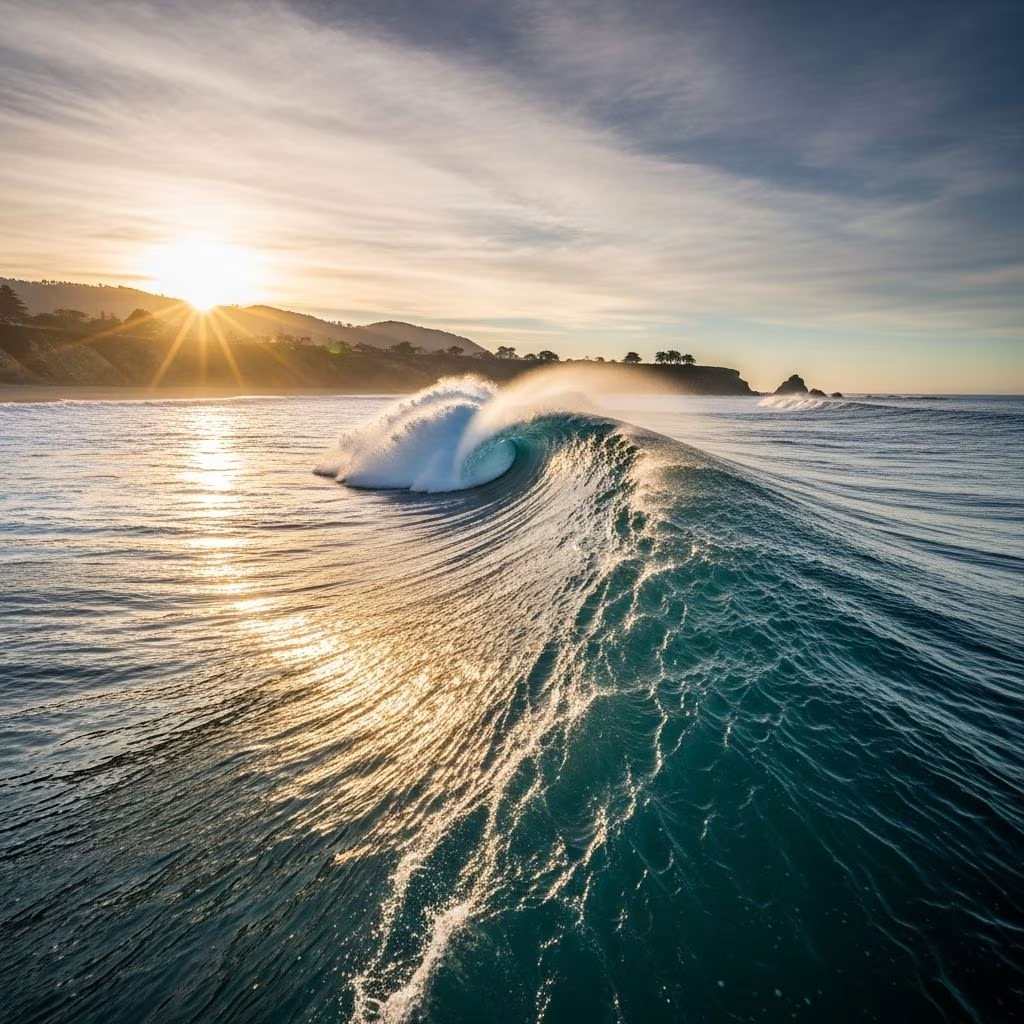
Explore California's top surfing destinations from beginner-friendly beaches to expert-only big wave breaks across three distinct coastal regions.
 Travel Essentials
California’s coastline stretches over 800 miles and has earned its reputation as one of the world’s most celebrated surfing destinations. The state’s diverse geography creates varying wave conditions throughout its regions, offering opportunities for surfers of every skill level. From the warm, rolling swells of Southern California to the powerful, raw waves of the north, understanding the unique characteristics of each region helps surfers plan their perfect session.
The Pacific Ocean provides California with multiple swell directions depending on the season and location. Winter swells typically originate from storms in the North Pacific, creating powerful waves that reach Northern California first before traveling south. Summer offers more consistent, manageable conditions, particularly in Southern California where southern hemisphere swells wrap around the coast. The topography of the California coastline—featuring points, reefs, and beaches—creates diverse wave formations that break in different ways depending on swell direction, tide, and wind conditions.
Atmospheric conditions play an equal role in determining ideal surfing windows. Offshore winds, which blow from the land toward the ocean, create cleaner wave faces and more defined barrels. Most of California experiences its best offshore conditions during specific times of day and particular seasons, making strategic timing crucial for quality sessions.
Southern California is renowned for its extended point breaks—formations where waves peel gradually along a rocky or sandy point, allowing long rides. These breaks accommodate various riding styles and skill levels, though conditions vary significantly by location and season.
Beyond sandy points, Southern California features powerful reef and rock breaks that create more challenging conditions. These formations require intermediate to advanced skills and produce more defined barrels.
Multiple Southern California locations offer beach break conditions where sandbars create shifting peaks, allowing flexibility in peak selection.
Central California’s most famous surfing hub offers radically different wave types within short distances, challenging surfers to adapt their techniques.
Beyond Santa Cruz, the Central Coast offers more remote experiences for surfers seeking solitude and undercrowded conditions.
Northern California’s geography and Pacific positioning create some of Earth’s most powerful and dangerous surfing conditions. These breaks demand exceptional skill, experience, and often require specialized equipment and support systems.
Northern California offers additional breaks for intermediate to advanced surfers seeking challenging but slightly less extreme conditions than Maverick’s or Ocean Beach.
| Skill Level | Southern California | Central California | Northern California |
|---|---|---|---|
| Beginner | San Onofre, Doheny State Beach, Cardiff Reef | Cowells Beach, Sand Dollar Beach | Limited options; requires instruction |
| Intermediate | Lower Trestles, Newport Beach, Swami’s | Pleasure Point, Steamer Lane (sections) | Point Arena, Salmon Creek, North Jetty |
| Advanced | Malibu, Rincon, Windansea | Steamer Lane (full break), advanced Santa Cruz | Ocean Beach, Maverick’s (experts only) |
Winter represents peak season for most California breaks as North Pacific storms generate consistent, powerful swells. Northern California experiences the most dramatic winter conditions, while Southern California still receives quality waves with less intensity than northern regions.
Summer provides the most accessible conditions for intermediate and beginner surfers. Southern California experiences the warmest water temperatures and most consistent smaller waves. Malibu reaches peak popularity during these months, and beginner-friendly breaks become crowded but manageable.
Transition seasons offer variable conditions as swell patterns shift. These periods often provide quality waves with fewer crowds, making them ideal for surfers seeking balance between challenge and accessibility.
Water temperature ranges from the 50s Fahrenheit in Northern California to the 60s-70s in Southern California depending on season. Wetsuits become essential during winter months everywhere and year-round in Northern California. Tide significantly impacts wave quality at point breaks and reef formations, with each break presenting optimal conditions at specific tidal stages. Generally, lower tides create more powerful waves at reef breaks, while point breaks often work across multiple tidal ranges.
Winter months (November-March) offer the most consistent and powerful swells, particularly for intermediate to advanced surfers. Summer (June-September) provides the most accessible conditions for beginners and intermediate surfers with warmer water temperatures.
Sand Dollar Beach (Central Coast), Cowells Beach (Santa Cruz), Cardiff Reef, and San Onofre State Beach in Southern California offer the most forgiving wave conditions and accessible learning environments.
Famous breaks like Malibu, Rincon, and Steamer Lane attract consistent crowds, especially during optimal seasonal conditions. Less-publicized breaks and those requiring more skill typically see fewer surfers. Early morning sessions and shoulder seasons offer reduced crowding.
Winter wetsuits are essential in Northern California year-round and throughout California during winter months. Summer in Southern California allows brief shorty wetsuits or rash guards for sun protection. Water temperature varies significantly by region and season.
Beginners require a surfboard matched to their size and skill level, a wetsuit appropriate to the season, and basic safety knowledge. Experienced surfers may use specialized equipment tailored to specific break characteristics. Rash guards protect against sun exposure and board friction.
Ocean hazards include strong currents, dangerous rips, sharp reef formations, and marine wildlife. Northern California’s big wave breaks present extreme danger requiring specialized knowledge. Always respect local conditions and never surf beyond your skill level.
California’s surfing heritage reflects centuries of wave-riding culture and continues to attract surfers worldwide. Whether seeking gentle summer waves at beginner-friendly beaches or pursuing the ultimate challenge at world-class big wave venues, California’s diverse coastline delivers experiences for every surfer. Understanding regional characteristics, seasonal variations, and personal skill limitations enables surfers to maximize their California surfing adventures while respecting the ocean’s power and maintaining safety. From the iconic Southern California point breaks to the raw intensity of Northern California’s offshore formations, the Golden State’s surfing opportunities remain virtually limitless.
