

 Travel Essentials
 Travel Essentials

Explore Sydney Harbour's most breathtaking viewing locations, from clifftop reserves to bridge walks, perfect for photography and memorable experiences.
 Travel Essentials
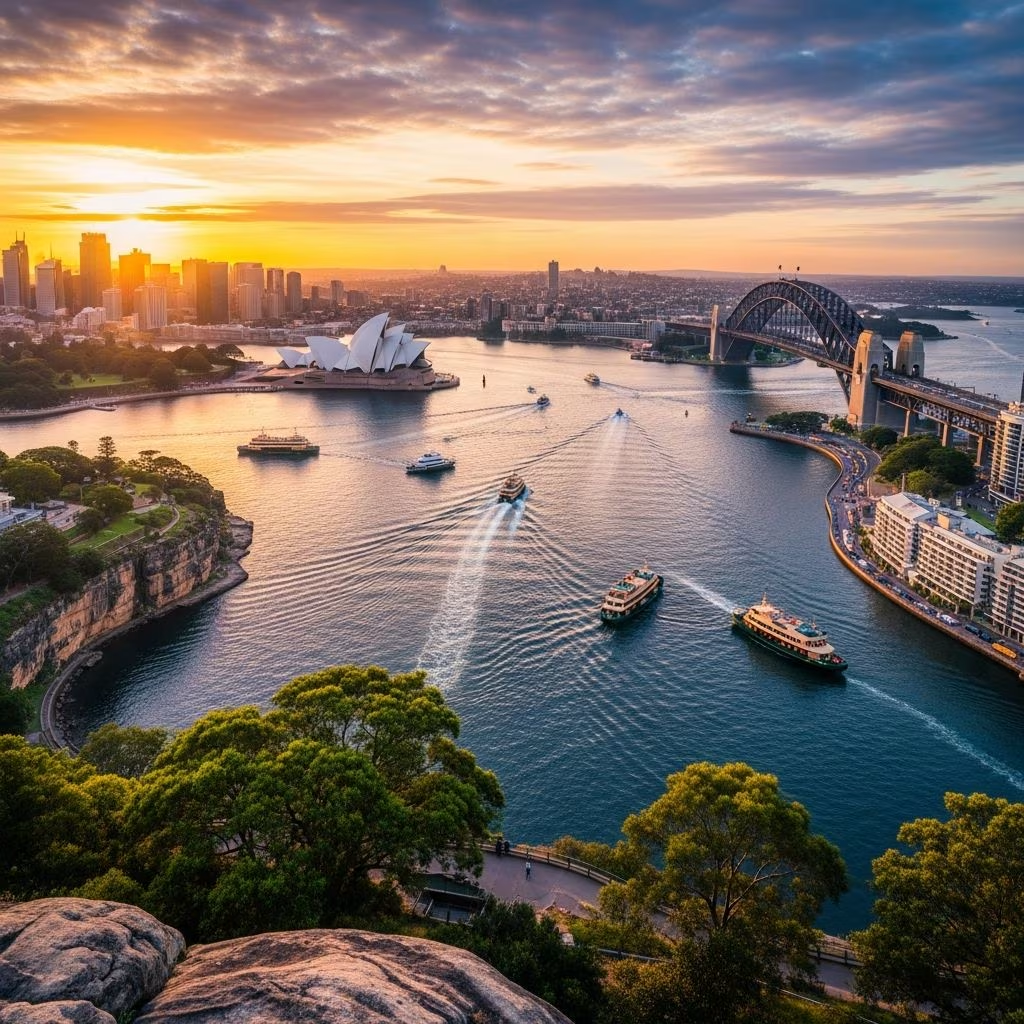
Sydney Harbour stands as one of the world’s most photographed waterways, and for good reason. The interplay between natural geography, architectural landmarks, and water creates countless perspectives that shift throughout the day. Whether you’re chasing golden hour light, planning a romantic evening, or simply seeking to absorb one of Australia’s most iconic landscapes, the harbour offers numerous viewing opportunities that cater to different interests and experience levels.
Sydney Harbour stretches across approximately 70 square kilometers, with multiple peninsulas, coves, and waterfront areas that each reveal distinct perspectives of the same iconic elements. The harbour’s most recognizable features—the Opera House, Harbour Bridge, and surrounding cityscape—appear transformed depending on your vantage point, time of day, and weather conditions. This geographic complexity means that no single view encompasses everything the harbour has to offer, making strategic location selection essential for photographers and experience seekers alike.
The eastern side of Sydney Harbour provides some of the most accessible and celebrated viewpoints for visitors. These locations benefit from consistent natural light and direct sightlines to the harbour’s most famous structures.
Positioned within the Royal Botanic Garden and east of the Opera House, this historic stone platform offers one of the harbour’s most comprehensive vistas. The location, named for Governor Lachlan Macquarie’s wife during the early 1800s, provides sight lines that encompass the Bridge, operational waterways, distant mountain ranges, and historically significant sites including Kirribilli House and Fort Denison. The carved-rock ledge has served as a viewing platform for nearly two centuries, making it both a visual and historical destination. The elevated position creates photographs that balance foreground botanical elements with middle-ground water vistas and distant urban skyline.
Dawes Point Reserve sits immediately beneath the Harbour Bridge’s southern approach, offering unobstructed views directly across the water toward the Opera House. This location functions exceptionally well during sunrise hours, as the eastern orientation captures the sun’s emergence above the harbour’s distant edges. The reserve’s proximity to Circular Quay makes it highly accessible via public transport, attracting both international visitors and local photographers seeking consistent, reliable compositions.
The northern reaches of Sydney Harbour deliver perspectives that showcase the water’s expanse and the relationship between architectural landmarks and surrounding landscapes. These locations often provide quieter experiences compared to southern harbour views.
Observatory Hill, positioned in Millers Point, has functioned as a community gathering space since 1858. The elevated green space delivers sweeping views of the Harbour Bridge, city skyline, and western harbour approaches. The location has become particularly popular during late afternoon hours on weekends, as the western light angle creates ideal sunset photography conditions. The hill’s historical significance combines with its practical viewing qualities, offering visitors both aesthetic and educational dimensions to their harbour experience.
Located in North Sydney’s relatively quiet district, Lavender Bay transforms dramatically as daylight fades. The waterfront boardwalk provides intimate viewing angles of Luna Park’s illuminated architectural elements, the Bridge’s glowing arch, and the city’s reflected light on calm water surfaces. Lavender Street, positioned above the bay, creates particularly strong compositions during evening hours when artificial lighting activates the landscape. The location attracts photographers specifically seeking nighttime compositions, as the concentrated lighting sources create dramatic contrast and color saturation.
Cremorne Point delivers 360-degree harbour perspectives from its rocky outcrops and grassy parkland areas. Different positions along the peninsula reveal varied angles of the Bridge, city skyline, Middle Harbour, and northern beach approaches. The location maintains surprising tranquility despite its proximity to urban areas, making it suitable for extended visits and contemplative viewing experiences. The Cremorne Point Walk connects multiple vantage positions, allowing visitors to explore varied perspectives without requiring vehicle transport.
Certain harbour vantage points deliver perspectives that differ fundamentally from standard ground-level viewing, offering unique visual experiences.
Climbing the Sydney Harbour Bridge itself provides a completely transformed perspective as elevation increases to 87 metres above the water surface. The constantly changing viewing angle throughout the ascent reveals the Bridge’s structure, the water below, and the harbour’s geographic breadth in ways impossible from stationary ground positions. The experience delivers visual information that standard photography cannot capture, as observers witness how the Bridge connects north and south, and how the Opera House appears as a distinct architectural element from elevated angles.
Blues Point Reserve at McMahons Point delivers perhaps the only harbour location that provides square-on visual alignment with both the Opera House and Harbour Bridge simultaneously. This unique geometric perspective creates compositional opportunities unavailable elsewhere around the harbour, making it particularly valuable for photographers seeking distinctive imagery. The location functions effectively during both sunrise and picnic hours, serving dual purposes for different visitor types.
Sydney’s renowned ferry system itself functions as a mobile viewing platform, with the constant motion revealing the harbour from perspectives impossible to achieve from stationary positions. The ferry journey provides endlessly changing compositions as the vessel moves through various water zones, passing beneath the Bridge and around the Opera House’s distinctive form.
For visitors seeking views that encompass the harbour within the broader urban landscape, elevated indoor viewing platforms provide comprehensive perspectives.
Sydney Tower Eye, positioned 250 metres above street level, delivers 360-degree views that extend toward the Blue Mountains on clear days. The elevated glass floor experience allows observers to look directly downward at bustling streets and major attractions, providing context that combines harbour views with the broader city landscape. This location offers weather-protected viewing suitable for visitors with time constraints or those seeking different visual perspectives than ground-based locations provide.
Locations further from the central harbour district offer less crowded viewing experiences with panoramic sight lines across expanded water zones.
Bradleys Head, projecting southward from Mosman district near Taronga Zoo, delivers excellent perspectives of the Opera House, Harbour Bridge, and Fort Denison. The location supports multiple activity types including picnics, fishing, and hiking, with the Bradleys Head to Chowder Bay walk connecting to the longer Manly to Split Bridge track. The position provides balanced harbour composition while incorporating scenic natural landscape elements beyond the core harbour attractions.
Larkin Street Lookout at Balls Head offers serene harbour views across to the city and Bridge without significant tourist infrastructure or crowds. This location appeals to visitors seeking peaceful contemplative experiences rather than concentrated photography activities. The removal from central tourist zones preserves the sense of discovery for those willing to venture beyond immediately accessible areas.
Sydney’s public transport network connects most major harbour lookouts via ferry, train, and bus services. Visitors can access central and northern harbour locations using these systems without vehicle requirements. Remote locations including West Head and Royal National Park lookouts require personal vehicle transportation or guided tour arrangements.
Different harbour activities align with particular viewing locations. Photographers seeking technical image capture benefit from locations offering stable positioning and consistent sight lines. Romantic experiences align with sunset-oriented positions featuring natural privacy and water-view orientation. Family picnic activities work well at locations with natural grass areas, nearby amenities, and multiple viewing angles including children’s perspectives. Fitness-oriented visitors benefit from locations incorporating walking paths, coastal trails, and variable topography.
Sydney’s relatively mild climate means harbour viewing occurs year-round, though seasonal variations affect light quality and visibility. Summer months deliver longer viewing windows and clearer atmospheric conditions, while winter brings earlier twilight periods and sometimes more dramatic cloud formations. Rainy periods can reduce visibility to distant mountains but sometimes intensify the harbour’s reflected light characteristics.
No single location encompasses all harbour elements optimally, as each position emphasizes different aspects. Macquarie’s Point offers comprehensive vistas, while Blues Point delivers unique Bridge and Opera House alignment unavailable elsewhere. Selection depends on your specific priorities and artistic objectives.
Most ground-level lookouts and parks offer free public access, including Dawes Point Reserve, Observatory Hill, and Cremorne Point. Specialized experiences like Bridge climbs or paid observation platforms involve entrance charges.
Early morning hours, particularly during weekday periods, deliver quieter experiences at central locations. Northern and western harbour positions maintain lower visitor volumes throughout most time periods compared to central zones.
Visibility diminishes during heavy rain or fog, though these conditions sometimes create atmospheric photographic opportunities. Most locations remain accessible but with reduced sight lines to distant elements.
Sydney Harbour’s viewing landscape extends far beyond the single iconic perspective familiar to casual observers. By exploring diverse vantage points across eastern, northern, and western shoreline areas, visitors unlock progressively richer understanding of the harbour’s complexity and beauty. Strategic location selection aligned with specific interests—whether photography, romantic experience, peaceful contemplation, or family activity—transforms harbour viewing from passive observation into engaged experience. The harbour’s consistent evolution through seasonal, daily, and hourly lighting cycles ensures that repeated visits to familiar positions continually reveal fresh visual possibilities, explaining why Sydney residents maintain lifelong relationships with these viewing locations.
