


 Food & Culture
Food & Culture
Best Things to Do in Belo Horizonte, Brazil
Explore Belo Horizonte's best attractions including world-class museums, contemporary art galleries, authentic markets, and lively nightlife in Brazil's cultural capital.
 Food & Culture
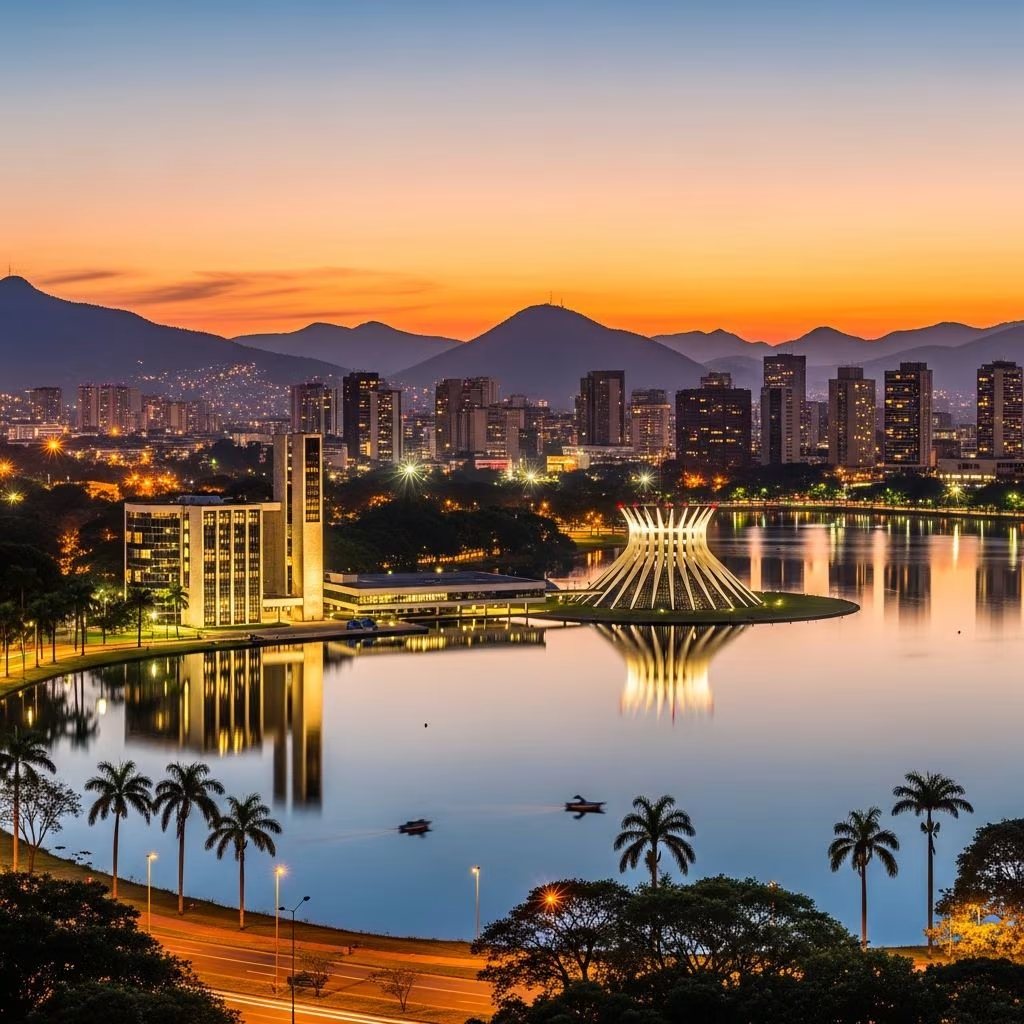
Nestled among the mountains of southeastern Brazil, Belo Horizonte stands as a city of remarkable contrasts, blending contemporary culture with historical significance, artistic innovation with culinary tradition, and modern urban energy with serene natural spaces. This vibrant capital of Minas Gerais offers visitors an authentic glimpse into Brazilian life while maintaining world-class attractions that rival any major South American destination. Whether you’re a food enthusiast, art lover, history buff, or cultural explorer, Belo Horizonte presents compelling reasons to venture beyond the typical tourist circuits.
Culinary Excellence: Where Tradition Meets Innovation
The gastronomic landscape of Belo Horizonte represents far more than simple dining—it’s a window into regional identity and centuries of cultural evolution. The city’s food scene celebrates the distinctive flavors of Minas Gerais, a state renowned throughout Brazil for its uncompromising standards and time-honored recipes.
The Market Experience: Mercado Central
Standing as one of the world’s most celebrated markets, Mercado Central serves as the epicenter of Belo Horizonte’s food culture. This sprawling marketplace transcends its utilitarian purpose, functioning instead as a living museum of regional gastronomy and social interaction. Within its labyrinthine corridors, vendors display an astounding variety of local products that define Mineiro identity.
The market specializes in products that have earned international acclaim. Queijo minas, the traditional cow’s milk cheese produced in the region, represents centuries of agricultural expertise and remains a staple in Brazilian cuisine. Visitors will also discover goiabada, a guava paste that balances tartness with sweetness and appears frequently in both savory and dessert applications. Beyond these signature items, the market offers Brazilian meats of superior quality, artisanal candies, and specialty ingredients that cater to both professional chefs and home cooks.
The market functions as a social hub where locals gather to conduct business, share gossip, and enjoy informal meals at modest bars tucked throughout the space. This authentic atmosphere provides travelers with genuine encounters beyond typical tourist interactions.
Navigating Belo Horizonte’s Diverse Restaurant Scene
Beyond the market, the city’s culinary offerings extend across numerous neighborhoods, each presenting distinctive gastronomic personalities. The Savassi district particularly stands out as a dining destination, where establishments showcase traditional Mineiro cooking techniques alongside contemporary interpretations. Wood-fired grills produce perfectly charred meats, while local dairies supply cheeses that enhance every meal. The beverage program often features caipirinha cocktails crafted with care and precision, complemented by regionally-produced coffee that rivals offerings in specialty establishments worldwide.
Botanical Artistry: Inhotim as Cultural Phenomenon
Approximately one hour from central Belo Horizonte lies Inhotim, an institution that defies conventional museum categorization and instead functions as a transformative aesthetic experience. This venue stands among the world’s largest open-air art galleries, commanding attention as Latin America’s premier contemporary art institution.
The facility encompasses 140 hectares of meticulously maintained botanical gardens throughout which more than 700 artworks are strategically distributed. Unlike traditional museum experiences where visitors move through enclosed spaces, Inhotim invites exploration across naturalistic landscapes where artistic interventions emerge unexpectedly. The integration of living plants with permanent and rotating installations creates constantly evolving perspectives as seasons progress and vegetation transforms.
The institution maintains 23 indoor exhibition spaces that range from permanent installations to frequently rotated contemporary presentations. These controlled environments protect delicate works while providing necessary context for understanding artistic movements and individual artists. The variety ensures that visitors cannot predict what aesthetic experiences await around each corner—the unexpected juxtaposition of natural elements with human-created works produces moments of genuine revelation.
A particular highlight involves “Piscina,” a work by Jorge Macchi that exists as both conceptual art and functional swimming pool. This integration of utility within aesthetic experience exemplifies Inhotim’s philosophy of breaking boundaries between observer and participant. Visitors are invited to bring swimwear and experience the work from inside rather than remaining detached viewers.
Planning Consideration: A single day provides merely superficial acquaintance with Inhotim’s offerings. Serious enthusiasts benefit from multi-day passes and on-site accommodations that permit unhurried exploration.
Architectural Legacy and Urban Spaces
The Significance of Praça da Liberdade
Occupying the emotional center of Belo Horizonte, Praça da Liberdade (Freedom Square) functions as the city’s primary gathering space and architectural showcase. This expansive plaza combines horticultural appeal—with abundant greenery providing respite from urban intensity—alongside historical structures that chronicle the city’s political evolution.
The surrounding palaces represent architectural styles spanning multiple decades, from neoclassical formality to Art Deco exuberance. These former government buildings have undergone careful transformation into cultural institutions, museums, and exhibition spaces. This adaptive reuse preserves historical significance while maintaining contemporary relevance.
Among these cultural venues, the Centro Cultural Banco do Brasil (CCBB BH) occupies a grand 1920s structure and offers free admission to rotating art exhibitions. This accessibility democratizes cultural engagement, ensuring that economic barriers don’t prevent exposure to contemporary artistic practice. The venue additionally hosts performances and special events that enliven the square’s atmosphere. The Café do Museu courtyard provides refreshment options that encourage extended visits.
Museums Across the City Center
Belo Horizonte’s commitment to historical preservation and cultural presentation extends beyond Praça da Liberdade throughout multiple neighborhoods. The Museu de Artes e Ofícios, housed within the architecturally significant old railway station, tells Brazilian historical narratives through collections of everyday objects that reveal how ordinary citizens lived across different periods. This approach to historical storytelling emphasizes human experience rather than elite narratives, providing visitors with relatable entry points to understanding broader historical movements.
Football enthusiasts discover comprehensive narratives at Mineirão & Museu Brasileiro do Futebol, where guided stadium tours contextualize the sport’s cultural significance within Brazilian identity. The museum’s exhibits chronicle football’s evolution from recreational activity to national obsession, illustrating how the sport intersects with social movements, economic development, and collective memory.
In the Cidade Jardim neighborhood, Museu Histórico Abílio Barreto preserves a colonial farmhouse while using this structure to narrate the city’s founding story. This physical anchoring of historical narrative within authentic architecture creates powerful connections between past and present.
The Memorial Minas Gerais – Vale presents a sweeping three-century chronicle of regional culture and mining history, industries that fundamentally shaped Minas Gerais’ economic and social development.
Social Rituals and Nightlife Culture
The Boteco Phenomenon
Belo Horizonte’s nightlife identity crystallizes around the boteco—small, unpretentious open-air establishments that have proliferated throughout the city with more than 9,000 locations operating at various capacity. These venues represent something far more significant than mere bars; they function as social anchors where community members gather for conversation, laughter, and occasional musical participation.
The culture surrounding botecos reflects Brazilian values emphasizing human connection and present-moment enjoyment. Red plastic chairs arranged on sidewalks become meeting places where strangers become acquaintances and acquaintances strengthen into friendships. The atmosphere remains casual yet convivial, deliberately eschewing the pretension that characterizes upscale establishments.
Visitors experience this culture most authentically by exploring neighborhoods such as Savassi, where Friday and Saturday nights showcase the populace’s enthusiastic engagement with nightlife. The bottom section of Rua da Bahia particularly exemplifies this phenomenon, with bars extending tables onto sidewalks and creating vibrant street atmospheres throughout most weekdays. Live musical performances serve as additional attractions, drawing crowds and establishing each venue’s distinctive character.
Discovering Neighborhood Character Through Exploration
Rather than confining nightlife experiences to singular locations, visitors benefit from wandering through various neighborhoods where botecos proliferate in unexpected locations. This approach reveals authentic local patterns while avoiding contrived tourist experiences. The consumption of petiscos—sharable plates of cured meats, cheeses, and vegetables—accompanies beer drinking and transforms meals into communal activities where strangers naturally interact.
Religious Architecture and Historical Spirituality
Belo Horizonte and surrounding areas preserve extraordinary examples of religious architecture spanning multiple centuries and aesthetic movements. Igreja São José, the city’s first constructed church, exemplifies this heritage through its grandiose Gothic-influenced façade, soaring spires, and elaborate stained-glass installations. This structure serves as a regular gathering point for both faithful practitioners and architectural enthusiasts.
Beyond the city center, rural churches blend Portuguese baroque traditions with Asian stylistic influences, creating distinctive visual vocabularies that reflect historical trade connections and cultural exchange. The Matriz de NS de Conceição exemplifies this synthesis, while Igreja NS do Carmo preserves sculptures by Aleijadinho, an 18th-century artist of tremendous significance within Brazilian artistic tradition. The Museu do Ouro, housed within an old gold foundry, narrates the region’s most prosperous historical era while explaining precious metal extraction techniques.
Natural Perspectives and Geographical Drama
Belo Horizonte’s etymological meaning—”Beautiful Horizon”—derives from the geographical drama surrounding the city, where mountainous terrain creates constantly shifting visual perspectives. The Mirante Mangabeiras provides the optimal vantage point for appreciating this landscape, offering panoramic city views that capture the scale and complexity of urban development within natural geography.
This location rewards both sunrise and sunset visits, with photographers particularly favoring evening hours when atmospheric conditions and solar angles create exceptional lighting conditions. The elevation gain required to reach this viewpoint provides gentle physical activity while building appreciation for the topographical complexity that shapes Belo Horizonte’s urban form.
Creative Markets and Artisanal Commerce
The Hippie Fair, occurring every Sunday morning, transforms urban spaces into temporary galleries where artisanal creators display handcrafted goods. This weekly event draws both local artists seeking sales opportunities and visitors searching for authentic handmade souvenirs. The variety spans from footwear to fine art, reflecting the creative diversity within Belo Horizonte’s artisan community.
Performing Arts and Musical Heritage
The Palácio das Artes functions simultaneously as theater, concert hall, and gallery, serving as one of the city’s principal cultural hubs. The venue’s acoustical excellence supports classical recitals and contemporary musical performances, while gallery spaces exhibit visual artworks alongside performance programming. This integration of multiple artistic disciplines within singular institutional structures encourages cross-disciplinary appreciation and broader cultural engagement.
Practical Visitor Considerations
Seasonal Dynamics and Climate
Belo Horizonte’s mountainous location creates temperate climates distinct from lower-altitude Brazilian cities. The perpetually sunny character noted by travel guidebooks produces consistent outdoor conditions suitable for year-round activities. However, rainfall patterns during certain seasons may affect specific activities, particularly visits to botanical gardens and outdoor art installations.
Neighborhood Navigation Strategy
Visitors maximize their experiences by treating neighborhoods as distinct entities meriting thorough exploration rather than rapid transit points. Each district presents characteristic architecture, dining options, retail environments, and social atmospheres worth experiencing directly. This approach reveals local patterns and creates opportunities for unplanned discoveries that constitute travel’s most memorable moments.
Time Allocation Framework
Comprehensive appreciation of Belo Horizonte’s offerings requires minimum four-day engagement, with additional time strongly recommended. Inhotim alone justifies multi-day visitation, museum collections reward unhurried examination, and neighborhood exploration resists acceleration. Single-day visits necessarily emphasize geographic coverage while sacrificing depth.
References
- Belo Horizonte: Best Things to Do — LaidBack Trip. Accessed April 2026. https://www.laidbacktrip.com/posts/belo-horizonte-things-to-do
- The 10 best things to do in Belo Horizonte, Brazil — Lonely Planet. Accessed April 2026. https://www.lonelyplanet.com/articles/top-things-to-do-in-belo-horizonte
- Things to do in Belo Horizonte, Brazil — Velvet Escape. Accessed April 2026. https://velvetescape.com/things-to-do-in-belo-horizonte/
- THE 15 BEST Things to Do in Belo Horizonte (2026) — TripAdvisor. Accessed April 2026. https://www.tripadvisor.com/Attractions-g303374-Activities-Belo_Horizonte_State_of_Minas_Gerais.html
- Best of Belo Horizonte Tourism — Expedia Travel Guide. Accessed April 2026. https://www.expedia.com/Belo-Horizonte.dx6053272
On This Page
Culinary Excellence: Where Tradition Meets Innovation Botanical Artistry: Inhotim as Cultural Phenomenon Architectural Legacy and Urban Spaces Social Rituals and Nightlife Culture Religious Architecture and Historical Spirituality Natural Perspectives and Geographical Drama Creative Markets and Artisanal Commerce Performing Arts and Musical Heritage Practical Visitor Considerations← Previous
Best Ski Resorts in California: Top Mountains for All Skill Levels
Next →
Best Beaches in Vietnam: Top Island and Mainland Escapes
Related Reading
More in Food & Culture
Food & Culture Food & Culture
 Food & Culture
Best Places to Eat in Rome: Neighborhood Dining Guide
 Food & Culture
 Food & Culture