

 Travel Essentials
 Travel Essentials

Essential guide to Bolivia's top attractions including salt flats, Lake Titicaca, and adventure activities for travelers seeking authentic experiences.
 Travel Essentials
Bolivia stands as one of South America’s most captivating destinations, offering an extraordinary blend of natural wonders, cultural richness, and adrenaline-pumping adventures. From surreal landscapes that defy imagination to ancient indigenous traditions, this landlocked nation provides unforgettable experiences for every type of traveler. Whether you seek spiritual connection, physical challenge, or cultural immersion, Bolivia delivers transformative moments across its diverse regions.
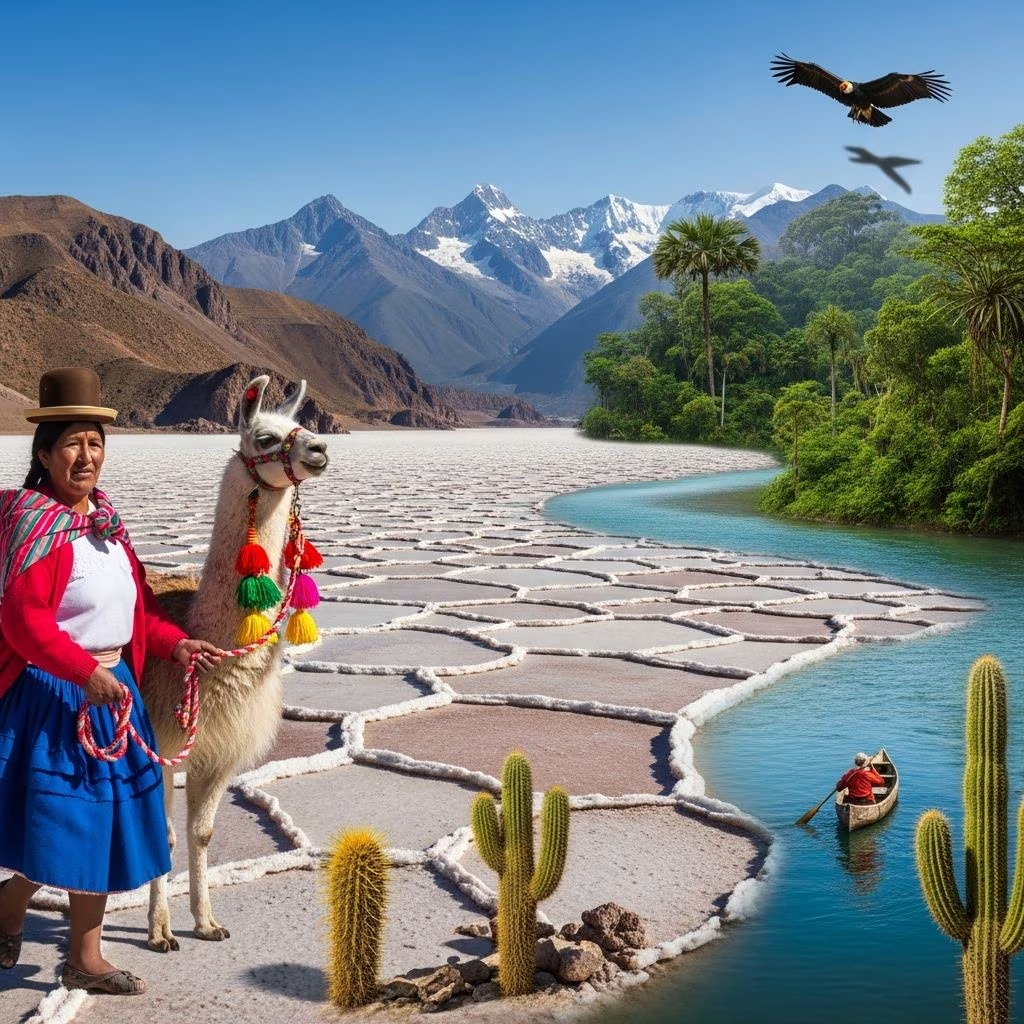
The Salar de Uyuni represents one of Earth’s most extraordinary natural phenomena and serves as Bolivia’s flagship attraction. Stretching across 10,000 square kilometers at an elevation of 3,656 meters, this vast expanse of salt creates an otherworldly landscape that challenges the perception of what nature can create. The sheer magnitude of this geological formation defies comprehension until you stand within its boundaries.
Visitors typically engage with this destination through multi-day guided expeditions, most commonly spanning three days. These journeys traverse the monotonous yet mesmerizing terrain, incorporating visits to peripheral attractions that enhance the overall experience. The tours navigate past volcanic lagoons displaying brilliant mineral-rich waters in shades of crimson, turquoise, and jade. Hot springs scattered throughout the region provide opportunities for thermal bathing while surrounded by the stark beauty of the high altitude plateau.
The salt flats achieve particular renown during the austral winter months spanning May through September. During this dry season, atmospheric conditions create some of the planet’s clearest night skies, with minimal light pollution enabling stargazing experiences of exceptional quality. The crystalline salt surface amplifies the celestial display, reflecting stars overhead and creating an immersive cosmic experience that few terrestrial locations can match.
Within the Eduardo Avarao Andean Fauna National Reserve near the Chilean border lies Laguna Colorada, a hydrogeological marvel that challenges conventional understanding of color in nature. This shallow alkaline lake displays a remarkable blood-red hue caused by carotenoid pigments from algae and the abundance of pink flamingos that inhabit the waters. The visual impact of this natural phenomenon creates an almost surreal landscape that appears digitally manipulated yet remains entirely authentic.
The reserve encompasses a landscape of geological drama, featuring volcanic peaks and fractured rock formations that create a natural gallery of Earth’s internal forces. The Andean mountain range provides a majestic backdrop to the lagoon, completing a compositional masterpiece. Optimal photographic conditions occur during twilight hours—either in the moments following sunrise when mist rises from the volcanic waters, or approaching sunset when the lagoon achieves its deepest crimson intensity.
Lake Titicaca occupies a profound place in both geological and cultural geography. As the world’s highest navigable lake at 3,812 meters elevation, it represents a unique engineering feat of nature and holds spiritual significance for indigenous Andean peoples. According to ancient mythology, this sacred body of water witnessed the origin of both the Incan civilization and solar creation itself.
The primary attraction centers on the region’s floating islands, particularly those inhabited by the Uros people. Approximately 40 distinct floating islands comprise this aquatic settlement, constructed entirely from totora reeds harvested from the lake’s margins. These islands provide insight into pre-Columbian adaptations to lakeside environments and showcase a cultural continuity spanning centuries.
A visit to these islands offers direct observation of traditional living practices largely unchanged by globalization. Daily activities—from boat construction to crop cultivation—unfold according to ancestral methodologies. The Isla del Sol, distinct from the floating islands, contains extensive archaeological remains including Incan temples and ceremonial sites. Sunset observation from this historically significant island creates moments of profound contemplation.
Bolivia’s administrative capital presents a vertically oriented city that challenges conventional urban design principles. Situated at 3,650 meters elevation, La Paz sprawls across mountain slopes in a cascading arrangement of neighborhoods stacked upon one another. This topographical arrangement creates distinct communities, each with characteristic architecture and cultural flavor.
The city’s cultural institutions and markets provide windows into Bolivian traditions. The Witches’ Market (Mercado de Hechicería) sells traditional medicinal remedies, amulets, and spiritual paraphernalia reflecting indigenous beliefs and contemporary spiritual practices. The 16th of July Market offers conventional commercial activity with authentic local commerce, providing genuine interaction with urban Bolivian daily life.
The Valle de la Luna presents a distinct geological wonder within proximity to the capital. This erosional landscape creates towering rock formations and carved channels that produce a lunar-like environment. The interplay of light across these formations transforms throughout the day, offering varied aesthetic experiences from morning through evening hours.
The Yungas Road, colloquially known as the Death Road, connects La Paz to the Yungas region through a downhill mountain cycling route. This challenging descent traverses 64 kilometers of increasingly precarious mountain terrain, descending approximately 3,600 meters in elevation. The route initially follows a wider, more established pathway before narrowing into single-track sections with precipitous drops.
Guided cycling tours organize the experience with safety protocols and support vehicles. The journey begins at high altitude where thin air challenges riders’ respiratory systems, gradually improving as elevation decreases and the landscape transitions from barren highlands to cloud forest vegetation. The combination of physical exertion, altitude challenges, and exposure creates an intensely memorable experience.
Beyond cycling challenges, the Yungas region offers the Western Hemisphere’s highest via ferrata experience. This climbing route incorporates secured metal ladders, handholds, and suspension systems allowing climbers to traverse otherwise inaccessible terrain. The route features two rappelling descents, a suspended bridge, and a canopy-level zipline through rainforest vegetation.
This geological preserve northeast of Cochabamba contains paleontological evidence spanning millions of years of Earth history. The park features billion-year-old dinosaur footprints preserved in limestone formations, creating an archaeological experience linking visitors to prehistoric environments. The Vergel Circuit provides a structured hiking route leading to the Natural Theatre viewpoint, from which descents access spectacular waterfall formations within canyon walls.
Additional highlights include Ciudad de Itas, a dramatic rock formation resembling an urban settlement, and the Umajallanta cave system featuring intricate limestone passages. These geological features combine to create an environment where geology, biology, and prehistory intersect in accessible and visually compelling ways.
Known colloquially as Bolivia’s Wild West, Tupiza provides a landscape of dramatic red-rock formations and provides authentic frontier atmosphere. Horseback riding constitutes the primary activity for landscape engagement, with guided tours ranging from several hours to multi-day expeditions exploring surrounding terrain. The distinctive geology features iron oxide-rich rocks creating burnt orange and crimson hues that intensify during early morning and late afternoon light.
This highland village maintains a distinctive cultural character emphasizing artistic expression, environmental consciousness, and community engagement. Local workshops teach traditional silver jewelry production, providing hands-on experience with metalworking crafts. The El Fuerte archaeological site contains pre-Columbian structures with astronomical alignments and ceremonial significance.
Amboro National Park adjacent to Samaipata encompasses diverse ecosystems transitioning from highland terrain to cloud forest. Bird-watching constitutes a primary activity, with the park harboring approximately 812 bird species representing varied ecological niches and migratory patterns. The Refugio Zoológico provides animal rescue and rehabilitation services, offering insight into wildlife conservation efforts throughout the region.
Beyond natural attractions and adventure activities, Bolivia’s cultural expressions merit dedicated attention. Cholita wrestling, a theatrical combat form combining professional wrestling entertainment with traditional Andean women performers, occurs regularly in La Paz’s Polifuncional arena. These performances blend indigenous cultural identity with contemporary entertainment forms, creating uniquely Bolivian spectacles.
The National Museum of Ethnographic and Folklore preserves and displays artifacts, textiles, and cultural objects representing Bolivia’s diverse ethnic groups and historical periods. These institutions provide contextual understanding of the peoples and traditions encountered throughout travel within the country.
| Region | Primary Attractions | Best Visiting Season | Typical Duration |
|---|---|---|---|
| Uyuni Plateau | Salar de Uyuni, Laguna Colorada, Hot Springs | May-September (dry) | 3-4 days |
| Lake Titicaca | Floating Islands, Isla del Sol, Archaeological Sites | May-September | 2-3 days |
| La Paz | Cultural Sites, Markets, Urban Tours | May-September | 2-3 days |
| Yungas Region | Death Road, Via Ferrata, Cloud Forests | May-September | 1-2 days |
| Torotoro | Paleontological Sites, Hiking, Caves | May-September | 1-2 days |
May through September represents the optimal visiting period, coinciding with the austral winter and dry season. During these months, weather patterns provide clear skies, minimal rainfall, and excellent visibility for astronomical observation and photography.
Many Bolivian attractions exist at elevations exceeding 3,600 meters, where atmospheric oxygen levels significantly decrease. Acclimatization periods of several days allow physiological adaptation to altitude stress. Visitors from lower elevations should schedule rest days upon arrival and remain vigilant for altitude sickness symptoms.
Guided tour operators handle logistics for most popular routes, including transportation, accommodation, and meal arrangements. Alternatively, local bus services connect major cities, though journey durations may extend significantly due to terrain and infrastructure limitations.
Bolivia maintains strong indigenous cultural traditions deserving respect and consideration. Photography protocols vary by community; always request permission before photographing individuals. Support local businesses and artisans through direct purchases rather than intermediaries when possible.
Bolivia presents a multifaceted destination appealing to diverse traveler motivations and capability levels. Whether seeking contemplative moments amid crystalline salt flats, cultural immersion within indigenous communities, or physical challenges in mountain environments, this South American nation delivers authentic transformative experiences. The combination of geological marvels, living cultural traditions, and accessible adventure opportunities establishes Bolivia as an increasingly significant destination for travelers seeking meaningful engagement with natural and human landscapes.
